The Journey of Teaching Music
What Is Teaching Music
Teaching Music
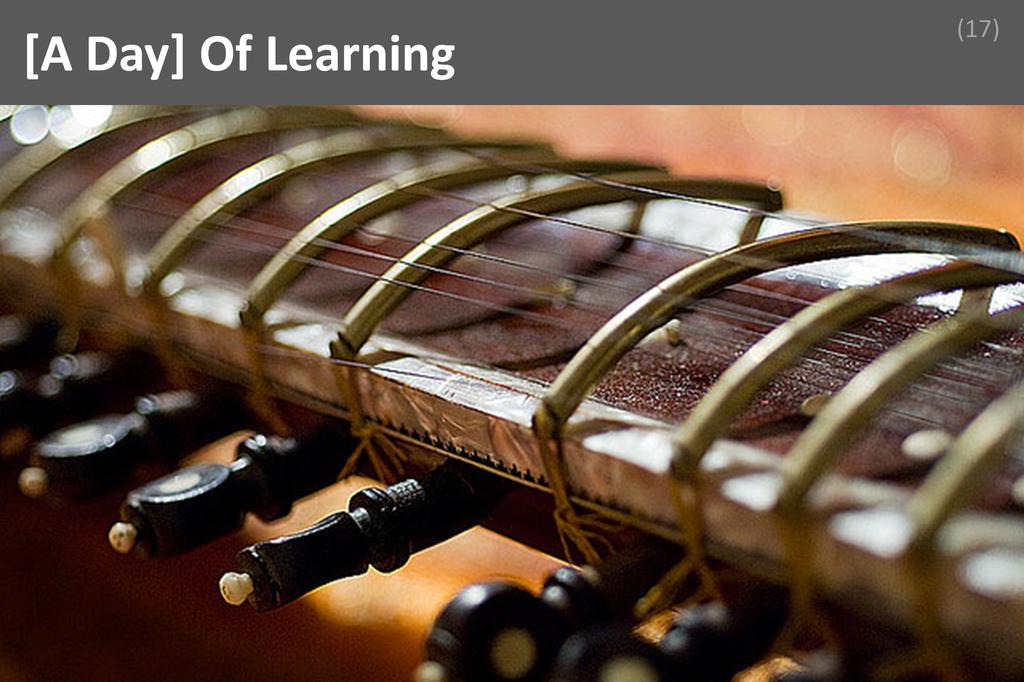
Teaching music is the professional practice of instructing individuals or groups in the skills, theory, and appreciation of music. It involves guiding students in playing instruments, singing, understanding musical concepts, and fostering creativity, often within schools, private studios, or community settings, to nurture musical growth and expression.
Teaching music holds significant value both for educators and their students. It cultivates creativity, discipline, and emotional intelligence, enriching the lives of learners. For professionals, it offers the satisfaction of inspiring others and witnessing their progress. Teaching music also strengthens communication and leadership skills, as instructors must adapt their methods to diverse learning styles. Additionally, it fosters a lifelong appreciation for the arts, contributing to cultural enrichment within communities. The benefits extend beyond musical proficiency, as students often develop improved cognitive abilities and teamwork skills. For teachers, the career provides a meaningful way to share their passion, make a positive difference, and enjoy a dynamic, ever-evolving work environment.
A music teacher working in a public middle school might lead a band class, where students learn to play various instruments and perform as an ensemble. The teacher designs lesson plans that introduce music theory, reading notation, and ensemble techniques. During rehearsals, the teacher demonstrates proper technique, corrects mistakes, and encourages collaboration among students. As concert season approaches, the teacher organizes performances, helping students build confidence and stage presence. Beyond technical instruction, the teacher fosters a supportive environment that motivates students to express themselves musically and work together toward common goals. Through these daily interactions, the teacher not only imparts musical knowledge but also helps students develop important life skills.
Education
Music Terminologies
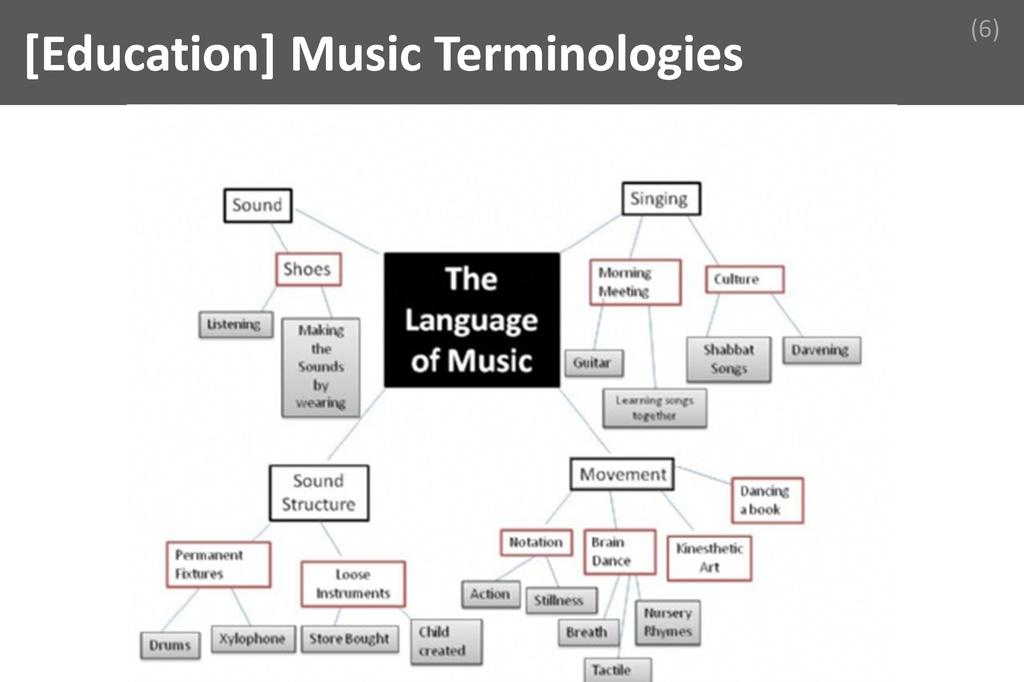
Music terminologies refer to the specialized vocabulary, symbols, and expressions used to describe musical concepts, techniques, and elements. This language is essential for clear communication among musicians, educators, and students. In teaching music, mastery of these terms underpins both academic instruction and professional practice, ensuring precise and effective knowledge transfer.
Understanding music terminologies is fundamental for anyone preparing to teach music, as it forms the backbone of all musical instruction and discourse. These terms enable educators to accurately convey complex ideas, interpret scores, and discuss musical styles, techniques, and theory with clarity. Mastery of this language fosters confidence and credibility, allowing teachers to engage students at various skill levels and adapt lessons to diverse learning needs. Over time, a strong command of music terminologies enhances professional growth, supports collaboration with colleagues, and opens opportunities for advanced study or leadership roles within educational institutions. Ultimately, it ensures that educators can nurture a deeper appreciation and understanding of music in their students.
Imagine a music teacher leading a class on orchestral performance. During rehearsal, the teacher uses precise music terminologies such as dynamics, tempo, articulation, and phrasing to guide students through a complex piece. When a student struggles with a passage marked "legato," the teacher explains the term, demonstrates the technique, and references its importance in achieving the desired musical expression. By consistently integrating correct terminology into instruction and feedback, the teacher not only clarifies expectations but also helps students develop their own musical vocabulary. This daily application of music terminologies ensures that students are well-prepared to interpret scores, communicate with peers, and progress confidently in their musical education.
Skills
Voice Training
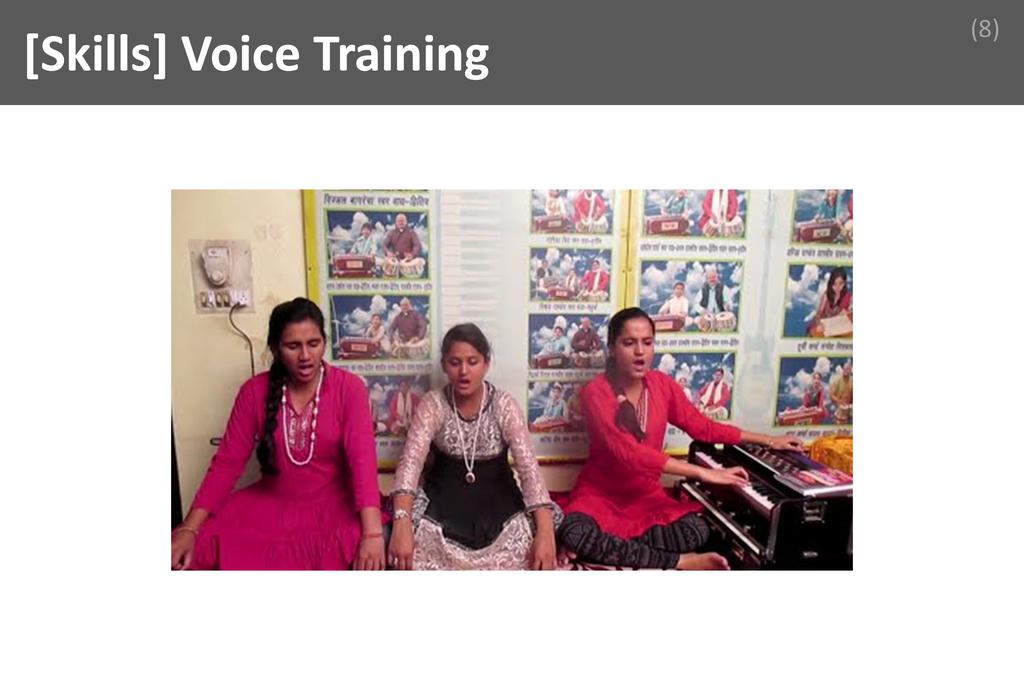
Voice training is the systematic process of developing and refining the vocal abilities through exercises, techniques, and guided practice to enhance tone, pitch, projection, and stamina. For a Teaching Music professional, it is a foundational skill that enables effective demonstration, clear communication, and the ability to model healthy vocal habits for students.
Mastery of voice training directly elevates a music teacher’s effectiveness in the classroom or studio. A well-trained voice allows educators to demonstrate musical concepts with clarity and precision, ensuring students can accurately emulate pitch, tone, and articulation. Employers and clients highly value this skill because it reflects professionalism, reliability, and a commitment to vocal health, which is essential for sustained teaching. Cultivating voice training involves consistent practice, ongoing education, and sometimes collaboration with vocal coaches. Over time, teachers who invest in their own vocal development are better equipped to diagnose and address students’ vocal challenges, fostering a more supportive and productive learning environment.
Imagine a music teacher preparing a choir for an important performance. During rehearsals, several students struggle with breath control and vocal projection, risking the overall quality of the ensemble. Drawing on their own voice training, the teacher demonstrates effective breathing techniques and vocal exercises, guiding students through targeted practice. By modeling proper technique and offering individualized feedback, the teacher helps students overcome their difficulties, resulting in a more confident and cohesive performance. This scenario highlights how voice training not only solves immediate technical issues but also empowers students to reach their full potential, ultimately contributing to the success of both the teacher and the ensemble.
Identification of Notes

Identification of Notes is the ability to accurately recognize and name musical notes by sight or sound, whether on a staff, instrument, or through listening. This skill forms the foundation for reading music, teaching pitch, and guiding students in both vocal and instrumental instruction, making it indispensable for music educators.
Mastering Identification of Notes enhances a music teacher’s effectiveness by enabling them to quickly diagnose students’ mistakes, provide precise feedback, and facilitate efficient learning. Clients and employers highly value this skill because it ensures that lessons are accurate, productive, and tailored to each student’s needs. Teachers who excel in note identification can adapt to various musical styles and student abilities, fostering a supportive and dynamic learning environment. Cultivating this skill requires consistent practice through sight-reading, ear training, and interactive exercises. Over time, exposure to diverse musical contexts and regular engagement with both written and aural materials help solidify a teacher’s proficiency, ultimately benefiting their students’ musical growth.
Imagine a music teacher working with a beginner piano student who struggles to play a simple melody correctly. The teacher listens and immediately identifies that the student is confusing F and G notes. By quickly pinpointing the error through their strong note identification skills, the teacher can demonstrate the correct notes, explain the difference, and provide targeted exercises to reinforce learning. This timely intervention not only resolves the immediate issue but also builds the student’s confidence and understanding of note placement. The teacher’s expertise in identifying notes ensures that progress is steady and that foundational skills are established, setting the stage for future musical success.
Identification of Rhythm
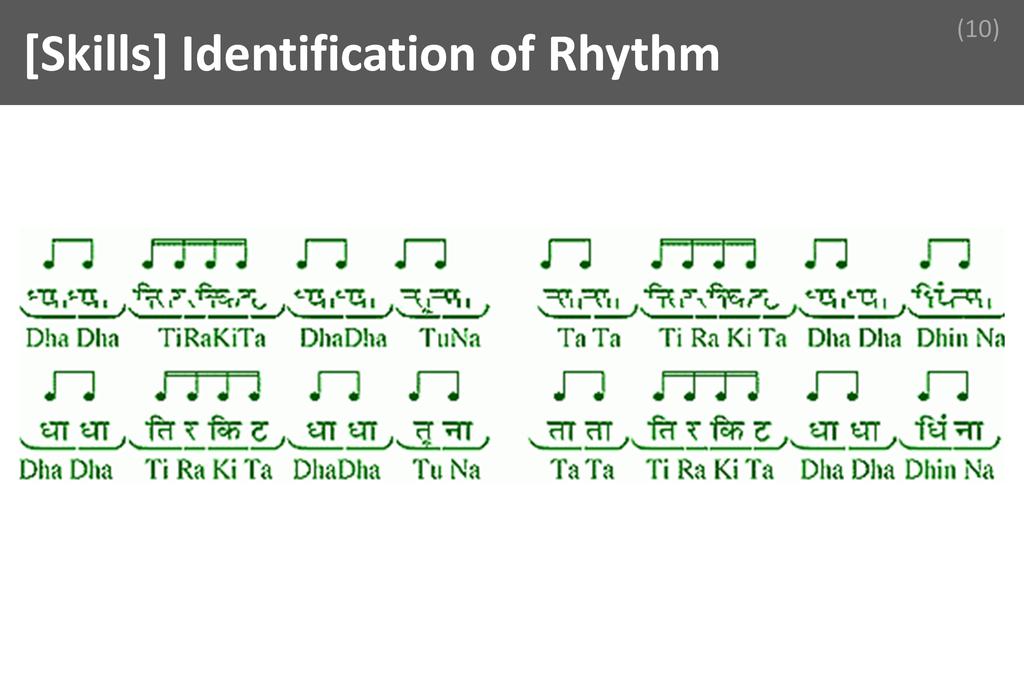
Identification of Rhythm is the ability to recognize, interpret, and reproduce patterns of beats, accents, and timing within music. For a Teaching Music professional, this skill is fundamental, as it underpins the structure of musical pieces and enables effective instruction, ensemble coordination, and the development of students’ musicality.
Mastering the identification of rhythm directly enhances a music teacher’s effectiveness by allowing them to break down complex pieces, address students’ timing issues, and foster a deeper understanding of musical structure. Clients and employers highly value this skill because it ensures accurate performance, cohesive group playing, and the ability to teach diverse genres. Cultivating this skill involves consistent practice through listening exercises, clapping or tapping out rhythms, and analyzing a wide variety of musical styles. Over time, exposure to different rhythmic patterns and teaching scenarios sharpens a teacher’s ability to diagnose and correct rhythmic errors, making them a more versatile and reliable educator.
Imagine a music teacher preparing a student ensemble for a public performance. During rehearsals, the group struggles with staying synchronized, particularly in a section with complex syncopation. The teacher draws on their identification of rhythm skills to isolate the problematic passage, demonstrating the correct rhythm and guiding students through targeted exercises. By breaking down the rhythm and providing clear, practical examples, the teacher helps the ensemble internalize the timing, resulting in a polished, cohesive performance. This scenario highlights how the ability to identify and teach rhythm can resolve critical issues, boost students’ confidence, and ensure the success of both the learners and the overall musical presentation.
Dynamics and Improvisation
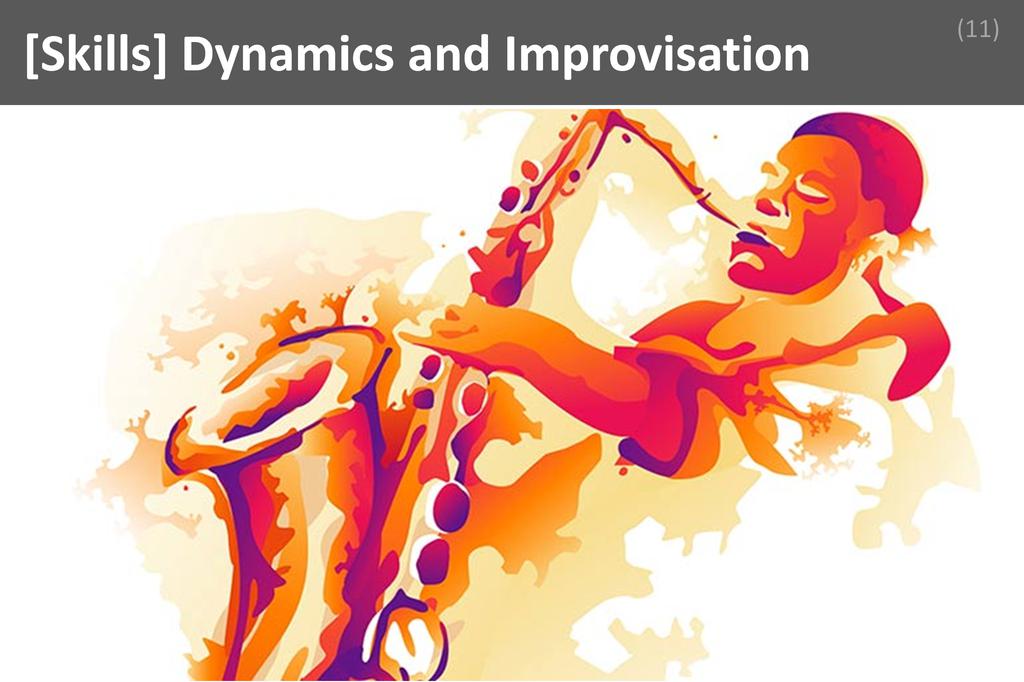
Dynamics and Improvisation refers to the ability to adapt musical expression, volume, and intensity while spontaneously creating or modifying music in real time. In teaching music, this skill enables educators to respond creatively to students’ needs, making lessons engaging, responsive, and tailored to individual learning styles.
Mastering dynamics and improvisation significantly enhances a music teacher’s effectiveness by allowing lessons to remain flexible and engaging. Students benefit from a more interactive and personalized learning experience, which can foster deeper understanding and enthusiasm for music. Employers and clients value this skill because it demonstrates adaptability, creativity, and the capacity to address diverse classroom situations. To cultivate this skill, educators should practice improvisational techniques, experiment with varying musical expressions, and seek feedback from peers and students. Over time, consistent exposure to different musical genres and teaching scenarios helps refine the ability to think on one’s feet and adjust teaching methods dynamically, ensuring that each lesson resonates with students’ unique needs and interests.
Imagine a music teacher leading a group lesson when a student unexpectedly struggles with a particular rhythm exercise. Instead of rigidly following the lesson plan, the teacher uses dynamics and improvisation to slow down the tempo, alter the exercise, and introduce a simple, spontaneous clapping game. This creative adjustment not only addresses the student’s challenge but also re-engages the entire class, turning a potential setback into a collaborative learning opportunity. By dynamically responding to the moment and improvising a new approach, the teacher maintains a positive atmosphere and ensures that all students remain motivated and involved, ultimately achieving a successful outcome for the lesson.
Positives
Continuous Learning
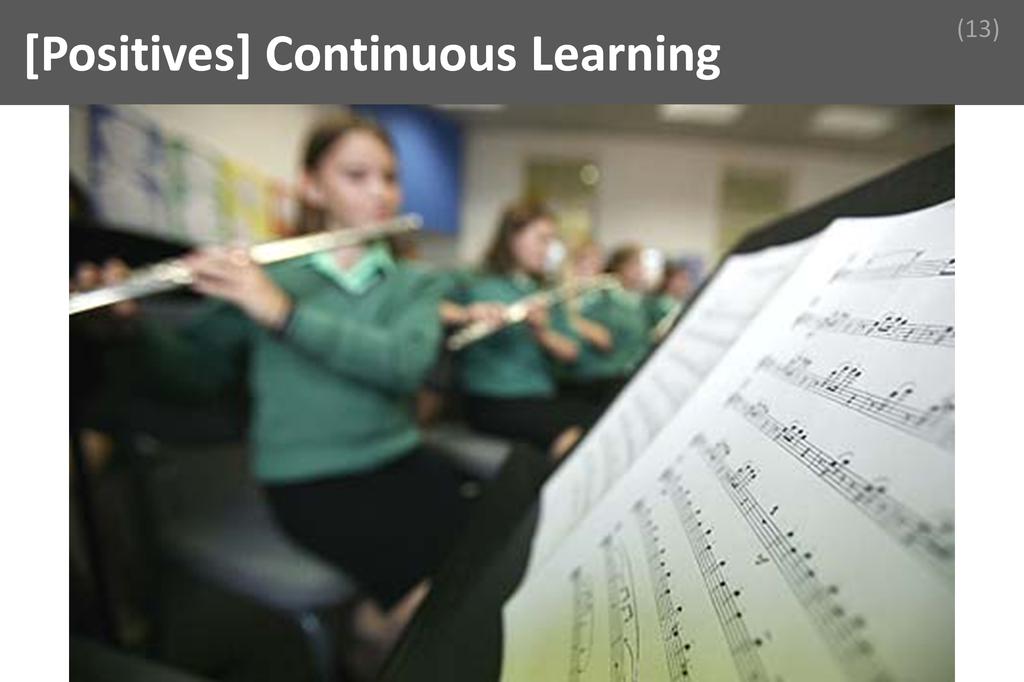
Continuous Learning is the ongoing process of acquiring new knowledge, skills, and insights throughout one’s career, rather than relying solely on initial training or education. In the field of teaching music, this approach fosters personal growth, adaptability, and creativity, ensuring that educators remain inspired, effective, and connected to evolving musical landscapes.
Continuous Learning is a cornerstone of a fulfilling career in teaching music because it keeps educators intellectually engaged and emotionally invested in their craft. As music constantly evolves, teachers who embrace lifelong learning stay updated with new techniques, genres, and technologies, which enriches their teaching repertoire. This dynamic environment prevents stagnation and encourages innovation, making each day unique and stimulating. The process of learning alongside students not only deepens the teacher’s expertise but also models curiosity and resilience for learners. This ongoing growth leads to greater job satisfaction, as educators witness their own development mirrored in their students’ progress, creating a cycle of mutual inspiration and achievement that sustains passion for the profession.
Imagine a music teacher who decides to learn about digital music production to better connect with students interested in contemporary genres. As they explore new software and experiment with electronic instruments, they discover fresh ways to integrate technology into their lessons. This journey not only enhances their own musical abilities but also excites their students, who see their teacher’s enthusiasm for learning. The classroom becomes a vibrant space where both teacher and students share discoveries, collaborate on creative projects, and celebrate breakthroughs together. This experience exemplifies how continuous learning transforms teaching into a shared adventure, making the profession deeply rewarding and ever-evolving.
Challenges
Awareness
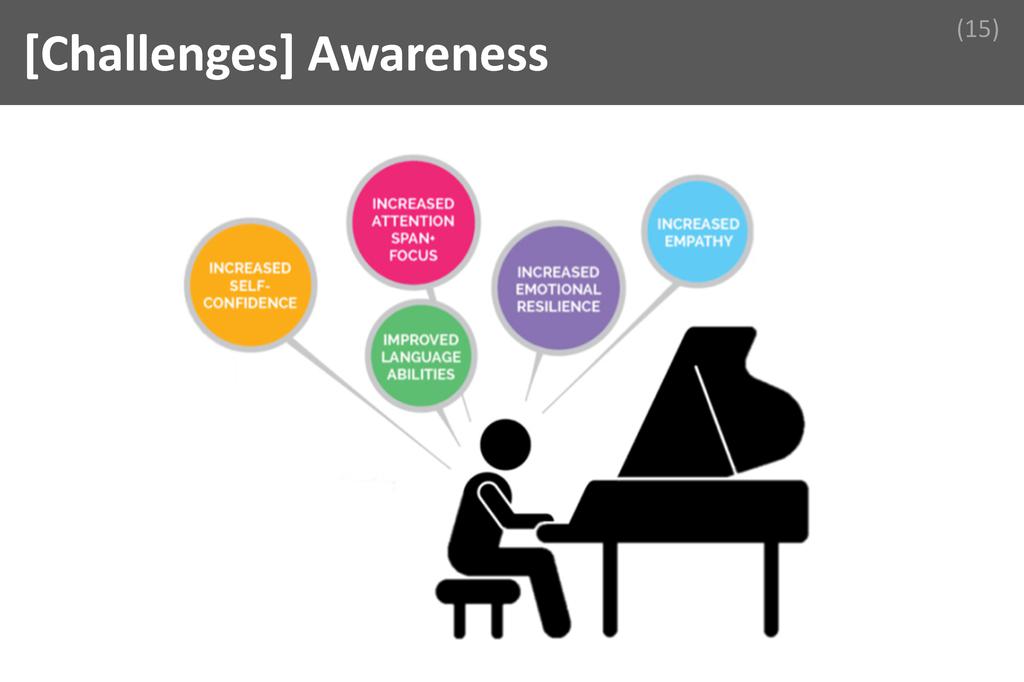
Awareness in the context of Teaching Music refers to a teacher’s ability to perceive, interpret, and respond to the diverse needs, backgrounds, and learning styles of students while remaining attuned to their own instructional methods. This is demanding because it requires constant reflection, adaptability, and sensitivity to subtle cues in a dynamic classroom environment.
The challenge of awareness permeates every aspect of a music teacher’s daily work. Without keen awareness, educators may miss signs of student disengagement, misunderstand cultural contexts, or fail to adapt lessons to individual abilities. This can lead to frustration, diminished student progress, and a less inclusive learning environment. Maintaining high awareness demands resilience because it involves ongoing self-evaluation and the willingness to adjust established routines. Successful professionals manage this constraint by fostering open communication, seeking feedback, and engaging in continuous professional development. They cultivate mindfulness and empathy, which helps them remain present and responsive, ensuring that each student’s unique needs are recognized and addressed throughout the learning process.
Consider a music teacher working with a class that includes students from various cultural backgrounds and with differing levels of musical experience. By staying aware, the teacher notices that some students are hesitant to participate in group singing due to unfamiliarity with the chosen repertoire. Instead of pressing forward, the teacher pauses to invite students to share songs from their own cultures, integrating these into the curriculum. This approach not only validates students’ identities but also enriches the learning experience for the entire class. Through this heightened awareness and adaptability, the teacher creates a more inclusive and engaging environment, demonstrating how attentiveness to student needs can transform potential obstacles into opportunities for growth and connection.
A Day Of
Teaching Music
The first notes of the day often begin before the sun rises, as a teaching music professional’s world is a symphony of preparation, performance, and passion. The pace is brisk, the environment alive with the hum of tuning instruments, the shuffle of sheet music, and the anticipation of young musicians eager to learn. Each day is a blend of artistry and organization, where creativity meets curriculum and every moment is an opportunity to inspire. In this dynamic setting, the rhythm of the day is set not just by the clock, but by the energy of students, the demands of lesson plans, and the ever-present drive to nurture musical growth.
As dawn breaks, the music teacher arrives early to prepare the classroom or rehearsal space. This quiet time is spent reviewing lesson plans, tuning instruments, and arranging chairs and stands to create an inviting and functional environment. There’s a careful check of technology—ensuring audio equipment and projectors are ready for demonstrations or listening exercises. The teacher might also use these moments to scan emails from parents or administrators, making last-minute adjustments to accommodate student needs or school events. This early preparation lays the groundwork for a smooth and engaging day of music instruction.
By mid-morning, the classroom comes alive as students file in, instruments in hand, ready for their first lesson or rehearsal. This is the heart of the day, where the teaching music professional is fully immersed in guiding students through scales, rhythms, and repertoire. Whether conducting a choir, directing a band, or leading a general music class, the teacher balances instruction with encouragement, offering real-time feedback and fostering a collaborative spirit. The energy is high as students practice, perform, and sometimes struggle, but always with the support and expertise of their teacher, who adapts on the fly to keep everyone engaged and progressing.
The afternoon often shifts to smaller group work, individual lessons, or collaborative projects. The teacher might meet with colleagues to coordinate upcoming performances, discuss curriculum updates, or plan interdisciplinary activities that connect music with other subjects. There’s time spent coaching students one-on-one, addressing specific challenges or preparing for auditions and recitals. This phase of the day is hands-on and interactive, requiring flexibility and creativity as the teacher juggles multiple roles—mentor, collaborator, and sometimes even performer.
As the school day winds down, the teaching music professional turns to reflection and preparation for tomorrow. This is a quieter, more introspective time, spent reviewing student progress, updating grades, and documenting lesson outcomes. The teacher might research new repertoire, arrange music, or explore innovative teaching strategies to keep lessons fresh and engaging. Communication with parents and colleagues continues, ensuring everyone is informed and supported. By the end of the day, the teacher has not only guided students through the world of music but also set the stage for another day of discovery and growth. |


 Home
Home Abroad
 Plan
Plan Philosophy
 Seminar
 Pages
Pages Advisors
 Testimonials










 Workshop
 Discuss
 Meet
Meet
 Advisor
 Story
Story
 Fine Print
 Links
Links
 Blog
Blog
 Follow
