The Journey of Book Publishing
What Is Book Publishing
Book Publishing

Book publishing is the process of preparing, producing, and distributing written works such as novels, nonfiction, and academic texts. It involves editing, design, marketing, and sales, transforming manuscripts into accessible books for readers. Professionals collaborate to ensure quality, reach audiences, and support authors’ creative and intellectual contributions.
Book publishing plays a vital role in shaping culture, preserving knowledge, and promoting literacy. For professionals in the field, it offers the opportunity to influence public discourse, discover new voices, and contribute to the spread of ideas. The industry provides intellectual fulfillment through collaboration with authors and creatives, fosters professional growth by developing diverse skills, and offers the satisfaction of bringing meaningful content to a global audience. Book publishing also supports the economy by creating jobs and generating revenue through the sale and distribution of books. Ultimately, it connects readers with stories and information that can inspire, educate, and entertain.
A professional in book publishing, such as an editor, might work with an aspiring author to refine a manuscript for a debut novel. The editor provides feedback on structure, character development, and language, guiding the author through revisions. Once the manuscript is polished, the publishing team collaborates on cover design, typesetting, and marketing strategies to ensure the book reaches its intended audience. Sales and distribution professionals then coordinate with bookstores and online retailers to make the book widely available. Throughout this process, publishing professionals use their expertise to transform an initial idea into a finished product, supporting the author’s vision and connecting readers with new literary experiences.
Education
Management

Management is the process of planning, organizing, leading, and controlling resources—such as people, finances, and information—to achieve organizational goals efficiently and effectively. In book publishing, management bridges creative vision and business execution, making it an essential academic and professional discipline for anyone aiming to succeed in this dynamic industry.
Understanding management is vital for professionals in book publishing because the industry relies on the seamless coordination of diverse teams, tight schedules, and limited resources. Mastery of management principles enables individuals to oversee projects from manuscript acquisition to final distribution, ensuring that deadlines are met and budgets are respected. This foundational knowledge empowers professionals to navigate challenges such as market shifts, technological changes, and evolving reader preferences. Over the long term, strong management skills foster leadership, adaptability, and strategic thinking, all of which are critical for career advancement. By integrating management theory into daily practice, publishing professionals can drive innovation, maintain high-quality standards, and contribute to the sustained success of their organizations.
Consider a managing editor at a mid-sized publishing house who is responsible for coordinating the release of several titles each season. Drawing on their management training, they develop detailed production schedules, allocate tasks among editors, designers, and marketers, and monitor progress to ensure deadlines are met. When an unexpected delay occurs—such as a late manuscript or a design setback—they use problem-solving and communication skills to reassign resources and adjust timelines without compromising quality. Their ability to balance competing priorities, motivate team members, and maintain clear communication channels exemplifies how theoretical management concepts are applied in practice. This approach not only ensures smooth operations but also builds trust and efficiency within the publishing team.
Literature

Literature encompasses written works, especially those considered to have artistic or intellectual value, including fiction, poetry, drama, and essays. In book publishing, literature forms the backbone of content creation, curation, and evaluation, serving as a critical field of study for understanding narrative techniques, genres, and cultural significance within the industry.
A deep understanding of literature is essential for anyone entering or advancing in book publishing. This knowledge equips professionals with the ability to critically assess manuscripts, recognize emerging literary trends, and appreciate the nuances of storytelling across genres and cultures. Mastery of literary concepts enables editors, agents, and publishers to identify works with artistic merit and commercial potential, ensuring a diverse and high-quality catalog. Furthermore, familiarity with literary history and theory fosters effective communication with authors and helps in positioning books within the market. Over the long term, this expertise enhances decision-making, supports professional credibility, and contributes to the cultural impact of published works, making literature an indispensable foundation for a successful publishing career.
Consider an editor at a publishing house who receives a manuscript that blends elements of magical realism and historical fiction. Drawing on their literary knowledge, the editor recognizes the narrative techniques reminiscent of Gabriel García Márquez and the thematic depth found in classic historical novels. This theoretical understanding allows the editor to provide insightful feedback to the author, suggesting ways to strengthen character development and narrative structure while maintaining the work’s unique voice. Additionally, the editor can effectively position the manuscript within the publisher’s catalog, targeting the right audience and drawing comparisons to established literary works. This application of literary theory and analysis directly influences the manuscript’s refinement and its eventual success in the marketplace.
Language & Grammar

Language and grammar encompass the rules, structures, and conventions that govern effective communication in written and spoken forms. In book publishing, mastery of language and grammar is essential for ensuring clarity, coherence, and professionalism, forming a critical component of the academic and practical skill set required in the industry.
A deep understanding of language and grammar is indispensable for anyone aspiring to excel in book publishing. This knowledge underpins every stage of the publishing process, from manuscript evaluation to editing and final proofing. Mastery of grammar ensures that published works are not only free from errors but also convey ideas with precision and elegance. Professionals who are adept in language and grammar can maintain high editorial standards, enhance the readability of texts, and uphold the publisher’s reputation. Over time, these skills contribute to career advancement, as clear and effective communication is highly valued in editorial, production, and even marketing roles within publishing. Ultimately, a strong command of language and grammar is a lifelong asset that supports both personal growth and professional credibility.
Consider an editor working at a publishing house who receives a promising manuscript from a new author. The story is compelling, but the text is riddled with grammatical errors, awkward phrasing, and inconsistent language usage. Drawing on their expertise in language and grammar, the editor meticulously revises the manuscript, correcting errors, refining sentence structure, and ensuring consistency in style and tone. This process not only improves the readability and professionalism of the book but also helps the author’s voice shine through more clearly. By applying their theoretical knowledge in a practical setting, the editor transforms a rough draft into a polished, publishable work, demonstrating the indispensable role of language and grammar in the daily operations of book publishing.
Finance

Finance is the study and management of money, investments, and other financial instruments. It encompasses budgeting, forecasting, analyzing financial statements, and making informed decisions about resource allocation. In book publishing, finance is essential for understanding costs, revenues, and profitability, forming a crucial part of the knowledge needed to run a successful publishing operation.
A solid grasp of finance is indispensable for anyone preparing for or working in book publishing. Understanding finance allows professionals to evaluate the viability of projects, allocate resources efficiently, and ensure the long-term sustainability of their publishing house. It forms the backbone of strategic decision-making, from setting book prices to negotiating contracts and managing cash flow. Mastery of financial principles also empowers individuals to interpret sales data, forecast market trends, and justify investments in marketing or new titles. Over time, these skills contribute to career advancement, as financial literacy is highly valued in leadership roles and is critical for navigating the increasingly complex economic landscape of the publishing industry.
Consider a publishing manager tasked with deciding whether to acquire a new manuscript. By applying their knowledge of finance, the manager analyzes projected production costs, estimates potential sales based on market research, and calculates the break-even point. They review historical data on similar titles, assess the impact of different pricing strategies, and determine the budget for marketing and distribution. This financial analysis enables the manager to make an informed recommendation to the editorial board, balancing creative ambition with fiscal responsibility. In daily operations, such financial acumen ensures that publishing decisions are sustainable, risks are managed, and the company remains competitive in a challenging marketplace.
Skills
Creativity

Creativity is the ability to generate original ideas, approach problems from new perspectives, and combine existing concepts in innovative ways. In book publishing, creativity empowers professionals to craft compelling narratives, design eye-catching covers, and develop unique marketing strategies, making it an indispensable asset for standing out in a competitive industry.
Creativity enhances performance in book publishing by enabling professionals to identify fresh literary voices, devise engaging promotional campaigns, and adapt to shifting reader preferences. Clients and employers highly value this skill because it drives the discovery of bestsellers, fosters brand differentiation, and ensures content remains relevant and appealing. To cultivate creativity, individuals should expose themselves to diverse genres, collaborate with colleagues from various backgrounds, and regularly challenge themselves with new projects. Over time, maintaining curiosity, seeking feedback, and embracing experimentation help refine creative abilities, ultimately leading to more innovative solutions and greater professional success in the publishing world.
Imagine a book publisher facing declining sales for a promising debut novel despite traditional marketing efforts. Drawing on creativity, the publishing professional devises an interactive online campaign, inviting readers to contribute fan art and alternate endings. This fresh approach generates buzz on social media, attracts new audiences, and revitalizes interest in the book. By thinking beyond conventional tactics and leveraging creative engagement, the publisher not only boosts sales but also builds a vibrant community around the author’s work. This scenario illustrates how creativity can transform challenges into opportunities, demonstrating its critical role in achieving success within the dynamic landscape of book publishing.
Patience

Patience is the ability to calmly endure delays, challenges, or setbacks without frustration, maintaining a steady focus on long-term goals. In book publishing, patience allows professionals to navigate lengthy editorial processes, collaborate with diverse teams, and manage the unpredictable timelines inherent in bringing a manuscript to market.
Patience directly enhances performance in book publishing by enabling professionals to handle revisions, feedback, and production delays with composure and resilience. Clients and employers highly value this trait because it fosters strong relationships, ensures quality control, and supports the meticulous attention to detail required in publishing. Cultivating patience involves practicing mindfulness, setting realistic expectations, and learning to view setbacks as opportunities for growth. Over time, professionals can develop greater patience by reflecting on past experiences, seeking mentorship, and embracing the iterative nature of the publishing process. This steady approach not only improves individual effectiveness but also contributes to a more harmonious and productive work environment.
Imagine an editor working with a debut author whose manuscript requires multiple rounds of revision. The process is slow, with the author struggling to implement feedback and deadlines repeatedly shifting. Instead of expressing frustration, the editor patiently guides the author through each stage, offering constructive advice and encouragement. This patience helps build trust, allowing the author to grow in confidence and skill. Eventually, the manuscript is transformed into a polished, publishable work. The editor’s patience not only ensures a higher-quality book but also strengthens the professional relationship, leading to future collaborations and a reputation for reliability and support within the publishing community.
Editing

Editing is the process of reviewing, revising, and refining written content to enhance clarity, coherence, accuracy, and overall quality. In book publishing, editing ensures that manuscripts are polished, error-free, and engaging, making them suitable for publication. It is a fundamental skill that shapes the final product’s success and credibility.
Mastering editing significantly elevates a publishing professional’s performance by ensuring manuscripts are not only grammatically correct but also compelling and market-ready. Clients and employers highly value this skill because it directly impacts a book’s readability, reputation, and commercial viability. Effective editing can transform a promising draft into a standout publication, reducing costly errors and rework. To cultivate editing expertise, professionals should read widely, study grammar and style guides, and seek feedback from peers and mentors. Regular practice, attention to detail, and openness to constructive criticism are key to honing this skill over time, ultimately making an editor indispensable in the publishing process.
Imagine a book editor working with a debut author whose manuscript is rich in ideas but riddled with inconsistencies, awkward phrasing, and factual errors. The editor meticulously reviews each chapter, clarifies confusing passages, corrects inaccuracies, and suggests structural improvements. Through several rounds of editing, the manuscript evolves into a cohesive, engaging narrative that captures the author’s voice while meeting industry standards. When the book is published, it receives positive reviews for its clarity and professionalism, demonstrating how skilled editing not only resolves critical issues but also plays a pivotal role in the book’s success and the publisher’s reputation.
Up-to-Date with Market Trends

Being "Up-to-Date with Market Trends" means consistently monitoring, understanding, and adapting to the latest shifts, preferences, and innovations within the book publishing industry. This skill enables professionals to anticipate changes, respond to emerging genres, and align publishing strategies with current reader interests, ensuring ongoing relevance and competitiveness in the market.
Staying current with market trends directly enhances a publishing professional’s ability to make informed decisions about acquisitions, marketing, and distribution. Employers and clients highly value this skill because it helps maximize sales potential, reduce risks, and identify new opportunities before competitors do. Cultivating this skill involves regularly reading industry reports, attending literary events, engaging with reader communities, and analyzing bestseller lists. Over time, professionals who actively seek out and interpret market data develop a keen sense for what resonates with audiences and can pivot strategies accordingly. This adaptability not only improves individual performance but also contributes to the overall success and resilience of publishing houses in a rapidly evolving landscape.
Imagine a book editor who notices a surge in demand for climate fiction through social media trends and sales analytics. By recognizing this emerging interest before it becomes mainstream, the editor proposes acquiring and fast-tracking a promising manuscript in this genre. The publisher, acting on this timely insight, releases the book ahead of competitors, capturing significant media attention and strong sales. This proactive approach, rooted in being up-to-date with market trends, not only secures a bestseller for the company but also establishes the publisher’s reputation as an industry leader attuned to readers’ evolving tastes. In this way, staying informed about market trends directly translates into tangible business success.
Communication

Communication is the clear, effective exchange of ideas, information, and feedback through spoken, written, or visual means, ensuring mutual understanding and collaboration. In book publishing, communication is vital for coordinating among authors, editors, designers, marketers, and stakeholders, enabling seamless project management and the successful realization of a book from concept to publication.
Strong communication skills directly enhance performance in book publishing by reducing misunderstandings, streamlining workflows, and fostering productive relationships across diverse teams. Clients and employers highly value professionals who can articulate ideas, provide constructive feedback, and negotiate solutions, as these abilities ensure projects stay on track and meet quality standards. To cultivate communication skills, individuals should practice active listening, seek feedback on their interactions, and engage in regular writing and speaking opportunities. Over time, consistent effort in refining both verbal and written communication leads to increased confidence, adaptability, and effectiveness in managing the complex, collaborative nature of publishing projects.
Imagine a book editor facing a tight deadline discovers inconsistencies in a manuscript just days before print. The editor must quickly communicate the issues to the author, clarify the necessary changes, and coordinate with the design and production teams to implement corrections without delaying the release. By clearly explaining the problems, setting expectations, and maintaining open channels for questions and updates, the editor ensures everyone is aligned and motivated to resolve the issue efficiently. This scenario highlights how adept communication not only prevents costly errors but also builds trust and teamwork, ultimately contributing to the successful launch of the book.
Reading Habit

Reading Habit is the consistent and intentional practice of engaging with diverse written materials, fostering comprehension, critical thinking, and an appreciation for language. In book publishing, this habit is indispensable, as it equips professionals with the ability to evaluate manuscripts, spot trends, and maintain high editorial standards, ultimately shaping successful publications.
A strong reading habit directly enhances a publishing professional’s ability to assess manuscripts for originality, clarity, and market potential. Clients and employers highly value this skill because it ensures that only quality content reaches publication, reflecting positively on the company’s reputation. Regular reading sharpens editorial judgment, helps identify emerging genres, and keeps professionals updated on industry standards. To cultivate this habit, one should set aside dedicated time daily for reading a variety of genres and formats, engage in active discussions about books, and reflect on different writing styles. Over time, this practice not only broadens literary knowledge but also hones the analytical skills necessary for making informed publishing decisions.
Imagine an editor at a publishing house who is faced with a promising but unconventional manuscript. Drawing on a well-developed reading habit, the editor quickly recognizes subtle literary references and innovative narrative techniques that might be overlooked by a less experienced reader. This insight allows the editor to advocate for the manuscript’s publication, confidently presenting its unique strengths to the acquisitions team. The editor’s familiarity with similar works and market trends, gained through regular reading, helps position the book effectively for its target audience. Ultimately, the editor’s reading habit proves crucial in identifying a future bestseller, demonstrating the tangible impact of this core skill in book publishing.
Positives
Opportunity to Read Unpublished Work
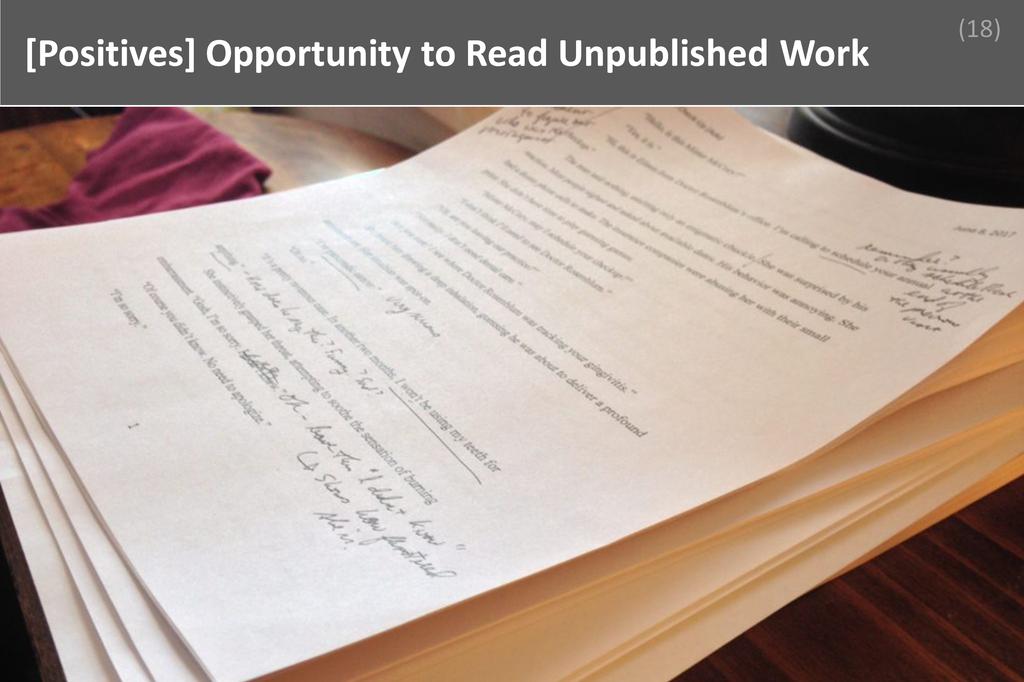
The "Opportunity to Read Unpublished Work" refers to the unique privilege professionals in book publishing have to access, review, and engage with manuscripts and stories before they are available to the public. This early exposure allows them to discover new voices, shape literary trends, and influence what readers will experience in the future. This aspect contributes positively to the profession by fostering a sense of excitement, responsibility, and creative involvement, making each day in publishing dynamic and intellectually stimulating.
Having the chance to read unpublished work is a major advantage in book publishing because it places professionals at the forefront of literary discovery. This privilege transforms daily tasks into a journey of exploration, where every manuscript holds the potential to become the next bestseller or cultural phenomenon. The anticipation of finding a hidden gem or nurturing a debut author brings a sense of purpose and fulfillment that few other industries can match. This aspect not only enhances job satisfaction but also encourages personal and professional growth, as it requires critical thinking, empathy, and a deep appreciation for storytelling. For many, the excitement of being among the first to encounter new ideas and narratives is a constant source of motivation and pride.
Imagine an editor receiving a fresh manuscript from an unknown author. As they read through the pages, they are captivated by a unique voice and a compelling story that has never been shared with the world. The editor realizes the potential impact this book could have and feels a profound sense of responsibility and excitement. They work closely with the author, offering feedback and guidance, knowing that their early engagement is shaping a work that could inspire thousands. This experience, of being the first to witness and nurture new talent, exemplifies the deeply rewarding nature of having access to unpublished work in book publishing. It is a daily reminder of the power and privilege inherent in this career.
Self-Development

Self-development is the ongoing process of enhancing one’s skills, knowledge, and personal qualities through conscious learning and reflection. In book publishing, self-development means continually adapting to new trends, technologies, and creative ideas. It empowers professionals to grow intellectually and emotionally, fostering resilience, adaptability, and a deeper sense of purpose in their work.
Self-development is a cornerstone of satisfaction and growth in book publishing because the industry thrives on innovation, learning, and collaboration. Professionals are constantly exposed to diverse genres, voices, and perspectives, which challenges them to expand their understanding and refine their expertise. This dynamic environment encourages individuals to seek out new skills, whether in editing, marketing, or digital production. As they grow, they become more confident and versatile, which not only enhances their career prospects but also makes daily tasks more engaging and meaningful. The sense of progress and achievement that comes from self-development translates into higher motivation, greater creativity, and a lasting passion for the work.
Imagine an editor who begins their career focused on traditional print books but, through self-development, learns about digital publishing and emerging storytelling formats. By attending workshops, reading industry reports, and collaborating with tech-savvy colleagues, they acquire new skills in e-book formatting and interactive content creation. This journey not only broadens their professional capabilities but also reignites their enthusiasm for the industry. As a result, they feel more confident tackling new projects, contribute innovative ideas to their team, and experience a profound sense of fulfillment knowing they are growing alongside the evolving world of publishing. This ongoing self-development becomes a source of pride and inspiration in their daily work.
Making Authors Out of Writers
“Making Authors Out of Writers” means guiding aspiring writers through the transformative journey from raw manuscript to published book, helping them realize their creative vision and achieve recognition as authors. This process is central to book publishing, as it empowers writers, elevates their voices, and brings new stories into the world. By nurturing talent and providing essential support, publishing professionals play a pivotal role in turning dreams into tangible achievements, making this profession deeply meaningful and impactful.
The ability to make authors out of writers is a profound source of motivation and pride for those in book publishing. Every day, professionals witness the evolution of ideas into finished works, knowing their expertise and encouragement have helped writers reach new heights. This collaborative process fosters a sense of accomplishment and purpose, as publishing teams celebrate each milestone alongside the writer. The satisfaction of seeing a writer’s name on a book cover, knowing you played a part in their journey, is unmatched. This ongoing cycle of discovery, mentorship, and achievement not only drives personal growth but also strengthens the entire literary community, making book publishing a uniquely rewarding career.
Imagine an editor working closely with a passionate writer who has never been published before. Through months of thoughtful feedback, encouragement, and editorial guidance, the editor helps the writer refine their manuscript, shaping it into a compelling narrative ready for readers. When the book is finally published and the writer holds their first printed copy, the joy and gratitude are palpable. The editor feels a deep sense of fulfillment, knowing they have helped transform a hopeful writer into a proud, accomplished author. This moment of shared triumph exemplifies the daily rewards of making authors out of writers in the world of book publishing.
Challenges
Criticism

Criticism in book publishing refers to the evaluation and judgment of manuscripts, editorial decisions, or published works by colleagues, reviewers, and the reading public. This scrutiny is demanding because it often challenges personal and professional choices, requiring individuals to balance creative vision with market expectations and industry standards.
The persistent presence of criticism in book publishing can affect professionals’ confidence, decision-making, and creative output. Daily, editors and authors must contend with feedback that may be subjective, harsh, or conflicting, which can lead to self-doubt or hesitation. This environment demands resilience, as professionals must separate constructive input from negativity and remain focused on the broader goals of quality and audience engagement. Successful individuals in the industry develop a thick skin, learn to view criticism as an opportunity for growth, and maintain open communication with peers and stakeholders. By fostering a culture of continuous improvement and embracing diverse perspectives, they transform criticism into a valuable tool for personal and professional development.
Consider an editor who receives negative feedback from both an author and a marketing team regarding proposed changes to a manuscript. Instead of reacting defensively, the editor listens carefully to each perspective, acknowledges the concerns, and facilitates a collaborative discussion to find common ground. By remaining calm and open-minded, the editor is able to integrate the most constructive elements of the criticism, ultimately enhancing the manuscript’s appeal without compromising its integrity. This approach not only resolves immediate tensions but also builds trust and respect among colleagues, demonstrating how criticism, when managed thoughtfully, can lead to stronger outcomes and professional growth.
Politics by Big Players

"Politics by Big Players" in Book Publishing refers to the influence and control exerted by major publishing houses, established authors, and powerful agents over industry decisions, opportunities, and trends. This dynamic creates barriers for emerging professionals, making it demanding due to limited access, favoritism, and the need to navigate complex, often unwritten, power structures.
The presence of politics by big players can shape everything from which manuscripts are prioritized to whose voices are amplified in marketing and distribution. For professionals, this means daily work may involve navigating alliances, managing expectations, and sometimes facing setbacks unrelated to merit. The environment demands resilience because success often hinges on relationships and strategic positioning as much as on talent or hard work. Successful professionals manage this constraint by building authentic networks, staying adaptable, and focusing on long-term reputation. They learn to read the room, advocate for their projects diplomatically, and seek out mentors who can provide guidance through the industry's intricate social landscape.
Consider an editor at a mid-sized publishing house who champions a debut author’s manuscript. Despite initial enthusiasm, the project faces resistance from upper management, who favor established authors with proven sales records. Rather than conceding, the editor leverages relationships with influential colleagues and gathers market data to demonstrate the manuscript’s potential. By carefully navigating office politics and presenting a compelling business case, the editor secures support for the project. The book’s eventual success not only benefits the author but also enhances the editor’s standing within the company, illustrating how perseverance, strategic networking, and a nuanced understanding of internal dynamics can overcome the challenges posed by big player politics.
Acceptance by Readers

Acceptance by Readers refers to the process by which a published work is embraced, appreciated, and positively received by its intended audience. In book publishing, this is demanding because reader preferences are subjective, unpredictable, and influenced by trends, making it difficult to consistently meet or exceed audience expectations.
The challenge of gaining acceptance from readers permeates every stage of a publishing professional’s daily work, from manuscript selection to marketing strategies. Unpredictable reader reactions can lead to uncertainty, affecting morale and decision-making. This ongoing pressure demands resilience, as professionals must handle criticism, adapt to shifting tastes, and learn from both successes and failures. Successful individuals in the field remain attuned to audience feedback, conduct thorough market research, and foster open communication with authors to refine content. They also embrace flexibility, allowing them to pivot strategies when initial reception falls short. By cultivating a growth mindset and focusing on continuous improvement, publishing professionals can better navigate the complexities of reader acceptance and maintain a steady course in a dynamic industry.
Consider an editor working with a debut novelist whose manuscript explores unconventional themes. Initial reader feedback during advance reviews is mixed, with some praising the originality while others express confusion. Rather than dismissing the criticism, the editor collaborates closely with the author to clarify narrative elements and strengthen character development. They also adjust the marketing approach, targeting niche communities more likely to appreciate the book’s unique qualities. After publication, the book gradually gains traction among dedicated readers who champion it online, leading to increased visibility and broader acceptance. This scenario illustrates how proactive adaptation and strategic engagement with reader feedback can transform initial skepticism into lasting appreciation, ultimately overcoming the challenge of acceptance by readers.
Co-operation by Booksellers

Co-operation by booksellers refers to the willingness and proactive engagement of bookstores to stock, promote, and sell titles from publishers. This is demanding because booksellers face limited shelf space, competing priorities, and commercial pressures, making it difficult for publishers to secure visibility and support for their books, especially new or niche titles.
The lack of co-operation from booksellers can significantly hinder a publisher’s ability to reach readers, affecting sales, author satisfaction, and overall brand reputation. This challenge requires professionals to be resilient, as they must constantly negotiate, adapt marketing strategies, and build relationships despite frequent setbacks. Successful publishers often overcome this by fostering strong communication, offering tailored promotional support, and demonstrating the commercial potential of their titles. They may also leverage data-driven insights to persuade booksellers of a book’s marketability or collaborate on exclusive events and campaigns. By remaining persistent and flexible, professionals can gradually earn trust and increase the likelihood of booksellers championing their titles.
Consider a small independent publisher launching a debut novel. Initially, local booksellers hesitate to stock the book due to its unknown author and limited marketing budget. The publisher responds by organizing community events, providing advance reading copies, and sharing positive early reviews with the booksellers. Over time, the publisher builds rapport and demonstrates the book’s appeal through local media coverage and customer interest. Eventually, the booksellers agree to feature the novel in their stores and recommend it to customers. This collaborative approach not only boosts sales but also establishes a foundation for future co-operation, illustrating how persistence and creative engagement can overcome the challenge of bookseller co-operation in the publishing industry.
A Day Of
Book Publishing
In the world of book publishing, every day unfolds with a blend of creative energy and meticulous coordination, where the hum of conversation and the rustle of manuscript pages set a brisk, purposeful pace. The environment is a dynamic mix of quiet focus and lively collaboration, with professionals juggling deadlines, author communications, and the ever-shifting demands of the literary marketplace. Whether nestled in a bustling open-plan office or working remotely with a team scattered across time zones, publishing practitioners must balance the art of storytelling with the science of project management, ensuring that each book’s journey from manuscript to finished product is as seamless as it is inspired.
As the day begins, publishing professionals often start by reviewing their inboxes for overnight updates from authors, agents, or international colleagues. The early morning hours are ideal for reading through manuscript submissions, making notes on editorial queries, and prioritizing the day’s tasks. This quiet window allows for focused attention on developmental edits or copyedits, setting the tone for a productive day ahead. With a fresh cup of coffee in hand, practitioners map out their schedules, flag urgent deadlines, and prepare for the collaborative demands that will soon follow.
By mid-morning, the pace accelerates as the core activities of the day take center stage. Editorial meetings fill the calendar, where teams discuss acquisition prospects, review progress on current projects, and strategize marketing plans. This is also the prime time for calls with authors to discuss revisions, clarify feedback, or brainstorm promotional ideas. The energy in the office is palpable, with editors, designers, and marketers exchanging ideas and troubleshooting challenges in real time. These interactions are crucial for aligning everyone’s vision and ensuring each book’s unique voice is preserved and amplified.
The afternoon is dedicated to execution and collaboration, as publishing professionals shift their focus to production schedules, jacket design approvals, and coordination with printers or digital distributors. Meetings with the publicity and sales teams help refine launch strategies and address any logistical hurdles. The atmosphere is one of teamwork and problem-solving, as practitioners work together to keep projects on track and adapt to any last-minute changes. This period often involves reviewing proofs, finalizing metadata, and ensuring that every detail aligns with the publishing timeline.
As the day winds down, attention turns to administrative wrap-up and forward planning. Professionals update project trackers, respond to outstanding emails, and compile reports on the day’s progress. There is time for a final review of manuscripts or marketing materials, as well as research into emerging trends or potential new acquisitions. With the office growing quieter, practitioners reflect on the day’s achievements and set priorities for tomorrow, ensuring that the momentum continues and each book’s journey remains on course. |


 Home
Home Abroad
 Plan
Plan Philosophy
 Seminar
 Pages
Pages Advisors
 Testimonials















 Workshop
 Discuss
 Meet
Meet
 Advisor
 Story
Story
 Fine Print
 Links
Links
 Blog
Blog
 Follow
