The Journey of Playing Veena
What Is Playing Veena
Playing Veena
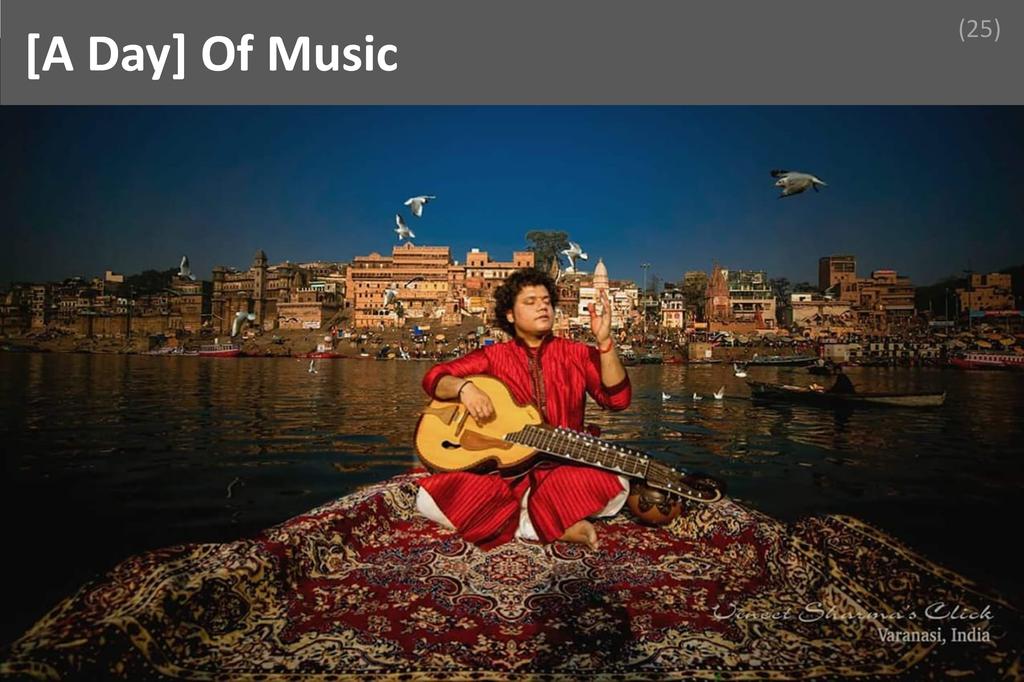
Playing Veena is the art and practice of performing music on the veena, a traditional Indian stringed instrument. It involves mastering intricate finger techniques, understanding ragas and talas, and expressing emotion through melody, making it both a musical discipline and a form of cultural expression.
Playing Veena holds significant cultural and artistic value, serving as a bridge between ancient musical traditions and contemporary performance. For professionals, it offers a profound sense of connection to heritage, enhances cognitive and emotional skills, and provides opportunities for creative expression. Mastery of the veena can lead to recognition in classical music circles, invitations to perform at prestigious events, and the ability to teach and inspire future generations. The discipline required to excel in veena playing fosters patience and perseverance, while the meditative quality of the music promotes mental well-being. Additionally, being a veena artist can open doors to collaborations with other musicians, expanding both personal and professional horizons.
A professional veena player might begin their day with hours of dedicated practice, refining complex compositions and improvisational skills. Later, they could participate in a live concert, captivating audiences with soulful renditions of classical ragas. In another scenario, the artist might conduct workshops, sharing their expertise with aspiring musicians and helping to preserve the veena tradition. They may also collaborate with dancers or fusion bands, adapting the veena’s sound to new genres and audiences. Through these varied activities, the veena player not only hones their craft but also contributes to the vibrant tapestry of Indian classical music, ensuring its relevance and appeal for future generations.
Education
Proper Training from Guru
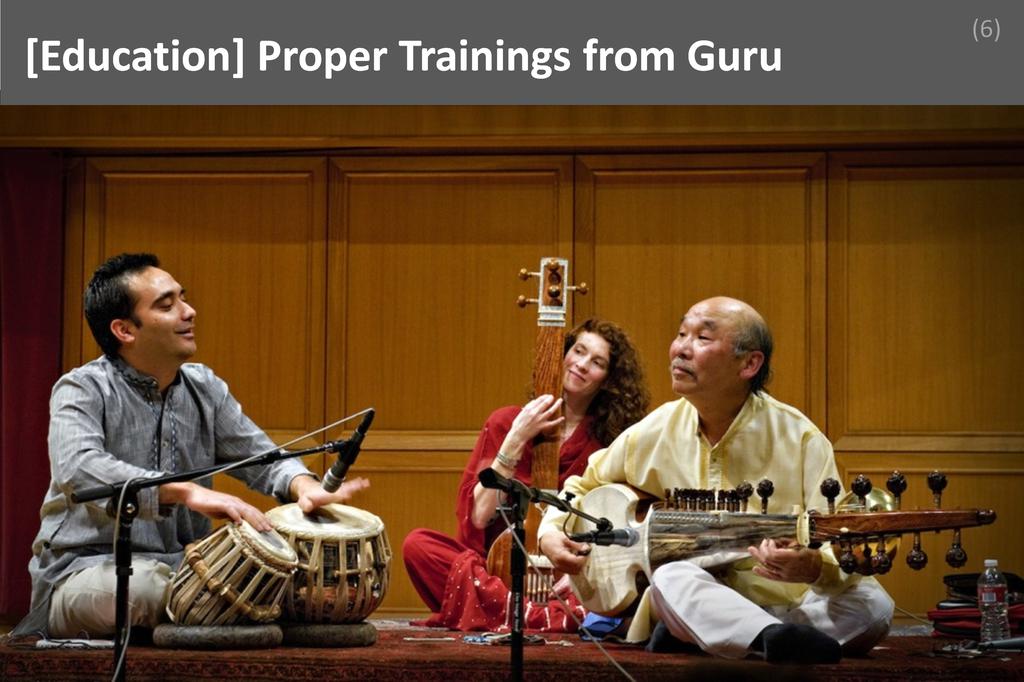
Proper Training from Guru refers to the traditional, systematic instruction imparted by a master (guru) to a student (shishya) in the art of playing the veena. This method emphasizes personalized mentorship, oral transmission of techniques, and deep immersion in musical nuances, forming a cornerstone of both academic study and professional mastery in veena performance.
Understanding and undergoing proper training from a guru is essential for anyone aspiring to excel in playing the veena. This approach ensures that students not only learn the technical aspects of the instrument but also absorb the subtle nuances, improvisational skills, and cultural context that cannot be captured through self-study or modern tutorials alone. The guru-shishya tradition fosters discipline, patience, and a deep sense of respect for the art form, which are crucial attributes for a professional musician. Over time, this foundational training enables veena players to develop their unique style, interpret complex compositions authentically, and maintain the integrity of the musical tradition. Such grounding also opens doors to advanced learning, performance opportunities, and teaching roles in the field.
Consider a professional veena player preparing for a prestigious concert. Drawing from years of proper training under a guru, the musician recalls specific techniques and improvisational methods taught during one-on-one sessions. When faced with a challenging raga during rehearsal, the player applies subtle gamakas and intricate finger movements exactly as demonstrated by the guru, ensuring authenticity and emotional depth in the performance. The musician also remembers the guru’s advice on stage presence and audience engagement, which helps in confidently presenting the piece. This daily reliance on foundational lessons from the guru not only enhances the quality of the performance but also upholds the rich tradition of veena playing, distinguishing the artist in a competitive professional landscape.
Riyaaz
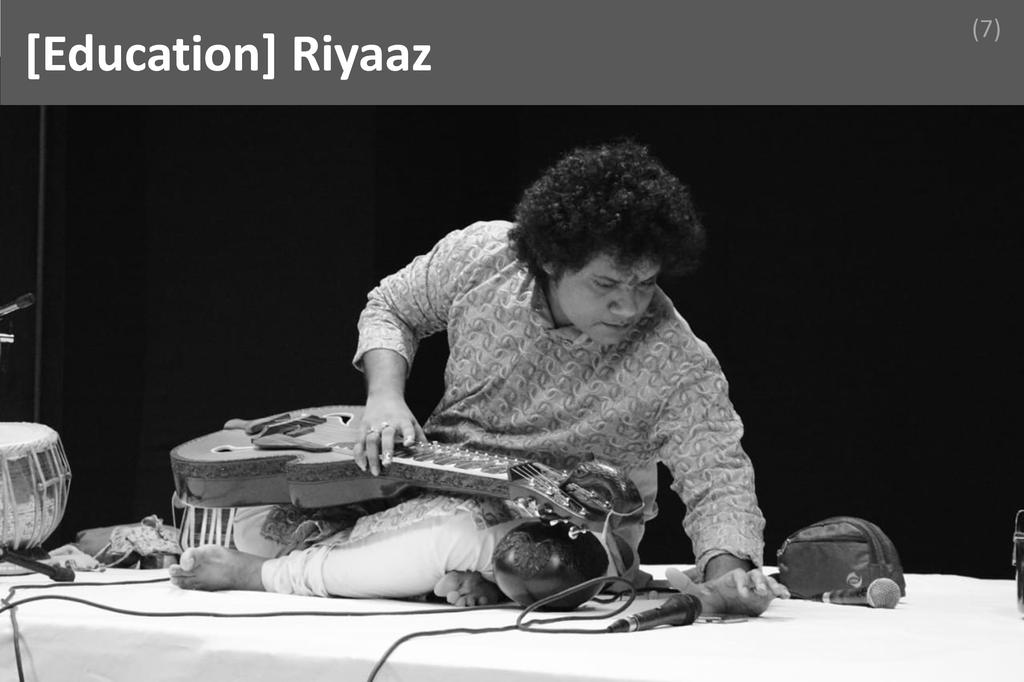
Riyaaz refers to the disciplined, regular, and mindful practice of music, essential for mastering any instrument, including the Veena. It involves repetitive exercises, improvisation, and refinement of technique. In both academic study and professional performance, Riyaaz is the cornerstone that transforms theoretical knowledge into practical skill and artistic expression.
Understanding and embracing Riyaaz is crucial for anyone aspiring to excel in playing the Veena. It is through consistent and focused practice that foundational techniques, such as finger placement, string plucking, and intricate gamakas, become second nature. Riyaaz not only sharpens technical proficiency but also deepens the musician’s emotional connection to the instrument and the music itself. For professionals, this habitual practice ensures readiness for performances, auditions, and recordings, while also fostering creativity and adaptability. Over time, Riyaaz cultivates discipline, patience, and resilience, qualities that are indispensable for a sustainable and successful career in music. Ultimately, it bridges the gap between learning and mastery, enabling musicians to reach their full artistic potential.
Consider a professional Veena player preparing for a major concert. Each day, she dedicates several hours to Riyaaz, focusing on perfecting complex ragas and experimenting with improvisational passages. During her practice, she identifies subtle flaws in her technique, such as uneven tempo or unclear articulation, and methodically works to correct them. This rigorous routine not only enhances her technical command but also boosts her confidence and stage presence. When she finally performs, her audience experiences seamless transitions, expressive nuances, and a captivating musical narrative—all made possible by her unwavering commitment to Riyaaz. Her daily practice transforms theoretical understanding into a polished, professional performance.
Gharana
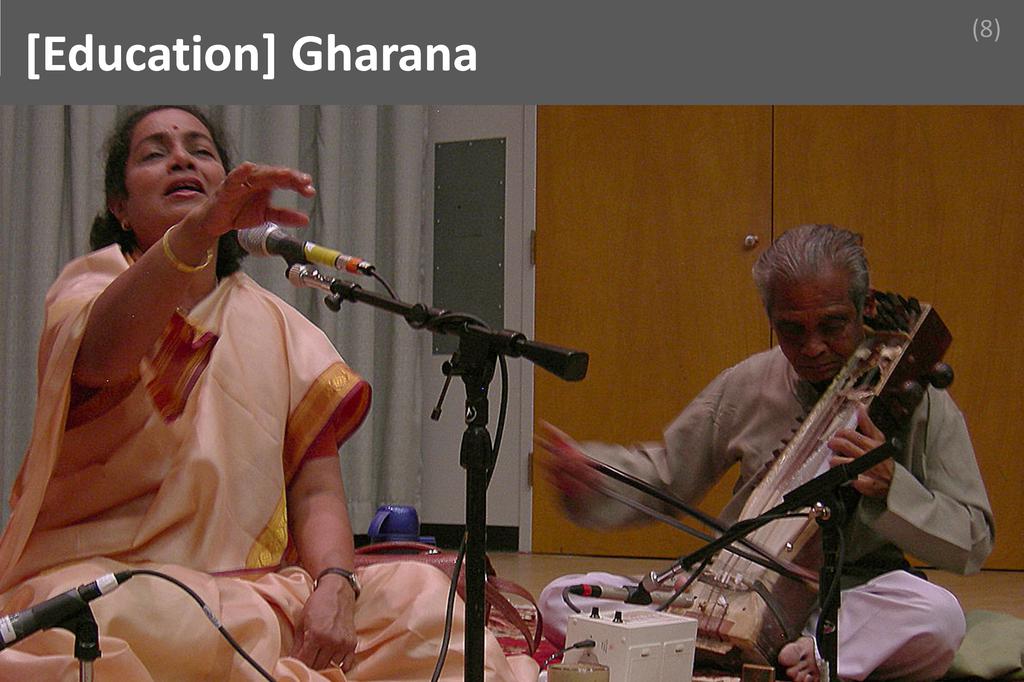
A "Gharana" is a distinctive school or lineage of musical thought, style, and pedagogy in Indian classical music, passed down through generations. For Veena players, understanding Gharana is essential, as it shapes their technique, repertoire, and interpretation, forming a critical part of both academic study and professional expertise.
Learning about Gharana is vital for anyone aspiring to master the Veena because it provides a structured framework for musical expression and technical proficiency. Each Gharana offers unique approaches to fingering, ornamentation, and improvisation, which are crucial for developing a personal style while maintaining authenticity. For professionals, this foundational knowledge not only enhances their performance quality but also deepens their understanding of the historical and cultural context of their art. Over the long term, a strong grasp of Gharana traditions enables Veena players to innovate responsibly, teach effectively, and participate meaningfully in collaborative projects, ensuring their relevance and adaptability in the evolving landscape of classical music.
Consider a Veena artist preparing for a major concert. Drawing on their understanding of the Tanjore Gharana, they select compositions and improvisational techniques that reflect the Gharana’s signature melodic patterns and rhythmic intricacies. During rehearsals, this theoretical grounding allows the artist to communicate effectively with accompanying musicians, ensuring stylistic coherence. On stage, the artist’s nuanced application of Gharana-specific ornamentations and phrasing not only distinguishes their performance but also resonates with connoisseurs familiar with the tradition. This daily integration of Gharana knowledge supports both artistic integrity and professional credibility, demonstrating how theoretical mastery directly informs and elevates practical musicianship.
Music Theory
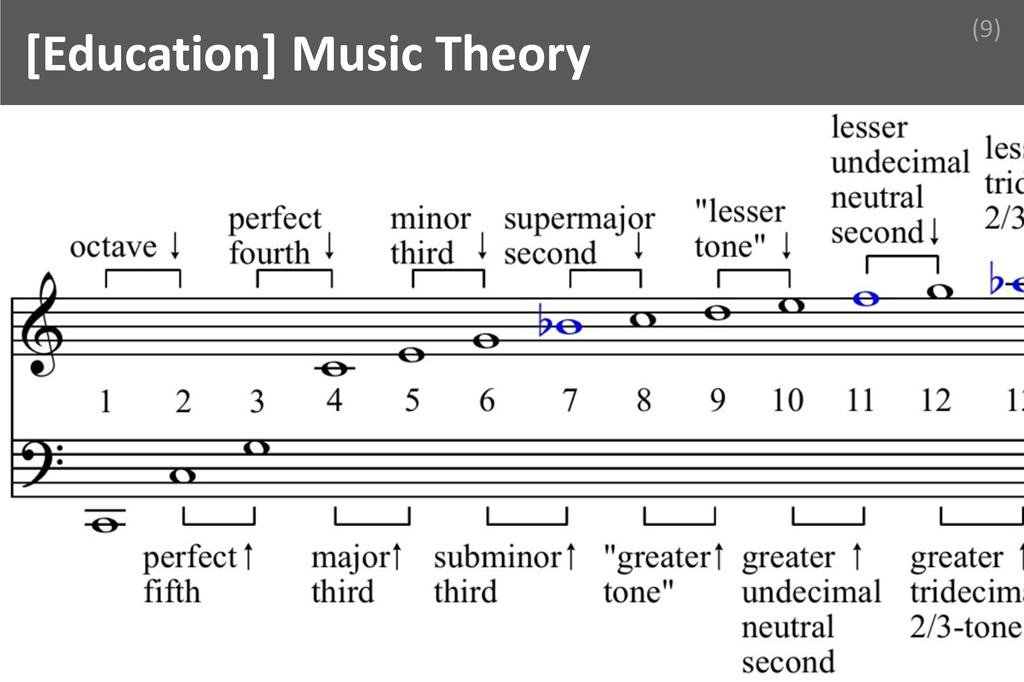
Music theory is the study of the fundamental elements that make up music, including melody, rhythm, harmony, and structure. For those learning or performing on the Veena, music theory provides the essential framework to understand compositions, improvise creatively, and communicate effectively with other musicians in both academic and professional settings.
A solid grasp of music theory is indispensable for anyone aspiring to master the Veena. It empowers musicians to decode complex ragas, understand tala patterns, and interpret compositions with depth and accuracy. This foundational knowledge not only enhances technical proficiency but also nurtures creativity, enabling performers to improvise and compose original pieces. In professional contexts, music theory facilitates collaboration with other artists, participation in ensemble performances, and adaptation to diverse musical genres. Over time, this expertise opens doors to teaching, composing, and performing at advanced levels, ensuring sustained growth and versatility in a competitive field. Ultimately, music theory transforms a Veena player from a mere practitioner into a well-rounded musician with a lifelong capacity for learning and innovation.
Consider a Veena artist preparing for a classical concert. Drawing on their understanding of music theory, they analyze the chosen raga’s scale, identify characteristic phrases, and plan improvisational segments that highlight the raga’s unique mood. During rehearsal, they apply knowledge of rhythm cycles to synchronize with percussionists, ensuring seamless coordination. If a fellow musician suggests modulating to a related raga mid-performance, the Veena player’s theoretical background allows them to adapt instantly, maintaining musical coherence. This daily application of music theory not only enhances the quality of their performance but also builds confidence, enabling them to handle unexpected changes and collaborate effectively with other artists, ultimately elevating the entire musical experience for both performers and audience.
Skills
Focus and Discipline
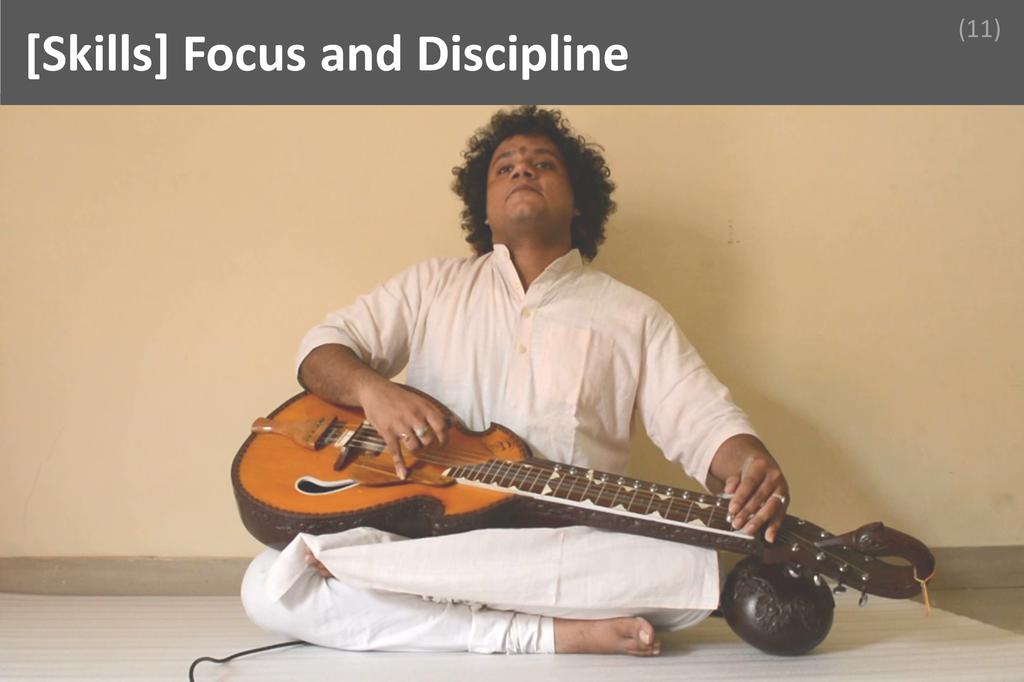
Focus and discipline refer to the unwavering attention and consistent self-control required to master complex tasks over time. For a professional Veena player, these qualities are vital for learning intricate compositions, perfecting technique, and maintaining the mental clarity needed to perform with precision and emotional depth.
Focus and discipline are the backbone of a Veena player’s growth and artistry. By dedicating themselves to regular, mindful practice, musicians refine their skills, memorize complex ragas, and develop the stamina needed for lengthy performances. Clients and employers value these traits because they ensure reliability, consistent improvement, and the ability to deliver high-quality performances under pressure. Cultivating focus and discipline involves setting clear goals, maintaining a structured practice schedule, and embracing patience through repetitive learning. Over time, these habits not only enhance technical proficiency but also foster creativity and confidence, making the musician a more compelling and dependable performer.
Imagine a Veena player preparing for a prestigious concert where they must perform a challenging new composition. Despite initial struggles with certain passages, the musician applies focus and discipline by breaking down the piece into manageable sections and practicing each part methodically every day. They resist distractions, adhere to their practice routine, and review their progress regularly. On the day of the concert, their disciplined preparation pays off as they deliver a flawless, expressive performance. The audience and organizers are deeply impressed, recognizing the musician’s dedication and professionalism. This scenario highlights how focus and discipline enable a Veena player to overcome obstacles, achieve artistic excellence, and build a strong reputation in their field.
Passion and Perseverance
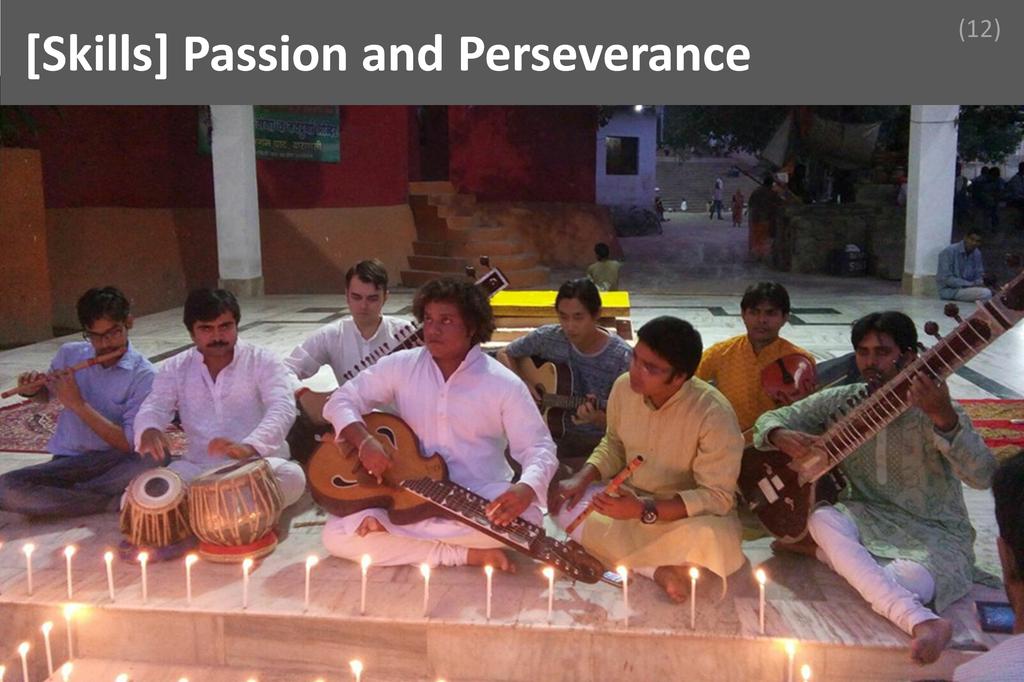
Passion and perseverance refer to a deep, enduring enthusiasm for one’s craft, combined with the unwavering determination to overcome obstacles and continue progressing despite setbacks. For a Veena player, this quality fuels consistent practice, inspires creative expression, and sustains motivation through the demanding journey of mastering the instrument.
Passion and perseverance directly enhance a Veena player’s performance by fostering resilience during challenging practice sessions and performances. Clients and employers value musicians who demonstrate this quality because it ensures reliability, continuous improvement, and a genuine connection to the art form. Cultivating this skill involves setting meaningful goals, embracing feedback, and maintaining a positive attitude even when progress seems slow. Over time, the persistent pursuit of excellence leads to refined technique, deeper musicality, and the ability to handle the pressures of live performance or recording sessions. By nurturing both passion and perseverance, a Veena player not only elevates their own artistry but also inspires confidence in collaborators and audiences alike.
Imagine a Veena player preparing for a prestigious concert who encounters a complex composition that proves difficult to master. Despite repeated mistakes and moments of frustration, the musician’s passion for the Veena and commitment to excellence drive them to practice tirelessly, seek guidance from mentors, and experiment with new techniques. Over weeks of dedicated effort, their perseverance pays off as they gradually conquer the challenging sections and infuse the piece with personal expression. On the day of the concert, the musician delivers a captivating performance, earning praise from both the audience and critics. This success is a direct result of their unwavering passion and perseverance, transforming a daunting challenge into a career-defining achievement.
Law of Karma
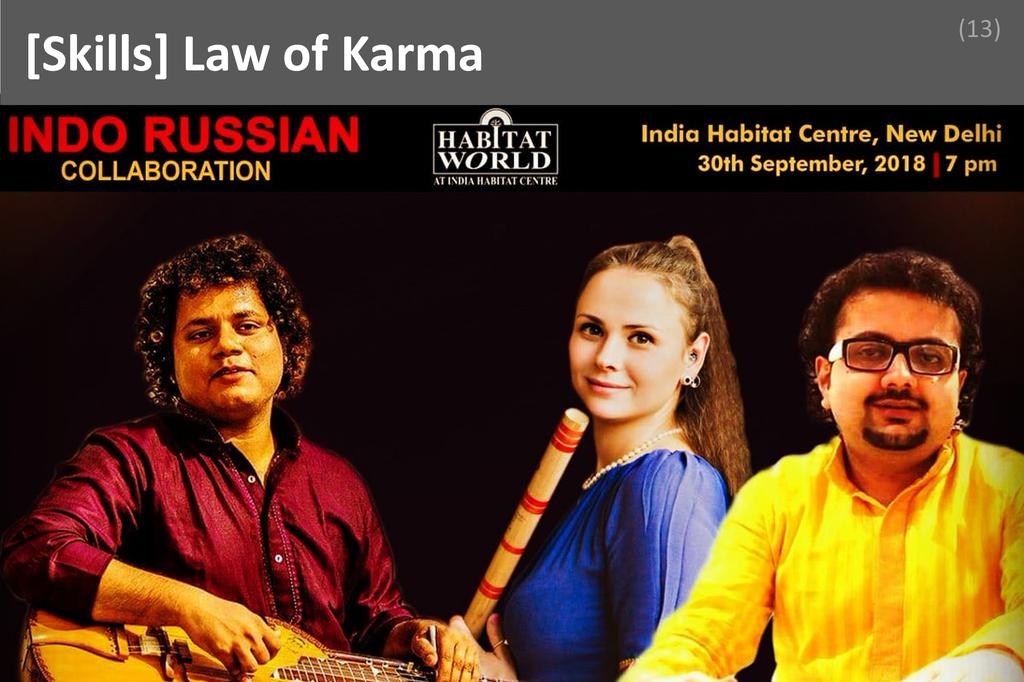
The "Law of Karma" is the principle that every action, intention, and effort produces a corresponding result, shaping future experiences and outcomes. In the context of playing Veena, this law underscores the importance of consistent practice, mindful performance, and ethical behavior, all of which directly influence a musician’s growth and reputation.
Embracing the Law of Karma as a Veena player means understanding that every dedicated hour of practice, every thoughtful interpretation, and every respectful interaction with peers and audiences will yield positive results over time. This mindset not only enhances technical proficiency but also fosters resilience and patience, qualities highly valued by clients, employers, and collaborators. Audiences and event organizers appreciate musicians who demonstrate reliability, humility, and a commitment to continuous improvement, all of which are nurtured by a karmic approach. To cultivate this skill, one must consistently reflect on their intentions, maintain discipline in their practice routines, and approach each performance with sincerity and gratitude, trusting that these efforts will eventually be rewarded.
Imagine a Veena artist preparing for a prestigious concert who faces unexpected technical difficulties during rehearsal. Instead of succumbing to frustration, the artist recalls the Law of Karma and chooses to respond with calm determination, investing extra time to resolve the issue and perfect their performance. This positive, proactive attitude not only leads to a flawless concert but also earns the admiration of organizers and fellow musicians. The artist’s reputation for professionalism and perseverance grows, resulting in more invitations and opportunities. In this way, the Law of Karma directly influences the trajectory of their career, demonstrating how mindful actions and intentions can transform challenges into lasting success.
Social Media

Social media refers to digital platforms and applications that enable users to create, share, and interact with content and communities online. For a professional playing the veena, social media serves as a vital tool for self-promotion, audience engagement, networking, and sharing performances with a global audience, amplifying their reach and influence.
Mastering social media significantly enhances a veena player’s career by providing direct access to audiences, potential collaborators, and event organizers. Clients and employers value this skill because it demonstrates initiative, adaptability, and the ability to build a personal brand. Through consistent content sharing, live performances, and interactive sessions, a veena artist can showcase their expertise and personality, attracting concert opportunities, sponsorships, and students. Cultivating this skill involves staying updated with platform trends, learning content creation techniques, and engaging authentically with followers. Over time, a strong social media presence can transform a veena player from a local performer into a recognized artist with international appeal, opening doors to diverse career opportunities.
Imagine a veena player preparing for a major concert, only to face last-minute venue restrictions that limit in-person attendance. By leveraging their social media platforms, the artist quickly announces a live-streamed performance, ensuring that fans worldwide can still experience the event. The real-time interaction through comments and shares not only salvages the concert but also expands the artist’s audience far beyond geographical boundaries. This adaptability, powered by social media proficiency, turns a potential setback into a resounding success, demonstrating the platform’s critical role in modern performance careers. The artist’s ability to connect, engage, and deliver value online cements their reputation and opens new avenues for future collaborations and performances.
Creativity
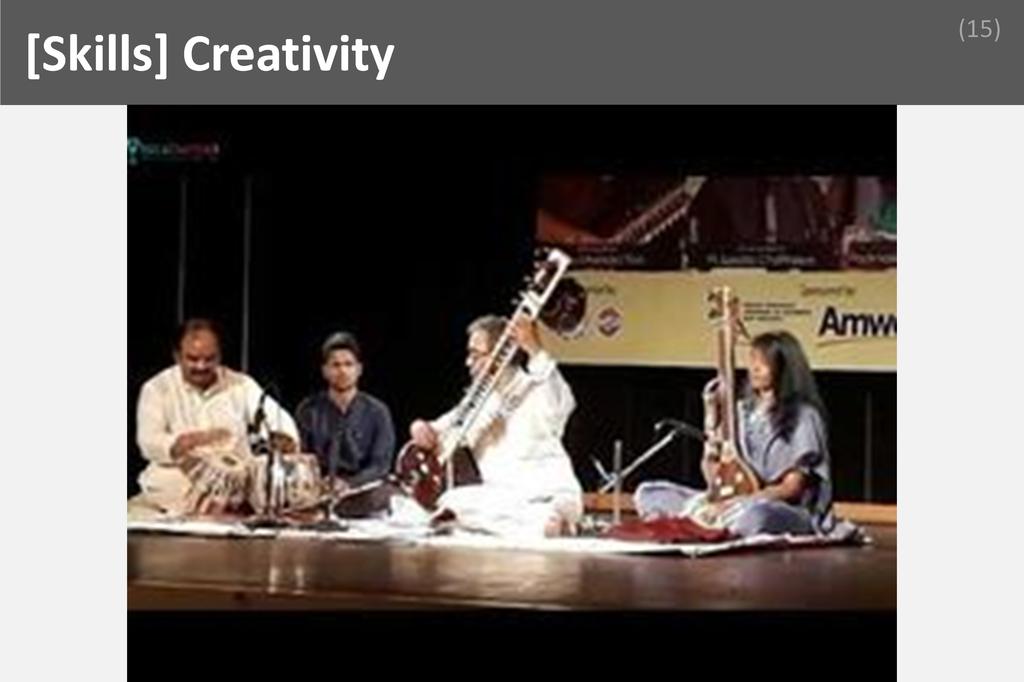
Creativity is the ability to generate original ideas, approaches, or interpretations by combining imagination, intuition, and experience. For a professional playing the Veena, creativity is vital because it enables the musician to craft unique renditions, improvise during performances, and infuse personal expression into traditional compositions, captivating audiences and enriching the art form.
Creativity enhances a Veena player's performance by allowing them to interpret classical ragas in innovative ways, compose original pieces, and adapt to the mood of live audiences. Clients and employers, such as concert organizers or music schools, highly value creative musicians because they bring freshness and distinction to their performances, setting them apart from others. Cultivating creativity involves consistent practice, exposure to diverse musical genres, and a willingness to experiment with new techniques or fusion styles. Over time, engaging with other musicians, attending workshops, and reflecting on feedback can further nurture a Veena player's creative instincts, ensuring their artistry remains dynamic and relevant.
Imagine a Veena player invited to perform at a prestigious cultural festival where the audience expects both tradition and novelty. Midway through the concert, the artist senses the crowd’s energy waning during a well-known raga. Drawing on creativity, the musician seamlessly weaves in unexpected rhythmic patterns and introduces subtle improvisations, blending elements from folk music without compromising the raga’s essence. This inventive approach not only re-engages the audience but also earns critical acclaim for breathing new life into a classic piece. The ability to creatively adapt in the moment transforms a routine performance into a memorable experience, demonstrating the indispensable role of creativity in a successful Veena career.
Positives
Inner Peace
Inner Peace is a state of calmness, contentment, and emotional balance that arises from within, regardless of external circumstances. It is the quiet confidence and serenity that allows individuals to remain centered and composed. In the realm of playing Veena, inner peace nurtures creativity, focus, and a deep connection to the music.
The pursuit of inner peace through playing Veena transforms the profession into a deeply fulfilling journey. This sense of tranquility allows musicians to immerse themselves fully in their art, free from distractions and anxieties. As a result, they experience heightened concentration and emotional clarity, which enhances both their technical skill and expressive power. Inner peace fosters resilience, enabling Veena players to navigate challenges and setbacks with grace. This positive state of mind not only boosts job satisfaction but also encourages continuous growth, as musicians are more open to learning and self-improvement. Each day, professionals in this field find joy and meaning in their practice, knowing that their music is both an expression and a source of inner harmony.
Imagine a Veena artist preparing for an important concert. As the day approaches, external pressures and expectations could easily become overwhelming. However, through years of dedicated practice and mindful engagement with the instrument, the artist has cultivated a profound sense of inner peace. Sitting quietly before the performance, she closes her eyes and lets her fingers gently trace the strings, feeling the vibrations resonate within her. In that moment, all worries fade away, replaced by a deep calm and focus. When she steps onto the stage, her music flows effortlessly, touching the hearts of the audience. This experience of inner peace not only elevates her performance but also leaves her with a lasting sense of fulfillment and joy.
Music Therapy

Music Therapy is a clinical and evidence-based practice that uses music to address physical, emotional, cognitive, and social needs of individuals. It involves creating, singing, moving to, and listening to music to improve health and well-being. In the context of playing Veena, music therapy fosters healing, relaxation, and emotional expression, making the profession deeply rewarding. The soothing tones and intricate melodies of the Veena naturally lend themselves to therapeutic experiences, allowing both the musician and the audience to experience profound emotional relief and mental clarity. This positive influence not only enriches the lives of listeners but also enhances the personal fulfillment of the Veena player.
The therapeutic power of music is a significant advantage for those pursuing a career in playing Veena. Engaging with the instrument daily allows professionals to immerse themselves in a calming and restorative environment, which can reduce stress and promote mental well-being. This ongoing exposure to the healing qualities of music leads to higher job satisfaction, as Veena players witness firsthand the positive effects their art has on themselves and others. The sense of purpose derived from helping listeners find solace and emotional balance through music can be incredibly motivating. Over time, this benefit fosters personal growth, resilience, and a deep connection to the cultural and spiritual roots of the Veena, making each day in this career both meaningful and inspiring.
Imagine a Veena artist who regularly performs at a local wellness center, where patients dealing with anxiety and chronic pain come for relief. During a session, the gentle resonance of the Veena fills the room, creating a serene atmosphere. As the music flows, patients visibly relax, their breathing slows, and a sense of peace settles over the group. The artist observes these transformations and feels a profound sense of accomplishment, knowing that her music is not just an art form but a source of healing. This daily interaction with music therapy reinforces her passion for the Veena, reminding her that her career is not only about performance but also about making a tangible difference in people’s lives.
Respect and Recognition
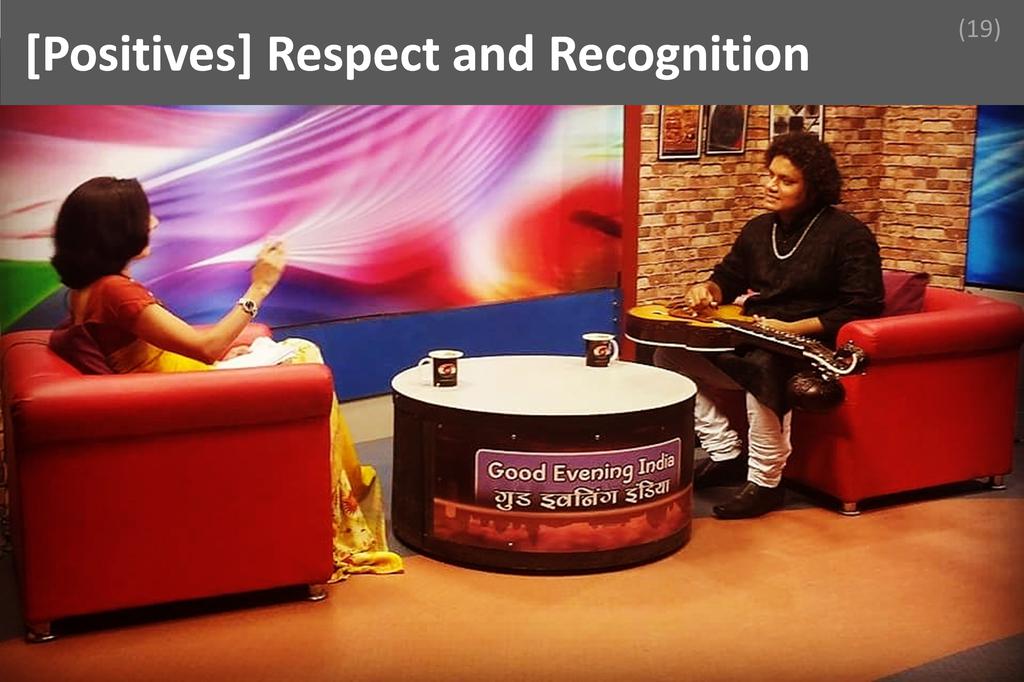
Respect and recognition refer to the admiration, esteem, and acknowledgment received from peers, audiences, and society for one’s skills, dedication, and contributions. In the context of playing the veena, this appreciation validates the musician’s hard work and artistry, fostering a sense of pride and belonging within the cultural and musical community.
The respect and recognition garnered by veena players serve as powerful motivators, enhancing both personal and professional fulfillment. When musicians are celebrated for their talent and commitment, it boosts their confidence and inspires them to further hone their craft. This positive reinforcement not only increases job satisfaction but also opens doors to new opportunities, such as invitations to perform at prestigious events or collaborate with other artists. Daily, veena players experience this benefit through the applause of audiences, the admiration of students, and the acknowledgment from fellow musicians. Such recognition affirms their role as cultural ambassadors, encouraging them to preserve and promote the rich heritage of veena music.
Imagine a veena artist performing at a renowned music festival, captivating the audience with intricate melodies and emotive expressions. As the final note fades, the hall erupts in a standing ovation, and the artist is approached by aspiring musicians eager to learn from their expertise. Later, the artist receives heartfelt messages from listeners who were moved by the performance, as well as invitations to conduct workshops and collaborate on new projects. This outpouring of respect and recognition not only validates the artist’s dedication but also fuels a deeper passion for sharing the beauty of the veena with the world, making every moment on stage profoundly rewarding.
Spiritual Aspect of Music
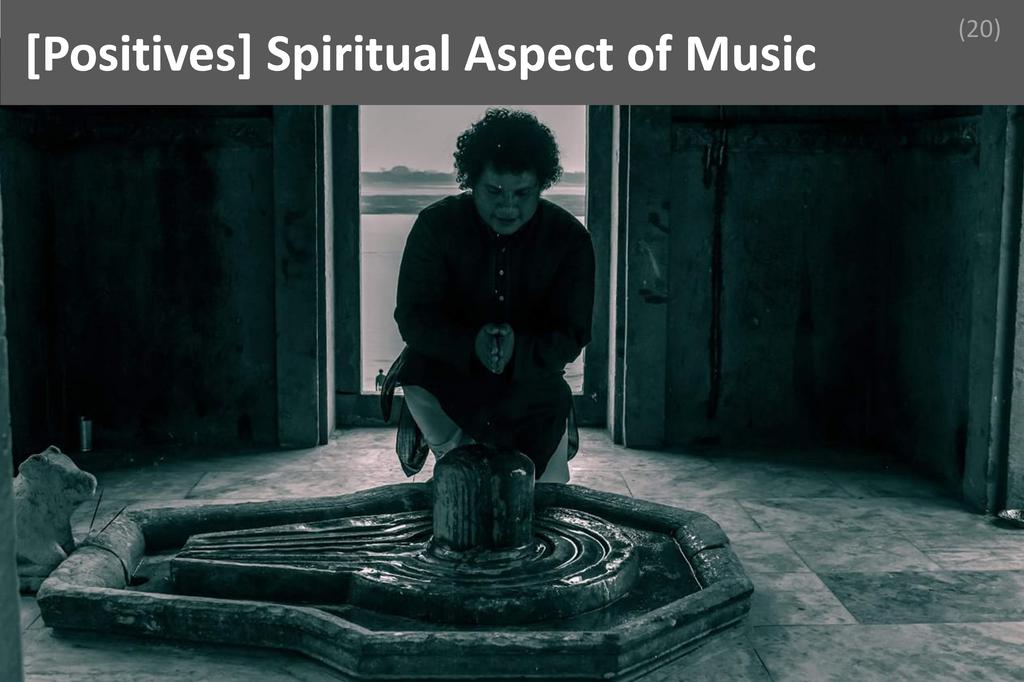
The "Spiritual Aspect of Music" refers to the profound sense of inner peace, connection, and transcendence that arises when engaging deeply with musical expression. It is the experience of music as a bridge between the self and something greater, fostering mindfulness, emotional healing, and a sense of purpose beyond technical mastery or performance.
Embracing the spiritual aspect of music transforms playing the Veena from a mere artistic pursuit into a deeply enriching journey. This dimension infuses daily practice and performance with meaning, allowing musicians to find solace and inspiration even in challenging moments. The sense of connection to tradition, culture, and the divine elevates job satisfaction, as each note played becomes an act of devotion and self-discovery. This spiritual engagement nurtures resilience, creativity, and emotional well-being, making the profession more than just a career—it becomes a lifelong path of personal growth. Professionals who experience this benefit often find themselves more motivated, fulfilled, and able to touch the hearts of their audiences in profound ways.
Imagine a Veena artist preparing for a concert dedicated to a revered spiritual festival. As she tunes her instrument and begins her practice, she feels a deep sense of calm and presence envelop her. The intricate melodies flow effortlessly, and she senses a connection not only to her own emotions but also to the lineage of musicians who came before her. During the performance, the audience is visibly moved, some even closing their eyes in meditation. The artist herself feels uplifted, as if the music is channeling something greater than herself. In that moment, the spiritual aspect of music transforms the stage into a sacred space, leaving both performer and listeners profoundly fulfilled.
Challenges
Lack of Right Guru
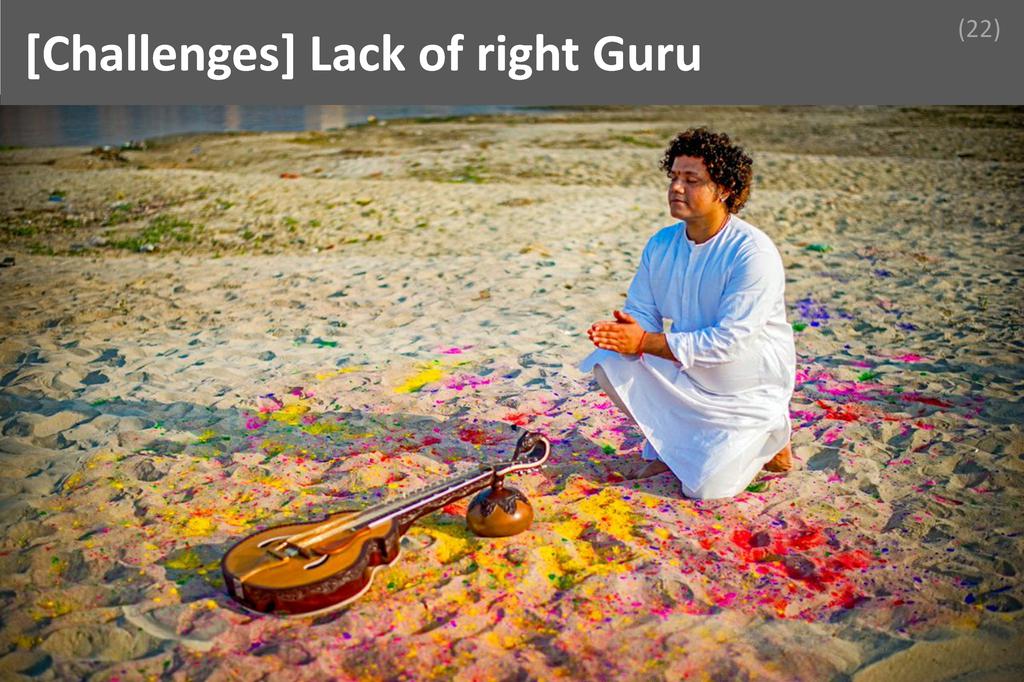
Lack of Right Guru in the context of Playing Veena refers to the absence of a knowledgeable, experienced, and compatible teacher who can guide a learner’s musical journey. This challenge is demanding because the nuances, techniques, and traditions of Veena playing are best transmitted through personalized mentorship and direct guidance.
The absence of a suitable guru can leave Veena professionals feeling isolated, uncertain, and stagnant in their progress. Without expert feedback, it becomes difficult to correct mistakes, refine technique, or understand the deeper aspects of ragas and compositions. This situation demands resilience, as self-motivation and discipline must replace the structured learning and encouragement a guru provides. Successful professionals often navigate this constraint by seeking alternative learning resources, such as online tutorials, workshops, and peer networks. They may also record their practice sessions for self-assessment or connect with distant mentors through virtual platforms. By cultivating a habit of critical self-evaluation and remaining open to feedback from various sources, they continue to grow despite the lack of direct, traditional guidance.
Consider a dedicated Veena player living in a remote area where access to accomplished gurus is limited. Determined to advance, she turns to digital platforms, attending virtual masterclasses and joining online communities of fellow Veena enthusiasts. She regularly uploads her practice videos to receive constructive feedback from experienced musicians worldwide. By actively participating in online discussions and seeking out rare recordings, she broadens her understanding of the instrument’s repertoire and techniques. Over time, her persistence pays off, as she not only hones her skills but also develops a unique style influenced by diverse inputs. Her journey demonstrates that, even without a traditional guru, resourcefulness and commitment can lead to mastery in Veena playing.
Initial Struggle
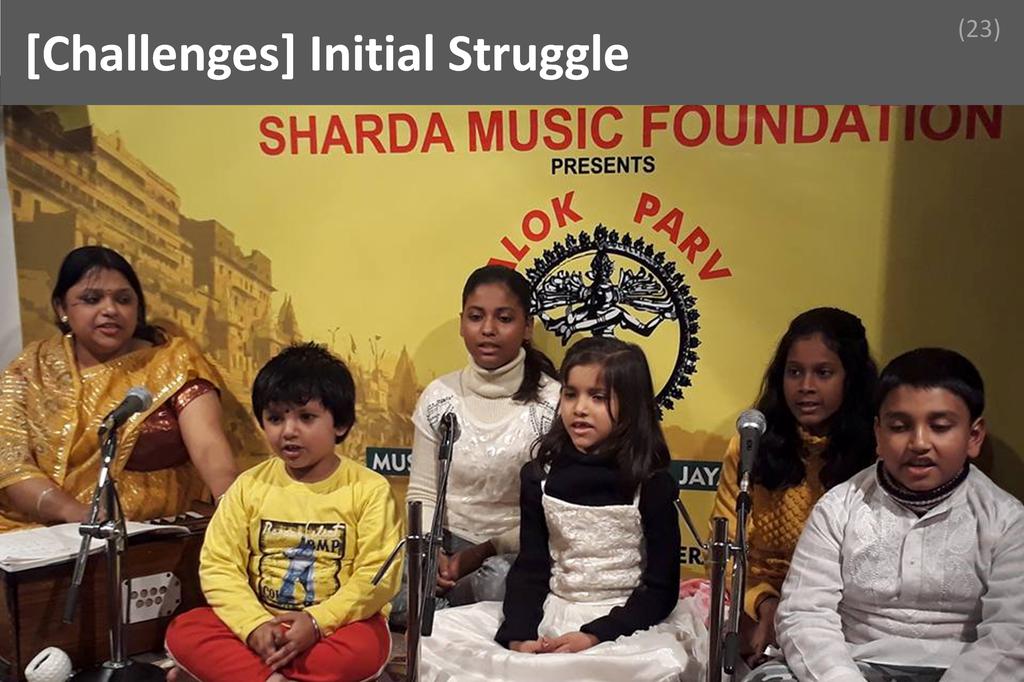
Initial Struggle in playing the Veena refers to the early phase when learners grapple with mastering finger placement, hand coordination, and producing clear notes. This period is demanding because the instrument’s complexity requires both physical dexterity and mental focus, making progress slow and often frustrating for beginners and aspiring professionals.
The initial struggle with the Veena can significantly affect daily practice and performance, often leading to self-doubt and discouragement. The physical discomfort from developing calluses, the challenge of synchronizing both hands, and the slow pace of improvement can test one’s patience and commitment. This phase demands resilience, as consistent effort is essential despite minimal visible progress. Successful professionals manage this constraint by setting realistic expectations, embracing incremental achievements, and maintaining a disciplined practice routine. They often seek guidance from experienced mentors, allowing them to refine their technique and stay motivated. Over time, these strategies help transform the initial struggle into a foundation for long-term mastery and confidence in their musical journey.
Consider the journey of a young Veena artist who, during her early years, found it difficult to produce clean notes and maintain rhythm. Despite hours of daily practice, her progress seemed negligible, and frustration mounted as she compared herself to more advanced peers. Instead of giving up, she sought feedback from her teacher, who encouraged her to focus on small, achievable goals and to celebrate minor improvements. By recording her practice sessions, she tracked subtle progress over weeks, which boosted her confidence. Gradually, her persistence paid off, and the once-daunting initial struggle became a testament to her dedication. Today, she credits those challenging beginnings for instilling the discipline and resilience that define her artistry.
A Day Of
Playing Veena
The day begins not with the clatter of keyboards or the hum of office chatter, but with the resonant, honeyed tones of the veena filling a quiet room. For a professional veena player, each workday is a blend of discipline, artistry, and devotion, unfolding in a rhythm as intricate as the ragas they perform. The environment is both serene and charged with creative energy, where the boundaries between practice and performance blur, and every hour is shaped by the pursuit of musical excellence. The pace ebbs and flows, from solitary morning meditations to the vibrant exchange of ideas with fellow musicians, all culminating in the satisfaction of a day spent in harmony with one’s craft.
As the first light filters through the window, the veena practitioner begins the day with a quiet ritual of tuning and gentle warm-up exercises. This early morning phase is dedicated to aligning the mind and body with the instrument, reviewing compositions, and practicing foundational scales. The stillness of the hour allows for deep concentration, setting a contemplative tone that anchors the rest of the day. The musician may also spend time reflecting on upcoming performances or lessons, ensuring that both instrument and spirit are finely attuned.
By mid-morning, the focus shifts to the heart of the day’s work: rigorous practice sessions and repertoire development. This is when the veena player delves into complex ragas, polishes intricate passages, and experiments with improvisation. The intensity of this period demands both technical precision and emotional expression, as the musician pushes the boundaries of their skill. Whether preparing for a concert, recording, or teaching, this is the time when artistry is honed and new ideas are brought to life.
The afternoon brings opportunities for collaboration, whether through ensemble rehearsals, student instruction, or live performances. The veena player might join other instrumentalists or vocalists to synchronize compositions, exchange feedback, and refine group dynamics. Alternatively, this time may be devoted to teaching, guiding students through the nuances of technique and interpretation. The energy is more interactive, with the musician drawing inspiration from the shared pursuit of musical excellence and the collective joy of creation.
As the day winds down, the veena professional turns to reflection and administrative tasks. This is a quieter, introspective phase, spent reviewing recordings, documenting progress, and making notes on areas for improvement. The musician may also research new compositions, respond to correspondence, and plan the next day’s practice or engagements. The evening closes with a sense of fulfillment, as the echoes of the day’s music linger, and preparations are made for another day devoted to the art of the veena. |


 Home
Home Abroad
 Plan
Plan Philosophy
 Seminar
 Pages
Pages Advisors
 Testimonials












 Workshop
 Discuss
 Meet
Meet
 Advisor
 Story
Story
 Fine Print
 Links
Links
 Blog
Blog
 Follow
