


 Home
Home Abroad
 Plan
Plan Philosophy
 Seminar
 Pages
Pages Advisors
 Testimonials
Value Investing
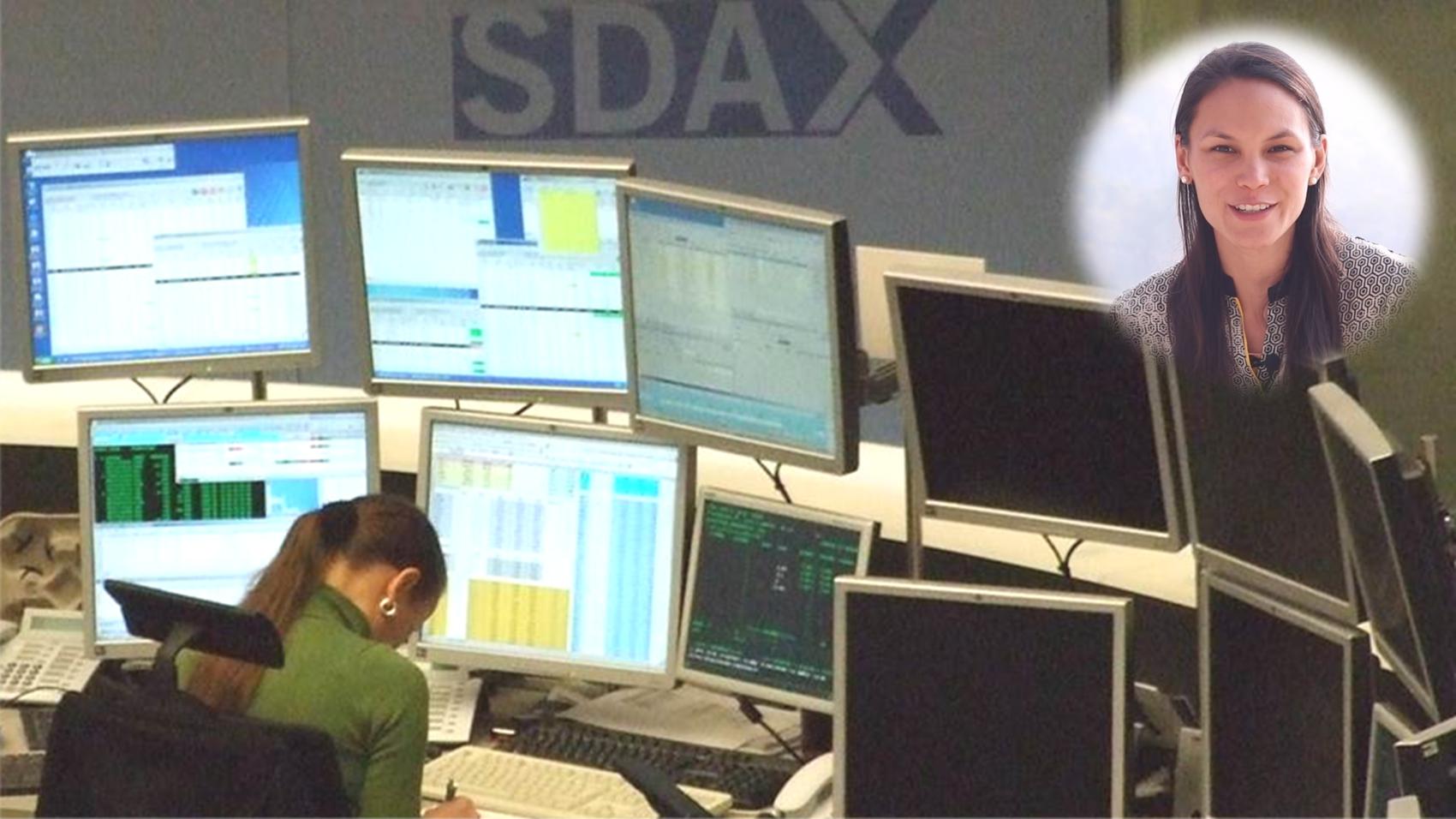
Shaleen Seth | Vice President Research & Analytics | Seers Group


|
What is Value Investing?
A Career in Value Investing is very intriguing. Internet is brimming with pages on How to get into Value Investing, while one should first understand What is a Career in Value Investing. While anyone can have an opinion on what Value Investing entails; only a real professional can really explain it.
Vice President Research & Analytics Shaleen Seth has 5 years & 6 months of professional experience in Value Investing. Vice President Research & Analytics Shaleen Seth defines Value Investing as:
Value investing is an investment paradigm that involves buying securities that appear underpriced by some form of fundamental analysis.
How Vice President Research & Analytics Shaleen Seth got into Value Investing?
After my graduation, I joined my father's business of Value Investing and while working in Value Investing, I did International Business Organization and M Com from IGNOO University. After that, I Started a Portfolio Management Company with the name of Seers Fund Management and I am the Vice President Research & Analytics.
Vice President Research & Analytics Shaleen Seth's Talk on Value Investing |
|
 | |
The Journey of Value Investing What Is Value Investing     Education    Skills        Positives     Challenges   A Day Of The afternoon brings a shift from solitary analysis to collaborative action. Team meetings are convened to debate findings, challenge each other’s conclusions, and refine investment strategies. Ideas are stress-tested in spirited discussions, and consensus is built around which stocks to add, hold, or trim. If conviction is high and the price is right, trades are executed with careful attention to position sizing and risk management. This is also the time to respond to any unexpected market developments, ensuring the portfolio remains aligned with long-term objectives. As the trading day winds down, the focus turns to reflection and preparation. The value investing professional reviews the day’s decisions, updates research notes, and tracks the performance of existing holdings. Administrative tasks are handled efficiently, ensuring compliance and documentation are up to date. The evening is often spent reading industry reports, exploring new investment ideas, and setting priorities for tomorrow’s research. With the markets closed, there is space to think strategically, ensuring that each day’s work builds toward a portfolio grounded in discipline, insight, and long-term value. | |
Install the LifePage App to:
- (for Free) Watch Vice President Research & Analytics Shaleen Seth’s full Value Investing Career Talk
- ₹ Do a Self Assessment on Value Investing to calculate your Dream Index, which is defined as:
According to Shaleen Seth your chances of success in Value Investing is __%
- Access your personalized Dream Index Report which will have all your Dream Indices sorted in descending order.


How to get into
Value Investing?
If you are want to get into Value Investing, start by investing in a Career Plan.
The 14 hour process, guided by a LifePage Career Advisor, will help you introspect and check whether your interest in Value Investing is merely an infatuation or is it truly something you wish to do for the rest of your life.
Next, your Career Advisor will help you document how you can get into Value Investing, what education and skills you need to succeed in Value Investing, and what positives and challenges you will face in Value Investing.
Finally, you will get a Career Plan stating which Courses, Certifications, Trainings and other Items you need to do in the next 7 years to become world’s best in Value Investing.
LifePage Career Plan
14 hour personalized guidance program


Your LifePage Career Advisor facilitates your guided introspection so that you systematically explore various Career options to arrive at a well thought out Career choice.
Next: your Advisor helps you figure out how you will get into your chosen Career and how will you develop the skills needed for success in your Chosen Career.
LifePage Plan will not stop at saying "to become an Architect study Architecture". It will guide you on which Certifications, Trainings and Other items you need to do along with your Architecture education to become the world's best Architect.
Links for this Talk
Vice President Research & Analytics Shaleen Seth's LifePage:
[LifePage]
https://www.lifepage.in/page/shaleenseth
LifePage Career Talk on Value Investing

[Career]
https://www.lifepage.in/careers/value-investing
[Full Talk]
https://lifepage.app.link/20181013-0002

[Trailer]
https://www.youtube.com/watch?v=_aXRZFD9bHs
(Value Investing, Shaleen Seth, Seers Group, Vice President Research & Analytics, Investment, Finance, Business Development, Profit Making, Business, Accounting, Economics)
Similar Talks

Financial Management
Kapil Rawat
Financial Mgmt Associate | Citibank - New York, London, Dublin & Delhi
Financial Mgmt Associate | Citibank - New York, London, Dublin & Delhi
[ 1 year & 6 months Experience ]
Financial Management means planning, organizing, directing and controlling the financial activities such as procurement and utilization of funds of the enterprise.
"I did MBA from IESE Business School, Barcelona. After MBA I joined Citibank’s Financial Management Associate program in New York."
|
|
|
Financial Trading
Mar Michelle Häusler
Credit Flow Trader | JP Morgan, UBS
Credit Flow Trader | JP Morgan, UBS
[ 6 years Experience ]
Financial Trading is buying and selling of financial instruments such as stocks, bonds, commodities, derivatives, and mutual funds.
"I am a graduate in Economics from University of Bath, UK. I worked for JP Morgan & UBS as a Financial Trader for a couple of years before taking freelancing work. Currently, I handle independent financial assignments for various clients."
|
|
|

Internal Audit
Harshit Gupta
Internal Auditor | Ernst & Young New Delhi
Internal Auditor | Ernst & Young New Delhi
[ 3 years & 9 months Experience ]
Internal auditing is an Internal Operation where one assists the management in finding flaws, controls and ways to perform more efficiently. The word Audit means to check and therefore, Internal Auditing is the performing of that function of checking in an Organization.
"I am a Chartered Accountant. I did my schooling from St Josephs Academy, Dehradun. I then studied Commerce at and graduated from Delhi University. I completed studying Chartered Accountancy in 2013. I then, did a few internships. Thereafter, I started working at Ernst & Young at Delhi office as a Consultant in Internal Auditing."
|
|
|

Stock Broking
Peter Dixon
Stock Broker | Painter Smith & Amberg
Stock Broker | Painter Smith & Amberg
[ 9 years Experience ]
Stockbroking is buying and selling of Financial Securities such as stocks shares and bonds through the stock market by a dealer (stockbroker) who acts as an agent on behalf of clients wishing to buy or sell securities.
"I did my graduation in finance from California State University, San Bernardino. I worked at a bank called Wells Fargo as a teller during my graduation.I moved on to become a stock broker at Wells Fargo after obtaining my License from the State of California. I also worked at Painter Smith & Amberg as a Stock Broker."
|
|
|

Asset Sales
Arjun Lal
Sales Manager | ICICI Bank, Goa
Sales Manager | ICICI Bank, Goa
[ 8 years & 4 months Experience ]
Assets are related to loans and in asset sales, an individual is required to sell loans. The Loan Portfolio includes home loans, car loans, personal loans, credit cards, loans against property and gold loans. An asset manager needs to understand the customers asset requirements before offering them a particular loan.
"After completing my B Sc in Physical Education, I did my M B A from The National Institute of Management, Kolkata. I then got selected for ICICI Bank as an Asset Sales Manager and then persued my M A in Education from Azim Premji University."
|
|
|

Equity Research
Veena Krishna
Equity Research Analyst | Quest Securities
Equity Research Analyst | Quest Securities
[ 4 years Experience ]
Equity Research primarily means analyzing company's financials, perform ratio analysis, forecast the financials (financial modeling) and explore scenarios with an objective of making BUY/SELL stock investment recommendation.
"I was born and brought up in Mumbai. After completing my education I started my career as a Equity Research Analyst in the company called Quest Securities. "
|
|
|

Financial Management
Mar Michelle Häusler
Team Co-ordinator | The Awaken Love movement
Team Co-ordinator | The Awaken Love movement
[ 3 years Experience ]
Financial management refers to the efficient and effective management of money in such a manner as to accomplish the objectives of the organization.
"I am a graduate in Economics from University of Bath, UK. I then worked at JP Morgan & UBS as Financial Trader for some time. I was dissatisfied with the system and the way things worked. I then embarked on to my spiritual journey and enrolled myself in Schumacher College, UK for MA in Economics for Transition where one learns from ecology, outdoors and economics in a holistic way. I work as a Team Co-ordinator at Awaken Love and also handle independent financial assignments for various clients."
|
|
|

Financial Marketing
Sahil Midha
Sales Manager | Kognitive Marketing, Canada
Sales Manager | Kognitive Marketing, Canada
[ 2 years Experience ]
A financial market is a market in which people trade financial securities, commodities, and value at low transaction costs and at prices that reflect supply and demand. Securities include stocks and bonds, and commodities include precious metals or agricultural products.
"I have done B Tech and M Tech in Mechanical Engineering and then worked as an Assistant Engineer in Power Plant Industry for 4 years. I am working as a Sales Manager at Kognitive Marketing in Canada."
|
|
|

Treasury Management
Vibhash Joshi
Assistant Vice President | General Electric
Assistant Vice President | General Electric
[ 3 years Experience ]
Treasury Management is the process of administering to the financial assets and holdings of a business. The goal of most treasury management departments is to optimize their company's liquidity, make sound financial investments for the future with any excess cash, and reduce or enter into hedges against its financial risks.
"After completing an MBA degree in Finance from MDI, Gurgaon, I joined General Electric in the Treasury department. I am currently serving as Assistant Vice President for GE."
|
|
|

Internal Audit
Naman Jain
Analyst | KPMG
Analyst | KPMG
[ 3 years & 3 months Experience ]
Internal auditing is an independent, objective assurance and consulting activity designed to add value and improve an organization's operations. It helps an organization to accomplish its objectives by systematic, disciplined approach to evaluate and improve the effectiveness of risk management and governance processes. Professionals called internal auditors are employed by organizations to perform the internal auditing activity.
"After doing my schooling from St Norbert School Indore, I did my BBA from Symbiosis Centre for Management Studies, Pune. After that, I worked as a Graphic Designer and Content writer with Cara Cafe and Green Apple Advertisement, Pune. I am working as an Analyst with KPMG taking care of the Internal Audits of the company."
|
|
|

Financial Planning
Saral Agarwal
Founder | Saral Enterprise
Founder | Saral Enterprise
[ 5 years & 2 months Experience ]
Financial Planning is the process of estimating the capital required and determining its competition. It is the process of framing financial policies in relation to procurement, investment and administration of funds of an enterprise.
"After completing my certifications in Finance, I worked with Anand Rathi Securities as a relationship Manager for 1 year. In 2016, I started my own company with the name of Saral Enterprises where I work as an Independent Financial Advisor."
|
|
|

Investment Management
Anant Ramola
Director | Arthaprise Financial Advisors Pvt Ltd
Director | Arthaprise Financial Advisors Pvt Ltd
[ 7 years & 8 months Experience ]
Investment management is the professional asset management of various securities (shares, bonds, and other securities) and other assets (e.g. real estate) in order to meet specified investment goals for the benefit of the investors. An Investment Manager ia an advisor to a client with one overriding goal: to substantially grow the client's portfolio. Investment Managers conduct interviews, research, and statistical analyses of companies, markets, and trends to determine what investments to make or avoid on behalf of their clients.
"After completing my MBA, I worked as a Relationship Manager at ING Vysya for 2.5 years. After that, I worked as Senior Manager at DBS Cholamandalam for a year. Then I worked as Assistant Vice President at Almondz Global for over 4 years. After that, I had a brief stint as a Chief Manager at Kotak Mahindra Bank for a year. Post that, I worked at Ameriprise Financial Services Private Limited as Assistant Vice President for 7 years. In 2018, I started my own venture called Arthaprise Financial Advisors and I am the Co-Founder and Director there."
|
|
|

Wealth Management
Achin Jain
Co-founder | Client Alley
Co-founder | Client Alley
[ 16 years Experience ]
Wealth management is a consultative process whereby the advisor gleans information about the client's wants and tailors a bespoke strategy utilizing appropriate financial products and services.
"I did BE Honours from College of Engineering Roorkee and MBA from Pune University. After my education, I started working with various banks and in 2014, I started my own Wealth Management Company with my friend in the name of Client Alley."
|
|
|

Wealth Management
Dhananjay Kumar
Director | Arthaprise Financial
Director | Arthaprise Financial
[ 15 years & 2 months Experience ]
Wealth management is an investment advisory service that combines other financial services to address the needs of affluent clients. It is a consultative process whereby the advisor gleans information about the client's wants and tailors a bespoke strategy utilizing appropriate financial products and services.
"After completing my graduation, I did wealth management certification from CIEL. I had worked for 15 years with various financial planning and wealth management companies such as Deutsche Bank, Aditya Birla Management etc. I have started my own company for the same in 2018 by the name of Arthaprise Financial."
|
|
|

Financial Control
Hang Mai
Management Controller | Servier
Management Controller | Servier
[ 5 years Experience ]
A financial controller is responsible for ensuring that all accounting allocations are appropriately made and documented. In smaller companies, the controller may also perform cash management functions and oversee accounts payable, accounts receivable, cash disbursements, payroll and bank reconciliation functions.
"I finished my schooling from Vietnam after which I went to frnace from where I did my Graduation in Biology and Masters in Business Management.I started my career with Ernst & Youngas Auditor. I worked with one more for 1 year as Counselor.Currently I am working SERVIER as a Financial Controller."
|
|
|
[Install the LifePage App to access all Talks]


 Workshop
 Discuss
 Meet
Meet
 Advisor
 Story
Story
 Fine Print
 Links
Links
 Blog
Blog
 Follow
