Career Counselling 2.0 HomeHomeCareer Counselling 2.0 AbroadAbroadCareer Counselling 2.0 PlanPlanCareer Counselling 2.0 | TalksTalksCareer Counselling 2.0 PhilosophyPhilosophyCareer Counselling 2.0 SeminarSeminarCareer Counselling 2.0 PagesPagesCareer Counselling 2.0 AdvisorsAdvisorsCareer Counselling 2.0 TestimonialsTestimonials

Astronomy Popularization

Astronomer R C Kapoor talks about Astronomy Popularization course, what is Astronomy Popularization and other details about a Career in Astronomy Popularization.


Astronomy Popularization

R C Kapoor | Astronomer | Various Assignments


What is Astronomy Popularization?


Astronomy Popularization is a great Career option. One should first understand What a Career in Astronomy Popularization entails before investing time and effort to figure out How to start a Career in Astronomy Popularization. While anyone can have an opinion on what Astronomy Popularization entails; only a real professional can really explain it.

Astronomer R C Kapoor is an experienced professional with 48 years & 1 month in Astronomy Popularization. Astronomer R C Kapoor describes Astronomy Popularization as:

Astronomy is such a fascinating subject that attracts not only students but also layman and amateurs. Curiosity to understand the subjects is very common in all age groups. Historically, Astronomy is one of the oldest sciences concerned with the study of planets, stars, galaxies & other celestial objects and phenomena. From time immemorial the night sky has fascinated many cultures in the past including the Indians, Babylonians, Egyptians, Chinese & the Greeks and it continues to fascinate us even today.


How Astronomer R C Kapoor got into Astronomy Popularization?


My inclination towards astronomy led to my graduation and then post graduation in Astrophysics. In 1971, I started my career and joined Observatory (now Aryabhatta Research Institute of Observational Sciences, ARIES) at Nainital in observational astronomy. Then, in 1974 until 2010, I was with the Indian Institute of Astrophysics (IIA), Bangalore where I worked on various topics in relativistic astrophysics - black holes, white holes, quasars and pulsars etc. His association with the institution continues. In 1980, I completed my Ph D from Agra University. I actively participate in popularization of astronomy and have also published research papers in peer-reviewed international journals and presented papers in national and international conferences. I have also published on the physical-chemical nature of bhasmas in the Indian Systems of Medicine.


Astronomer R C Kapoor's Talk on Astronomy Popularization


Session Image
The Journey of Astronomy Popularization


What Is Astronomy Popularization


Popular Astronomy

### Popular Astronomy Image
What is
Popular Astronomy is the practice of making astronomical concepts, discoveries, and research accessible and engaging to the general public. It bridges the gap between professional astronomers and society, using clear communication, creative outreach, and educational activities to foster curiosity and understanding about the universe among people of all ages and backgrounds.

Concept
Popular Astronomy plays a crucial role in shaping public perception and appreciation of science. For professionals in Astronomy Popularization, it provides a platform to inspire future generations, promote scientific literacy, and encourage critical thinking. By translating complex ideas into relatable narratives, it helps demystify astronomy, making it approachable for everyone. This field also strengthens community engagement, supports educational initiatives, and can drive support for scientific funding and policy. Ultimately, Popular Astronomy empowers individuals to participate in scientific discussions, fosters a sense of wonder about the cosmos, and builds a more informed and curious society.

Real World Example
A professional in Astronomy Popularization might organize a public stargazing event at a local park, where participants use telescopes to observe planets and stars. During the event, the professional explains celestial phenomena in simple terms, answers questions, and shares stories about recent discoveries. They might also use digital media, such as live-streamed sky tours or interactive social media posts, to reach a broader audience. Through these activities, the professional not only educates but also inspires enthusiasm for astronomy, helping attendees connect with the universe in meaningful ways and encouraging lifelong interest in science.

Education


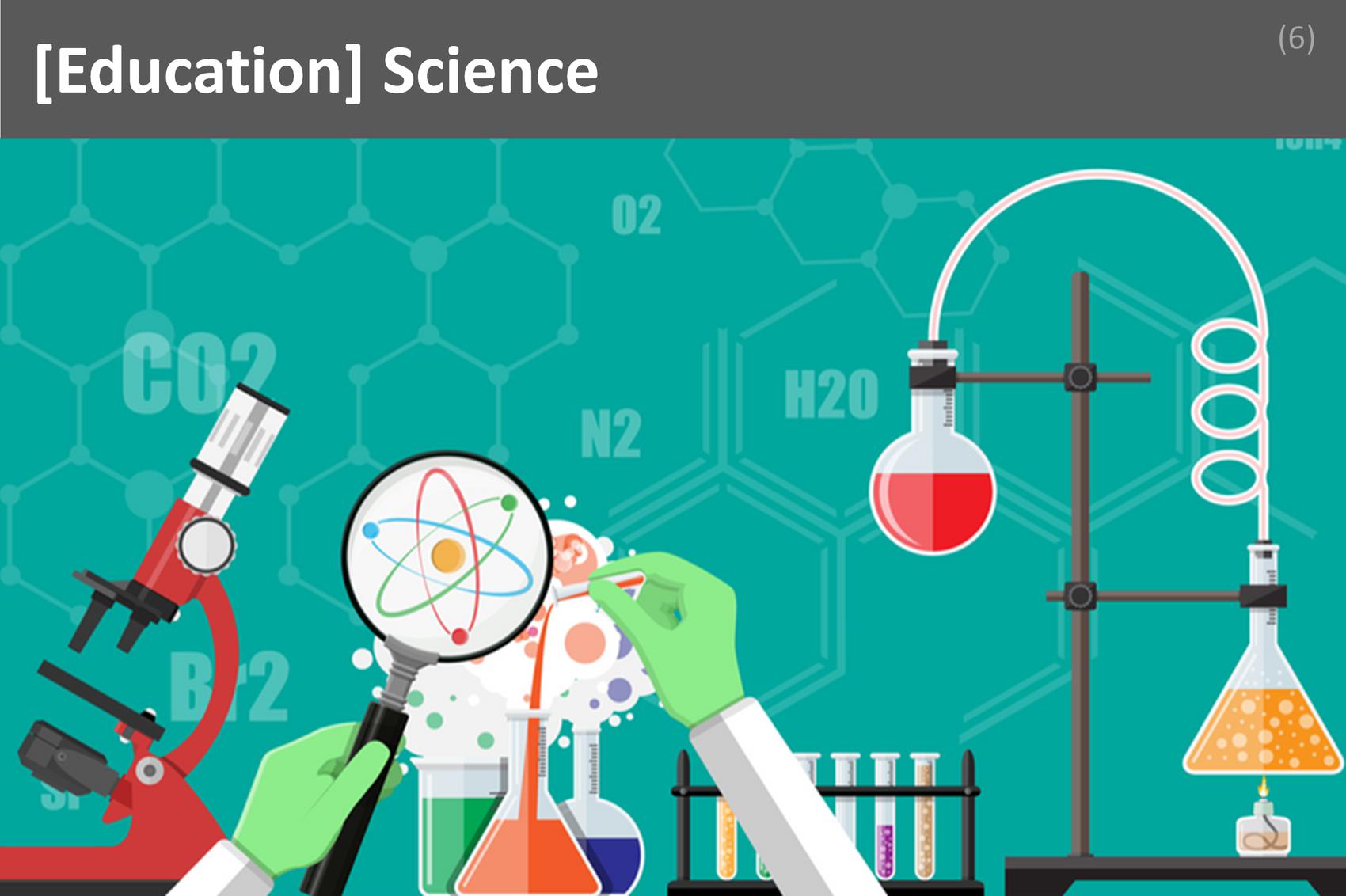
Science

### Science Image
What is
Science is the systematic pursuit of knowledge about the natural world through observation, experimentation, and logical reasoning. It seeks to explain phenomena by developing testable theories and models. In Astronomy Popularization, science forms the backbone of accurate communication, ensuring that complex astronomical concepts are conveyed truthfully and engagingly to diverse audiences.

Concept
A deep understanding of science is essential for anyone preparing for or working in Astronomy Popularization because it provides the conceptual framework necessary to interpret and explain astronomical phenomena. Professionals in this field must be able to distinguish between scientific facts, theories, and misconceptions, ensuring that the information they share is both accurate and accessible. Mastery of scientific principles allows them to critically evaluate new discoveries, address public questions with confidence, and foster a culture of curiosity and skepticism. Over the long term, this foundational knowledge enhances credibility, supports lifelong learning, and enables professionals to adapt to advancements in astronomy, making them effective communicators and educators in a rapidly evolving field.

Real World Example
Consider an astronomy popularizer hosting a public stargazing event. During the session, a participant asks why planets appear to move differently from stars in the night sky. Drawing on their scientific understanding, the professional explains the concept of planetary motion, referencing the heliocentric model and the laws of physics that govern celestial bodies. They clarify the difference between apparent and actual motion, using simple analogies rooted in scientific reasoning. This ability to translate complex scientific ideas into relatable explanations not only enhances the audience’s appreciation of astronomy but also builds trust in the information presented. Such daily interactions demonstrate how a solid grasp of science is indispensable for effective astronomy outreach.

Astro Tourism

### Astro Tourism Image
What is
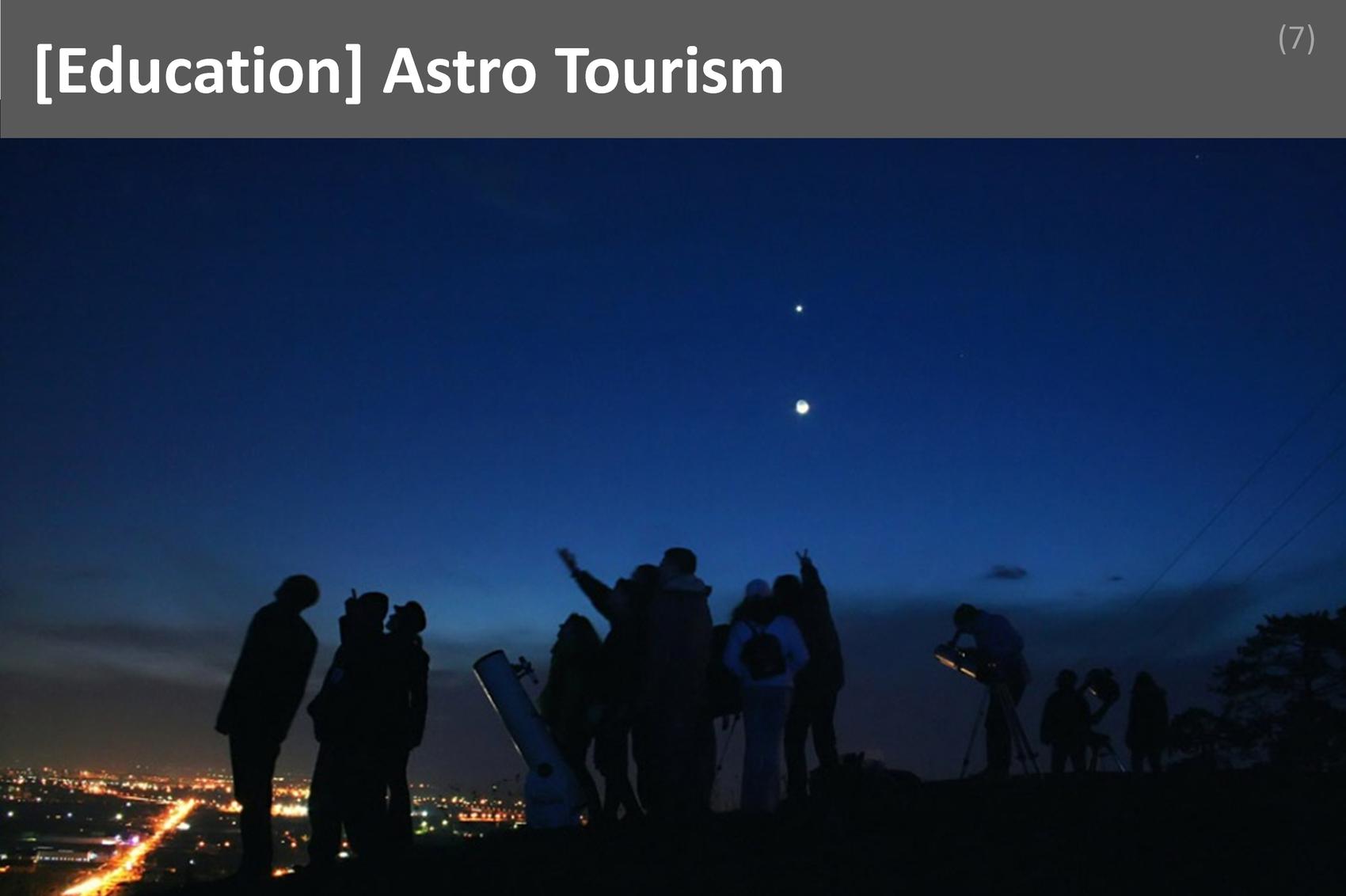
Astro Tourism is a specialized form of travel focused on experiencing astronomical phenomena, such as stargazing, eclipses, and observatory visits, in locations with optimal viewing conditions. It bridges science, education, and travel, making astronomy accessible and engaging for the public. Understanding Astro Tourism is essential for effective Astronomy Popularization.

Concept
A thorough grasp of Astro Tourism is vital for anyone preparing for or working in Astronomy Popularization because it connects scientific knowledge with public engagement. Professionals must understand how to design and promote experiences that inspire curiosity and foster scientific literacy. This subject provides insight into audience motivations, logistical considerations, and the cultural significance of celestial events. Mastery of Astro Tourism enables professionals to collaborate with tourism operators, educators, and local communities, ensuring that astronomical experiences are both scientifically accurate and memorable. Over time, this expertise enhances career prospects by positioning individuals as leaders in a growing interdisciplinary field, capable of shaping public perception and appreciation of astronomy through innovative outreach and educational initiatives.

Real World Example
Imagine an astronomy popularizer working at a science center in a region renowned for its dark skies. Drawing on their knowledge of Astro Tourism, they organize a stargazing festival timed with a meteor shower. They coordinate with local hotels, transportation providers, and tourism boards to create packages that include guided night sky tours, educational talks, and telescope sessions. By understanding visitor expectations and the logistics of hosting large groups in remote areas, the professional ensures a seamless and enriching experience. Their expertise allows them to communicate complex astronomical concepts in accessible ways, transforming a simple night under the stars into a memorable, educational journey that deepens public interest in astronomy and supports local economic development.

Astronomy

### Astronomy Image
What is
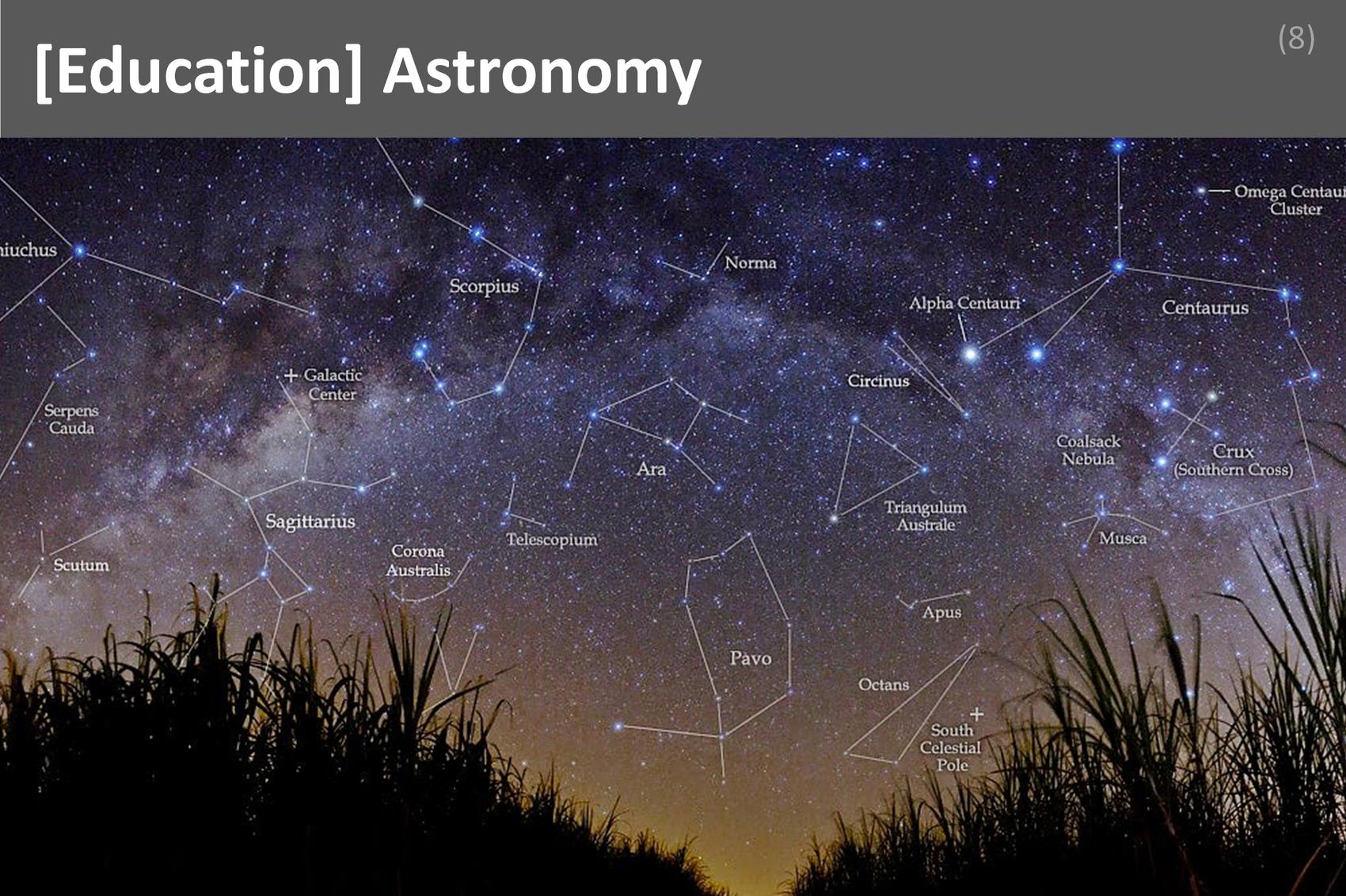
Astronomy is the scientific study of celestial objects, such as stars, planets, comets, and galaxies, as well as the phenomena that originate outside Earth's atmosphere. It seeks to understand the universe’s origins, structure, evolution, and eventual fate. For Astronomy Popularization, this discipline forms the essential academic and professional foundation.

Concept
A thorough grasp of astronomy is indispensable for anyone aiming to popularize the subject. Mastery of its core concepts enables professionals to accurately interpret and communicate complex astronomical phenomena to the public. This foundational knowledge ensures that explanations are both scientifically sound and engaging, fostering public interest and understanding. Over time, a deep understanding of astronomy allows popularizers to adapt to new discoveries, address misconceptions, and inspire curiosity in diverse audiences. It also enhances credibility, as audiences and collaborators are more likely to trust and value insights from someone with a solid academic grounding. Ultimately, proficiency in astronomy equips professionals to bridge the gap between scientific communities and the general public, making the wonders of the universe accessible to all.

Real World Example
Imagine an astronomy popularizer leading a public stargazing event at a local observatory. As participants gather, someone asks about the difference between a planet and a star. Drawing on their theoretical understanding of astronomy, the professional explains the physical and chemical distinctions, such as nuclear fusion in stars versus reflected sunlight in planets. They further elaborate on how astronomers classify celestial bodies and why certain objects appear brighter or change position in the night sky. By translating complex scientific principles into relatable language, the popularizer not only answers questions but also sparks further curiosity. This ability to connect theory with real-world observation exemplifies how a solid grounding in astronomy enhances daily outreach and educational activities.

Psychology

### Psychology Image
What is
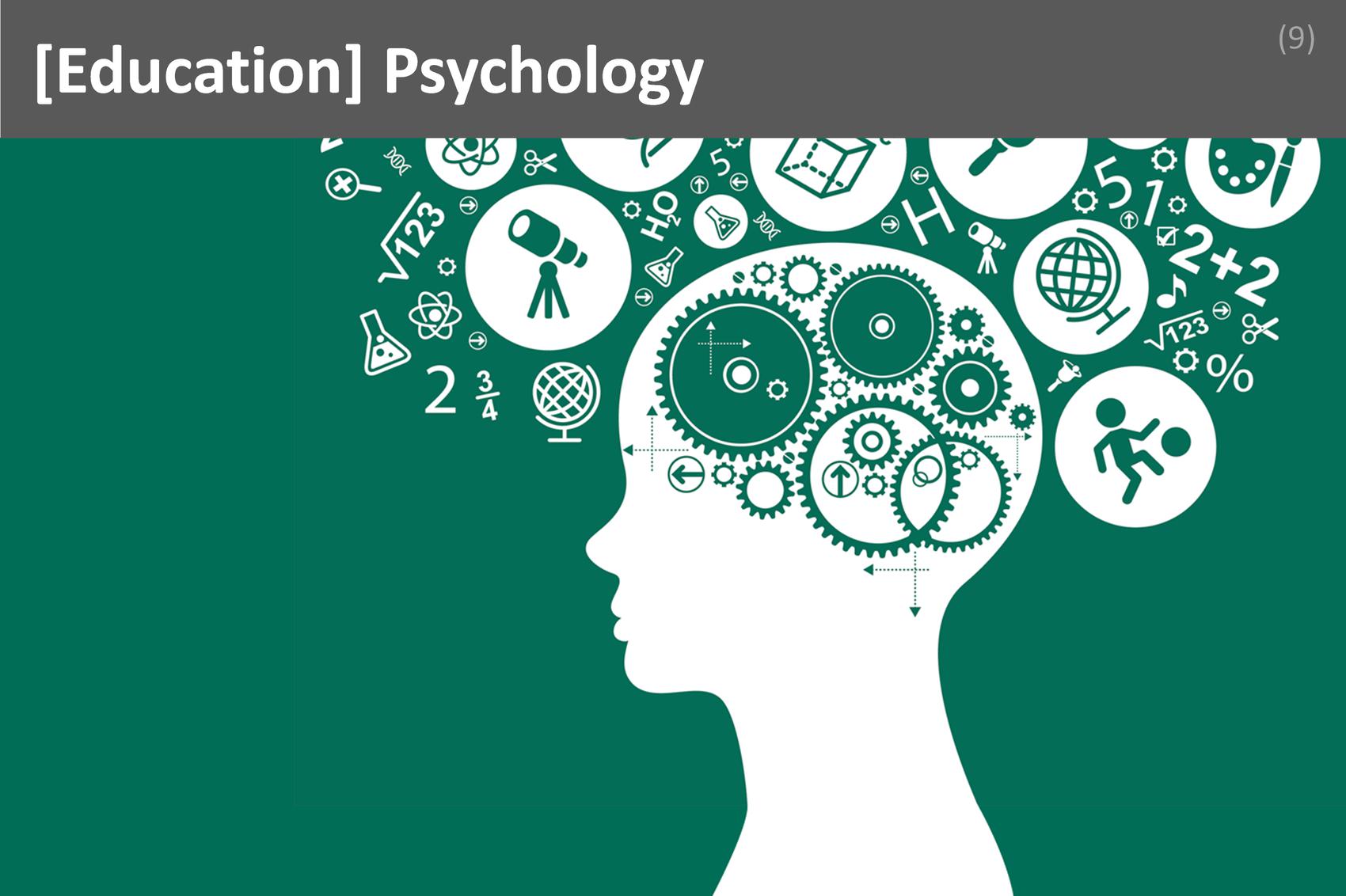
Psychology is the scientific study of the mind and behavior, exploring how individuals think, feel, and act both individually and within groups. In the context of Astronomy Popularization, psychology provides essential insights into how people learn, process information, and become inspired, making it a crucial interdisciplinary field for effective science communication.

Concept
Understanding psychology is vital for anyone involved in Astronomy Popularization because it equips professionals with the tools to engage diverse audiences, foster curiosity, and address misconceptions. By grasping how people perceive and retain information, astronomy communicators can tailor their presentations and outreach strategies to maximize impact. This foundational knowledge helps professionals anticipate audience reactions, manage group dynamics, and create inclusive learning environments. Over the long term, a strong grounding in psychology enhances a communicator’s ability to adapt to changing audience needs, evaluate the effectiveness of educational programs, and build lasting enthusiasm for astronomy. Ultimately, psychology empowers astronomy popularizers to bridge the gap between complex scientific concepts and public understanding.

Real World Example
Imagine an astronomy popularizer hosting a public stargazing event. Drawing on their understanding of psychology, they recognize that participants may feel intimidated by scientific jargon or hesitant to ask questions. To create a welcoming atmosphere, the professional uses storytelling techniques and relatable analogies, making complex astronomical phenomena accessible and engaging. They observe audience reactions, adjusting their explanations in real time to maintain interest and address confusion. By fostering an interactive environment and encouraging participation, the popularizer not only imparts knowledge but also builds confidence and curiosity among attendees. This practical application of psychological principles ensures that the event is both educational and memorable, inspiring a deeper appreciation for astronomy.

Instrumentation

### Instrumentation Image
What is
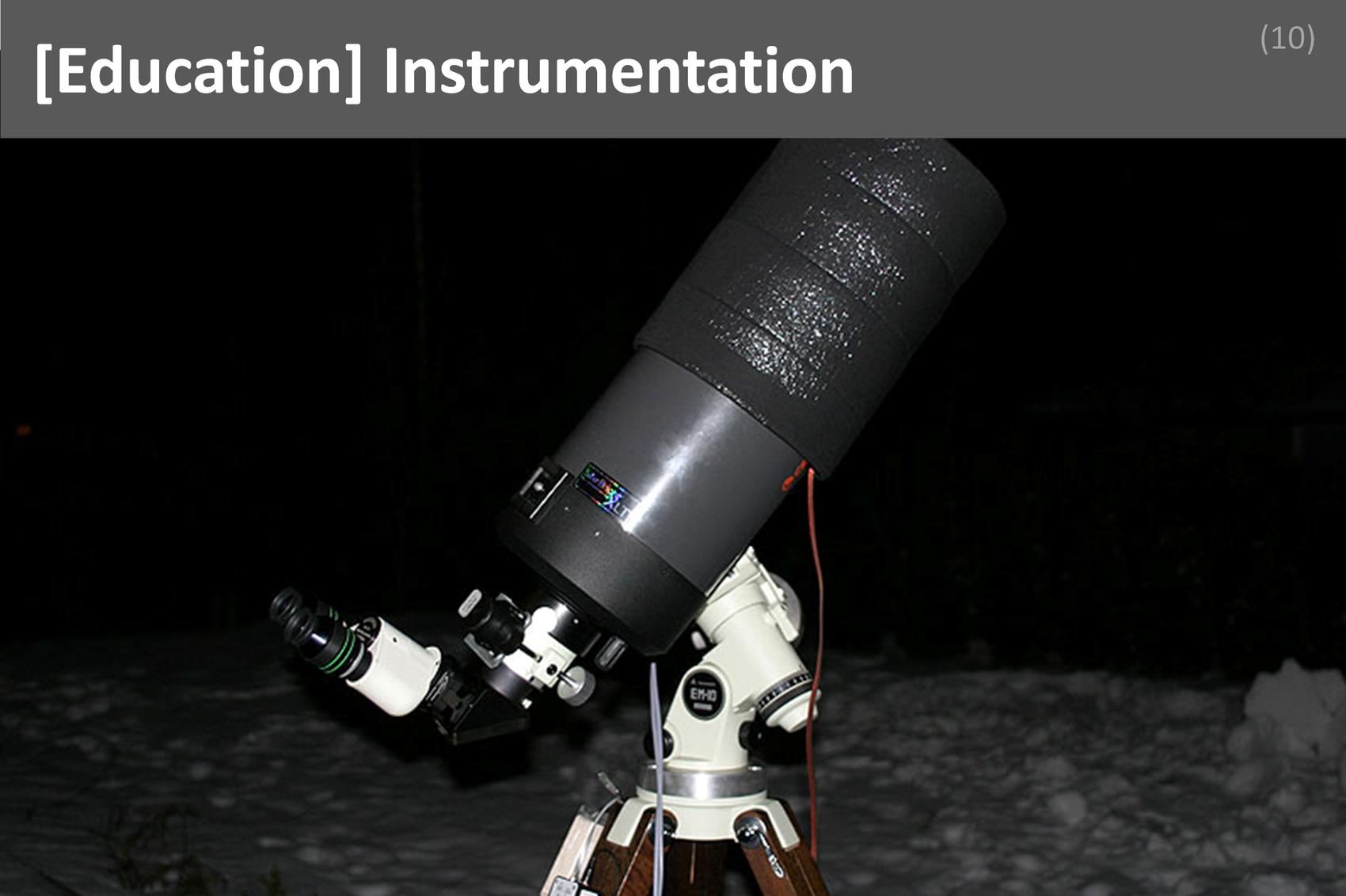
Instrumentation refers to the science and technology of designing, building, and utilizing devices that observe, measure, and record astronomical phenomena. In the context of Astronomy Popularization, it encompasses the understanding of telescopes, detectors, spectrographs, and related tools, forming a crucial bridge between scientific research and public engagement with the cosmos.

Concept
A solid grasp of instrumentation is essential for anyone involved in Astronomy Popularization because it enables clear and accurate communication about how astronomical discoveries are made. Professionals must explain not only what is observed in the universe but also how these observations are achieved. This knowledge allows them to demystify complex equipment for diverse audiences, fostering public trust and enthusiasm. Furthermore, understanding instrumentation empowers professionals to design effective educational programs, lead hands-on workshops, and troubleshoot technical issues during outreach events. Over the long term, this expertise enhances credibility, opens opportunities for collaboration with research institutions, and ensures that public engagement activities remain scientifically accurate and technologically current.

Real World Example
Imagine an astronomy popularizer hosting a public stargazing night at a local observatory. Their theoretical understanding of instrumentation allows them to set up and calibrate telescopes correctly, ensuring optimal viewing conditions. When participants ask how a telescope gathers and magnifies light, the professional confidently explains the roles of lenses, mirrors, and detectors, making the science accessible and engaging. If technical issues arise, such as image distortion or tracking errors, their background in instrumentation enables quick troubleshooting, minimizing downtime and maximizing the audience’s experience. By translating complex technical concepts into relatable explanations, the professional not only educates but also inspires curiosity and appreciation for the tools that unlock the universe’s secrets.

Skills


Communication

### Communication Image
What is
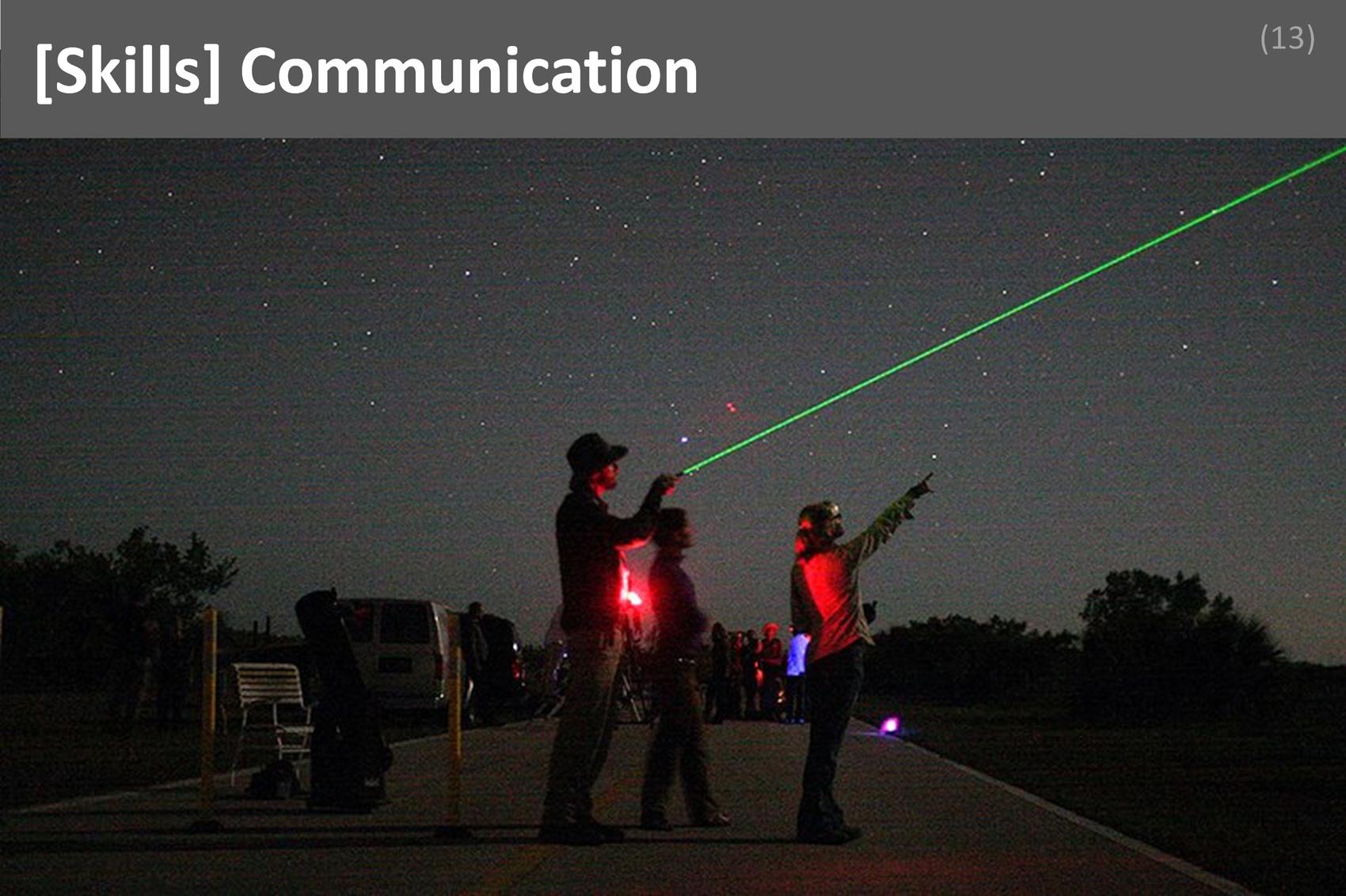
Communication is the process of effectively transmitting ideas, information, and emotions between individuals or groups through spoken, written, or visual means. In Astronomy Popularization, communication enables professionals to translate complex scientific concepts into accessible language, fostering public understanding, engagement, and enthusiasm for astronomy. It is the bridge between experts and the wider community.

Concept
Strong communication skills directly enhance an astronomy popularizer’s ability to inspire curiosity and convey scientific knowledge to diverse audiences. Clients and employers highly value this skill because it ensures that outreach programs, public talks, and educational materials resonate with people of all backgrounds and ages. Effective communicators can adapt their message to suit different platforms, whether it’s a classroom, a planetarium, or social media. To cultivate this skill, professionals should seek feedback, practice public speaking, and stay updated on both scientific developments and audience engagement techniques. Over time, consistent effort in refining language, storytelling, and presentation abilities leads to more impactful and memorable science communication.

Real World Example
Imagine an astronomy popularizer preparing for a live-streamed event during a major celestial event, such as a solar eclipse. Midway through the broadcast, unexpected technical jargon confuses viewers, leading to a flurry of questions and visible frustration in the chat. The professional quickly recognizes the disconnect and shifts their approach, using clear analogies and relatable examples to explain the phenomenon in real time. By actively engaging with the audience’s concerns and simplifying explanations, the popularizer not only salvages the event but also transforms confusion into excitement and understanding. This scenario highlights how adept communication can turn a potential setback into a successful, educational experience for all involved.

Writing

### Writing Image
What is
Writing is the process of expressing ideas, information, and narratives through structured language, enabling clear communication across diverse audiences. In astronomy popularization, writing serves as the bridge between complex scientific concepts and public understanding, allowing professionals to inspire curiosity, foster learning, and make astronomy accessible to everyone regardless of their background.

Concept
Mastering writing significantly enhances an astronomy popularization professional’s effectiveness by enabling them to translate intricate scientific findings into engaging, digestible content. Employers and clients highly value this skill because it ensures that outreach materials, articles, and educational resources are both accurate and captivating. Well-written content can boost public engagement, attract funding, and elevate the profile of institutions or projects. To cultivate strong writing abilities, professionals should practice regularly, seek feedback from peers, and study exemplary science communicators. Over time, refining grammar, expanding vocabulary, and experimenting with different formats—such as blogs, social media posts, and press releases—help develop a versatile and impactful writing style.

Real World Example
Imagine an astronomy popularizer tasked with addressing public concerns after a widely misinterpreted news story about a potential asteroid impact. By crafting a clear, factual, and reassuring article, the professional can dispel myths, explain the science behind asteroid tracking, and restore public confidence. Their writing not only corrects misinformation but also educates readers about the ongoing efforts of astronomers to monitor near-Earth objects. In this scenario, the ability to write persuasively and accurately is crucial for maintaining trust, guiding public perception, and fulfilling the core mission of making astronomy both understandable and relevant to society.

Model Building

### Model Building Image
What is
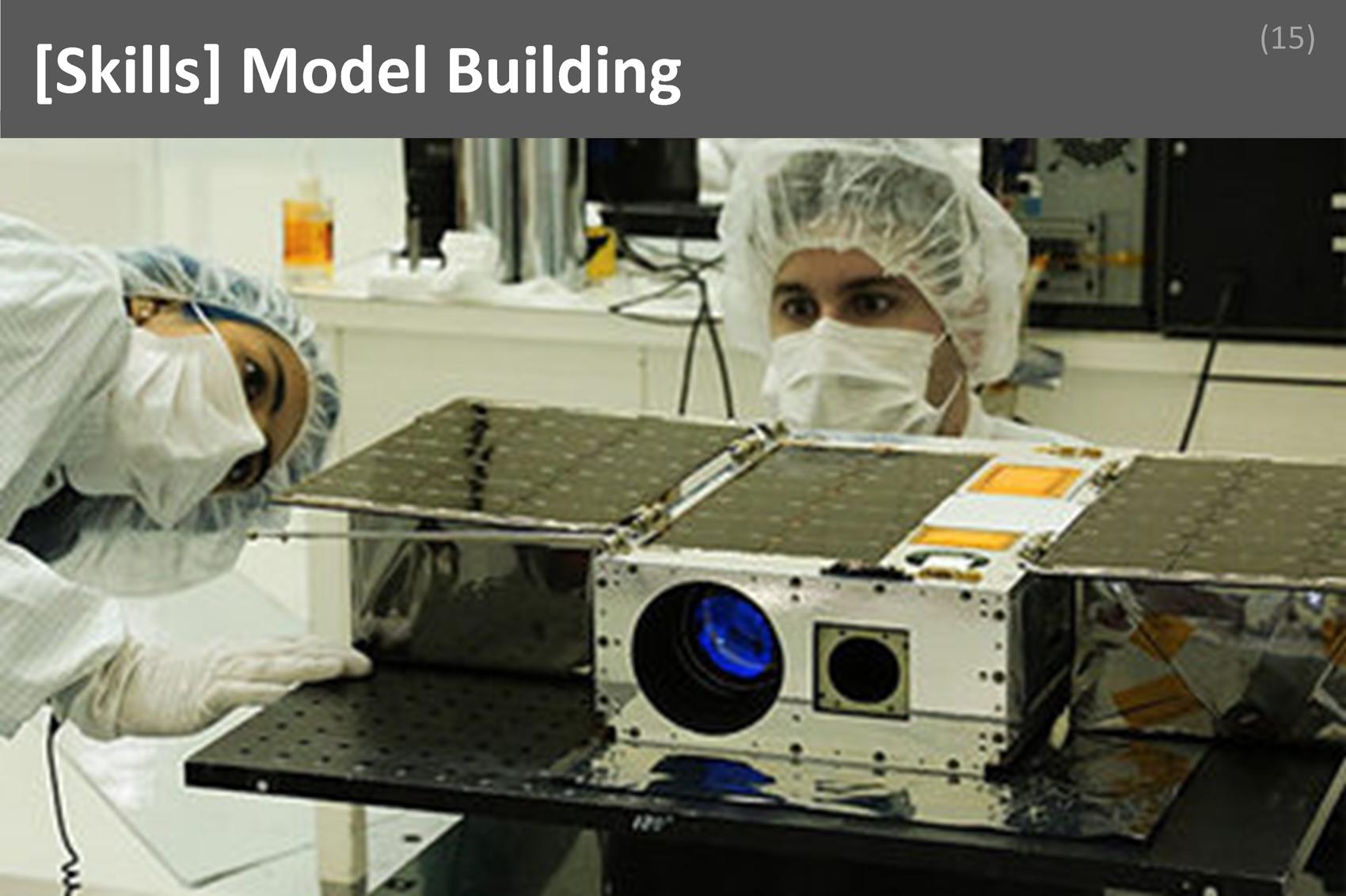
Model Building is the process of creating simplified, conceptual, or physical representations of complex astronomical phenomena to enhance understanding and communication. In Astronomy Popularization, this skill enables professionals to break down intricate scientific concepts into accessible formats, making them comprehensible and engaging for diverse audiences, from students to the general public.

Concept
Mastering Model Building significantly enhances an astronomy popularizer’s ability to communicate abstract or complex ideas with clarity and impact. Clients and employers highly value this skill because it bridges the gap between scientific research and public understanding, fostering greater interest and support for astronomy. By constructing effective models, professionals can tailor their explanations to suit different learning styles, ensuring their message resonates. Cultivating this skill involves continuous learning, staying updated with scientific advancements, and practicing the translation of new discoveries into relatable models. Engaging with feedback from audiences and collaborating with educators or scientists also refines one’s ability to build models that are both accurate and compelling.

Real World Example
Imagine an astronomy popularizer tasked with explaining gravitational waves to a group of high school students. Rather than relying solely on technical jargon, the professional constructs a hands-on model using a stretched fabric and weighted balls to represent spacetime and massive objects. This visual and tactile demonstration allows students to observe how ripples form and propagate, mirroring the behavior of gravitational waves. By employing Model Building, the popularizer not only demystifies a complex topic but also sparks curiosity and engagement. This approach transforms an abstract concept into a memorable learning experience, showcasing the indispensable role of Model Building in effective science communication.

Creative Designing

### Creative Designing Image
What is
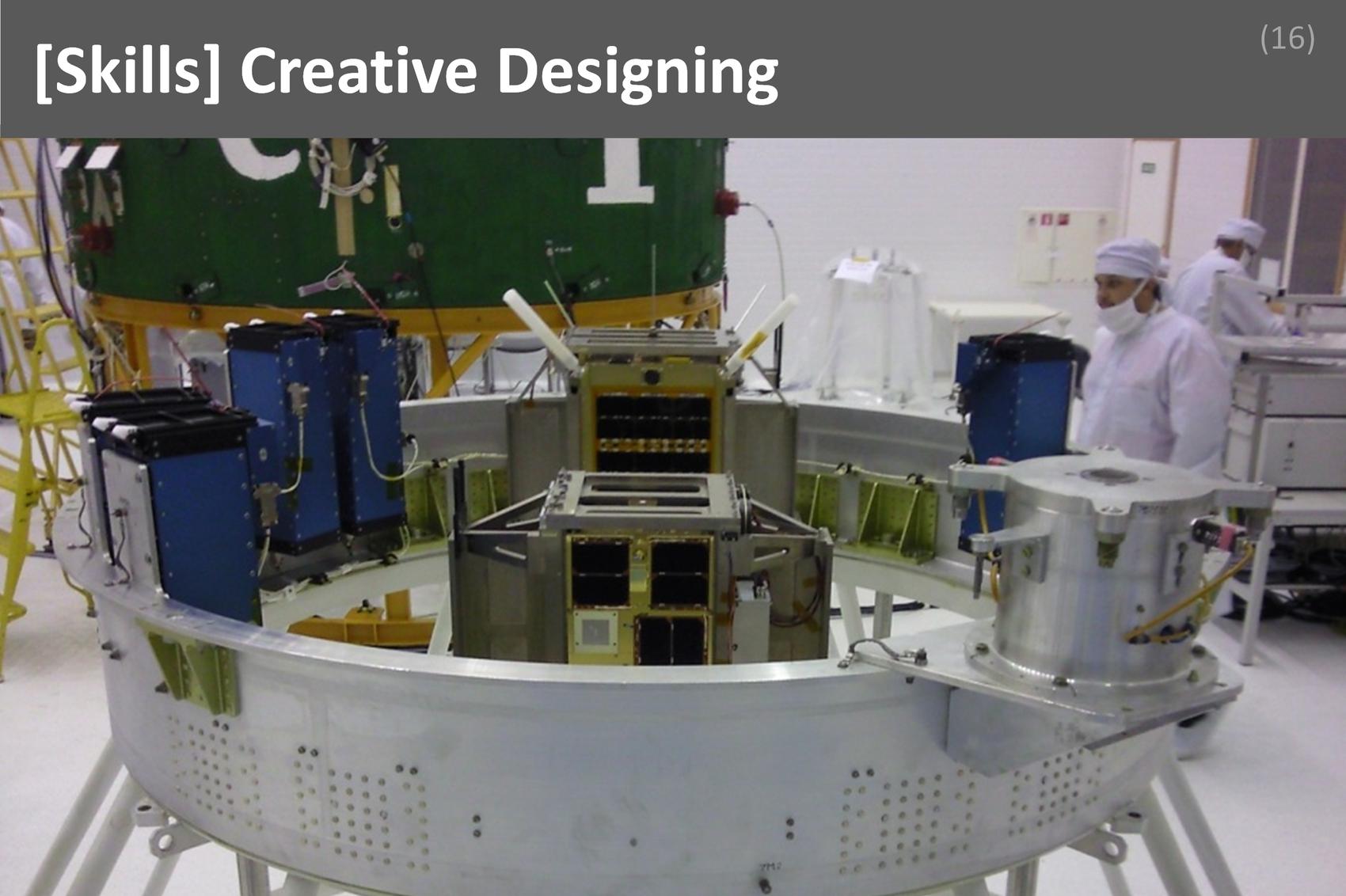
Creative Designing is the process of conceptualizing and producing visually engaging materials that effectively communicate complex ideas, using elements such as layout, color, imagery, and typography. In Astronomy Popularization, it transforms intricate scientific concepts into accessible, captivating content, making astronomy approachable and inspiring for diverse audiences.

Concept
Mastering Creative Designing significantly enhances a professional’s ability to convey astronomical information in ways that resonate with the public. This skill enables the creation of compelling visuals, infographics, and interactive media that simplify and humanize scientific data. Employers and clients highly value this capability because it increases audience engagement, broadens outreach, and elevates the impact of educational campaigns or public events. To cultivate Creative Designing, one should practice regularly with design software, study visual communication principles, and seek feedback from both peers and target audiences. Over time, exposure to various design challenges and continuous learning from successful science communicators help refine this essential skill, ensuring that complex astronomical phenomena are presented in ways that spark curiosity and understanding.

Real World Example
Imagine an Astronomy Popularization specialist tasked with organizing a public event to explain the significance of a newly discovered exoplanet. The initial scientific data is dense and filled with jargon, making it inaccessible to most attendees. By leveraging Creative Designing, the specialist develops a series of visually rich posters and interactive digital displays that break down the discovery into simple, visually appealing segments. These materials use color-coded diagrams, engaging illustrations, and clear typography to guide the audience through the exoplanet’s features and its importance in the broader context of space exploration. As a result, attendees not only grasp the scientific breakthrough but also leave the event inspired and eager to learn more, demonstrating how Creative Designing can be pivotal in achieving outreach success.

Influencing Skills

### Influencing Skills Image
What is
Influencing skills refer to the ability to shape opinions, inspire action, and guide decisions through effective communication, empathy, and credibility, without relying on authority or coercion. In astronomy popularization, these skills enable professionals to engage diverse audiences, foster curiosity, and encourage support for scientific initiatives and educational outreach.

Concept
Influencing skills directly enhance an astronomy popularizer’s ability to connect with audiences, secure funding, and build partnerships. Clients and employers highly value professionals who can inspire public interest, motivate stakeholders, and advocate for science education. Cultivating this skill involves practicing persuasive communication, understanding audience perspectives, and building trust through authenticity and expertise. Over time, professionals can refine their approach by seeking feedback, observing effective communicators, and adapting their strategies to different contexts. The ability to influence not only boosts outreach effectiveness but also strengthens relationships with collaborators, sponsors, and the broader community, making it a cornerstone of success in this field.

Real World Example
Imagine an astronomy popularizer tasked with convincing a local school district to incorporate astronomy programs into their curriculum. Despite initial resistance due to budget constraints and competing priorities, the professional leverages influencing skills by presenting compelling evidence of astronomy’s educational benefits, sharing inspiring stories of student engagement, and addressing concerns with empathy. Through clear, passionate communication and by building rapport with decision-makers, the popularizer gradually shifts perceptions and garners support. Ultimately, the school district agrees to pilot the program, demonstrating how effective influencing skills can overcome obstacles, unite stakeholders, and achieve meaningful progress in science outreach.

Positives


Self Satisfaction

### Self Satisfaction Image
What is
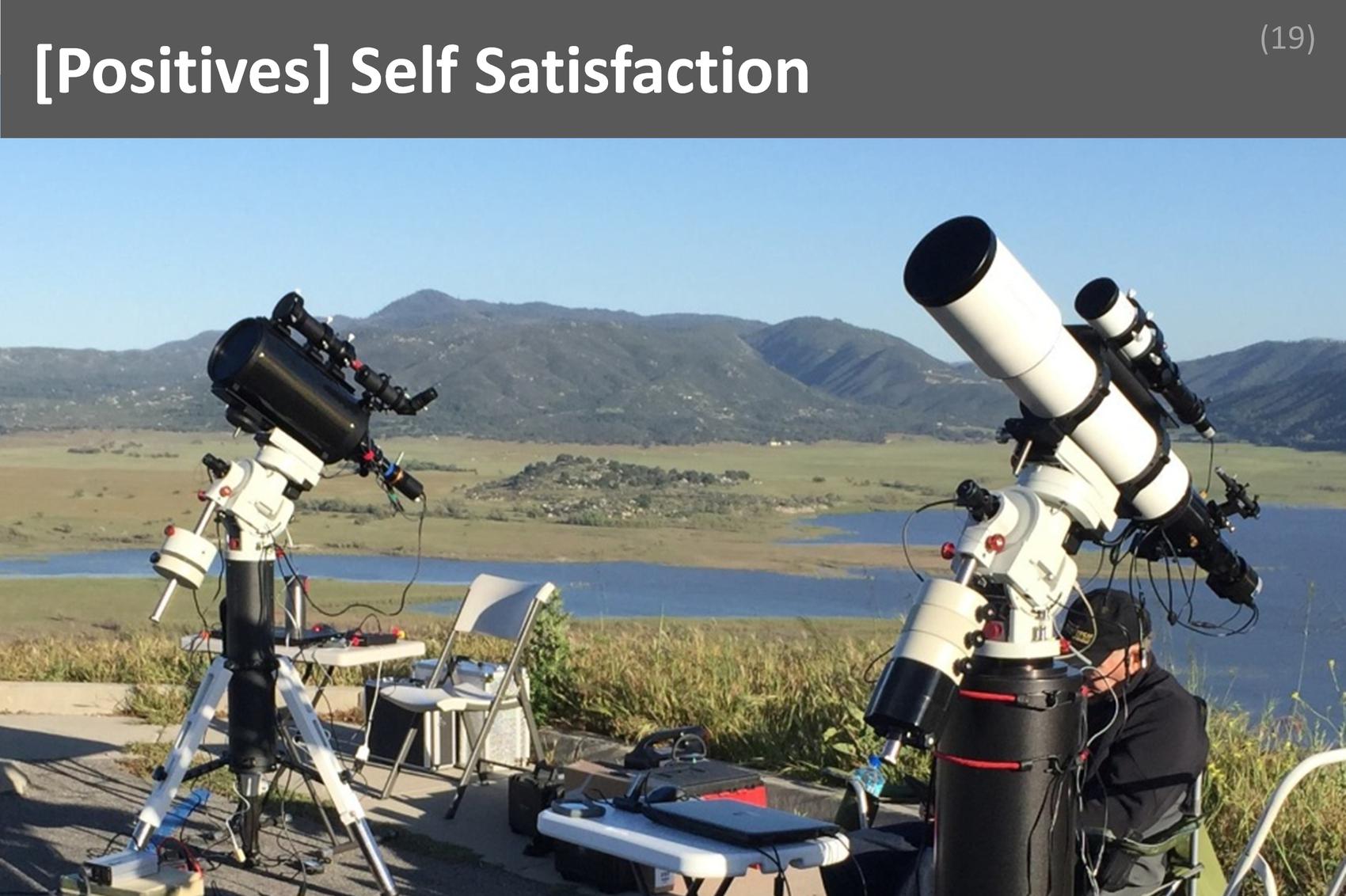
Self satisfaction is the deep sense of fulfillment and contentment that arises from achieving personal goals, aligning actions with values, and making a meaningful impact. In astronomy popularization, self satisfaction emerges when professionals see their efforts spark curiosity, inspire learning, and foster a greater appreciation for the universe among diverse audiences. This intrinsic reward fuels motivation, resilience, and a lasting passion for sharing scientific knowledge.

Concept
The positive aspect of self satisfaction is central to the enduring appeal of a career in astronomy popularization. When professionals witness the wonder and excitement in others as they grasp complex cosmic concepts, it reinforces their sense of purpose and accomplishment. This emotional reward not only boosts daily job satisfaction but also encourages continuous personal and professional growth. The knowledge that their work helps bridge the gap between science and society instills a profound sense of pride. Over time, this self satisfaction becomes a driving force, helping individuals overcome challenges, adapt to new communication methods, and remain enthusiastic about their mission to make astronomy accessible and engaging for all.

Real World Example
Imagine an astronomy communicator hosting a public stargazing event. As the night unfolds, they guide participants through the constellations, explain the phases of the moon, and answer questions about distant galaxies. At the end of the evening, a young attendee approaches, eyes wide with excitement, expressing a newfound desire to learn more about the universe. The professional feels a wave of self satisfaction, knowing their passion and expertise have ignited curiosity and inspired someone’s journey into science. This moment of connection and impact reaffirms their commitment to the field, making the challenges and hard work worthwhile and leaving a lasting sense of fulfillment.

Societal Impact

### Societal Impact Image
What is
Societal Impact refers to the meaningful influence that a profession or activity has on the broader community, shaping public understanding, attitudes, and behaviors for the collective good. In astronomy popularization, societal impact means inspiring curiosity, fostering scientific literacy, and encouraging critical thinking, all of which contribute to a more informed and engaged society.

Concept
The societal impact of astronomy popularization is a profound source of motivation and fulfillment for professionals in the field. Knowing that their work helps bridge the gap between complex scientific discoveries and the general public, these professionals play a crucial role in cultivating a culture that values knowledge and exploration. This positive aspect not only enhances job satisfaction but also opens doors for career growth, as the demand for effective science communicators continues to rise. Every day, astronomy popularizers witness firsthand how their efforts spark wonder, ignite lifelong passions, and empower individuals to think critically about the universe and humanity’s place within it. This ongoing connection with the public reinforces a sense of purpose and pride in their work.

Real World Example
Imagine an astronomy popularizer hosting a community stargazing event at a local park. As families gather around telescopes, the professional explains the stories behind the constellations and the science of distant galaxies. Children’s eyes widen with amazement, and adults ask thoughtful questions about space exploration. In that moment, the popularizer sees the direct societal impact of their work: inspiring curiosity, breaking down barriers to scientific understanding, and uniting people from diverse backgrounds in shared wonder. The professional leaves the event knowing they have not only educated but also inspired a new generation of thinkers and dreamers, making a tangible difference in their community’s appreciation for science.

Continuous Learning

### Continuous Learning Image
What is
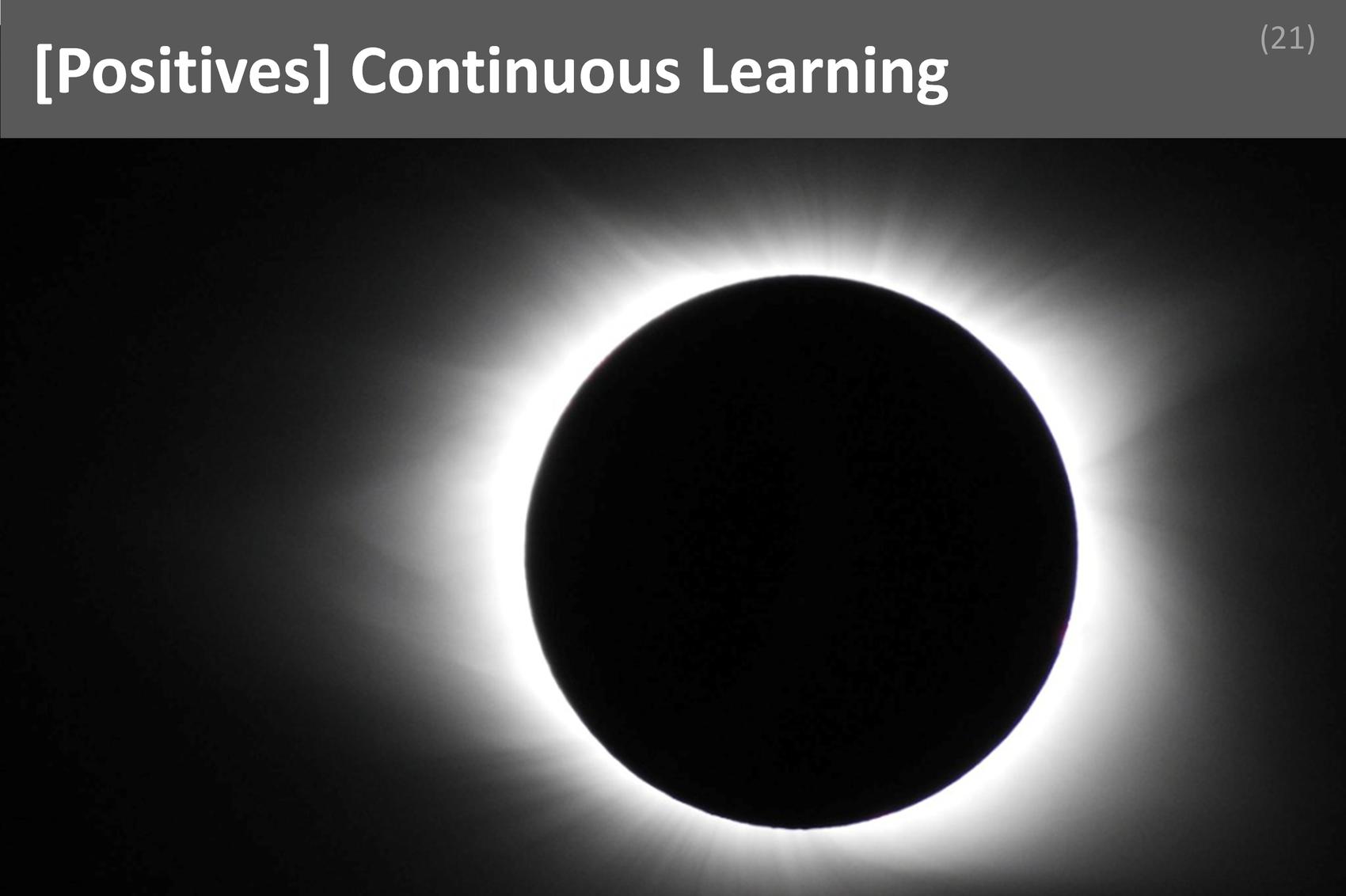
Continuous Learning is the ongoing process of acquiring new knowledge, skills, and insights throughout one’s career, driven by curiosity and the evolving nature of a field. In astronomy popularization, it means staying updated with scientific discoveries, innovative communication methods, and audience engagement strategies, ensuring that information shared is both accurate and captivating. This commitment to perpetual growth not only keeps professionals intellectually stimulated but also enhances their ability to inspire and educate diverse audiences. By embracing continuous learning, astronomy popularizers remain at the forefront of their discipline, adapting to new challenges and opportunities as the universe of knowledge expands.

Concept
The dynamic nature of astronomy ensures that there is always something new to learn, whether it’s the latest exoplanet discovery, advancements in telescope technology, or fresh approaches to science communication. This constant influx of knowledge makes the profession deeply engaging, as each day presents opportunities to explore uncharted territory and share newfound insights with the public. Continuous learning fosters a sense of purpose and excitement, as professionals are not only educators but also lifelong students of the cosmos. This ongoing intellectual growth leads to greater job satisfaction, as it prevents stagnation and encourages creative thinking. Ultimately, it empowers astronomy popularizers to connect more authentically with their audiences, making their work both meaningful and impactful.

Real World Example
Imagine an astronomy popularizer preparing for a public lecture just as a groundbreaking discovery is announced: astronomers have detected signs of life on a distant exoplanet. Driven by curiosity and a commitment to accuracy, the professional dives into the latest research papers, consults with experts, and adapts their presentation to include this exciting news. In the process, they not only expand their own understanding but also experience the thrill of sharing cutting-edge science with an eager audience. This real-time integration of new knowledge exemplifies the joy and fulfillment that continuous learning brings, transforming each event into a unique opportunity for growth and inspiration—for both the presenter and their listeners.

Opportunities

### Opportunities Image
What is
Opportunities refer to the diverse chances for growth, learning, collaboration, and innovation that arise within a profession. In astronomy popularization, opportunities manifest as new projects, partnerships, outreach events, and platforms to share knowledge. These possibilities empower professionals to expand their skills, reach wider audiences, and make meaningful contributions to science communication.

Concept
The abundance of opportunities in astronomy popularization is a driving force behind job satisfaction and professional growth. Each new project or initiative allows individuals to explore creative ways of engaging the public, whether through multimedia content, public talks, or interactive workshops. This constant evolution keeps the work dynamic and intellectually stimulating, preventing stagnation and fostering a sense of purpose. Opportunities also open doors to collaborate with scientists, educators, and organizations worldwide, broadening professional networks and perspectives. As professionals seize these chances, they witness the tangible impact of their efforts in inspiring curiosity and scientific literacy, making their daily work both meaningful and rewarding.

Real World Example
Imagine an astronomy popularizer who begins by organizing small local stargazing events. Through networking and seizing emerging opportunities, they are invited to collaborate with a national science museum on a planetarium show. This project leads to further invitations to speak at international conferences and contribute to educational television programs. Each new opportunity not only enhances their skills and reputation but also allows them to reach increasingly diverse audiences. The professional experiences firsthand how embracing opportunities transforms their career, amplifies their impact, and brings a deep sense of fulfillment as they ignite a passion for astronomy in countless individuals.

Challenges


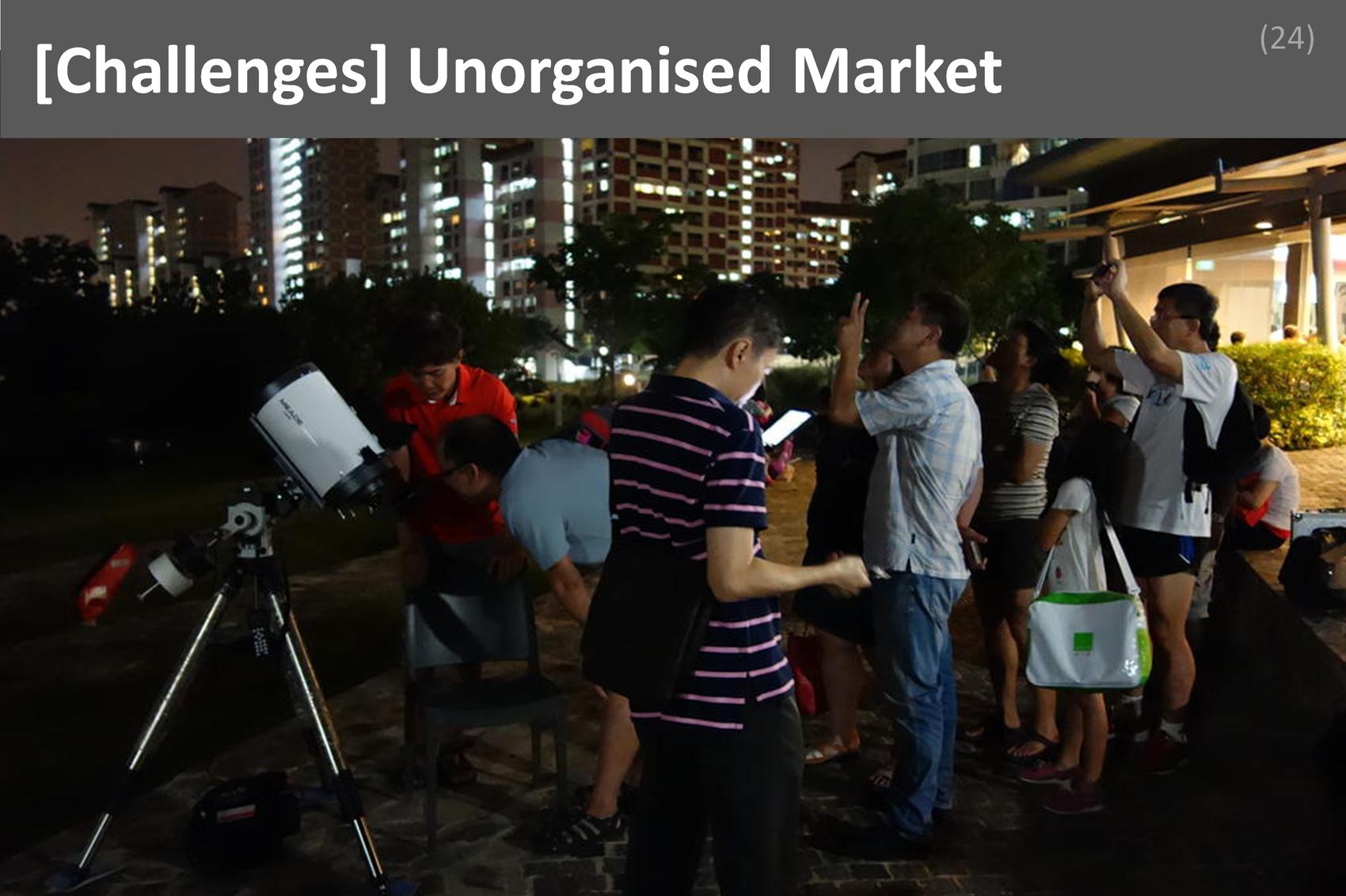
Unorganised Market

### Unorganised Market Image
What is
In Astronomy Popularization, an "Unorganised Market" refers to a fragmented landscape lacking standardized structures, clear career pathways, or consistent funding sources. This environment is demanding because professionals must navigate uncertain job security, irregular opportunities, and inconsistent recognition, making it difficult to establish sustainable careers or long-term projects.

Concept
The unorganised nature of the market means that professionals in Astronomy Popularization often face unpredictable workloads, sporadic income, and limited institutional support. This uncertainty can lead to stress and burnout, requiring significant resilience and adaptability. Successful individuals in this field tend to diversify their activities, such as combining public talks, educational workshops, freelance writing, and collaborations with museums or science centers. They build strong personal networks and maintain a visible presence in both digital and local communities to attract opportunities. By continuously updating their skills and staying flexible, these professionals manage to carve out a niche for themselves, even in the absence of formal structures or guaranteed funding.

Real World Example
Consider an astronomy communicator who, facing the challenges of an unorganised market, initiates a series of community stargazing events while also producing online educational content. Despite the lack of a formal employer or steady funding, they partner with local schools and science clubs, securing small sponsorships and donations. By leveraging social media, they grow a dedicated audience, which leads to invitations for guest lectures and collaborations with educational platforms. Through persistence and adaptability, this professional not only sustains their career but also expands their impact, demonstrating how resourcefulness and networking can overcome the limitations of an unorganised market in Astronomy Popularization.

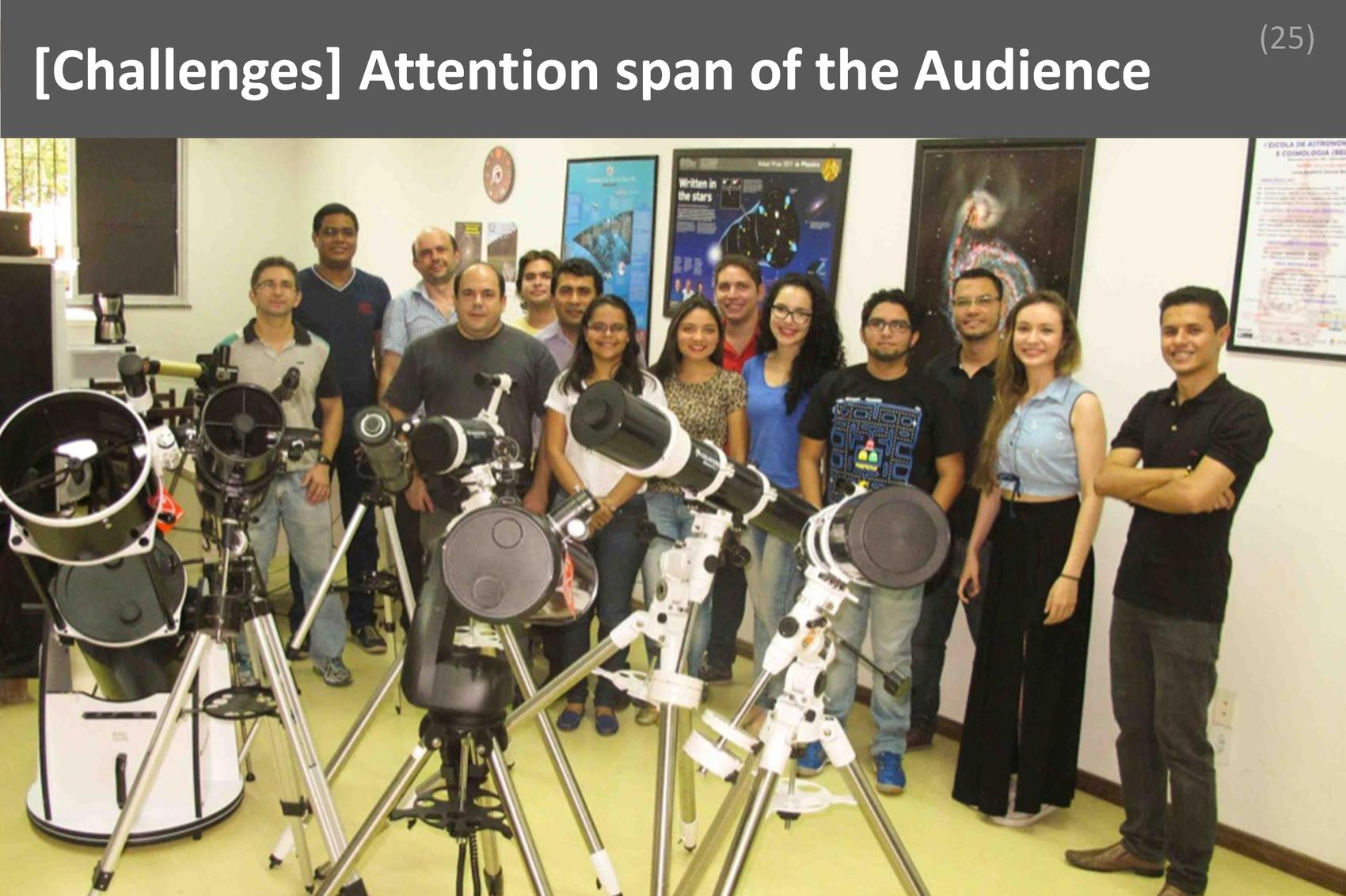
Attention span of the Audience

### Attention span of the Audience Image
What is
Attention span of the audience refers to the limited duration for which listeners or viewers can remain focused and engaged with astronomical content. In Astronomy Popularization, this is demanding because complex concepts must be communicated quickly and clearly before interest wanes, risking loss of message impact and audience connection.

Concept
The challenge of short attention spans significantly shapes the daily work of astronomy communicators. Presenters must constantly adapt their delivery, condensing intricate scientific ideas into digestible, captivating segments. This requires resilience, as repeated efforts may not always yield immediate engagement or understanding. Professionals who succeed in this environment often employ storytelling, vivid analogies, and interactive elements to maintain interest. They remain attentive to audience cues, adjusting their approach in real time to recapture wandering attention. By continuously refining their communication techniques and embracing feedback, these professionals ensure that their passion for astronomy resonates, even within the brief windows of audience focus.

Real World Example
Imagine an astronomer leading a public stargazing event, noticing participants’ attention drifting during a technical explanation of black holes. Sensing the shift, the professional pivots, weaving a relatable story about how black holes affect time and space, using everyday experiences as metaphors. The audience’s curiosity is reignited, and questions begin to flow. By transforming abstract concepts into engaging narratives and inviting participation, the astronomer successfully overcomes the challenge of limited attention span, ensuring the core message is both understood and remembered. This adaptive approach not only sustains engagement but also fosters a deeper appreciation for the wonders of the universe among diverse audiences.

Access to right Information

### Access to right Information Image
What is
Access to right Information in Astronomy Popularization refers to the ability to obtain accurate, up-to-date, and relevant scientific data and resources necessary for effectively communicating astronomical concepts to the public. This is demanding because information is often scattered, highly technical, or behind paywalls, making it difficult for professionals to present reliable content.

Concept
The challenge of accessing the right information can slow down content creation, limit the accuracy of public outreach, and increase the risk of spreading outdated or incorrect knowledge. Professionals must constantly verify sources, interpret complex scientific findings, and translate them for diverse audiences. This process requires resilience, as it often involves navigating institutional barriers, language differences, and rapidly evolving discoveries. Successful astronomy popularizers overcome these constraints by building networks with researchers, subscribing to reputable journals, and participating in professional communities. They also develop skills in critical evaluation and synthesis, enabling them to filter vast amounts of data and present only the most relevant and reliable information to their audiences.

Real World Example
Consider an astronomy communicator preparing a public lecture on the latest exoplanet discoveries. Faced with paywalled journal articles and technical jargon, she reaches out to astronomers involved in the research for clarifications and requests access to preprints. She also consults open-access databases and attends webinars where findings are discussed in accessible language. By leveraging her professional network and staying engaged with the scientific community, she gathers accurate, up-to-date information and translates it into engaging, understandable content for her audience. This approach not only ensures the reliability of her presentation but also demonstrates how proactive strategies can effectively overcome the barrier of limited access to the right information.

A Day Of


Popular Astronomy

What is
The world of astronomy popularization is a whirlwind of discovery, communication, and inspiration, where no two days are ever quite the same. From the moment the sun rises, practitioners are immersed in a dynamic environment that blends scientific rigor with creative outreach. Whether preparing for a planetarium show, responding to the latest cosmic event, or engaging with curious minds of all ages, the pace is brisk and the atmosphere charged with the excitement of sharing the universe’s wonders. In this field, each day is a journey that stretches far beyond the confines of a desk, reaching into classrooms, observatories, and the digital cosmos.

Concept
As the day begins, the astronomy popularization professional settles in with a cup of coffee and a quick scan of the latest astronomical news. This early morning period is dedicated to reviewing recent discoveries, checking updates from space agencies, and preparing educational materials for the day’s events. Whether it’s updating a presentation with fresh images from the James Webb Space Telescope or scripting a segment for a podcast, this time is all about ensuring that every fact is accurate and every story is ready to captivate.

Real World Example
Mid-morning marks the heart of the day, when the professional steps into the spotlight—sometimes literally. This is when school groups arrive for interactive workshops, or a live-streamed Q&A session with the public kicks off. The energy is palpable as complex concepts are translated into accessible language, hands-on demonstrations are orchestrated, and the audience’s questions fuel spontaneous discussions. Whether in a bustling science center or broadcasting to thousands online, this is the most intense and rewarding part of the day, where passion for the cosmos is shared in real time.

As the afternoon unfolds, the focus shifts to teamwork and project development. Meetings with fellow educators, scientists, or media partners fill the schedule, each one aimed at planning upcoming events, coordinating outreach campaigns, or developing new educational resources. This collaborative phase is essential for brainstorming fresh ideas, troubleshooting challenges, and ensuring that every initiative aligns with both scientific accuracy and audience engagement. The atmosphere is one of creative synergy, where diverse expertise comes together to expand the reach of astronomy.

As the day winds down, the professional turns to reflection and preparation for what lies ahead. This is the time to answer emails from teachers and journalists, review feedback from earlier sessions, and dive into research for future projects. Administrative tasks are balanced with moments of quiet curiosity—perhaps reading a new scientific paper or outlining next week’s stargazing guide. With the last rays of sunlight fading, plans are set in motion for another day of bringing the universe a little closer to home.


Install the LifePage App to:


  1. (for Free) Watch Astronomer R C Kapoor’s full Astronomy Popularization Career Talk

  2. ₹ Do a Self Assessment on Astronomy Popularization to calculate your Dream Index, which is defined as:

    According to R C Kapoor your chances of success in Astronomy Popularization is __%

  3. Access your personalized Dream Index Report which will have all your Dream Indices sorted in descending order.

Career Counselling 2.0


<?php echo $altimage; ?>


<?php echo $altimage; ?>


How to get into

Astronomy Popularization?


If you are want to get into Astronomy Popularization, start by investing in a Career Plan.

The 14 hour process, guided by a LifePage Career Advisor, will help you introspect and check whether your interest in Astronomy Popularization is merely an infatuation or is it truly something you wish to do for the rest of your life.

Next, your Career Advisor will help you document how you can get into Astronomy Popularization, what education and skills you need to succeed in Astronomy Popularization, and what positives and challenges you will face in Astronomy Popularization.

Finally, you will get a Career Plan stating which Courses, Certifications, Trainings and other Items you need to do in the next 7 years to become world’s best in Astronomy Popularization.


LifePage Career Plan

14 hour personalized guidance program


Your LifePage Career Advisor facilitates your guided introspection so that you systematically explore various Career options to arrive at a well thought out Career choice.

Next: your Advisor helps you figure out how you will get into your chosen Career and how will you develop the skills needed for success in your Chosen Career.

LifePage Plan will not stop at saying "to become an Architect study Architecture". It will guide you on which Certifications, Trainings and Other items you need to do along with your Architecture education to become the world's best Architect.


Links for this Talk


Astronomer R C Kapoor's LifePage:


Career Counselling 2.0
[LifePage]
https://www.lifepage.in/page/rckapoor


LifePage Career Talk on Astronomy Popularization


Career Counselling 2.0
[Career]
https://www.lifepage.in/careers/astronomy-popularization


Career Counselling 2.0
[Full Talk]
https://lifepage.app.link/20190128-0004


Career Counselling 2.0
[Trailer]
https://www.youtube.com/watch?v=8a32pu1pG9k


(Astronomy Popularization, R.C Kapoor, Indian Institute of Astrophysics, IIA, Astronomy, Cosmology, Space Science, Stars, Planets, Galaxies, Nebulae, Astrophysics)


Similar Talks


Career in Space Research
Space Research
Ranganath Navalgund
Director | Space Application Center (ISRO)
[ 40 years Experience ]

Space research is scientific study carried out using scientific equipment in outer space. It includes the use of space technology for a broad spectrum of research disciplines, including Earth Science, Materials Science, Biology, Medicine, and Physics. The term includes scientific payloads everywhere from deep space to low Earth orbit, and is frequently defined to include research in the upper atmosphere using sounding rockets and high-altitude balloons. Space science and space exploration involve the study of outer space itself, which is only part of the broader field of space research. Major Space Research Agencies in the World.

"After completing my graduation, I went to Indian Institute of Technology, Bombay to do Postgraduate degree in Physics. Subsequently I joined Tata Institute of Fundamental Research University, Bombay for my Ph D. Immediately after that I joined the Space Application Research Center, Ahemdabad. That is how I got into Space Research. As Director of two major centres of the Indian Space Research Organisation, I successfully led teams engaged in the development of communication and navigation payloads, state-of-the-art electro-optical and microwave sensors, data acquisition and processing systems, setting up international ground stations to receive IRS data in several countries, international collaborative research efforts and have contributed in a major way towards growth and development of remote sensing application programmes, in India. During this period of thirty five years of scientific and professional career, I have authored more than 100 scientific publications including 78 papers in peer reviewed journals, proceedings and technical reports."


Career Counselling 2.0 Career Counselling 2.0 Career Counselling 2.0 Career Counselling 2.0 Career Counselling 2.0


Career in Space Technology
Space Technology
A.S. Kiran Kumar
Former Chairman | ISRO
[ 44 years Experience ]

Space technology is technology developed by space science or the aerospace industry for use in spaceflight, satellites, or space exploration. Space technology includes spacecraft, satellites, space stations, and support infrastructure, equipment, and procedures.

"After completing my M Tech in Physical Engineering, in 1975 I joining Space Applications Centre, Ahmedabad working on Space borne Electro-optical imaging instruments. I remained at the institution ever since and was the Director of the Electro-optical Systems Group since April 2012 and later served as the Chairman of Indian Space Research Organisation Jan 2015 to Jan 2018. I represented Indian Space Research Organization at many international forums such as the World Meteorological Organisation and Indo-US Joint Working Group on Civil Space Cooperation and held the Chair of the ISRO Committee on Earth Observation Satellites."


Career Counselling 2.0 Career Counselling 2.0 Career Counselling 2.0 Career Counselling 2.0 Career Counselling 2.0


Career in Engineering Research
Engineering Research
Dr G P Kapoor
Dean | DIT University
[ 4 years & 4 months Experience ]

Teaching and Research in natural objects is all about, how you perceive the natural object and simulate it into the machines.

"I have done teaching and research in different capacities at IIT Kanpur for 36 years. I have also served as the chairman of AIEEE examinations."


Career Counselling 2.0 Career Counselling 2.0 Career Counselling 2.0 Career Counselling 2.0 Career Counselling 2.0


Career in Stem Cell Research
Stem Cell Research
Dr Rajneesh Verma
Progaram Specific Researcher | CIRA, Kyoto University - Japan
[ 4 years & 11 months Experience ]

Stem cells are biological cells that can differentiate into other types of cells and can divide to produce more of the same type of stem cells. They are found in multicellular organisms. Stem cells are a class of undifferentiated cells that are able to differentiate into specialized cell types. Commonly, stem cells come from two main sources: Embryos formed during the blastocyst phase of embryological development (embryonic stem cells) and adult tissue (adult stem cells).

"I m Reproductive Bio-technologist and a stem cell Scientist from Monash University, Melbourne (Australia). In 2011, I was the First one in the world to generate Induced pluripotent Stem Cells (iPSC) of wild cats namely, Snow Leopard, Bengal Tiger, Jaguar and Serval. Having worked on various projects in the field of stem cells, in 2017, I joined CIRA, Kyoto (Koji Eto group) as a Program Researcher."


Career Counselling 2.0 Career Counselling 2.0 Career Counselling 2.0 Career Counselling 2.0 Career Counselling 2.0


Career in Astrophysics
Astrophysics
R C Kapoor
Professor | Indian Institute of Astrophysics
[ 48 years Experience ]

Astrophysics is a branch of space science that applies the laws of physics and chemistry to explain the birth, life and death of stars, planets, galaxies, nebulae and other objects in the universe. It has two sibling sciences, astronomy and cosmology, and the lines between them blur.

"My inclination towards astronomy led to my graduation and then post graduation in Astrophysics. In 1971, I started my career and joined Observatory (now Aryabhatta Research Institute of Observational Sciences, ARIES) at Nainital in observational astronomy. Then, in 1974 until 2010, I was with the Indian Institute of Astrophysics (IIA), Bangalore where I worked on various topics in relativistic astrophysics black holes, white holes, quasars and pulsars etc. His association with the institution continues. In 1980, I completed my Ph D from Agra University. I actively participate in popularization of astronomy and have also published research papers in peer-reviewed international journals and presented papers in national and international conferences. I have also published on the physical-chemical nature of bhasmas in the Indian Systems of Medicine."


Career Counselling 2.0 Career Counselling 2.0 Career Counselling 2.0 Career Counselling 2.0 Career Counselling 2.0


Career in R & D in SCADA & IOT
R & D in SCADA & IOT
Dr Sandeep Sharma
Project Lead | Converteam EDC Pvt Ltd
[ 14 years & 2 months Experience ]

Research and development refers to innovative activities undertaken by corporations or governments in developing new services or products, or improving existing services or products.

"I have done B Sc and M Sc in Electronic Sciences. Post that I did Ph D in Theoretical Investigation of Transient Analysis of First Order and Second Order Loads powered by PV Generators from Department of Electronic Science, Delhi University. I have worked with various organisations like Converteam EDC Pvt. Ltd & Saora Informatics India Pvt. Ltd as Manager and Project Lead. I have been a Faculty with Maharaja Agrasen College, Manav Rachna College of Engineering. I am Head & Associate Professor with Department of Electronics & Communication Engineering at DIT University."


Career Counselling 2.0 Career Counselling 2.0 Career Counselling 2.0 Career Counselling 2.0 Career Counselling 2.0


Career in Teaching & Research
Teaching & Research
Dr Kuldeep Kumar Raina
Vice Chancellor | DIT University
[ 32 years Experience ]

A teacher (or an educator) is a person who helps others to acquire knowledge, competences or values. Research comprises "creative and systematic work undertaken to increase the stock of knowledge, including knowledge of humans, culture and society, and the use of this stock of knowledge to devise new applications." It is used to establish or confirm facts, reaffirm the results of previous work, solve new or existing problems, support theorems, or develop new theories.

"I joined Thapar University (formerly Thapar Institute of Engineering & Technology), Patiala in February 1986 and worked there for few years. My contributions to the teaching and research have brought me recognition nationally and internationally through various awards & fellowships. I became full Professor of Materials Science in 1999. I have published over 200 research papers in peer review International/national journals and about 50 Invited lectures delivered in International conferences. In 2014 I joined DIT University as the Vice Chancellor and serving there since then. I have also served as the Vice-President of Electron Microscope Society of India, Council Member MRSI and ILCS, member of several international and national scientific societies like International Liquid Crystal Society, International Disordered Materials Research Society, Materials Research Society of Singapore/India, etc. I am also the member of Governing Council of Select Universities and an expert peer team member of NAAC."


Career Counselling 2.0 Career Counselling 2.0 Career Counselling 2.0 Career Counselling 2.0 Career Counselling 2.0


Career in Communication Research
Communication Research
Dr B S Jassal
Scientist F | DRDO
[ 37 years & 3 months Experience ]

Communication Research focuses on areas to better understand and develop communication networks, particularly in the wireless domain.

"I have done my B Sc, M SC & Ph D in Radiowave Propagation from DAV PG College, Dehradun. I retired from DRDO as Scientist grade F after 38 years of service. After serving as a Dean for 10 years, I am now a Visiting professor at Graphic ERA University where I teach and do Research."


Career Counselling 2.0 Career Counselling 2.0 Career Counselling 2.0 Career Counselling 2.0 Career Counselling 2.0


Career in Teaching Educational Research
Teaching Educational Research
Dr Vishal Sood
Associate Professor | Himachal Pradesh University, Shimla
[ 16 years Experience ]

Educational research means that research which is done in the field of education. The purpose of educational research is to determine various aspects dimensions, processes, concerning the creation of new knowledge to test the accuracy of current knowledge, the direction of development and future plans.

"After doing my B Sc from SD College Baijnath, I did B Ed and M Ed followed by MA, M Phil and Ph D in Sociology and then did PG Diploma in Marketing Management & Computer Software from Himachal Pradesh University, Shimla. Post that I did a PG Diploma in Higher Education from IGNOU. I am Associate Professor at Himachal Pradesh University, Shimla."


Career Counselling 2.0 Career Counselling 2.0 Career Counselling 2.0 Career Counselling 2.0 Career Counselling 2.0


Career in Research
Research
Rajan Gupta
Research Consultant | Various Assignments
[ 3 years Experience ]

Research is systematic investigation into and study of materials and sources in order to establish facts and reach new conclusions.

"I did B Sc Computer Science and MCA from University of Delhi. After that i did Post Graduate Program in Management from IMT, Gaziabad and executive Program in Business Analysis and business Intelligence from IIM, Ranchi and then Ph D in information System and Security from Delhi University. I am a Certified Management consultant from Consultant development Centre and i cleared Certified Analytics Professional exam which is held by INFORMS. I started his career as Research Analyst at Samsung Research Lab, Noida and Worked as Junior Research Fellow & Senior Research Fellow with University of Delhi."


Career Counselling 2.0 Career Counselling 2.0 Career Counselling 2.0 Career Counselling 2.0 Career Counselling 2.0


Career in Research in Chemistry
Research in Chemistry
Dr Ajay Singh
Dean & HoD Chemistry | Uttaranchal College of Applied & Life Sciences
[ 19 years & 1 month Experience ]

Chemistry is a branch of science that involves the study of the composition, structure and properties of matter. Often known as the central science, it is a creative discipline chiefly concerned with atomic and molecular structure and its change, for instance through chemical reactions.

"After completing my B Sc & M Sc in Chemistry, I went on to do a PG Diploma in Pulp & Paper Technology. I also have a Ph D in Polymer Chemistry. I have taught at Thapar Group of Institutions & Dolphin Institute. I joined Uttaranchal University in 2008 as Assistant Professor & HOD Chemistry and am now Dean & HOD Chemistry at Uttaranchal College of Applied and Life Sciences."


Career Counselling 2.0 Career Counselling 2.0 Career Counselling 2.0 Career Counselling 2.0 Career Counselling 2.0


Career in Policy Research
Policy Research
Udisha Saklani
Policy Consultant | National University Of Singapore
[ 3 years & 4 months Experience ]

The study of public policy includes the analysis of both the process of policymaking and the contents of policy. Policy analysis includes substantive area research, program evaluation and impact studies, and policy design.

"I did my Schooling from Welham Girls' School, Dehradun and my Graduation in Maths (Hons) from St Stephens College, Delhi University. I then did my Masters in Public Policy from National University of Singapore. Currently, I work as a a Policy Researcher at the Institute of Water Policy, National University of Singapore."


Career Counselling 2.0 Career Counselling 2.0 Career Counselling 2.0 Career Counselling 2.0


Career in Materials Research
Materials Research
Dr. Arun Kumar Shah
Assistant Director | DRDO
[ 30 years Experience ]

Materials science is an interdisciplinary field concerned with the understanding and application of the properties of matter. Materials scientists study the connections between the underlying structure of a material, its properties, its processing methods and its performance in applications.

"After doing my schooling from Dehradun and Jhansi, I did B Tech in Metallurgy at IIT Roorkee and then M Tech from IIT Kanpur. I did my Ph D in Metallurgy from IIT Bombay and PG Diploma in Metallurgy from Germany. I also attended the National Defence College in Delhi. I worked in DRDO for 30 years in Materials Research and Building Technology."


Career Counselling 2.0 Career Counselling 2.0 Career Counselling 2.0 Career Counselling 2.0 Career Counselling 2.0


Career in Public Policy Research
Public Policy Research
Abhishek Jain
Senior Program Lead | Council on Energy, Environment and Water
[ 5 years Experience ]

Public policy analysis is a large, sprawling intellectual enterprise involving numerous academic disciplines, private research organizations, and governmental agencies each sharing a common concern with the formulation, implementation, or consequences of public policy decisions.

"I did B Tech in Mechanical Engineering from IIT Roorkee and M Phil in Engineering for Sustainable Development from University of Cambridge. I have worked with Nestle as Energy & Project Engineer. In 2014, I joined Council on Energy, Environment & Water and currently working as Senior Program Lead."


Career Counselling 2.0 Career Counselling 2.0 Career Counselling 2.0 Career Counselling 2.0 Career Counselling 2.0


[Install the LifePage App to access all Talks]


<?php echo $altimage; ?>


<?php echo $altimage; ?>


&mbsp;


Career Counselling 2.0 | Home   Home  
Career Counselling 2.0 | Abroad   Abroad  
Career Counselling 2.0 | Plan   Plan  
Career Counselling 2.0 | Talks   Talks  
Career Counselling 2.0 | Philosophy   Philosophy  
Career Counselling 2.0 | Seminar   Seminar  
Career Counselling 2.0 | Workshop   Workshop  
Career Counselling 2.0 | Pages   Pages  
Career Counselling 2.0 | Advisors   Advisors  
Career Counselling 2.0 | Discuss   Discuss  
Career Counselling 2.0 | Meet   Meet  
Career Counselling 2.0 | Advisor   Advisor  
Career Counselling 2.0 | Story   Story  
Career Counselling 2.0 | Fine Print   Fine Print  
Career Counselling 2.0 | Links   Links  
Career Counselling 2.0 | Blog   Blog  
Career Counselling 2.0 | Testimonials   Testimonials  
Career Counselling 2.0 | Follow   Follow  
 
[ Site Visits ]


Career Counselling 2.0