


 Home
Home Abroad
 Plan
Plan Philosophy
 Seminar
 Pages
Pages Advisors
 Testimonials
High Altitude Ecology
S Sathyakumar | Scientist G | Wildlife Institute of India


|
What is High Altitude Ecology?
A Career in High Altitude Ecology is very interesting. Almost everyone seems to be talking about How to start a Career in High Altitude Ecology, while one should first develop an understanding of What is a Career in High Altitude Ecology. The most authoritative source of information on High Altitude Ecology is someone with real experience in it.
With 30 years & 7 months of professional experience, Scientist G S Sathyakumar understands High Altitude Ecology. Here is how Scientist G S Sathyakumar detailed High Altitude Ecology:
Ecology & Conservation is the branch of ecology and evolutionary biology that deals with the preservation and management of biodiversity and natural resources. It's goal is to find ways to conserve species, habitats, landscapes, and ecosystems as quickly, as efficiently, and as economically as possible.
How Scientist G S Sathyakumar got into High Altitude Ecology?
After completing B Sc in Zoology and M Sc in Wildlife Biology, I joined Wildlife Institute of India in 1988 as a Research Fellow. I then decided to pursue Ph D in Wildlife Science. I have experience of studying animals in Himachal Pradesh, J&K, and Sikkim & Trans-Himalayan region of Ladakh. I am a Scientist G at WII.
Scientist G S Sathyakumar's Talk on High Altitude Ecology |
|
 | |
The Journey of High Altitude Ecology What Is High Altitude Ecology     Education    Skills      Positives    Challenges   A Day Of After a morning in the field, the afternoon is devoted to collaborative analysis and practical tasks. The team gathers at a base camp or field station to process samples, calibrate instruments, and discuss preliminary findings. Laptops hum with data entry, while conversations buzz with hypotheses and troubleshooting. This is also the time for remote check-ins with colleagues or supervisors, sharing updates and seeking advice on unexpected challenges. The blend of hands-on work and intellectual exchange fuels both camaraderie and scientific progress. As the sun dips behind the peaks, the day winds down with a final review of collected data and careful planning for the next day’s objectives. The ecologist organizes field notes, uploads digital records, and begins preliminary analysis to identify trends or anomalies. Administrative tasks, such as updating research logs and preparing permits or reports, are tackled before the team debriefs and discusses adjustments for tomorrow’s work. In the fading light, there is a sense of accomplishment and anticipation, knowing that each day’s efforts bring new insights into the resilient life of high altitude ecosystems. | |
Install the LifePage App to:
- (for Free) Watch Scientist G S Sathyakumar’s full High Altitude Ecology Career Talk
- ₹ Do a Self Assessment on High Altitude Ecology to calculate your Dream Index, which is defined as:
According to S Sathyakumar your chances of success in High Altitude Ecology is __%
- Access your personalized Dream Index Report which will have all your Dream Indices sorted in descending order.


How to get into
High Altitude Ecology?
If you are want to get into High Altitude Ecology, start by investing in a Career Plan.
The 14 hour process, guided by a LifePage Career Advisor, will help you introspect and check whether your interest in High Altitude Ecology is merely an infatuation or is it truly something you wish to do for the rest of your life.
Next, your Career Advisor will help you document how you can get into High Altitude Ecology, what education and skills you need to succeed in High Altitude Ecology, and what positives and challenges you will face in High Altitude Ecology.
Finally, you will get a Career Plan stating which Courses, Certifications, Trainings and other Items you need to do in the next 7 years to become world’s best in High Altitude Ecology.
LifePage Career Plan
14 hour personalized guidance program


Your LifePage Career Advisor facilitates your guided introspection so that you systematically explore various Career options to arrive at a well thought out Career choice.
Next: your Advisor helps you figure out how you will get into your chosen Career and how will you develop the skills needed for success in your Chosen Career.
LifePage Plan will not stop at saying "to become an Architect study Architecture". It will guide you on which Certifications, Trainings and Other items you need to do along with your Architecture education to become the world's best Architect.
Links for this Talk
LifePage Career Talk on High Altitude Ecology

[Career]
https://www.lifepage.in/careers/high-altitude-ecology
[Full Talk]
https://lifepage.app.link/20180813-0002

[Trailer]
https://www.youtube.com/watch?v=T2tM-x_PSDE
(High Altitude Ecology, S Sathyakumar, Wildlife Institute of India, Scientist G, Ecosystem, Conservationist, Ecologist, Conservation, Ecosystems, Latitude, Longitude, Biological Diversity)
Similar Talks

Wildlife Biology
Suniti Bushan Datta
Wildlife Biologist | Varied Assignments
Wildlife Biologist | Varied Assignments
[ 16 years & 9 months Experience ]
Wildlife biology is the study of wild animals and how they interact with their natural surroundings.
"After completing my graduation, I worked as a wild life guide in South India.Then I did my masters in Wildlife Science from Wildlife Institute of India. I have been working as a Wildlife Biologist since 2002."
|
|
|

Wildlife Conservation & Science
Dr Yadvendradev Jhala
Scientist G & Senior Professor | Wildlife Institute of India
Scientist G & Senior Professor | Wildlife Institute of India
[ 25 years & 9 months Experience ]
Wildlife conservation is the practice of protecting wild plant and animal species and their habitat. Wildlife plays an important role in balancing the environment and provides stability to different natural processes of nature.
"I have done B Sc in Zoology and M Sc in Animal Physiology from University of Bombay. I then did Wildlife Conservation and Management Training Program at the Conservation and Research Center, Smithsonian Institution, USA. Post that I did Ph D in Wildlife Science from Virginia Polytechnic Institute and State University. I have also been a Post-doctoral Research Fellow at the National Zoological Park, Smithsonian Institution, USA. I have been a Lecturer of Zoology at St Xavier's College. I have also been a FAO Consultant in Sri Lanka for training Park Managers in Wildlife Science and Management. I am Scientist G and Senior professor at Wildlife Institute of India."
|
|
|

Wildlife Research
Roshan Puranik
Ecological & Wildlife Researcher | Global Tiger Forum
Ecological & Wildlife Researcher | Global Tiger Forum
[ 7 years Experience ]
Wildlife Research covers all major aspects of the ecology, management and conservation of wild animals in natural and modified habitats. A wide variety of wildlife is used in research (including mammals, birds, reptiles, fishes, amphibians and invertebrates) in studies aimed at understanding species behaviour and ecology.
"I have Graduated in Pharmacy from PES College, Bangalore. Then done my masters in Wildlife Management from Kuvempu University, Karnataka . I have been working in the research field for the past 4 years. I have studied about Tigers for almost 3 years now. I did my Masters in Pharmacy. Work as a Research Associate at Global Tiger Forum."
|
|
|
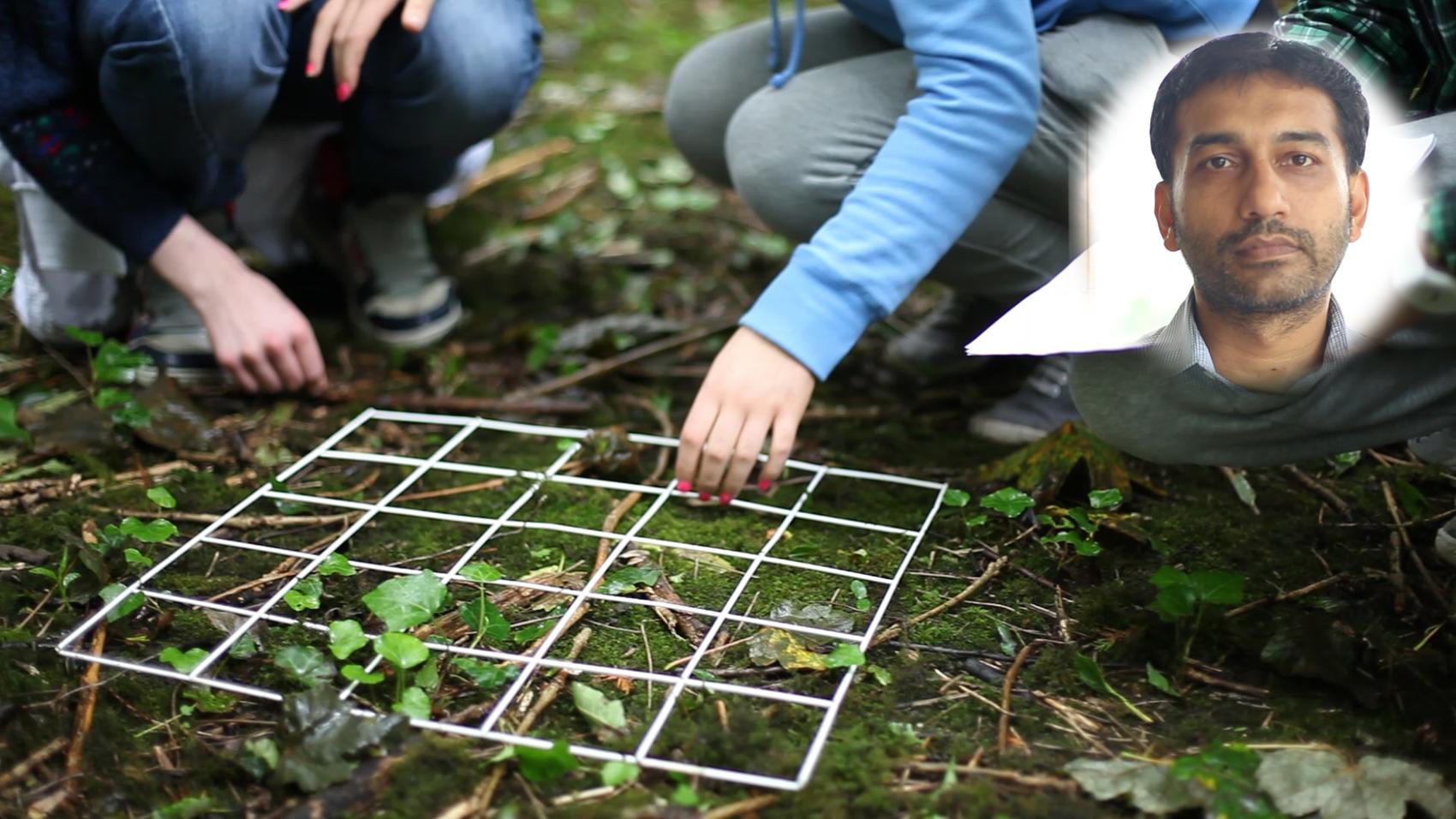
Landscape Ecology
Gautam Talukdar
Scientist | Wildlife Institute Of India
Scientist | Wildlife Institute Of India
[ 19 years & 7 months Experience ]
Landscape ecology is the science of studying and improving relationships between ecological processes in the environment and particular ecosystems. This is done within a variety of landscape scales, development spatial patterns, and organizational levels of research and policy
"I did my graduation from Dukhane College, Maharashtra. Then did my post graduation in Botany from the Institute of India. Finally did my PhD from Indian Institute of Remote Sensing. I am working as a Scientist in Wildlife Institute of India since 1999."
|
|
|
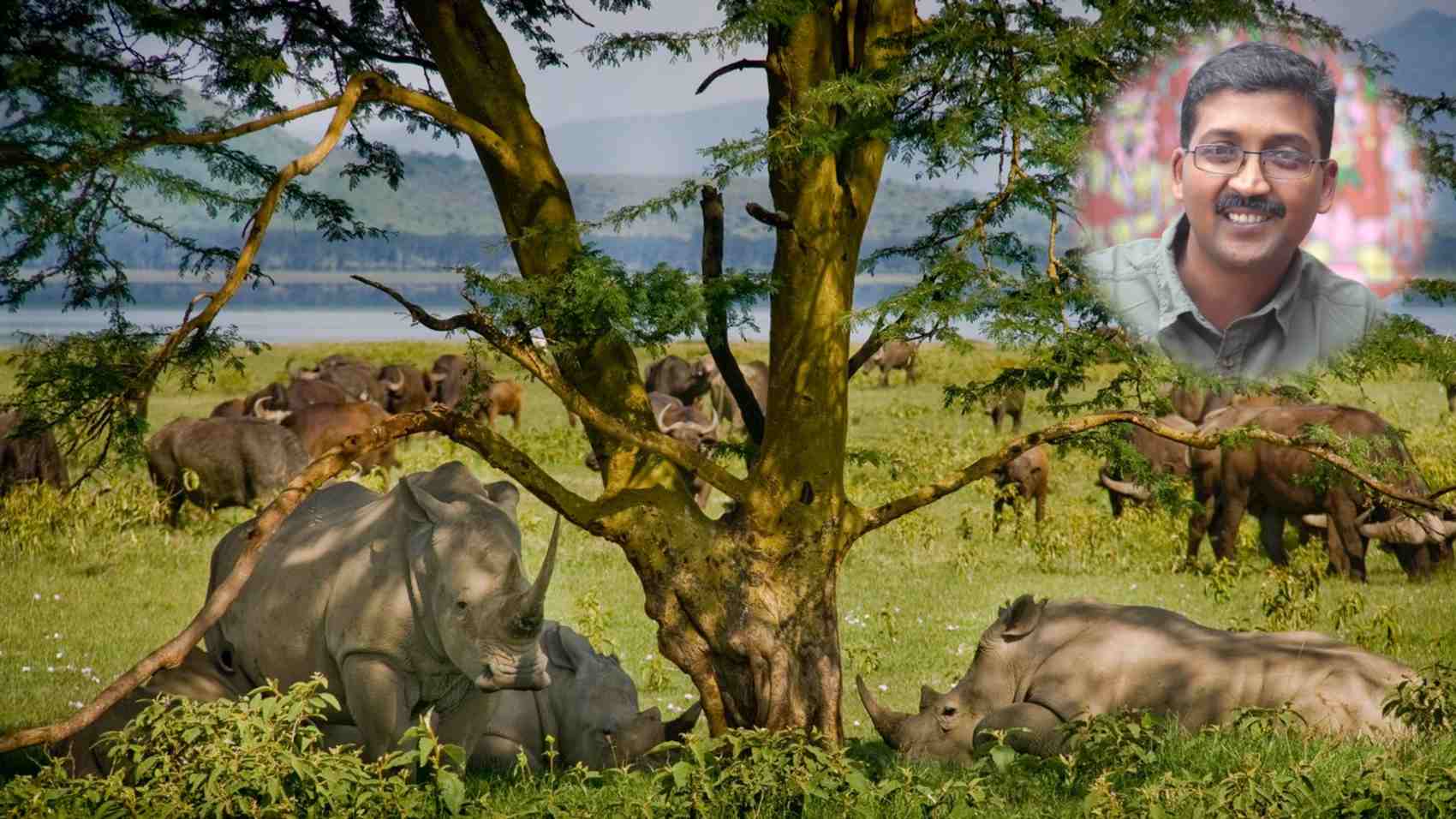
Wildlife Biology
Suresh Kumar
Scientist (E) | Wildlife Institute of India
Scientist (E) | Wildlife Institute of India
[ 23 years & 10 months Experience ]
A wildlife biologist is someone who studies and/or manages wild animals and their habitats. Wildlife biology as an academic subject or profession is usually narrowly defined as applying to terrestrial vertebrates.
"I have done Bachelors in Chemistry, Botany & Zoology. I then did a Masters in Wildlife Science and Ph D in Olive Ridley Sea Turtle from Wildlife Institute of India. I am also researching on Amur Falcon. I am working at Wildlife Institute of India since 1995 and am a Scientist (E) there."
|
|
|
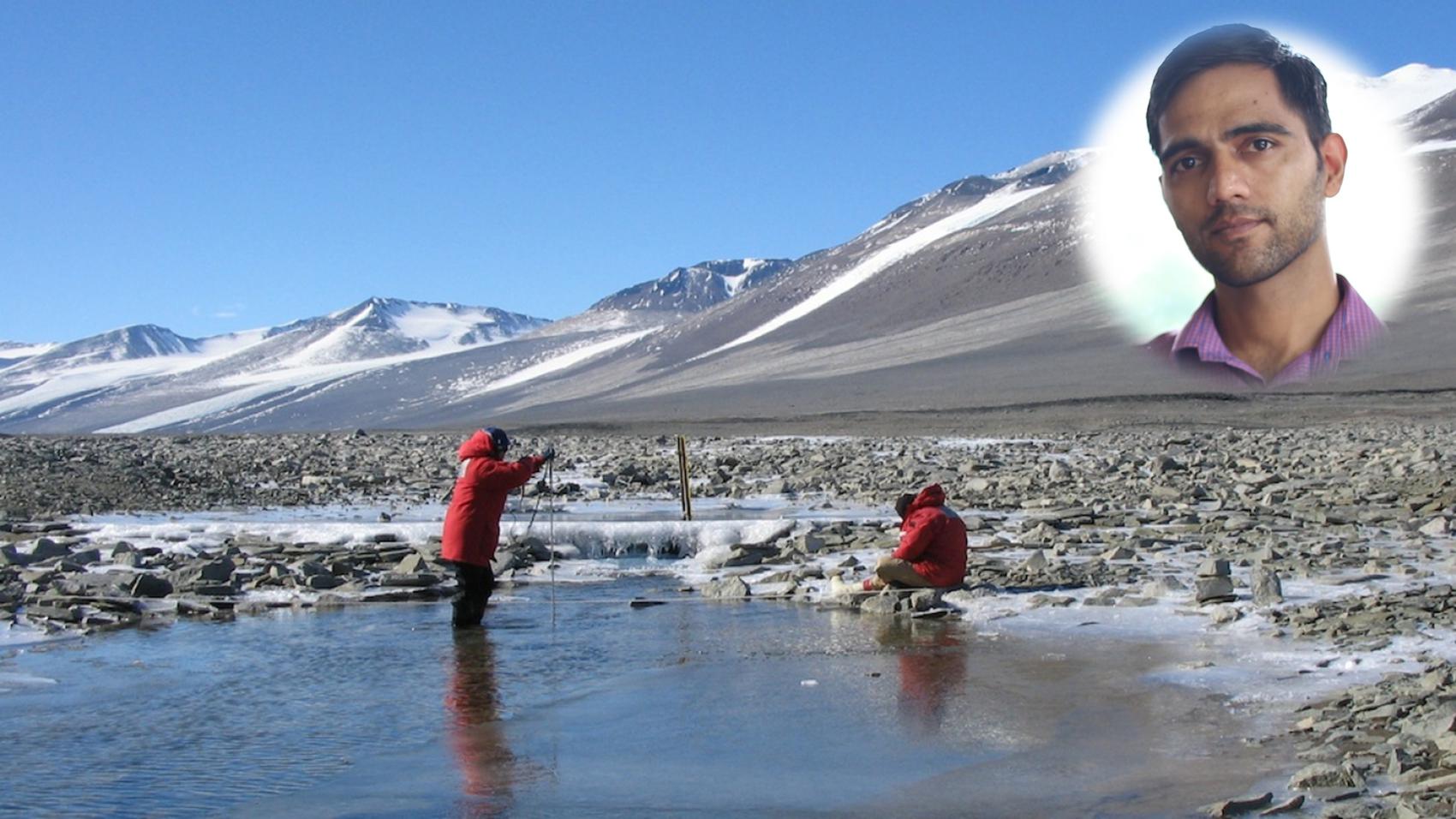
Ecological Research
Naveen Chandra Joshi
Project Scientist | Wildlife Institute Of India
Project Scientist | Wildlife Institute Of India
[ 2 years Experience ]
Ecological research is the branch of biology that deals with the relations of organisms to one another and to their physical surroundings.
"I did my schooling from Kendriya Vidyalaya , Haridwar. After that I did my post graduation in Zoology from HNB Garhwal University, Srinagar. Then I did my PhD from Gurukula Kangri University, Haridwar. I am working as a Project Scientist in Wildlife Institute of India since 2015."
|
|
|
Marine Biology
Anant Pande
Project Scientist | Wildlife Institute of India
Project Scientist | Wildlife Institute of India
[ 9 years & 7 months Experience ]
Marine biology is the study of marine organisms, their behaviors and interactions with the environment. Marine biologists study biological oceanography and the associated fields of chemical, physical, and geological oceanography to understand marine organisms.
"After completing B Sc in Zoology with specialization in Fishery Biology and M Sc in Zoology with specialization in Oceanography, I started working as a Project Assistant at National Institute of Oceanography. I was also selected as a student participant in Indian Antarctic Expedition. I am Project Scientist at Wildlife Institute of India."
|
|
|

Wildlife Biology
Dr S P Goyal
Scientist G | Wildlife Institute of India
Scientist G | Wildlife Institute of India
[ 32 years & 7 months Experience ]
Wildlife Biologists are scientists that observe and study the behaviors of animals. They frequently observe the features of certain wildlife and determine the creatures' role in specific ecosystems and/or how they interact with human beings. In addition, they will often perform various experiments to either increase our knowledge about a certain species or see how humans influence the ecosystem in question.
"After completing my B Sc, M Sc in Zoology and Ph D in Zoology, I started my research career in Thar Desert on Black Buck, Indian Gazelle and Great Indian Bustard. I worked there for quite some time and later joined Wildlife Institute of India (WII) in 1986. I worked there for 28 years and retired from the post of Scientist G. I am a Professor at WII."
|
|
|

Wildlife Conservation
Disha Ramanan
Research Assistant & Content Writer | Various Assignments
Research Assistant & Content Writer | Various Assignments
[ 7 years & 1 month Experience ]
Wildlife conservation is the practice of protecting wild plant, animal species and their habitat. Wildlife plays an important role in balancing the ecosystem and provides stability to different natural processes of nature. The goal of wildlife conservation is to ensure that nature will be around for future generations to enjoy and also to recognize the importance of wildlife and wilderness for humans and other species alike.
"After my education, I started working on Wildlife Conservation. I have worked on many wildlife research projects in many states like in Assam, Uttarakhand , Madhya Pradesh, Karnataka and Kerala."
|
|
|
Evolutionary Biology
Vishnupriya Kolipakam
Scientist C | Wildlife Institute of India
Scientist C | Wildlife Institute of India
[ 5 years & 7 months Experience ]
Evolutionary biology is the subfield of biology that studies the evolutionary processes that produced the diversity of life on Earth, starting from a single common ancestor. These processes include natural selection, common descent, and speciation.
"I have done B Sc in Biotechnology) from Bharathiar University and M Sc in Bioscience from University of Leads, UK. I then did Ph D in Evolutionary Biology from Maxplanck Institute, Germany & Netherlands. I am a population geneticist with a strong interest in Evolutionary Biology, Molecular Anthropology and Conservation Genetics. For my PhD from Max Planck Institute (Nijmegen), I looked at incorporating information on genes, language and culture in a consilient framework towards a holistic approach to understanding pre-history. I used population genetic modelling, coalescent simulations, forward simulation techniques and phylogenetics to understand the pre-history of Polynesian and Dravidian Societies. My research interests are largely interdisciplinary, working at the interface of evolutionary biology, anthropology and conservation biology. I worked on the mitochondrial DNA stratigraphy of Islands of Southeast Asia (University of Leeds, United Kingdom), population genetics of northeastern hill tribes, and molecular ecology of large carnivores(National Centre for Biological Sciences , Bangalore), and the anthropological and evolutionary nature of perceptions of human wildlife conflict in semi-arid areas of India, (Centre for Ecological Sciences, Indian Institute of Science). I have been associated with the Monitoring Tigers, Co-Predators, Prey and their Habitat project here at the Wildlife Institute. My role was to lead the genetic component of the project, wherein we used molecular techniques to understand the genetic diversity of large carnivores across the country. I continue to contribute to this aspect of the project. I am currently associated with projects investigating the population genetic structure of large carnivores, characterization of genetic diversity of Asiatic lions, and population genetic characteristics and phylogeography of the Gangetic river dolphin. My interest lies in exploring the evolutionary trajectories of biological systems, adaptive functions and their consequences, and the use of this information in making scientifically sound conservation interventions. I am specialized in Evolutionary Biology, Population Genetics, Phylogenetics, and Molecular Anthropology. I am Scientist C and Faculty at Wildlife Institute of India."
|
|
|

Conservation Genetics
Shweta Singh
Senior Research Fellow | Wildlife Institute of India
Senior Research Fellow | Wildlife Institute of India
[ 5 years & 8 months Experience ]
Conservation genetics is an interdisciplinary subfield of Population Genetics that aims to understand the dynamics of genes in populations principally to avoid extinction. Therefore, it applies genetic methods to the conservation and restoration of biodiversity.
"After completing my B Sc & M Sc in Zoology from Dayalbagh Educational Institute, Agra, I joined Wildlife Institute of India (WII) in 2013 in All India Tiger Monitoring Project. I am working in Genetic Connectivity of Large Carnivores and I am a Senior Research Fellow at WII."
|
|
|
Sustainability Consulting
Alok Gupta
Founder & CEO | Envecologic
Founder & CEO | Envecologic
[ 1 year & 7 months Experience ]
Sustainability consultancy entails providing innovative and smart strategies to businesses on how to make their products sustainable (usually in an ecological sense) for example, providing advice on engineering challenges to meet modern-day building standards and norms such as the LEED Green Building Rating System. Sustainability consultants might also advise a business on how to achieve carbon neutrality.
"After completing my education, I joined Boston Strategies International, a US-based company, where I served as Energy Economist & Country Representative. In December 2012, I started my own venture, Envecologic, which focuses on education & training, research and advisory services in the areas of environmental sustainability."
|
|
|

Wildlife Crime
Abdullah A Sadique
Wildlife Inspector | Bangladesh Forest Department
Wildlife Inspector | Bangladesh Forest Department
[ 6 years & 10 months Experience ]
Wildlife crime is an area of study typically defined from a legalistic perspective as an act in contravention of laws protecting wildlife. These crimes occur both within and across national borders and may include trafficking in wildlife or wildlife products.
"After completing my masters I started working as Wildlife Inspector to safeguard the wildlife and biodiversity. I am currently working in Bangladesh Forest Department."
|
|
|

Ecotoxicology
Anju Baroth
Scientist C | Wildlife Institute of India
Scientist C | Wildlife Institute of India
[ 11 years & 9 months Experience ]
Ecotoxicology is the study of the effects of toxic chemicals on biological organisms, especially at the population, community, ecosystem, and biosphere levels. Ecotoxicology is a multidisciplinary field, which integrates toxicology and ecology.
"I did B Sc in Botany, Zoology & Chemistry and M Sc in Environmental Science from University of Rajasthan. I then did a Ph D in Environmental Toxicology. I joined General Electric as Toxicity Expert and worked for 2 years. I then moved to General Elastic Plastics as Life Cycle and Sustainability Expert and worked for 5 years. I am an Ecotoxicologist and Scientist C at Wildlife Institute of India."
|
|
|
Conservation Genetics
Dr S K Gupta
Scientist E | Wildlife Institute of India
Scientist E | Wildlife Institute of India
[ 16 years & 7 months Experience ]
Conservation genetics is an interdisciplinary subfield of Population Genetics that aims to understand the dynamics of genes in populations principally to avoid extinction. Therefore, it applies genetic methods to the conservation and restoration of biodiversity.
"After completing B Sc in Botany, Zoology & Chemistry, I did Masters in Biotechnology from Meerut. Post that, I did Ph D in Wildlife Science from Saurashtra University. After that, I then worked as a Scientist at Dr Surapaneni Genomic Solutions for 2 years. I joined Wildlife Institute of India in 2008 as a Scientist C and am now I am a Scientist E."
|
|
|
Ecological Conservation
Dr Harshwanti Bisht
Deputy Director | Directorate of Higher Education
Deputy Director | Directorate of Higher Education
[ 41 years Experience ]
Ecological Conservation is the management of nature and of Earth's biodiversity with the aim of protecting species, their habitats, and ecosystems from excessive rates of extinction and the erosion of biotic interactions.
"I am a mountaineer. In 1981, I along with two other women became the first three women to summit the main peak of Nanda Devi (7,816 m). I was also a member of the Indian expedition to Mount Everest in 1984 and was awarded the Arjuna Award and Directorate of Higher Education, Government of UP Gold Medal. I am the Founder of Save Gangotri Project. I was awarded the Sir Edmund Hillary Medal for my philanthropic achievements and work to improve conditions in the Gangotri area of Uttarakhand, at the headwaters of the Ganges over the past 25 years. I am Deputy Director (Higher education) & Joint Director (RUSA) and actively working for the eco-conservation of Gangotri in Garhwal Himalaya."
|
|
|
Biodiversity Conservation
Ruchi Badola
Scientist G & Senior Professor | Wildlife Institute of India
Scientist G & Senior Professor | Wildlife Institute of India
[ 25 years & 7 months Experience ]
Conservation biology is the management of nature and of Earth's biodiversity with the aim of protecting species, their habitats, and ecosystems from excessive rates of extinction and the erosion of biotic interactions.
"After completing B A & M A in Economics, I did Ph D in Economics from Jiwaji University. After that, I joined Wildlife Institute of India in 1993 and have been there for 25 years now. I am Scientist G & Senior Professor there."
|
|
|
Natural Resource Management
K Ramesh
Scientist | Wildlife Institute of India
Scientist | Wildlife Institute of India
[ 23 years & 7 months Experience ]
Natural resource management refers to the management of natural resources such as land, water, soil, plants and animals, with a particular focus on how management affects the quality of life for both present and future generations.
"I have a Master's degree in Wildlife Biology from AVC College (Bharathidasan University), Tamil Nadu and a Ph D degree in Forest Ecology and Environment from Wildlife Institute of India (a Research Center of Forest Research Institute University, Dehradun). I have been working with WII since 1995; earlier as Research Fellow and joined the faculty in 2008. Prior to joining the faculty, I was with the World Pheasant Association-UK as a Post Doctoral Fellow for four years (2005-2008), undertaking a collaborative research project with WII on pheasants and partridges in northwest India. My professional interests include Landscape Ecology, Remote Sensing and GIS, Quantitative Methods, Species Distribution Models, Biostatistics, Radio-Telemetry, Wildlife Population Estimation and Monitoring. I have research and conservation experiences on birds and mammals of the Western Himalaya, Shivalik-Terai Landscape and Central India. Presently involved in diversity of projects that include Reintroduction and Monitoring of Tiger Population in Panna Tiger Reserve (Madhya Pradesh), Conservation Breeding and Reintroduction of Western Tragopan in Himachal Pradesh, Application of Wireless Sensor Networks for Forest and People Protection, Integration UAV (Drone) for wildlife research and management, and Climate Change Effects on Riverine Forests and Indicator Species along the Ganges. I have been a member of IUCN/SSC/Galliformes Specialist Group, International Association for Landscape Ecology, International Society for Restoration Ecology, etc. In addition to Gold Medal for my Graduation as well as Post-Graduation Courses, I received prestigious Distinguished Foreign Scholar Award by the US Regional Association of the International Association for Landscape Ecology and NASA-MSU Professional Enhancement Award by National Aeronautics and Space Administration, and Michigan State University, USA. I have traveled widely and am interested in sports."
|
|
|
Plant Ecology & Conservation
Dr G S Rawat
Dean | Wildlife Institute of India
Dean | Wildlife Institute of India
[ 34 years & 9 months Experience ]
Plant ecology is a subdiscipline of ecology which studies the distribution and abundance of plants, the effects of environmental factors upon the abundance of plants, and the interactions among and between plants and other organisms. Conservation is the preservation or efficient use of resources in an efficient or ethical manner.
"I did Bachelors and Masters in Botany from Kumaon University, Nainital. I also did Ph D in Taxonomy & Ethnobotany from the same college. I taught Plant Ecology and Taxonomy at Kumaon University. I also served at Botanical Survey of India for some time. I joined Wildlife Institute of India in 1986 as a Professor and have held various positions at the Institute since then. I am Dean at Wildlife Institute of India."
|
|
|

Ecology & Conservation
Raman Kumar
Ecologist | Nature Science Initiative
Ecologist | Nature Science Initiative
[ 17 years & 10 months Experience ]
Ecology is the branch of biology which studies the interactions among organisms and their environment. Objects of study include interactions of organisms with each other and with abiotic components of their environment.
"After completing my graduation from HNB Garhwal University, I did post graduation from FRI, Dehradun. After that, I did my PhD from Manipal University. In 2001, I started working as an ecologist and since then I have been working for various institutions and projects."
|
|
|

Sustainability & LCA
Anju Baroth
Lead Engineer | General Electric
Lead Engineer | General Electric
[ 9 years Experience ]
Sustainability is the process of change, in which the exploitation of resources, the direction of investments, the orientation of technological development and institutional change are all in harmony and enhance both current and future potential to meet human needs and aspirations. Life-cycle assessment is a technique to assess environmental impacts associated with all the stages of a product's life from raw material extraction through materials processing, manufacture, distribution, use, repair and maintenance, and disposal or recycling.
"I did B Sc in Botany, Zoology & Chemistry and M Sc in Environmental Science from University of Rajasthan. I then did a Ph D in Environmental Toxicology. I joined General Electric as Toxicity Expert and worked for 2 years. I then moved to General Elastic Plastics as Life Cycle and Sustainability Expert and worked for 5 years. I am an Ecotoxicologist and Scientist C at Wildlife Institute of India."
|
|
|
[Install the LifePage App to access all Talks]


 Workshop
 Discuss
 Meet
Meet
 Advisor
 Story
Story
 Fine Print
 Links
Links
 Blog
Blog
 Follow
