Career Counselling 2.0 HomeHomeCareer Counselling 2.0 AbroadAbroadCareer Counselling 2.0 PlanPlanCareer Counselling 2.0 | TalksTalksCareer Counselling 2.0 PhilosophyPhilosophyCareer Counselling 2.0 SeminarSeminarCareer Counselling 2.0 PagesPagesCareer Counselling 2.0 AdvisorsAdvisorsCareer Counselling 2.0 TestimonialsTestimonials

Hindustani Classical Music

Classical Vocalist Himanshu Darmora talks about Hindustani Classical Music course, what is Hindustani Classical Music and other details about a Career in Hindustani Classical Music.


Hindustani Classical Music

Himanshu Darmora | Classical Vocalist | Various Creative Assignments


What is Hindustani Classical Music?


Hindustani Classical Music is a great Career option. Internet is brimming with pages on How to get into Hindustani Classical Music, while one should first understand What is a Career in Hindustani Classical Music. It is best to learn about Hindustani Classical Music from a real professional, this is akin to getting it from the horse's mouth.

Classical Vocalist Himanshu Darmora invested 15 years in Hindustani Classical Music. Classical Vocalist Himanshu Darmora describes Hindustani Classical Music as:

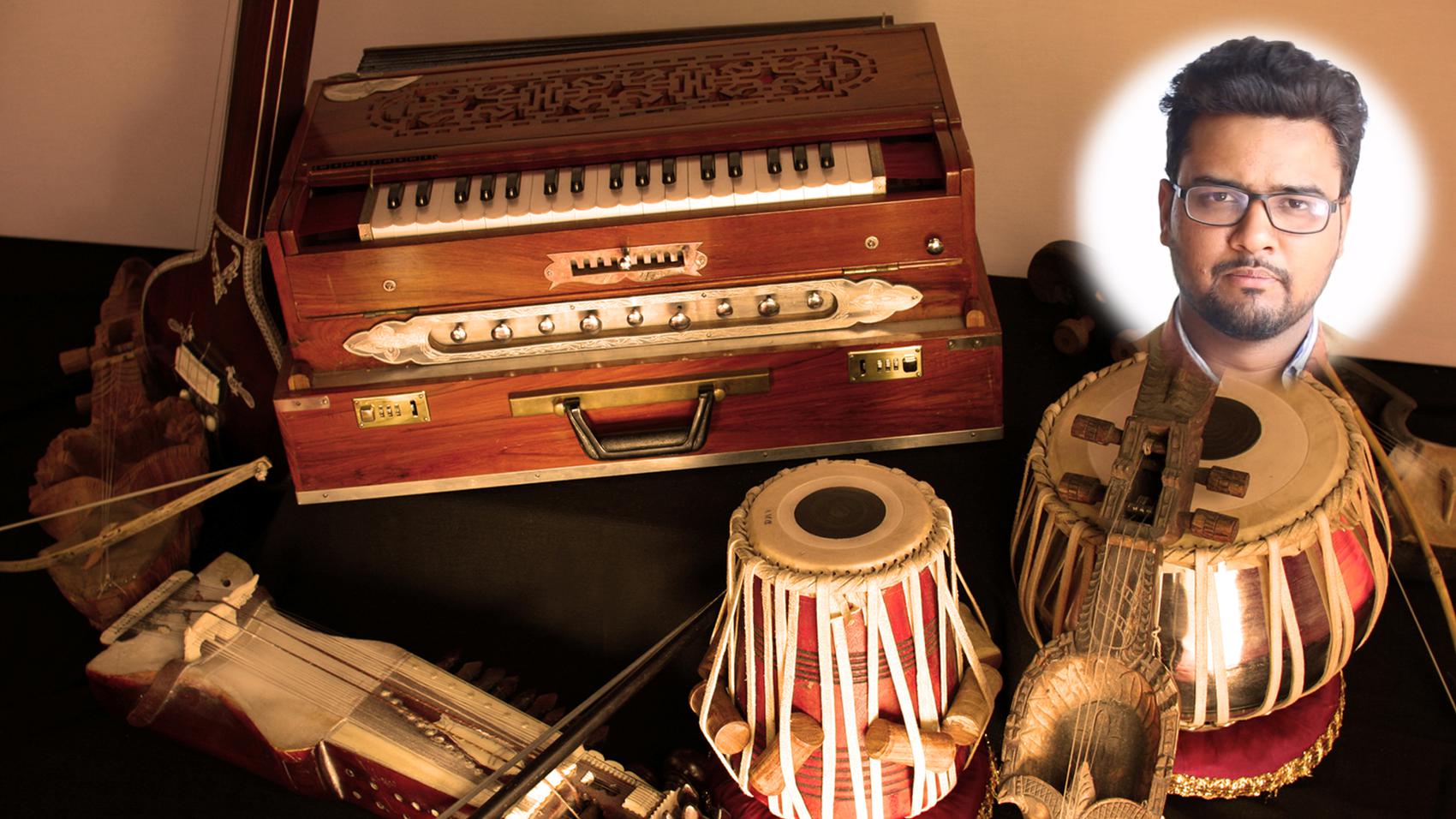
Hindustani Classical Music is the traditional music of northern areas of the Indian subcontinent, including the modern states of India, Nepal, Bangladesh and Pakistan. Its main instruments are tabla, sitar, sarod, flute and modern guitars. Hindustani (north Indian) Classical Music can be divided into melody, rhythm and harmony.


How Classical Vocalist Himanshu Darmora got into Hindustani Classical Music?


After doing my BA in Mass Comm & Journalism from IIMC Delhi, I did MA in Hindustani Vocal from Khairagarh University and then M Phil in Hindustani Music from Himachal University. I am also a Prabhakar in Classical Music from Allahabad University. I am a visiting faculty to RIMC, CJM, Shri Ram College of Commerce and many more. I also organise various musicial shows including Abhivyakti SAPA (Society for Advancement of performing Arts).


Classical Vocalist Himanshu Darmora's Talk on Hindustani Classical Music


Session Image
The Journey of Hindustani Classical Music


What Is Hindustani Classical Music
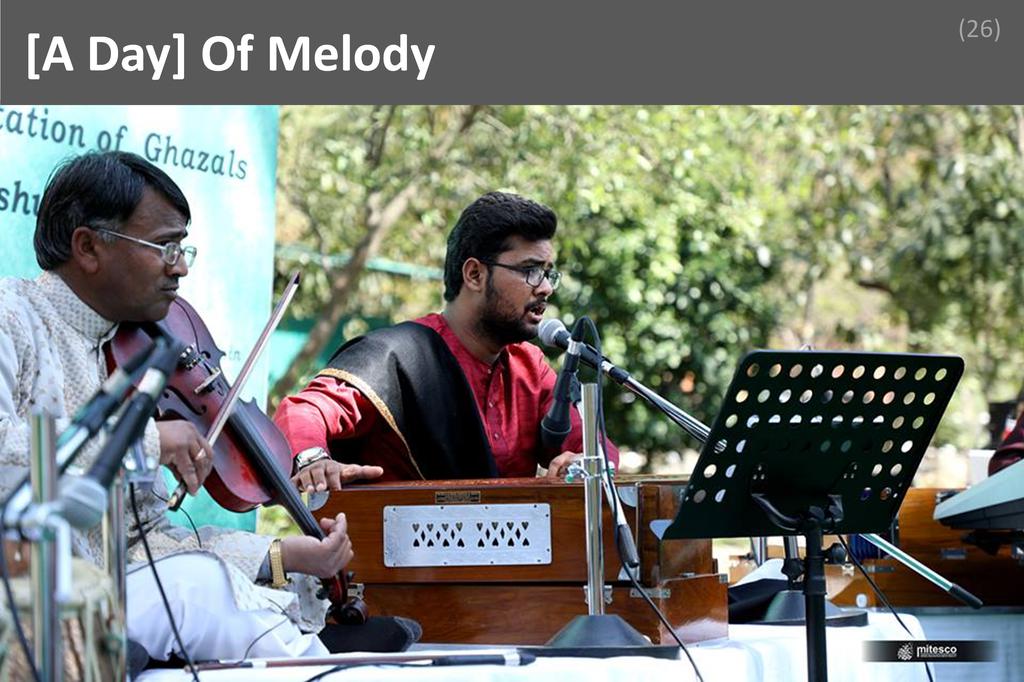

Hindustani Classical Music

### Hindustani Classical Music Image

Hindustani Classical Music is a traditional form of Indian music that originated in North India. It is characterized by its improvisational nature, intricate ragas, and rhythmic patterns called talas. This genre emphasizes both vocal and instrumental performances, fostering deep emotional expression and spiritual connection through its melodic and rhythmic structures.

Hindustani Classical Music holds immense cultural significance, serving as a bridge between generations and preserving centuries-old traditions. For professionals, it offers a profound sense of artistic fulfillment and personal growth, as mastering its complexities demands dedication and discipline. The genre enhances cognitive abilities, such as memory and concentration, due to its intricate patterns and improvisational demands. It also provides opportunities for global recognition, as Indian classical musicians are celebrated worldwide for their skill and creativity. Furthermore, the meditative and therapeutic qualities of this music contribute to emotional well-being, both for performers and listeners, making it a rewarding career path for those passionate about music and cultural heritage.

A professional Hindustani classical vocalist might spend years training under a guru, perfecting their command over ragas and talas. In a typical performance, the artist begins with an alap, slowly unfolding the raga’s mood, followed by compositions set to specific rhythmic cycles. The musician improvises within the raga’s framework, responding to the audience’s energy and collaborating with accompanists like tabla and harmonium players. This dynamic interaction showcases technical mastery and emotional depth, captivating listeners and creating a unique experience each time. Such performances often take place in concert halls, music festivals, or even international venues, allowing the artist to share the rich tradition of Hindustani classical music with diverse audiences.

Education


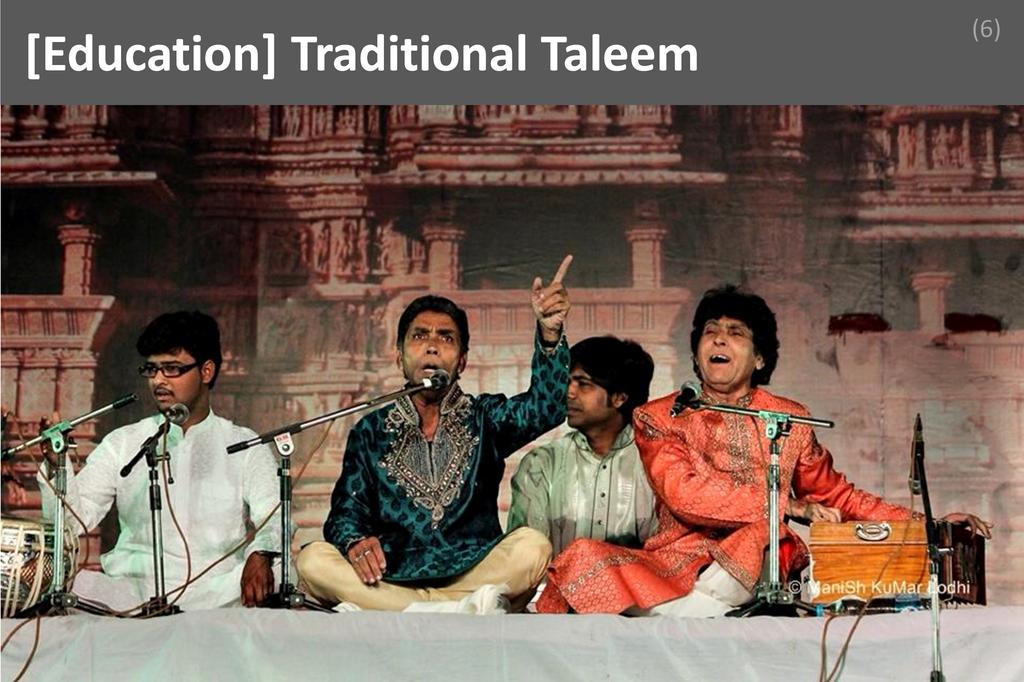
Traditional Taleem

### Traditional Taleem Image

Traditional Taleem refers to the time-honored method of learning Hindustani Classical Music through direct mentorship, oral transmission, and immersive practice under a guru. It emphasizes rigorous training, discipline, and deep absorption of musical nuances, forming the backbone of both academic study and professional mastery in this musical tradition.

Understanding Traditional Taleem is essential for anyone aspiring to excel in Hindustani Classical Music because it provides the authentic framework through which musical knowledge, style, and discipline are transmitted. This approach not only imparts technical skills but also instills a deep sense of musicality, creativity, and respect for the art form’s lineage. For professionals, mastery of Traditional Taleem ensures a solid foundation in raga structure, improvisation, and performance etiquette, all of which are critical for building a sustainable career. Over time, this grounding enables musicians to innovate within the tradition, teach future generations, and gain recognition and credibility within the classical music community.

Consider a vocalist preparing for a prestigious concert. Drawing from their Traditional Taleem, they begin their day with structured riyaz, focusing on the intricate patterns and ornamentations taught by their guru. During rehearsals, their understanding of raga development and improvisational techniques, acquired through years of immersive training, allows them to interpret compositions with authenticity and depth. When interacting with accompanists, their knowledge of traditional performance protocols ensures seamless collaboration. In the concert itself, the artist’s ability to adapt to the audience’s mood and maintain the purity of the raga reflects the practical application of their taleem, demonstrating how theoretical learning translates into professional excellence and artistic expression.

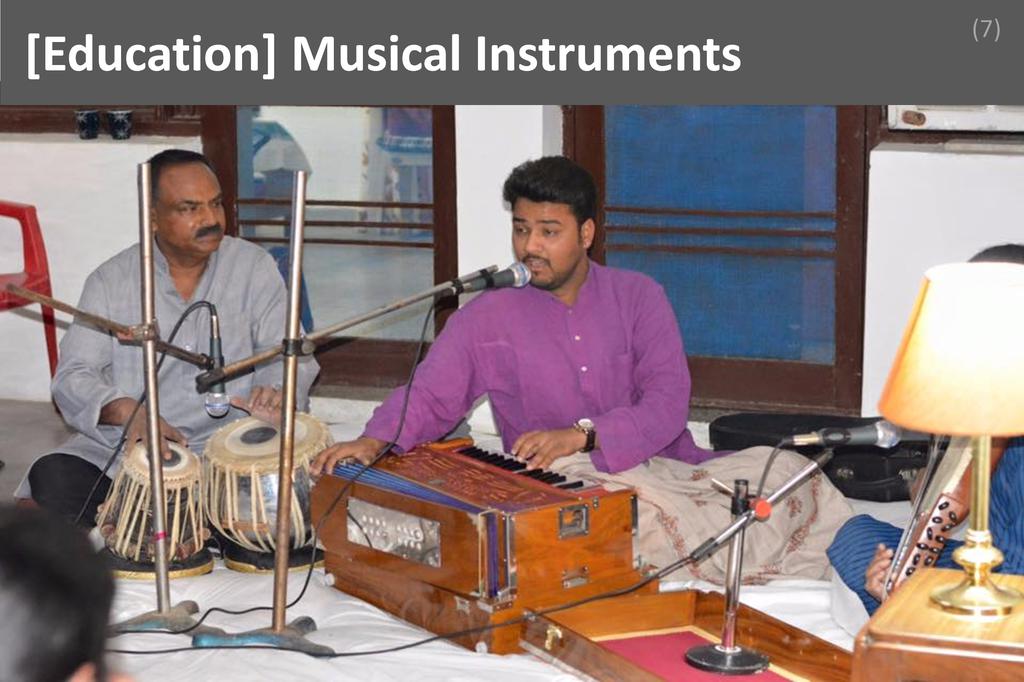
Musical Instruments

### Musical Instruments Image

Musical instruments are devices created or adapted to produce musical sounds, each with unique tonal qualities and playing techniques. In Hindustani Classical Music, understanding these instruments is essential, as they form the backbone of performance, composition, and accompaniment, making their study a core academic and professional requirement.

A deep understanding of musical instruments is vital for anyone pursuing Hindustani Classical Music, as it enables musicians to appreciate the nuances of sound production, resonance, and technique. Mastery of this subject allows professionals to communicate effectively with accompanists, select appropriate instruments for specific ragas, and innovate within traditional frameworks. This foundational knowledge also aids in the interpretation of compositions, improvisation, and the ability to adapt performances for different settings. Over the long term, expertise in musical instruments enhances a musician’s versatility, opens opportunities for teaching, and supports collaboration with artists from other genres, ensuring a sustainable and dynamic career in the ever-evolving landscape of classical music.

Consider a vocalist preparing for a concert who collaborates closely with a tabla player and a harmonium accompanist. Their theoretical understanding of musical instruments allows the vocalist to guide the accompanists on the desired tempo, dynamics, and ornamentation, ensuring a cohesive performance. During rehearsals, the vocalist may suggest specific tabla bols or harmonium phrases that complement the chosen raga, drawing on their knowledge of each instrument’s capabilities and limitations. This expertise not only elevates the overall musical experience but also fosters mutual respect and creative synergy among the performers, ultimately resulting in a more engaging and authentic presentation for the audience.

Sur Laya

### Sur Laya Image

Sur Laya refers to the intricate relationship between melody (sur) and rhythm (laya) in Hindustani Classical Music. It is the synchronization of accurate pitch with precise timing, forming the backbone of musical expression. Mastery of Sur Laya is essential for both academic study and professional performance in this tradition.

Understanding Sur Laya is vital for anyone pursuing Hindustani Classical Music because it underpins every aspect of musical performance and composition. A musician’s ability to maintain perfect pitch while adhering to complex rhythmic cycles is what distinguishes a novice from a seasoned professional. This foundational knowledge enables artists to interpret ragas authentically, improvise creatively, and collaborate effectively with accompanists. Over time, proficiency in Sur Laya enhances a musician’s reputation, opens doors to advanced learning, and increases opportunities for solo and ensemble performances. It also forms the basis for teaching, composing, and even musicological research, making it indispensable for a sustainable and respected career in Hindustani Classical Music.

Consider a vocalist preparing for a live concert accompanied by tabla and harmonium. During the performance, the singer must render each note of the raga with precise intonation while simultaneously aligning their phrases with the intricate rhythmic cycles played by the tabla. If the vocalist’s understanding of Sur Laya is strong, they can confidently execute complex improvisations, maintain cohesion with the accompanists, and respond dynamically to the audience’s energy. This seamless integration of melody and rhythm not only elevates the musical experience but also demonstrates the artist’s command over the core principles of Hindustani Classical Music, earning them respect and recognition within the musical community.

Poetry

### Poetry Image

Poetry is a literary form that uses rhythm, meter, imagery, and expressive language to evoke emotions, convey ideas, and tell stories. In Hindustani Classical Music, poetry forms the textual foundation of compositions, shaping the mood, theme, and emotional depth of performances, and is essential for both interpretation and improvisation.

A deep understanding of poetry is indispensable for anyone pursuing or working in Hindustani Classical Music. The lyrics, or bandish, are not merely words set to melody; they encapsulate nuanced emotions, cultural references, and philosophical themes that define the character of each raga. Mastery of poetic forms and language enables musicians to interpret compositions authentically, infuse performances with emotional resonance, and connect with audiences on a profound level. Over time, this expertise enhances a musician’s ability to compose original works, collaborate with poets, and contribute meaningfully to the preservation and evolution of the tradition. Thus, poetry is not just an academic requirement but a lifelong asset that enriches a musician’s artistry and professional growth.

Consider a vocalist preparing for a concert featuring a thumri, a semi-classical genre known for its poetic richness. The artist studies the poem’s language, metaphors, and emotional undertones to fully grasp its meaning. During the performance, this understanding allows the singer to emphasize certain words, modulate their voice to reflect the poem’s sentiment, and improvise with sensitivity to the text’s mood. The audience, in turn, experiences a performance that is not only musically skilled but also emotionally compelling, as the artist’s interpretation of the poetry brings the composition to life. This daily integration of poetic knowledge distinguishes accomplished musicians in the field.

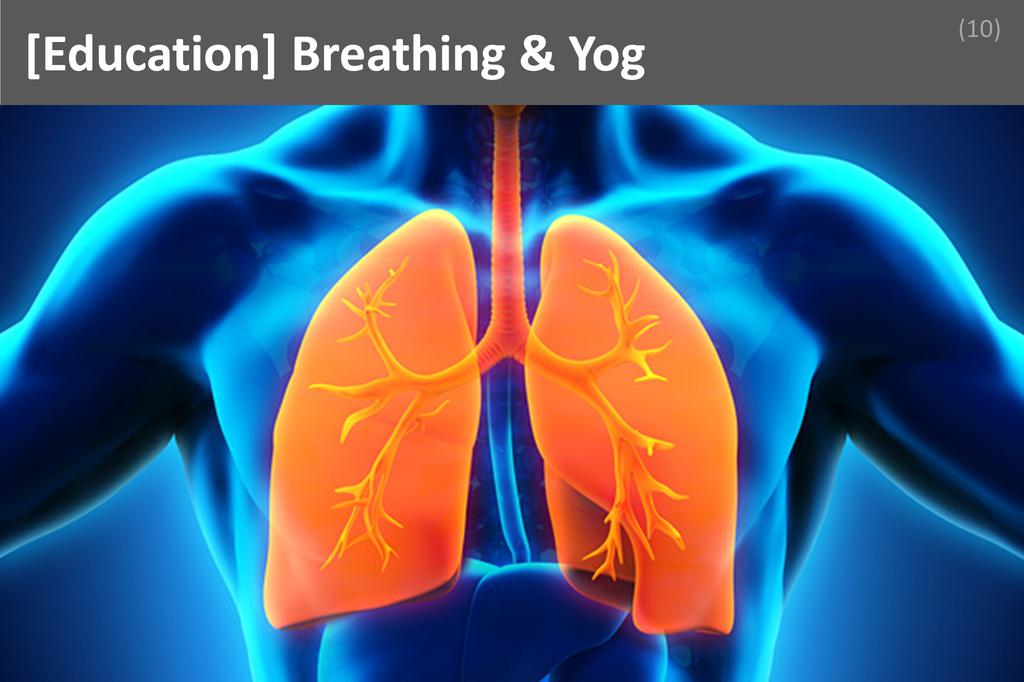
Breathing & Yog

### Breathing & Yog Image

Breathing & Yog refers to the disciplined practice of controlled breathing techniques and yogic exercises that enhance physical, mental, and emotional well-being. In Hindustani Classical Music, it is an essential academic and professional discipline, enabling musicians to develop stamina, control, and expressive capability necessary for rigorous vocal or instrumental performances.

Understanding Breathing & Yog is vital for anyone pursuing Hindustani Classical Music because it directly influences voice modulation, breath control, and overall performance quality. Mastery of these techniques forms the bedrock of a musician’s skill set, allowing for sustained singing, intricate phrasing, and emotional depth in renditions. Regular practice not only improves lung capacity and vocal strength but also fosters mental clarity and focus, which are crucial during long performances or demanding practice sessions. Over the course of a career, these skills help prevent vocal strain and fatigue, ensuring longevity and consistency in performance. Furthermore, a deep knowledge of Breathing & Yog distinguishes professionals, making them more adaptable and resilient in the face of challenging musical demands.

Consider a professional vocalist preparing for a three-hour evening concert. Before stepping onto the stage, they engage in specific yogic breathing exercises to calm nerves and center their focus. During the performance, their understanding of breath control allows them to execute complex taans and long alaaps without running out of breath or compromising tonal quality. When faced with demanding compositions that require sustained notes or rapid-fire passages, their yogic training ensures that their voice remains steady and expressive. After the concert, they use relaxation techniques from Yog to recover quickly, minimizing fatigue and maintaining vocal health. This seamless integration of Breathing & Yog into daily routines exemplifies how theoretical knowledge translates into practical excellence in Hindustani Classical Music.

Skills


Visualisation

### Visualisation Image

Visualisation is the mental process of creating vivid, detailed images or scenarios in the mind, allowing musicians to anticipate, plan, and internalise musical concepts before actual performance. In Hindustani Classical Music, it enables artists to mentally rehearse ragas, improvisations, and intricate rhythmic patterns, forming a crucial part of their creative and technical preparation.

The ability to visualise musical structures, phrases, and performance settings significantly enhances a musician’s interpretative depth and technical accuracy. Clients and employers value this skill because it leads to more confident, expressive, and error-free performances, as artists can foresee and address challenges before they arise. Cultivating visualisation involves consistent mental practice, listening to masters, and consciously imagining every nuance of a raga or composition. Over time, this mental rehearsal becomes second nature, allowing musicians to experiment creatively, memorise complex pieces, and adapt swiftly during live performances. The result is a performer who is not only technically proficient but also deeply connected to the emotional and aesthetic essence of Hindustani Classical Music.

Imagine a vocalist preparing for a prestigious concert where they must present an elaborate rendition of Raga Yaman. Before stepping on stage, the artist spends time visualising the entire performance, from the opening alaap to the intricate taans and concluding phrases. By mentally mapping out each section, anticipating possible improvisational routes, and picturing the audience’s reactions, the musician builds confidence and clarity. During the actual performance, this prior visualisation allows the artist to navigate unexpected challenges, such as a sudden lapse in memory or a change in accompanist tempo, with poise and creativity. The result is a seamless, captivating performance that leaves a lasting impression on listeners.

Research

### Research Image

Research is the systematic process of gathering, analyzing, and interpreting information to increase understanding, solve problems, or create new knowledge. In Hindustani Classical Music, research enables musicians to explore ragas, compositions, historical contexts, and performance practices, enriching their artistry and ensuring the preservation and evolution of this intricate musical tradition.

The ability to conduct thorough research significantly enhances a musician’s interpretative depth, technical proficiency, and creative expression. Clients and employers value musicians who demonstrate a deep understanding of musical forms, historical lineage, and stylistic nuances, as this expertise leads to more authentic and compelling performances. Developing research skills involves studying ancient texts, listening to recordings, attending workshops, and engaging with gurus and peers. Over time, consistent inquiry and critical analysis help musicians stay updated with evolving trends, discover rare compositions, and contribute original insights to the field. This ongoing process of learning and discovery not only elevates personal artistry but also adds value to collaborations, teaching, and public performances.

Imagine a vocalist preparing for a prestigious concert where the theme revolves around rare ragas. The musician embarks on a research journey, delving into old manuscripts, listening to archival recordings, and consulting with senior artists to uncover authentic compositions and performance techniques. Through this meticulous research, the vocalist discovers a forgotten bandish that perfectly fits the concert’s theme. By presenting this unique piece, the artist not only captivates the audience but also earns respect from peers and critics for reviving a lost gem. This scenario highlights how research empowers musicians to solve artistic challenges, innovate within tradition, and achieve professional distinction in the competitive world of Hindustani Classical Music.

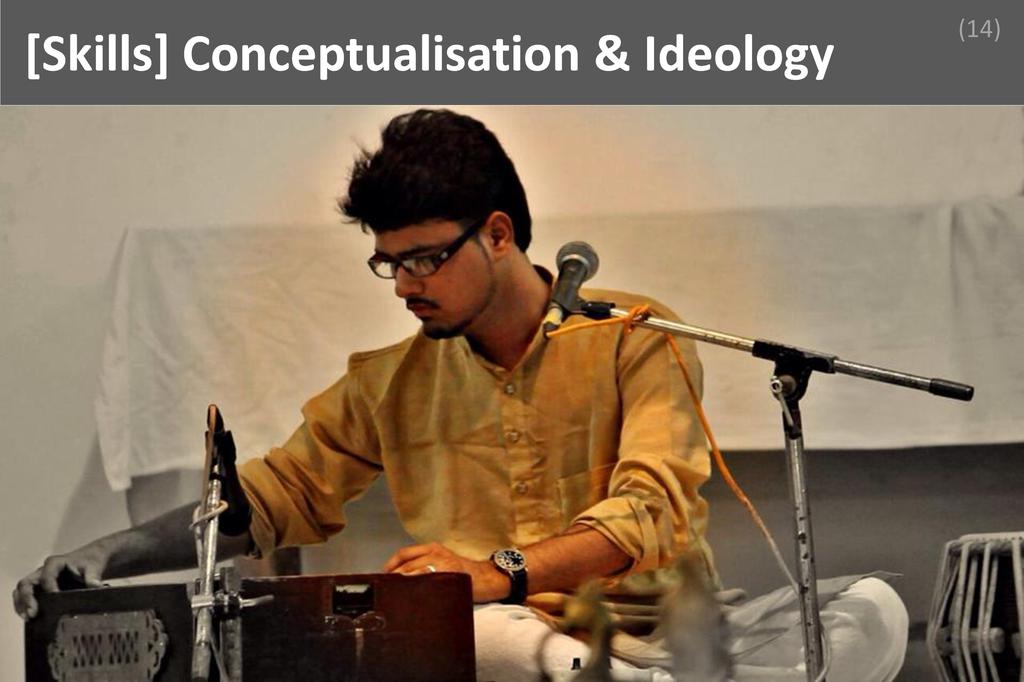
Conceptualization & Ideology

### Conceptualization & Ideology Image

Conceptualization & Ideology refers to the ability to form a clear artistic vision, grounded in philosophical understanding and creative interpretation, that shapes one’s musical expression and decisions. In Hindustani Classical Music, this skill enables musicians to internalize complex traditions, innovate within established frameworks, and communicate deeper meanings through their art.

Mastering conceptualization and ideology allows musicians to transcend rote performance and bring unique perspectives to their renditions. This skill enhances interpretative depth, enabling artists to create performances that are both authentic and original. Clients and employers value musicians who demonstrate a strong conceptual foundation because it reflects maturity, reliability, and the capacity to contribute meaningfully to collaborative projects or teaching environments. Cultivating this skill involves immersive study of musical theory, regular engagement with mentors, and critical reflection on one’s own artistic journey. Over time, musicians develop a nuanced understanding of ragas, talas, and the philosophical underpinnings of the tradition, allowing them to innovate responsibly while respecting the genre’s heritage.

Imagine a vocalist preparing for a prestigious concert where the audience expects both technical mastery and emotional depth. Midway through the performance, the artist senses a disconnect between the traditional bandish and the contemporary audience’s mood. Drawing on conceptualization and ideology, the vocalist reinterprets the raga, subtly weaving in improvisational elements that bridge classical purity with modern sensibilities. This thoughtful adaptation not only captivates the listeners but also preserves the integrity of the tradition. By relying on a well-developed conceptual framework, the musician successfully addresses the challenge, demonstrating both artistic leadership and a deep respect for the evolving nature of Hindustani Classical Music.

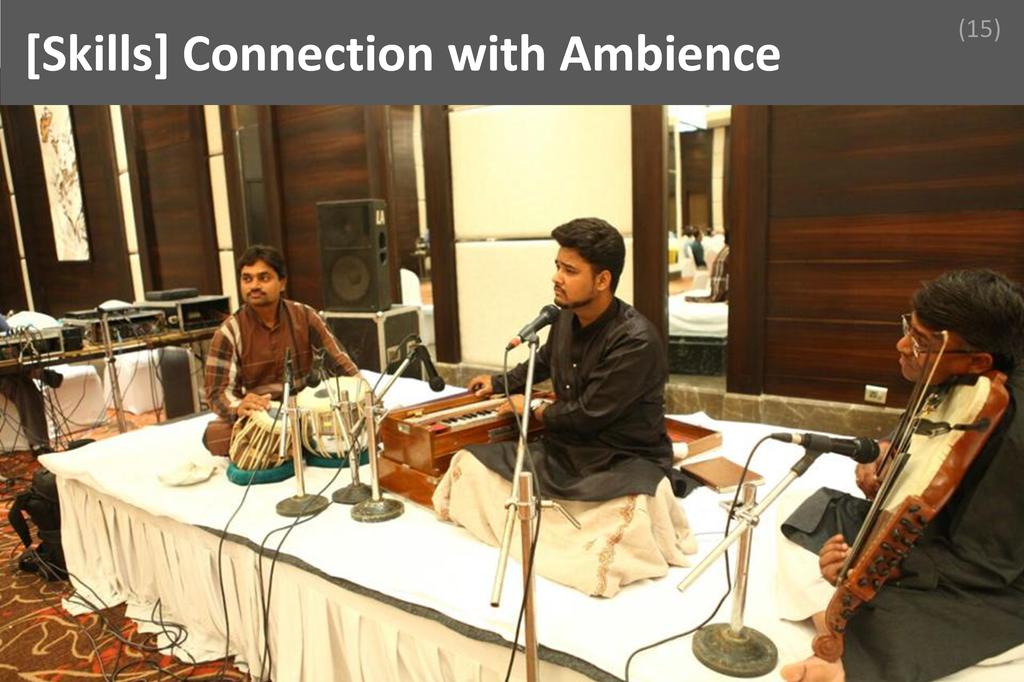
Connection with Ambience

### Connection with Ambience Image

Connection with Ambience refers to a musician’s ability to sense, interpret, and harmonize with the physical, emotional, and cultural atmosphere of a performance setting. This skill enables artists to adapt their music dynamically, creating a resonant experience that aligns with the mood, audience, and environment, enhancing overall impact.

Mastering connection with ambience elevates a Hindustani Classical musician’s artistry by allowing them to intuitively adjust tempo, volume, and improvisation based on the unique energy of each performance space and audience. Clients and employers deeply value this skill because it ensures every concert feels personal and memorable, fostering a strong rapport with listeners. Cultivating this ability involves attentive listening, mindfulness, and frequent live performance experience, which help musicians become sensitive to subtle cues from their surroundings. Over time, artists learn to read the room, respond to audience reactions, and even adapt to unexpected changes in acoustics or mood, making their performances more engaging and authentic.

Imagine a vocalist performing at an open-air evening concert where a sudden shift in weather brings a cool breeze and a hushed, reflective mood among the audience. Sensing this change, the musician chooses to render a contemplative raga, adjusting their voice to blend with the natural sounds and the subdued energy. This conscious alignment with the ambience transforms the performance, captivating the audience and turning a potential disruption into a memorable, immersive experience. By connecting with the environment and responding musically, the artist not only overcomes a challenge but also elevates the concert, demonstrating the profound importance of this core skill in Hindustani Classical Music.

Presentation

### Presentation Image

Presentation in Hindustani Classical Music refers to the artful and effective delivery of musical content, encompassing stage presence, clarity of expression, audience engagement, and the ability to communicate the emotional and technical depth of a performance. It is a vital skill that transforms technical mastery into a memorable and impactful musical experience, allowing artists to connect deeply with listeners and leave a lasting impression. In the professional toolkit of a Hindustani Classical musician, presentation bridges the gap between knowledge and audience appreciation, ensuring that the nuances of the tradition are both preserved and made accessible to diverse audiences.

Mastering presentation enhances a musician’s ability to captivate audiences, making performances more engaging and memorable. Clients and employers, such as event organizers, music academies, and recording labels, highly value musicians who can present their art with confidence and clarity, as this directly influences audience satisfaction and the overall success of an event. To cultivate this skill, musicians must practice not only their technical repertoire but also focus on aspects such as body language, vocal projection, and storytelling. Regular stage performances, feedback from mentors, and observing seasoned artists help refine presentation abilities. Over time, consistent effort in these areas leads to greater self-assurance and the ability to adapt performances to suit different audiences and settings.

Imagine a young vocalist invited to perform at a prestigious music festival. Midway through the performance, the audience appears distracted and disengaged. Drawing on strong presentation skills, the vocalist adjusts by introducing the next raga with a brief, relatable story, making eye contact, and modulating their voice to emphasize key phrases. This shift in approach rekindles the audience’s interest, drawing them into the performance and transforming the atmosphere. By the end, the audience is fully attentive and appreciative, and the vocalist receives enthusiastic applause and positive feedback from organizers. In this scenario, effective presentation not only salvages the performance but also enhances the musician’s reputation and future opportunities.

Positives


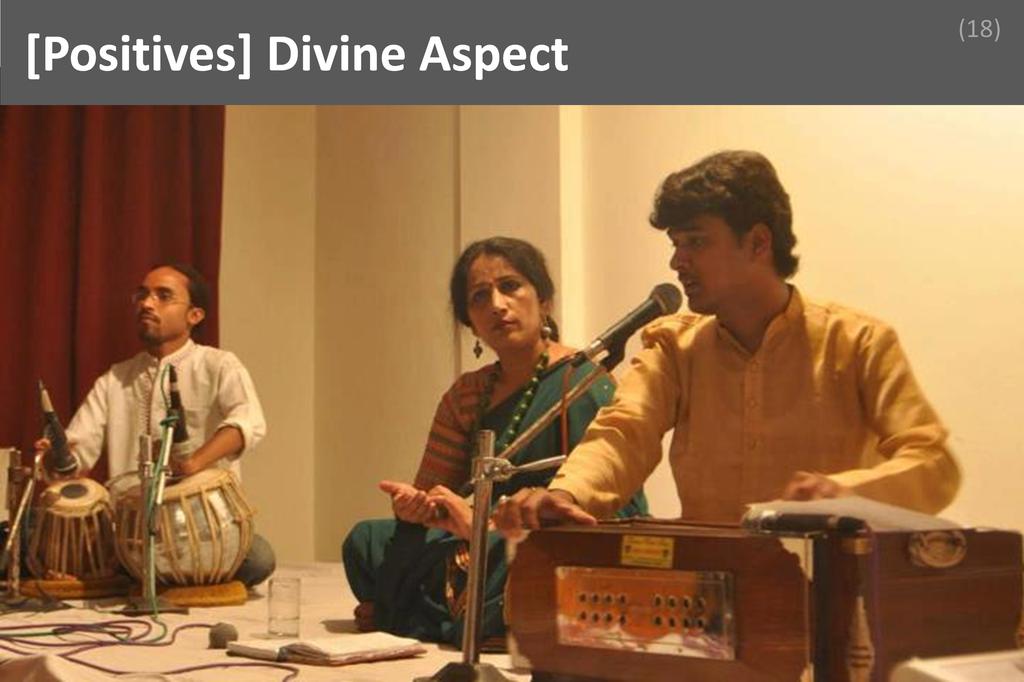
Divine Aspect

### Divine Aspect Image

The "Divine Aspect" in Hindustani Classical Music refers to the profound spiritual connection and transcendence that artists experience while performing or practicing. It is the sense of unity with something greater than oneself, where music becomes a medium for expressing and experiencing the sacred, elevating both the musician and the listener beyond the ordinary.

The Divine Aspect is a powerful force that transforms a career in Hindustani Classical Music into a deeply meaningful journey. Musicians often find that their work is not just a profession but a calling, infusing each performance with purpose and devotion. This spiritual connection fosters immense job satisfaction, as artists feel they are contributing to something timeless and universal. The sense of fulfillment derived from touching the divine through music enhances personal growth, resilience, and emotional well-being. Every day, professionals are reminded that their art is more than entertainment; it is a sacred offering that uplifts both themselves and their audiences, creating a lasting impact on their own lives and the cultural fabric of society.

Imagine a seasoned vocalist preparing for a dawn concert at a centuries-old temple. As the first notes of a morning raga resonate in the tranquil air, the musician feels an overwhelming sense of peace and connection to the divine. The audience, too, sits in silent reverence, moved by the purity and depth of the performance. In this moment, the artist is not merely singing but channeling a higher energy, experiencing a profound sense of purpose and joy. This encounter with the Divine Aspect leaves a lasting impression, reaffirming the musician’s dedication to their craft and reminding them why they chose this extraordinary path.

Self-Satisfaction

### Self-Satisfaction Image

Self-satisfaction is the deep sense of contentment and fulfillment that arises from pursuing one’s passion, achieving personal goals, and expressing one’s true self. In Hindustani Classical Music, self-satisfaction emerges from the journey of mastering intricate ragas, improvising creatively, and connecting with the soul of the music. This feeling is a powerful motivator, nurturing resilience and joy in the artist’s path. It transforms daily practice and performance into meaningful experiences, making the pursuit of this art form not just a profession, but a lifelong source of inner happiness and pride.

The presence of self-satisfaction in a career in Hindustani Classical Music is transformative. It fuels a musician’s dedication to rigorous practice and continuous learning, making even the most challenging moments feel worthwhile. This inner fulfillment enhances job satisfaction, as artists are not solely driven by external rewards or recognition, but by the joy of personal growth and creative expression. The sense of achievement that comes from mastering a difficult composition or improvising a unique rendition boosts confidence and inspires further exploration. Professionals experience this benefit daily, as each performance, rehearsal, or teaching session becomes an opportunity to connect with their own artistry and purpose, fostering a deep and lasting sense of well-being.

Imagine a vocalist who has spent months perfecting a complex raga for an upcoming concert. On the day of the performance, as the first notes resonate through the auditorium, the artist feels a profound connection to the music and the audience. Every phrase, every subtle nuance, reflects years of dedication and love for the art. When the performance concludes, the applause is gratifying, but the true reward lies in the artist’s own heart—a quiet, powerful sense of self-satisfaction. This inner fulfillment, born from personal effort and artistic expression, stays with the musician long after the concert ends, inspiring them to continue their journey with renewed passion and joy.

Stability in Life

### Stability in Life Image

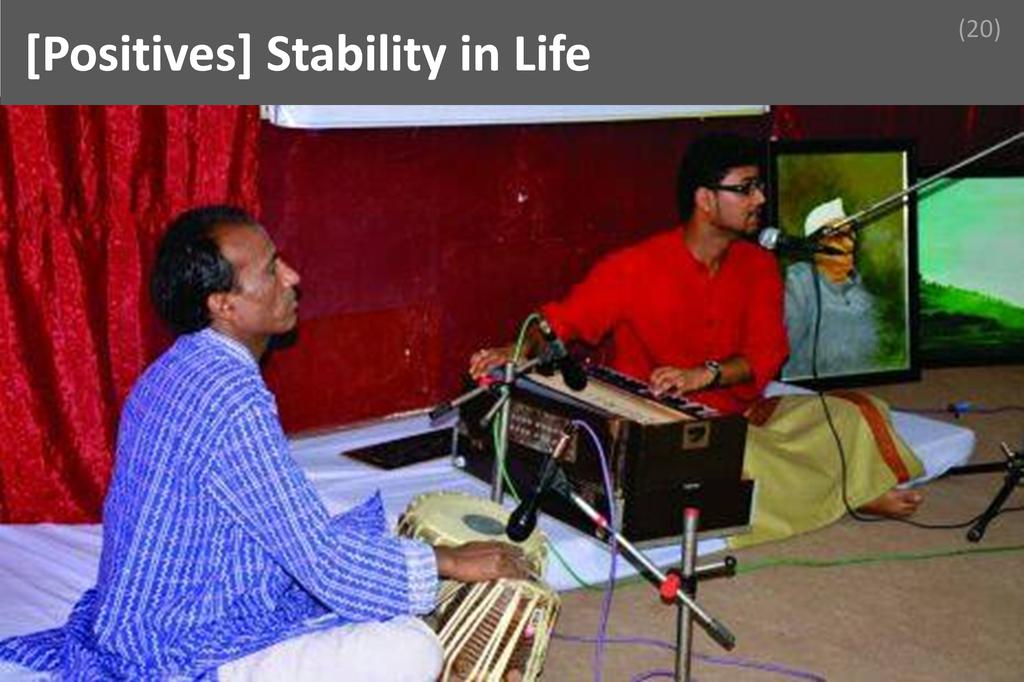
Stability in Life refers to a sense of security, consistency, and emotional balance that allows individuals to pursue their passions without constant fear of upheaval or uncertainty. In Hindustani Classical Music, this stability provides artists with a reliable foundation, enabling them to focus on their art, nurture their creativity, and grow professionally with confidence.

The presence of stability in a career in Hindustani Classical Music is a profound advantage, as it allows musicians to immerse themselves deeply in their craft without the distractions of financial or existential insecurity. This sense of security fosters a nurturing environment where artists can dedicate years to mastering intricate ragas and perfecting their performances. As a result, musicians experience greater job satisfaction, knowing that their efforts are valued and their livelihoods are protected. The stability inherent in this field also encourages long-term growth, as artists can plan their careers, invest in their education, and build meaningful relationships with students and audiences. Each day, professionals benefit from this stability by enjoying a harmonious balance between their artistic pursuits and personal lives.

Consider the life of a seasoned Hindustani Classical vocalist who has established a steady schedule of performances, teaching engagements, and recordings. With a consistent flow of opportunities and a supportive community, she finds herself free from the anxiety of unpredictable income or career shifts. This stability allows her to devote uninterrupted time to her daily riyaaz, explore new compositions, and mentor aspiring students. The assurance of a stable career not only enhances her artistic output but also brings peace of mind, enabling her to fully appreciate the beauty and depth of her musical journey. Through this stability, she experiences a profound sense of fulfillment and purpose in her life and work.

Availability of Luxuries

### Availability of Luxuries Image

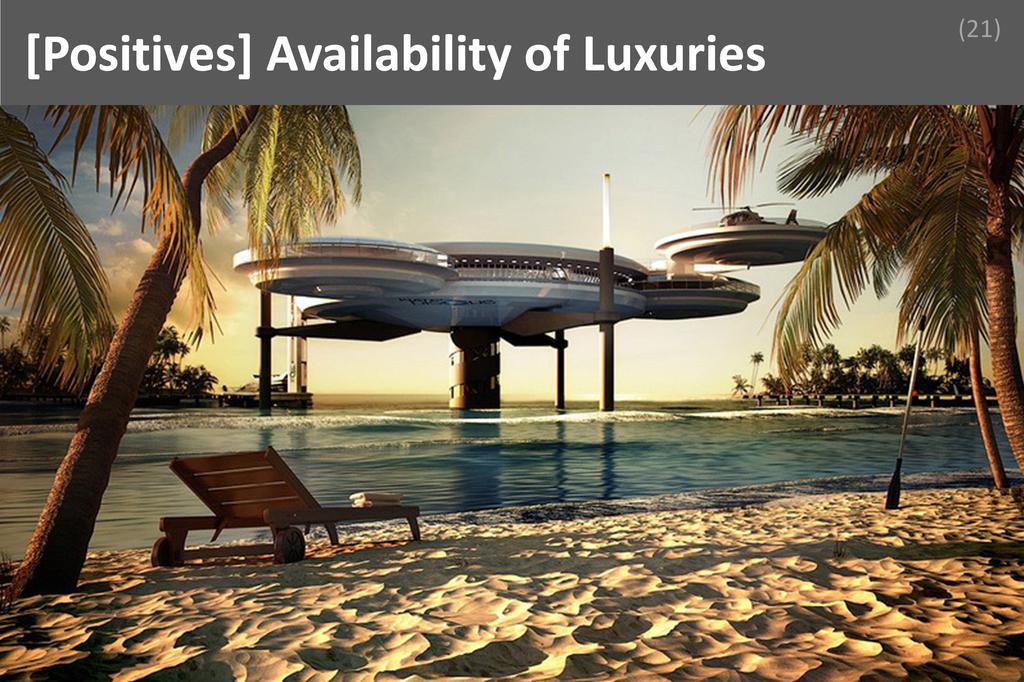
"Availability of Luxuries" refers to the access and enjoyment of high-quality comforts, exclusive experiences, and refined amenities that enhance one’s lifestyle. In the context of Hindustani Classical Music, this means artists often enjoy privileged travel, elegant accommodations, gourmet cuisine, and opportunities to interact with influential personalities, all of which enrich their personal and professional lives.

The availability of luxuries significantly elevates the appeal of a career in Hindustani Classical Music. Artists frequently travel to perform at prestigious venues, stay in premium hotels, and are treated with exceptional hospitality. These experiences not only provide comfort but also foster a sense of accomplishment and recognition. Access to such luxuries can boost morale, inspire creativity, and reinforce the value of their art. The daily exposure to refined environments and exclusive gatherings allows musicians to network with patrons, connoisseurs, and fellow artists, opening doors to new collaborations and opportunities. This luxurious lifestyle, combined with artistic fulfillment, makes the profession deeply satisfying and motivates musicians to strive for excellence.

Imagine a renowned Hindustani Classical vocalist invited to perform at an international music festival. Upon arrival, the artist is welcomed with a chauffeur-driven car and checked into a five-star suite overlooking a scenic cityscape. Gourmet meals are specially curated, and the artist is given access to a private rehearsal space. Throughout the festival, the musician mingles with dignitaries, celebrated artists, and influential music lovers at exclusive receptions. The luxurious treatment not only makes the artist feel valued but also provides a serene environment to focus on their craft. This experience exemplifies how the availability of luxuries transforms routine professional engagements into memorable, inspiring journeys that nurture both the artist’s spirit and career.

Challenges


Takes Time to Establish

### Takes Time to Establish Image

In Hindustani Classical Music, "Takes Time to Establish" refers to the prolonged journey required to gain recognition, mastery, and a stable career. This challenge is demanding because it involves years of rigorous practice, deep learning, and gradual acceptance within a discerning community, often without immediate rewards or acknowledgment.

The slow pace of establishment in Hindustani Classical Music affects daily life by requiring artists to dedicate countless hours to practice, often with little external validation. This can lead to self-doubt and financial uncertainty, making resilience essential. Professionals must cultivate patience, internal motivation, and a love for the art itself to persist through these lean years. Many successful musicians manage this constraint by focusing on incremental progress, seeking mentorship, and building supportive networks within the music community. They also diversify their activities, such as teaching or collaborating, to maintain engagement and financial stability while their reputation grows. Over time, consistent dedication and adaptability help them overcome the initial obscurity and carve a respected place in the field.

Consider the journey of a young vocalist who, after years of rigorous training under a guru, faces limited performance opportunities and recognition. Instead of becoming discouraged, she continues her daily riyaz, participates in small local concerts, and offers music lessons to sustain herself. She actively seeks feedback from senior musicians and gradually builds relationships within the classical music fraternity. Over several years, her persistence pays off as she is invited to perform at larger festivals, her reputation grows, and she begins to attract dedicated students. By embracing the slow process and remaining committed to her craft, she successfully navigates the challenge of taking time to establish herself in the demanding world of Hindustani Classical Music.

On-Stage Struggles

### On-Stage Struggles Image

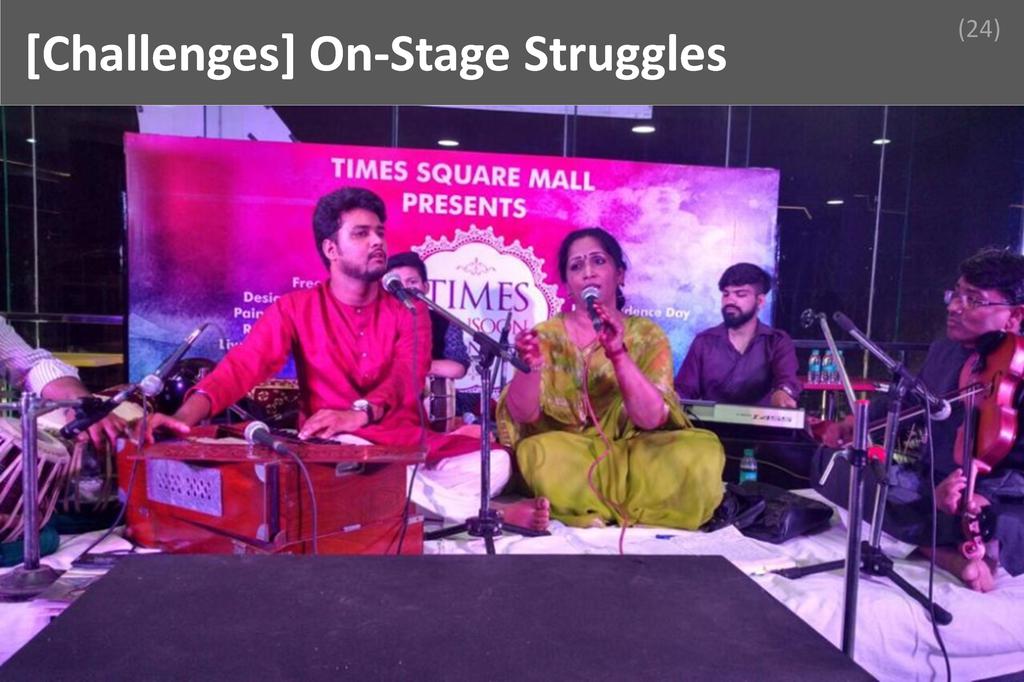
On-Stage Struggles in Hindustani Classical Music refer to the unpredictable difficulties performers face during live concerts, such as lapses in memory, technical glitches, unexpected audience reactions, or emotional pressure. These moments are demanding because they test a musician’s composure, adaptability, and ability to maintain artistic integrity under intense scrutiny.

The challenge of on-stage struggles can deeply affect a musician’s daily work, as the anticipation of potential mishaps often leads to anxiety and self-doubt. This pressure can disrupt practice routines and hinder creative expression. Overcoming such obstacles requires immense resilience, as musicians must learn to recover quickly from mistakes and maintain focus despite distractions. Successful professionals often develop mental fortitude through rigorous practice, mindfulness techniques, and by embracing each performance as a learning opportunity. They also cultivate a supportive network of peers and mentors, which helps them process setbacks constructively. By accepting that imperfections are part of the live experience, they gradually build confidence and transform on-stage challenges into moments of growth.

Consider the experience of a seasoned vocalist who, during a prestigious concert, momentarily forgets a complex taan in the middle of a raga. Instead of panicking, she seamlessly transitions into an improvised phrase, drawing from her deep understanding of the raga’s structure. The audience, unaware of the lapse, is captivated by her creativity and poise. After the performance, she reflects on the incident, recognizing it as an opportunity to strengthen her improvisational skills and mental resilience. This approach not only salvages the performance but also enhances her reputation as a confident and resourceful artist, demonstrating how on-stage struggles can be managed with grace and professionalism.

A Day Of


Hindustani Classical Music


In the world of Hindustani Classical Music, the workday unfolds not in the confines of a cubicle, but in the vibrant interplay of sound, silence, and tradition. Each day is a delicate balance between rigorous discipline and creative spontaneity, where the air is thick with the resonance of tanpuras and the subtle aroma of morning incense. The pace is both meditative and demanding, shaped by centuries-old practices and the ever-present drive for mastery. For a Hindustani Classical Music professional, the day is less about clocking hours and more about immersing oneself in a living art form that demands both devotion and adaptability.

As the first light filters through the window, the day begins with the sacred practice of riyaaz, or disciplined rehearsal. This early morning session is a time for vocalists and instrumentalists alike to connect with their chosen raga, exploring its nuances in the stillness before the world awakens. The quiet hours allow for deep concentration, uninterrupted by daily distractions, and set the tone for the rest of the day. Here, the musician revisits foundational exercises, refines intricate taans, and reflects on feedback from previous performances, all while nurturing a sense of inner calm and focus.

By mid-morning, the focus shifts to sharing knowledge with students, either in person or through virtual platforms. This is the heart of the day, where the energy is at its peak and the studio or classroom fills with the sounds of tabla, harmonium, and eager voices. The professional guides students through complex compositions, corrects subtle errors in technique, and imparts the philosophy behind each raga. These sessions are interactive and intense, requiring patience, keen observation, and the ability to inspire both beginners and advanced disciples. The exchange is as much about nurturing talent as it is about keeping the tradition alive.

Afternoons are often reserved for collaborative rehearsals with accompanists or fellow artists, as well as preparing for upcoming concerts or recordings. The environment becomes more dynamic, with musicians working together to synchronize their interpretations, experiment with improvisation, and fine-tune the emotional arc of a performance. This phase may also involve logistical coordination, such as discussing stage setups, sound checks, or repertoire selection. The focus is on execution and teamwork, ensuring that every element aligns for a seamless presentation.

As evening approaches, the pace slows, allowing time for reflection and administrative work. The musician reviews recordings from the day’s sessions, takes notes on areas for improvement, and researches new ragas or compositions to expand their repertoire. Correspondence with event organizers, updating schedules, and planning future lessons or performances become the priority. This quiet period is essential for setting goals, maintaining professional relationships, and ensuring that each new day builds on the progress of the last, sustaining both the art and the artist.


Install the LifePage App to:


  1. (for Free) Watch Classical Vocalist Himanshu Darmora’s full Hindustani Classical Music Career Talk

  2. ₹ Do a Self Assessment on Hindustani Classical Music to calculate your Dream Index, which is defined as:

    According to Himanshu Darmora your chances of success in Hindustani Classical Music is __%

  3. Access your personalized Dream Index Report which will have all your Dream Indices sorted in descending order.

Career Counselling 2.0


<?php echo $altimage; ?>


<?php echo $altimage; ?>


How to get into

Hindustani Classical Music?


If you are want to get into Hindustani Classical Music, start by investing in a Career Plan.

The 14 hour process, guided by a LifePage Career Advisor, will help you introspect and check whether your interest in Hindustani Classical Music is merely an infatuation or is it truly something you wish to do for the rest of your life.

Next, your Career Advisor will help you document how you can get into Hindustani Classical Music, what education and skills you need to succeed in Hindustani Classical Music, and what positives and challenges you will face in Hindustani Classical Music.

Finally, you will get a Career Plan stating which Courses, Certifications, Trainings and other Items you need to do in the next 7 years to become world’s best in Hindustani Classical Music.


LifePage Career Plan

14 hour personalized guidance program


Your LifePage Career Advisor facilitates your guided introspection so that you systematically explore various Career options to arrive at a well thought out Career choice.

Next: your Advisor helps you figure out how you will get into your chosen Career and how will you develop the skills needed for success in your Chosen Career.

LifePage Plan will not stop at saying "to become an Architect study Architecture". It will guide you on which Certifications, Trainings and Other items you need to do along with your Architecture education to become the world's best Architect.


Links for this Talk


Classical Vocalist Himanshu Darmora's LifePage:


Career Counselling 2.0
[LifePage]
https://www.lifepage.in/page/himanshudarmora


LifePage Career Talk on Hindustani Classical Music


Career Counselling 2.0
[Career]
https://www.lifepage.in/careers/hindustani-classical-music


Career Counselling 2.0
[Full Talk]
https://lifepage.app.link/20171026-0005


Career Counselling 2.0
[Trailer]
https://www.youtube.com/watch?v=8WWivAPNa48


(Hindustani Classical Music, Himanshu Darmora, Musical Instruments, Sur Laya, Music, Musician, Classical Music, Classical Vocalist)


Similar Talks


Career in Professional Singing
Professional Singing
Ravi Vishnariya
Singer | Various Creative Assignments
[ 4 years & 8 months Experience ]

Singing is the act of producing musical sounds with the voice and augments regular speech by the use of sustained tonality, rhythm, and a variety of vocal techniques. A person who sings is called a singer or vocalist.

"I was interested in singing since my childhood and started practicing singing in the year 2014 at Saptak College of Performing Arts."


Career Counselling 2.0 Career Counselling 2.0 Career Counselling 2.0 Career Counselling 2.0 Career Counselling 2.0


Career in Country Music
Country Music
Bobby Cash
Country Music Artist | Several Musical Assignments
[ 23 years & 3 months Experience ]

Country Music is a music of pioneers, early settlers & cowboys who settlers the American West in 90s. It’s the music that come from roots and Rural music that tells a story.

"I am an Indian country music singer, songwriter, guitarist and composer. I live in Dehradun City, I am India's first international country music artist who has charted singles in Australia, and also for being the only Indian country music artist to be featured in a documentary film,The Indian Cowboy...One in a Billion, aired on ABC Television (Australia) in January 2004 and on Discovery channel in India in June 2004."


Career Counselling 2.0 Career Counselling 2.0 Career Counselling 2.0 Career Counselling 2.0 Career Counselling 2.0


Career in Professional Singing
Professional Singing
Sankalp Khetwal
Vocalist | Bhairavas Band
[ 4 years Experience ]

Singing is the act of producing musical sounds with the voice and augments regular speech by the use of sustained tonality, rhythm, and a variety of vocal techniques. A person who sings is called a singer or vocalist.

"I have done Visharat in Indian Classical Music from Bhatkhande Sangeet Vidalaya. I was inclined towards music since childhood and took up music as profession. I participated in Rising Star, a singing show on Colors. I have been performing with Bhairavas Band as a vocalist since 2013."


Career Counselling 2.0 Career Counselling 2.0 Career Counselling 2.0 Career Counselling 2.0 Career Counselling 2.0


Career in Indian Classical Singing
Indian Classical Singing
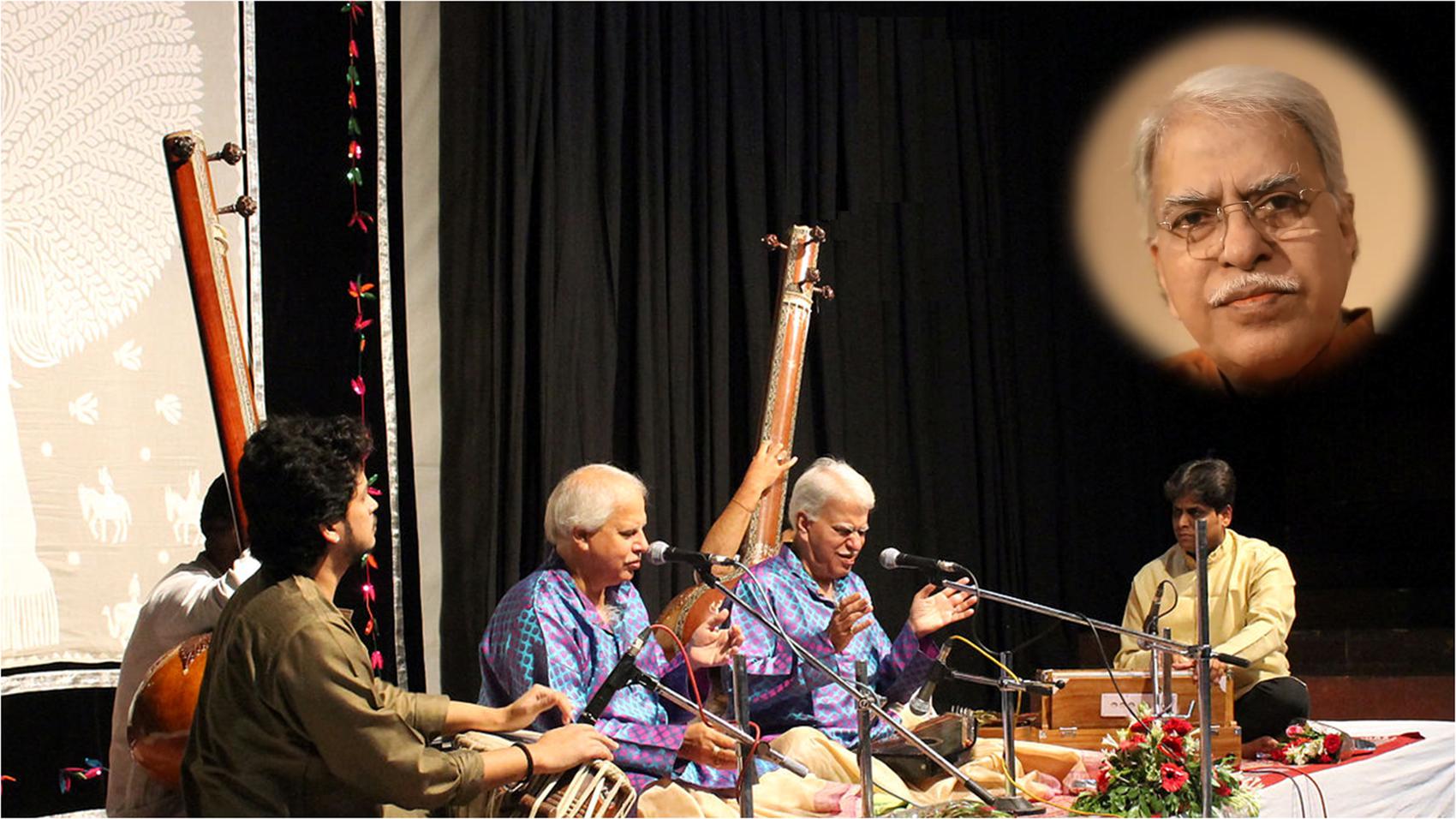
Late Pt Rajan Mishra
Music Artist | Various Creative Music Assignments
[ 44 years & 8 months Experience ]

Indian Classical Music is an ancient form of music, its establishment was done taking in account of nature and human emotions. Just like the nature is made of five elements similarly humans are also made up of these elements and indian classical music is also consisted in the same manner. The video describes the skills required for Indian Classical Music and also the positives and challenges one has to face if they go further ahead in Indian Classical Music.

"I was born and brought up in Varanasi. I received my initial musical training from my grandfather's brother, Bade Ram Das Ji Misra, and also their father, Hanuman Prasad Misra, and from their uncle, sarangi virtuoso, Gopal Prasad Misra, and started performing while I was still in teens. I moved to Ramesh Nagar in Delhi, in 1977, gave my first concert abroad, in Sri lanka in 1978, and soon went on to perform in many countries across the world including, Germany, France, Switzerland, Austria, USA, UK, The Netherlands, USSR, Singapore, Qatar, Bangladesh and Muscat."


Career Counselling 2.0 Career Counselling 2.0 Career Counselling 2.0 Career Counselling 2.0 Career Counselling 2.0


Career in Professional Singing
Professional Singing
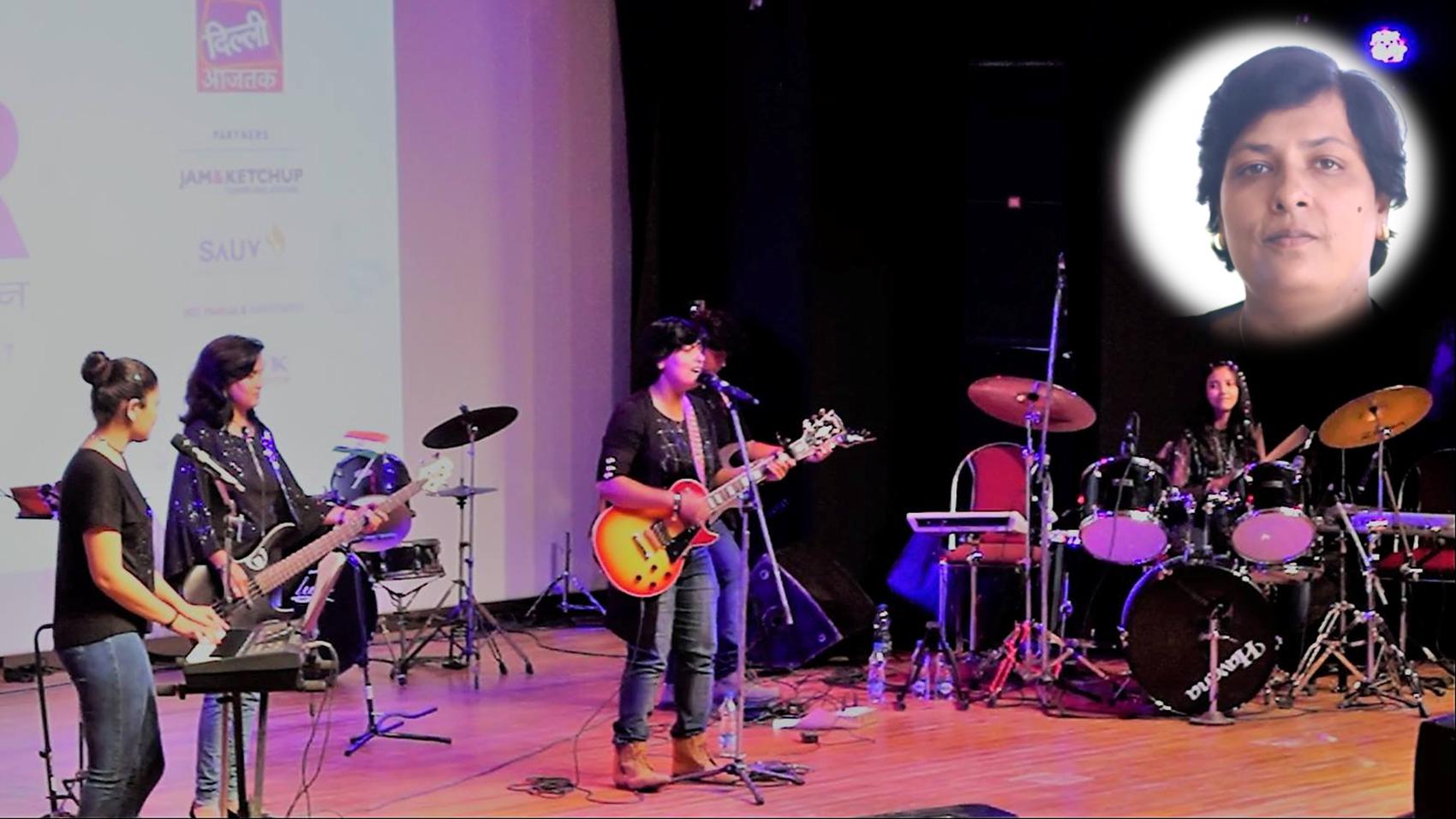
Swati Singh
Singer | Womania Band
[ 31 years Experience ]

Professional singers perform songs in front of live audiences and record music in recording studios

"I have been practicing singing since childhood and after working in school and banking field, I have started music institute called Saptak Institute of Performing Arts and also managing Womenia band."


Career Counselling 2.0 Career Counselling 2.0 Career Counselling 2.0 Career Counselling 2.0 Career Counselling 2.0


Career in Professional Singing
Professional Singing
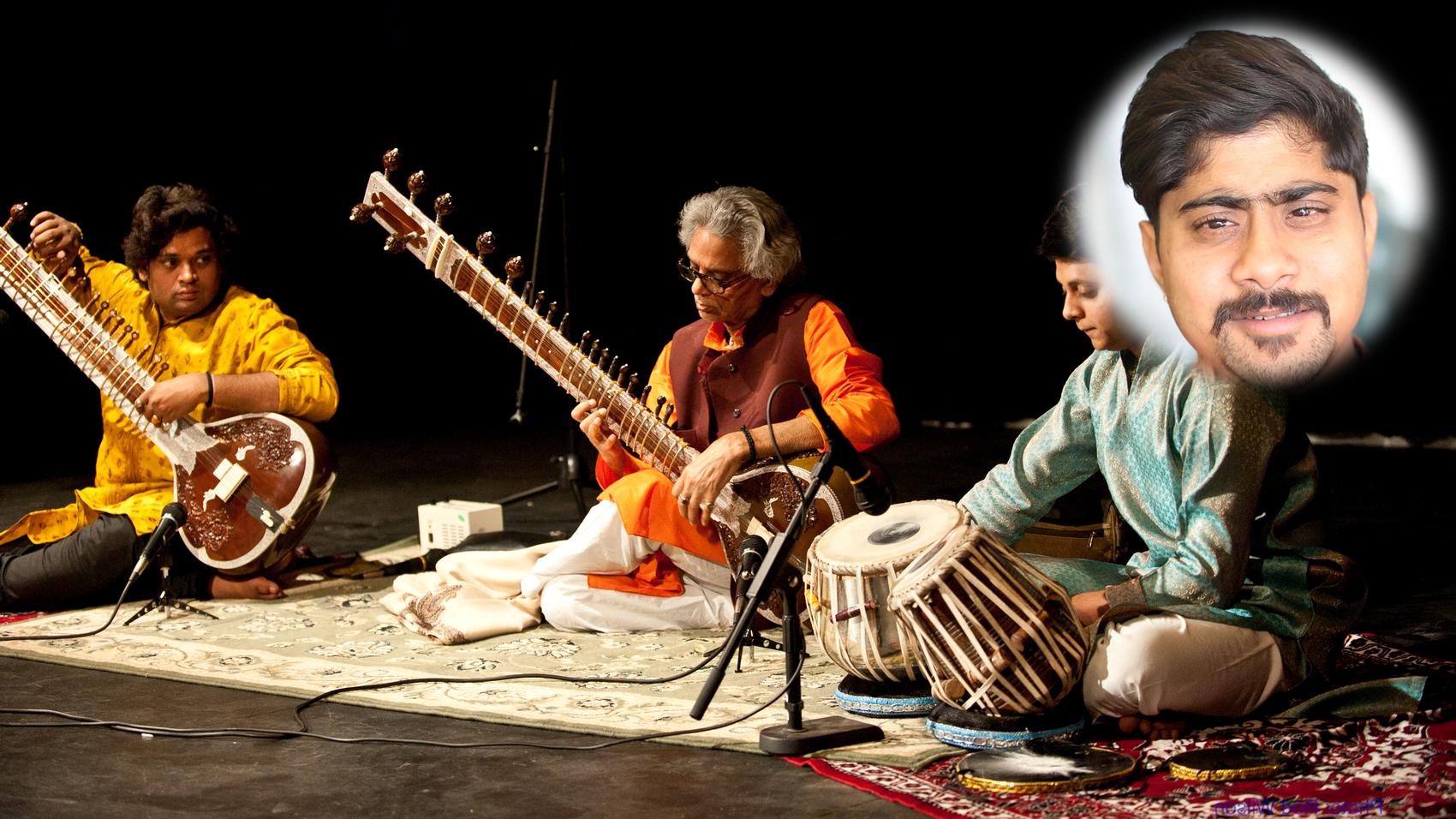
Vivek Badoni
Singer | Independent Practice
[ 6 years & 11 months Experience ]

Singing is the act of producing musical sounds with the voice and augments regular speech by the use of sustained tonality, rhythm, and a variety of vocal techniques. A person who sings is called a singer or vocalist.

"After doing my B Tech from Tulas Institute Dehradun, I worked with HCL and did freelancing as a Web Designer in various assignments. I was always inclined towards music and joined Bhairavas, a Musical Band in 2012. I am also working on a project titled Maathu Re Dreamhouse which is an Urban Folk Independent Music initiative."


Career Counselling 2.0 Career Counselling 2.0 Career Counselling 2.0 Career Counselling 2.0 Career Counselling 2.0


Career in Folk Singing
Folk Singing
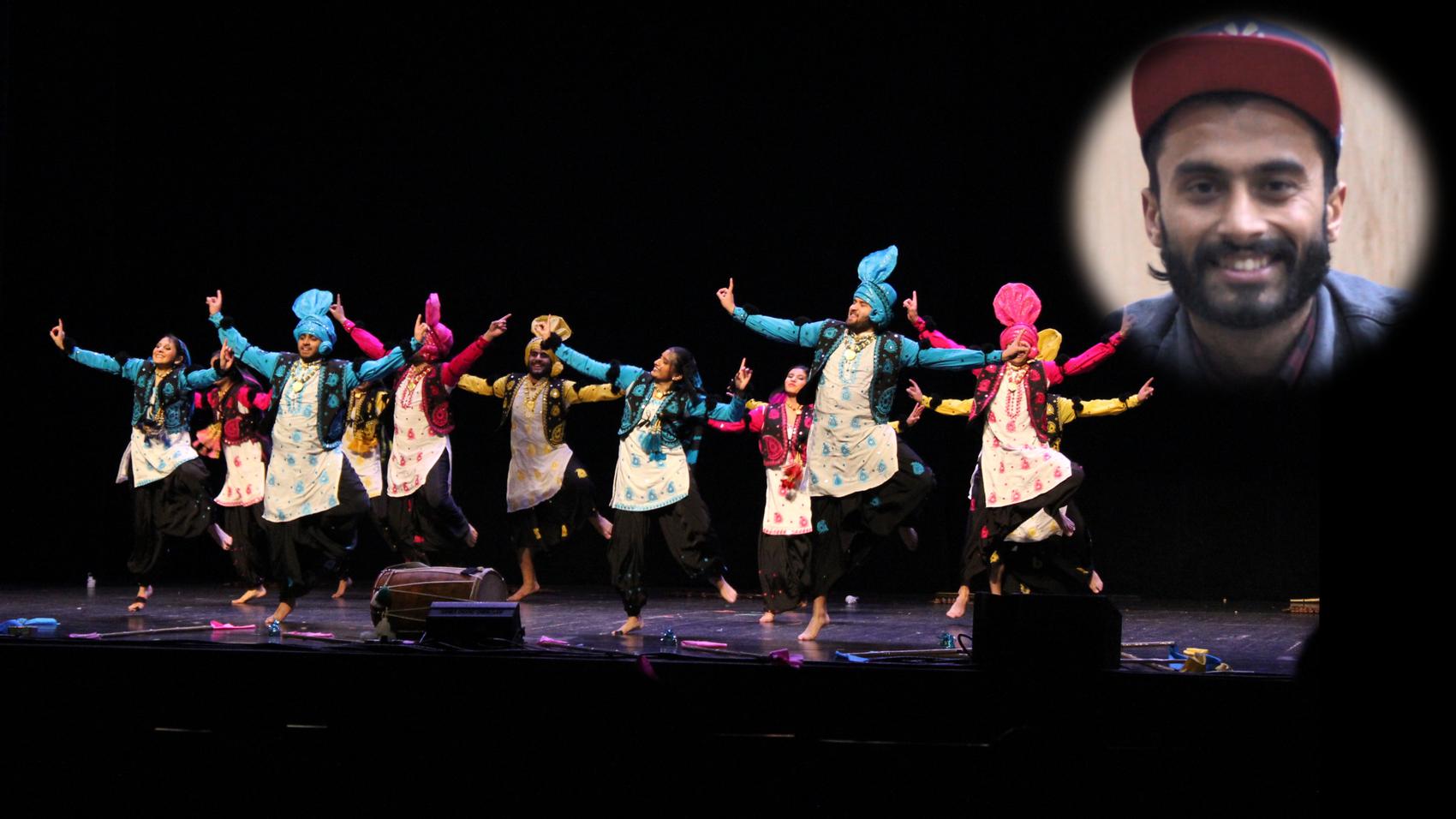
Harsh Sharma
Singer | Various Stage Shows
[ 4 years & 3 months Experience ]

Folk music includes both traditional music and the genre that evolved from it during the 20th century folk revival. India has a very rich tradition of folk music. The extreme cultural diversity creates endless varieties of folk styles. Each region has its own particular style.

"I did my schooling from KK International School and Bachelors in Arts from MM Modi College, Patiala. I have been involved in different singing assignments since 2015."


Career Counselling 2.0 Career Counselling 2.0 Career Counselling 2.0 Career Counselling 2.0 Career Counselling 2.0


Career in Singing
Singing
Kapil Verma
Solo Performer | Lodhi Hotel New Delhi
[ 6 years & 4 months Experience ]

Singing is the act of producing musical sounds with the voice and augments regular speech by the use of sustained tonality, rhythm, and a variety of vocal techniques. A person who sings is called a singer or vocalist.

"After completing my schooling from Guru Nanak School, I did B A from DAV College, Dehradun. I am a Vocalist at Rubab Band, and also working with Lodhi Hotel in Delhi as a Solo Performer."


Career Counselling 2.0 Career Counselling 2.0 Career Counselling 2.0 Career Counselling 2.0 Career Counselling 2.0


Career in Professional Singing
Professional Singing
Neeta Pandey Negi
Singer | Roohani Sisters
[ 5 years & 8 months Experience ]

Professional singers usually build their careers around one specific musical genre, such as classical or rock, although there are singers with crossover success (singing in more than one genre). They typically take voice training provided by voice teachers or vocal coaches throughout their careers.

"After completing my BA and MA in music from Miranda House, Delhi, I did M Phil and Ph D from music department of Delhi University. I have done music training from Kirana Gharana by Charanjeet Soni Ji and Ustad Iqbaal Ahmed Khan Saheb (Dilli Gharana). I have attended various National and International reality shows and since 2008, I am associated with my Band called Roohani Sisters which is a Sufi Jugalbandi Band and was empanelled by ICCR IN 2009."


Career Counselling 2.0 Career Counselling 2.0 Career Counselling 2.0 Career Counselling 2.0 Career Counselling 2.0


Career in Professional Singing
Professional Singing
Shekinah Mukhiya
Singer | Various Stage Shows
[ 4 years Experience ]

Singing is the act of producing musical sounds with the voice and augments regular speech by the use of sustained tonality, rhythm, and a variety of vocal techniques. A person who sings is called a singer or vocalist.

"I am a student of Colonel Brown School, Dehradun. I came into the spotlight after making it to the top ten of Voice of India Kids - the children's music reality show. I also perform at various stage shows with my father and actively take part in singing competitions."


Career Counselling 2.0 Career Counselling 2.0 Career Counselling 2.0 Career Counselling 2.0 Career Counselling 2.0


Career in Folk Singing
Folk Singing
Geeta Ram Kanswal
Singer | Various Creative Assignments
[ 4 years Experience ]

Folk music includes both traditional music and the genre that evolved from it during the 20th century folk revival. India has a very rich traditional Folk Music. The extreme cultural diversity creates endless varieties of folk styles. Each region has its own particular style.

"I have done B Sc from DAV PG College. I developed a keen interest in Folk Music in my childhood which encouraged me to take up singing at a very young age. I have sung 70-80 songs till date, the latest song Meri Reshma Chori Suniyal being a hit. I sing Garhwali songs."


Career Counselling 2.0 Career Counselling 2.0 Career Counselling 2.0 Career Counselling 2.0 Career Counselling 2.0


Career in Indian Classical Vocalist
Indian Classical Vocalist
Avinash Mishra
Indian Vocalist | Viram Gurukul
[ 10 years & 1 month Experience ]

It is the art of classical singing where we can perform a rag with particular notes like : sa re ga ma pa da ni sa and we have lots of thigs like thumeri , kajri , bhajan etc.

"I started learning music when I was 4 years old from my great grandfather Late Pandit Hanuman Prasad Mishra Ji. I have performed in Harsh Utsav in 2008 and I have also performed for few schools and recently I taught music at DPS Dehradun for their Annual function. I love to write and compose. I have composed few music like tarana in Rag jog. I have been teaching vocal at Viram Gurukul (its gurukul of Pandit Rajan Sajan Mishra Ji.) since 2007."


Career Counselling 2.0 Career Counselling 2.0 Career Counselling 2.0 Career Counselling 2.0 Career Counselling 2.0


Career in Singing
Singing
Jaspal Rana
Singer | Various Assignments
[ 21 years Experience ]

Make musical sounds with the voice, especially words with a set tune.

"I did my Schooling from Garhwal. I only did my education till 7th class. I have written several songs for Garhwali Movies and Albums. I have also worked as a singer in Song and Drama Division for 4 years. I have performed with various prominent artists."


Career Counselling 2.0 Career Counselling 2.0 Career Counselling 2.0 Career Counselling 2.0


Career in Professional Singing
Professional Singing
Suraj Bhandari
Singer | Various Singing Assignments
[ 4 years & 7 months Experience ]

Singing is the act of producing musical sounds with the voice and augments regular speech by the use of sustained tonality, rhythm, and a variety of vocal techniques. A person who sings is called a singer or vocalist.

"I am trained in Indian Classical Music from Saptak College of Performing Arts. I also teach music at the same institute. I sing at various stage shows."


Career Counselling 2.0 Career Counselling 2.0 Career Counselling 2.0 Career Counselling 2.0 Career Counselling 2.0


Career in Live Singing
Live Singing
Khek Ram
Singer | Various Music Assignments
[ 3 years Experience ]

On a night when a performer isn't feeling well or during sections of a concert that are physically taxing, a singer can rely on what's called guide vocals. At predetermined moments, an engineer controlling the concert's audio can smoothly mix down the artist's live singing and mix up a prerecorded vocal performance.

"I did my Schooling from Manali. After that did a computer course from Delhi and Ghaziabad. I worked with a Travel and tourism line for 3 to 4 years. I then shifted back to Manali and started live singing there."


Career Counselling 2.0 Career Counselling 2.0 Career Counselling 2.0 Career Counselling 2.0 Career Counselling 2.0


Career in Devotional Singing
Devotional Singing
Mukta
Singer & Co-ordinator | Awaken Love Band
[ 5 years Experience ]

Devotional singing is singing that originates in the heart. It is the expression of the joyous thrill that wells up from the heart when the Glory of God is remembered. It is the spontaneous manifestation of inner ecstasy.

"I have a Bachelors in Naturopathy. I have also completed a course in Yoga Teacher Training. I met Prem Baba in 2013 and found my calling in music. Ever since, I have been working with Prem Baba in Awaken Love Movement. I am a Singer and Co-ordinator with Awaken Love Band."


Career Counselling 2.0 Career Counselling 2.0 Career Counselling 2.0 Career Counselling 2.0


Career in Devotional Singing
Devotional Singing
Mukta
Singer & Co-ordinator | Awaken Love Band
[ 5 years Experience ]

Devotional singing is singing that originates in the heart. It is the expression of the joyous thrill that wells up from the heart when the Glory of God is remembered. It is the spontaneous manifestation of inner ecstasy.

"I have a Bachelors in Naturopathy. I have also completed a course in Yoga Teacher Training. I met Prem Baba in 2013 and found my calling in music. Ever since, I have been working with Prem Baba in Awaken Love Movement. I am a Singer and Co-ordinator with Awaken Love Band."


Career Counselling 2.0 Career Counselling 2.0 Career Counselling 2.0 Career Counselling 2.0


[Install the LifePage App to access all Talks]


<?php echo $altimage; ?>


<?php echo $altimage; ?>


&mbsp;


Career Counselling 2.0 | Home   Home  
Career Counselling 2.0 | Abroad   Abroad  
Career Counselling 2.0 | Plan   Plan  
Career Counselling 2.0 | Talks   Talks  
Career Counselling 2.0 | Philosophy   Philosophy  
Career Counselling 2.0 | Seminar   Seminar  
Career Counselling 2.0 | Workshop   Workshop  
Career Counselling 2.0 | Pages   Pages  
Career Counselling 2.0 | Advisors   Advisors  
Career Counselling 2.0 | Discuss   Discuss  
Career Counselling 2.0 | Meet   Meet  
Career Counselling 2.0 | Advisor   Advisor  
Career Counselling 2.0 | Story   Story  
Career Counselling 2.0 | Fine Print   Fine Print  
Career Counselling 2.0 | Links   Links  
Career Counselling 2.0 | Blog   Blog  
Career Counselling 2.0 | Testimonials   Testimonials  
Career Counselling 2.0 | Follow   Follow  
 
[ Site Visits ]


Career Counselling 2.0