The Journey of Media Education
What Is Media Education
Media Education

Media education is the process of teaching and learning about media, its forms, functions, and effects. It empowers individuals to critically analyze, create, and participate in media content, fostering informed engagement with information, communication technologies, and digital platforms in a rapidly evolving media landscape.
Media education plays a crucial role in today’s information-rich society, equipping individuals with the skills to navigate, interpret, and contribute to the media environment. For professionals in media education, this field offers the opportunity to shape how people understand and interact with media, promoting critical thinking and responsible media consumption. One major benefit is the development of media literacy, which helps individuals discern credible information from misinformation. Another benefit is the enhancement of creative and technical skills, enabling learners to produce their own media content. Finally, media education fosters civic engagement by encouraging active participation in public discourse, empowering people to use media as a tool for social change and community building.
A media education professional working in a high school might design a curriculum that teaches students how to analyze news articles, create podcasts, and understand the influence of social media on public opinion. Through hands-on projects, students learn to identify bias, evaluate sources, and produce their own multimedia stories. The educator guides discussions about current events, helping students recognize the impact of media on society and their personal lives. By integrating theory with practical skills, the professional ensures that students not only consume media thoughtfully but also become responsible creators and sharers of information. This approach prepares students to navigate the complexities of the digital world with confidence and ethical awareness.
Education
General Awareness

General Awareness refers to a broad understanding of current events, historical developments, cultural trends, and societal issues across local, national, and global contexts. In Media Education, it forms a crucial component of academic and professional knowledge, enabling individuals to interpret, analyze, and communicate information effectively within diverse and dynamic environments.
Developing strong general awareness is essential for anyone pursuing a career in Media Education because it underpins the ability to critically engage with content, understand audience perspectives, and respond to rapidly changing news cycles. Professionals equipped with this knowledge can contextualize media messages, identify biases, and foster informed discussions. This foundational skill set not only enhances classroom instruction but also prepares educators and media practitioners to guide students in navigating complex information landscapes. Over the long term, a well-developed sense of general awareness supports career advancement by enabling professionals to adapt to new trends, address emerging issues, and maintain credibility as thought leaders within the media and education sectors.
Consider a media educator tasked with designing a curriculum on digital literacy. By leveraging their general awareness, they can incorporate recent developments such as misinformation trends, global political events, and evolving social media platforms into their lessons. This approach ensures that students are not only learning theoretical concepts but are also able to relate them to real-world scenarios. During classroom discussions, the educator draws upon their knowledge of current affairs to provide relevant examples, encourage critical thinking, and foster meaningful debates. This practical application of general awareness enriches the learning experience, making it more engaging and directly applicable to the challenges students will face in the media landscape.
Technology

Technology refers to the tools, systems, and processes developed through scientific knowledge to solve problems, enhance efficiency, and facilitate communication. In Media Education, technology encompasses both the hardware and software used to create, distribute, and analyze media content, making it a fundamental aspect of both academic study and professional practice.
Understanding technology is essential for anyone preparing for or working in Media Education because it underpins every aspect of modern media creation and dissemination. Mastery of technological concepts enables professionals to adapt to rapidly evolving digital landscapes, ensuring they remain relevant and effective in their roles. This knowledge forms the backbone of media literacy, allowing educators and practitioners to critically assess and utilize new tools, platforms, and methodologies. Over the long term, a strong grasp of technology empowers media educators to innovate in their teaching, foster digital citizenship among learners, and respond proactively to industry trends. Ultimately, technological fluency opens doors to diverse career opportunities and positions professionals as leaders in a media-driven world.
Consider a media educator tasked with teaching students how to produce a podcast. Their theoretical understanding of technology allows them to select appropriate recording equipment, audio editing software, and distribution platforms. During daily operations, the educator demonstrates how to use microphones, manage sound quality, and edit audio files, ensuring students gain hands-on experience with industry-standard tools. They also guide students in publishing their podcasts online, discussing the implications of metadata, copyright, and audience analytics. By integrating technology seamlessly into the curriculum, the educator not only enhances student engagement but also prepares them for real-world media production environments, illustrating the practical value of technological expertise in Media Education.
Books-Inspirational

Books-Inspirational refers to a genre of literature designed to motivate, uplift, and encourage readers through stories, personal experiences, or philosophical insights. In Media Education, this genre provides essential content for analyzing narrative techniques, audience engagement, and the societal impact of positive messaging, forming a crucial part of academic and professional study.
Understanding Books-Inspirational is vital for anyone preparing for or working in Media Education because it cultivates the ability to recognize and harness the power of motivational storytelling. Professionals in this field must be adept at analyzing how inspirational narratives influence audiences, shape cultural values, and drive social change. Mastery of this subject enables educators and media practitioners to create content that resonates emotionally, fosters resilience, and encourages constructive action among viewers or readers. Over the long term, this expertise enhances a professional’s ability to design curricula, produce impactful media, and contribute meaningfully to discussions about media’s role in personal and societal development. It also supports the cultivation of empathy and ethical responsibility in media messaging.
A media educator tasked with developing a curriculum for high school students might draw upon their knowledge of Books-Inspirational to select texts that not only teach literary analysis but also promote personal growth and social awareness. By integrating inspirational books into lesson plans, the educator can facilitate discussions about overcoming adversity, ethical decision-making, and the importance of hope in challenging times. This approach not only enriches students’ understanding of narrative techniques but also equips them with emotional tools for real-life situations. In daily operations, the educator might reference these texts during classroom debates, media production projects, or community outreach, demonstrating how inspirational literature can be a catalyst for positive change both inside and outside the classroom.
Talk Shows

Talk shows are broadcast programs, typically on television, radio, or digital platforms, where hosts engage guests or audiences in discussions on various topics, ranging from current events to entertainment. In Media Education, understanding talk shows is essential for analyzing communication strategies, audience engagement, and the production techniques that shape public discourse.
Learning about talk shows is vital for anyone pursuing a career in media because these programs exemplify the dynamic interaction between hosts, guests, and audiences. They serve as a practical case study for mastering interviewing skills, managing live discussions, and navigating sensitive topics in real time. For media educators and students, talk shows offer a lens through which to examine media ethics, representation, and the influence of media on public opinion. Mastery of talk show formats and production processes provides a strong foundation for roles in broadcasting, journalism, and media production. Over time, this expertise enhances critical thinking, adaptability, and the ability to craft compelling content that resonates with diverse audiences.
A media education professional might be tasked with designing a curriculum that includes a module on talk show production. Drawing on their theoretical understanding, they guide students through the process of conceptualizing, scripting, and recording a mock talk show. During daily operations, this educator demonstrates how to research topics, prepare interview questions, and manage on-air discussions, ensuring students grasp the importance of ethical considerations and audience engagement. By referencing real-world talk shows, the professional helps students analyze different hosting styles and production choices, fostering a deeper appreciation for the complexities involved. This hands-on approach not only reinforces theoretical knowledge but also equips students with practical skills essential for future media careers.
Follow your Interest
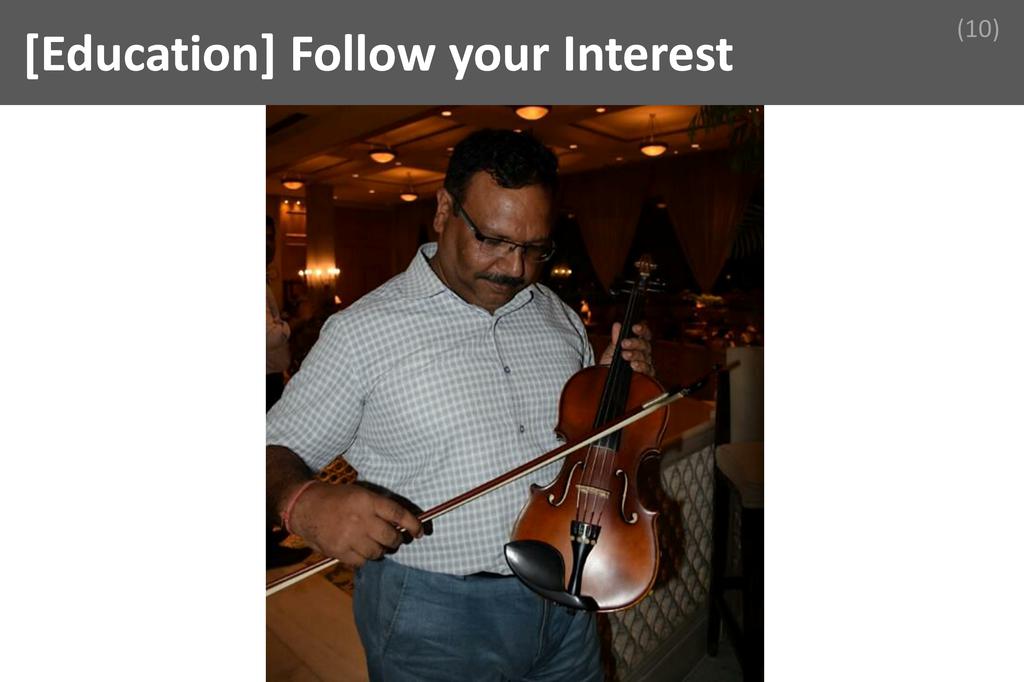
"Follow your Interest" is the practice of identifying, pursuing, and integrating personal passions into academic or professional endeavors. In Media Education, it emphasizes aligning one’s curiosity and enthusiasm with learning and career paths, fostering deeper engagement, creativity, and sustained motivation, which are essential for success in this dynamic field.
Understanding and applying "Follow your Interest" is crucial for anyone preparing for or working in Media Education because it nurtures intrinsic motivation and authentic engagement with the subject matter. Media Education is a rapidly evolving discipline that thrives on innovation, adaptability, and creativity. Professionals who align their work with their genuine interests are more likely to stay updated with industry trends, develop unique perspectives, and contribute original ideas. This approach not only enhances job satisfaction but also leads to higher productivity and resilience in the face of challenges. Over time, following one’s interest helps build a distinctive professional identity, fosters lifelong learning, and opens doors to specialized opportunities that can shape a fulfilling and impactful career.
Consider a media educator who has a strong personal interest in digital storytelling. By following this interest, they actively seek out the latest tools and techniques in multimedia production and incorporate them into their curriculum. During daily operations, this educator designs engaging projects that allow students to create podcasts, videos, or interactive narratives, making lessons more relevant and exciting. Their enthusiasm becomes contagious, inspiring students to explore their own interests within media. As a result, the educator not only stays motivated and innovative but also cultivates a dynamic learning environment that prepares students for the evolving demands of the media industry. This practical application demonstrates how following one’s interest can directly enhance both teaching effectiveness and student outcomes.
Skills
Passion & Dedication

Passion & Dedication is the unwavering enthusiasm and persistent commitment to one’s work, driving individuals to pursue excellence, overcome obstacles, and continuously improve. In Media Education, this quality fuels creativity, fosters resilience, and inspires both colleagues and students, making it a cornerstone for impactful teaching and innovative program development.
Passion & Dedication directly enhances performance in Media Education by motivating professionals to stay current with industry trends, experiment with new teaching methods, and invest extra effort in student success. Employers and clients highly value this trait because it translates into consistent, high-quality outcomes and a positive learning environment. Cultivating passion and dedication involves seeking out inspiring mentors, engaging with professional communities, and setting personal goals that align with one’s values. Over time, reflecting on achievements and embracing challenges helps reinforce commitment, ensuring that enthusiasm remains strong even during demanding periods.
Imagine a Media Education professional facing the sudden cancellation of a key guest speaker for an important student workshop. Driven by passion and dedication, they quickly mobilize their network, secure an alternative expert, and redesign the session to maintain its educational value. Their commitment not only salvages the event but also demonstrates adaptability and care for student learning. This proactive approach inspires students and colleagues alike, reinforcing the importance of going above and beyond. Ultimately, the professional’s passion and dedication transform a potential setback into a memorable and successful learning experience, highlighting the profound impact of this core skill in the field.
Communication Skills

Communication skills refer to the ability to clearly convey information, ideas, and emotions through verbal, non-verbal, and written means, while also actively listening and interpreting messages from others. In Media Education, these skills are vital for effective teaching, collaboration, content creation, and engaging diverse audiences across multiple platforms.
Strong communication skills directly enhance a Media Education professional’s ability to present complex concepts in accessible ways, facilitate productive discussions, and adapt messages for different audiences. Employers and clients highly value these abilities because they ensure clarity, minimize misunderstandings, and foster positive relationships within teams and with external stakeholders. Over time, these skills can be cultivated through deliberate practice, such as participating in workshops, seeking feedback, engaging in public speaking, and staying updated with evolving communication technologies. Continuous self-reflection and adapting to feedback also play a crucial role in refining one’s communication approach, making it possible to respond effectively to the dynamic demands of media environments.
Imagine a Media Education specialist tasked with guiding a group of students through a collaborative video project. Midway, the team faces conflict due to miscommunication about roles and deadlines, threatening the project’s completion. The specialist draws on their communication skills to mediate the discussion, actively listening to each student’s concerns and clarifying expectations. By rephrasing instructions, encouraging open dialogue, and ensuring everyone’s voice is heard, the specialist rebuilds trust and realigns the group’s efforts. As a result, the project is completed successfully, and students gain valuable experience in teamwork and conflict resolution, all made possible by the educator’s adept use of communication skills.
Consistency

Consistency is the unwavering commitment to maintaining reliable standards, behaviors, and quality over time, regardless of changing circumstances or challenges. In Media Education, it ensures that teaching methods, content delivery, and professional conduct remain dependable and trustworthy. This reliability builds credibility, fosters student engagement, and supports long-term educational outcomes.
Consistency directly enhances performance in Media Education by creating a stable learning environment where students know what to expect and can build upon previous knowledge without confusion. Employers and clients value this skill because it reflects professionalism, reliability, and a dedication to quality, all of which are crucial in an industry that often faces rapid change and high expectations. To cultivate consistency, professionals should establish clear routines, set achievable standards, and regularly reflect on their practices to ensure they are meeting their goals. Over time, this deliberate approach not only improves personal effectiveness but also strengthens the reputation of both the individual and the institution they represent.
Imagine a Media Education professional tasked with managing a semester-long digital storytelling course. Midway through the term, a sudden shift to remote learning threatens to disrupt the students’ progress. By relying on consistency—maintaining regular class schedules, providing timely feedback, and upholding clear communication—the educator ensures that students remain engaged and confident despite the upheaval. This steady approach minimizes confusion, preserves the integrity of the curriculum, and ultimately leads to successful course completion. The educator’s consistent actions reassure students and colleagues alike, demonstrating how this core skill can be the foundation for overcoming unexpected challenges and achieving educational success.
Multitasking

Multitasking is the ability to efficiently manage and execute multiple tasks or responsibilities simultaneously, maintaining productivity and quality across each. In Media Education, multitasking is indispensable because professionals must juggle lesson planning, content creation, technology integration, student engagement, and administrative duties, often within tight deadlines and dynamic environments.
Mastering multitasking directly enhances a Media Education professional’s performance by enabling them to handle diverse responsibilities without sacrificing quality or missing deadlines. Clients and employers highly value this skill because it ensures smooth project execution, adaptability to shifting priorities, and the ability to respond quickly to unforeseen challenges. Cultivating multitasking involves practicing time management, setting clear priorities, and gradually increasing task complexity. Over time, professionals can refine their ability to switch between tasks seamlessly, use digital tools to stay organized, and maintain focus under pressure. This continuous development not only boosts individual productivity but also contributes to the overall effectiveness and reputation of the educational institution or media organization.
Imagine a Media Education specialist preparing for a live-streamed workshop while simultaneously coordinating with guest speakers, troubleshooting technical issues, and responding to student queries in real-time. As the event unfolds, a last-minute change in the schedule requires immediate adjustments to the presentation materials and communication with the production team. By effectively multitasking, the professional ensures the workshop runs smoothly, maintains audience engagement, and resolves unexpected problems without delay. This ability to manage several critical tasks at once not only prevents disruptions but also demonstrates reliability and competence, ultimately leading to a successful event and positive feedback from both participants and stakeholders.
Practicality

Practicality is the ability to assess situations realistically, prioritize feasible solutions, and implement actions that yield effective results within available resources. In Media Education, practicality enables professionals to bridge theory and practice, ensuring that educational strategies, content creation, and technology integration are both achievable and impactful in real-world settings.
Practicality directly enhances performance in Media Education by enabling professionals to make informed decisions that align with institutional goals, budget constraints, and learner needs. Clients and employers highly value this skill because it leads to efficient project management, timely delivery, and the creation of relevant, engaging educational materials. Cultivating practicality involves gaining hands-on experience, staying updated with industry trends, and reflecting on past outcomes to refine future approaches. By consistently evaluating what works and adapting to changing circumstances, media educators can develop a pragmatic mindset that balances creativity with achievable outcomes, ultimately driving success in both classroom and production environments.
Imagine a media educator tasked with launching a new digital storytelling course on a limited budget and tight deadline. By applying practicality, the educator assesses available resources, selects cost-effective tools, and designs assignments that maximize student engagement without overextending the team. When technical issues arise with a chosen platform, the educator quickly pivots to an alternative solution that maintains course objectives while minimizing disruption. This practical approach ensures the course is delivered on time, meets learning outcomes, and satisfies both students and administrators, demonstrating how practicality is essential for overcoming challenges and achieving success in Media Education.
Positives
Glamorous

Glamorous refers to the captivating allure, prestige, and excitement associated with a profession that is often in the public eye, filled with creativity, innovation, and the potential to influence culture. In media education, this quality brings energy and inspiration, making the field vibrant and appealing for both educators and learners.
The glamorous aspect of media education is a powerful motivator, infusing daily work with a sense of excitement and purpose. Professionals in this field are often at the forefront of cultural trends, working with cutting-edge technology and creative projects that capture public attention. This environment fosters a dynamic and stimulating workplace, where innovation is encouraged and celebrated. The prestige associated with shaping future media professionals adds to the sense of accomplishment, while the opportunity to collaborate with talented individuals from diverse backgrounds enhances personal and professional growth. As a result, job satisfaction is heightened, and career development is accelerated, making media education a uniquely rewarding path.
Imagine a media education professional guiding students through the production of a short film that is later showcased at a regional film festival. The excitement of seeing their students’ work celebrated by an enthusiastic audience, covered by local press, and shared on social media platforms brings a sense of glamour to their daily routine. This experience not only validates their expertise but also highlights the influential role they play in shaping creative voices. The recognition and admiration from peers, students, and the broader community reinforce the glamorous nature of their work, making each achievement feel meaningful and inspiring continued passion for the field.
Exposure to World

Exposure to World in media education refers to the continuous engagement with diverse cultures, global perspectives, and emerging trends through international collaborations, multimedia content, and cross-border communication. This exposure broadens horizons, fosters adaptability, and cultivates a deeper understanding of the global landscape, enriching both personal growth and professional expertise in media education.
The benefit of Exposure to World in media education is profound, as it transforms routine work into a dynamic journey of discovery and learning. Professionals in this field are constantly challenged to think beyond local boundaries, integrating global viewpoints into their teaching and creative projects. This not only enhances job satisfaction by making daily tasks more stimulating but also accelerates professional growth through the acquisition of new skills and insights. The ever-changing global media environment ensures that educators remain at the forefront of innovation, while their students benefit from a curriculum that is both relevant and forward-thinking. Ultimately, this exposure nurtures a sense of purpose and excitement, as media educators play a pivotal role in shaping globally aware communicators.
Imagine a media education professional collaborating with educators and students from different continents on a documentary project exploring climate change. Through virtual meetings, shared research, and diverse storytelling techniques, the educator gains firsthand knowledge of how environmental issues are perceived and addressed worldwide. This experience not only enriches their own understanding but also allows them to bring fresh, global perspectives into their classroom. Students are inspired by real-world examples and international voices, making learning more engaging and relevant. The educator feels a deep sense of fulfillment, knowing they are helping to bridge cultural gaps and preparing students to thrive in a connected, global media landscape.
Respect & Recognition

Respect and recognition refer to the appreciation, esteem, and acknowledgment received from peers, students, and the broader community for one’s expertise, dedication, and contributions. In media education, this positive regard fosters a sense of value and belonging, motivating professionals to excel and innovate within their field.
The presence of respect and recognition in media education profoundly enhances job satisfaction and personal fulfillment. When educators and professionals are valued for their insights and efforts, they feel empowered to share knowledge, mentor others, and push creative boundaries. This acknowledgment not only validates their hard work but also encourages continuous learning and professional growth. Daily, media educators witness the impact of their guidance as students develop critical thinking and creative skills, reinforcing their sense of purpose. The culture of respect within educational institutions and the wider media industry creates a supportive environment where collaboration thrives, ultimately leading to greater achievements and a lasting legacy.
Imagine a media educator who mentors a group of students through a challenging documentary project. As the students present their final work at a local film festival, the educator is publicly thanked for their guidance and expertise. Colleagues and community members express admiration for the educator’s ability to inspire and nurture emerging talent. This moment of recognition not only affirms the educator’s skills but also highlights the profound influence they have on shaping future media professionals. The respect shown by students and peers becomes a powerful motivator, fueling the educator’s passion and commitment to their craft, and making every challenge along the way deeply rewarding.
Create Better Society

"Create Better Society" means actively shaping a more informed, empathetic, and responsible community by fostering critical thinking, ethical values, and media literacy. In media education, this concept empowers individuals to discern information, challenge stereotypes, and promote inclusivity, ultimately leading to a more just and equitable society for everyone.
The drive to create a better society is a powerful motivator for professionals in media education. This positive aspect matters because it transforms daily work into a mission with lasting significance, allowing educators to see their influence ripple through generations. By equipping students with the tools to analyze, question, and produce media responsibly, media educators help combat misinformation and foster a culture of understanding. This sense of purpose not only boosts job satisfaction but also encourages continuous professional growth, as educators witness the tangible effects of their efforts in more thoughtful and engaged citizens. Every lesson becomes an opportunity to inspire change, making the profession deeply fulfilling and impactful on both personal and societal levels.
Imagine a media education professional guiding a group of high school students through a project on analyzing news sources. As students learn to identify bias and verify facts, they begin to question viral misinformation and discuss the importance of truthful reporting. The educator observes students becoming more confident in their ability to navigate complex media landscapes and more empathetic toward diverse perspectives. Later, some students initiate a school-wide campaign promoting media literacy, sparking conversations among peers and teachers alike. Witnessing these changes, the educator feels a profound sense of accomplishment, knowing their work has contributed to a more thoughtful, responsible, and connected community—truly embodying the goal of creating a better society.
Creativity & Innovation

Creativity & Innovation is the ability to generate original ideas, approaches, and solutions, while embracing new technologies and methods to communicate and educate effectively. In media education, this quality empowers professionals to craft engaging content, adapt to evolving trends, and inspire learners, making the field dynamic and forward-thinking.
Creativity and innovation are at the heart of media education, transforming routine teaching into an exciting journey of discovery and expression. This positive aspect matters because it allows educators to continually reinvent their methods, keeping lessons fresh and relevant in a rapidly changing digital landscape. The freedom to experiment with storytelling, multimedia tools, and interactive platforms not only enhances student engagement but also fuels the educator’s own passion for the subject. As professionals witness the impact of their inventive approaches—seeing students think critically, collaborate, and create—they experience a deep sense of accomplishment. This ongoing cycle of inspiration and growth leads to higher job satisfaction and opens doors for career advancement, as innovative educators are often recognized as leaders in their field.
Imagine a media education professional designing a course on digital storytelling. Instead of relying solely on textbooks, they integrate podcasts, video blogs, and social media campaigns into the curriculum. Students are encouraged to produce their own multimedia projects, blending personal narratives with cutting-edge technology. The educator experiments with virtual reality to immerse students in different media environments, sparking curiosity and creativity. As students present their unique projects, the educator witnesses firsthand the transformative power of creative teaching. This experience not only validates their innovative efforts but also reinforces their commitment to pushing boundaries, making each day in media education both fulfilling and inspiring.
Dreams Come True

"Dreams Come True" refers to the realization of personal and professional aspirations through meaningful work, creative expression, and the empowerment of others. In media education, this means helping students discover their voices, achieve their goals, and transform their ambitions into reality, while educators themselves find fulfillment in guiding this journey.
The concept of dreams coming true is a powerful motivator in media education, as it transforms daily work into a source of inspiration and purpose. Educators witness firsthand the growth and success of their students, which brings immense satisfaction and pride. This ongoing cycle of achievement not only boosts morale but also encourages continuous professional development and innovation. Knowing that their efforts directly contribute to shaping the next generation of storytellers, journalists, and creators gives media educators a profound sense of accomplishment. This positive environment fosters creativity, resilience, and a shared commitment to making a difference, making every challenge worthwhile and every success deeply rewarding.
Imagine a media educator mentoring a student who dreams of producing a documentary on a social issue close to their heart. Through guidance, encouragement, and the sharing of technical skills, the educator helps the student bring their vision to life. The documentary is completed, screened at a local festival, and receives acclaim for its impact. The student’s confidence soars, and they realize their potential as a storyteller. For the educator, witnessing this transformation is a tangible reminder of why they chose this path. The joy of seeing a student’s dream come true reaffirms their passion for teaching and underscores the profound, lasting impact they have on individual lives and the broader community.
Challenges
Struggle

In Media Education, "Struggle" refers to the persistent effort required to balance rapidly evolving technologies, shifting audience expectations, and limited resources while delivering relevant and impactful learning experiences. This challenge is demanding because it requires constant adaptation, creative problem-solving, and the ability to manage uncertainty in a dynamic environment.
Struggle in Media Education often manifests as overwhelming workloads, tight deadlines, and the pressure to stay current with industry trends. These factors can lead to stress and burnout, making resilience a crucial trait for professionals in this field. The need to continuously update curricula, integrate new tools, and address diverse learner needs adds complexity to daily tasks. Successful professionals manage these constraints by cultivating adaptability, seeking collaborative support, and prioritizing self-care. They embrace lifelong learning, leverage professional networks, and remain open to feedback, which helps them navigate uncertainty and maintain motivation. By viewing struggle as an opportunity for growth rather than a setback, they transform challenges into valuable learning experiences that ultimately enhance their effectiveness as educators.
Consider a media educator tasked with redesigning a course to incorporate the latest digital storytelling tools, all while managing a full teaching load and limited institutional support. Initially overwhelmed, the educator reaches out to colleagues for advice, attends online workshops, and experiments with new platforms during personal time. Through persistence and a willingness to learn from mistakes, the educator gradually integrates the new tools into the curriculum, resulting in more engaging lessons and improved student outcomes. By embracing the struggle and seeking support, the educator not only overcomes the immediate challenge but also develops greater confidence and resourcefulness, setting a positive example for both peers and students.
Continuous Updating

Continuous Updating in Media Education refers to the ongoing necessity for professionals to stay current with rapidly evolving technologies, platforms, and pedagogical methods. This relentless pace requires educators to frequently revise curricula, master new tools, and adapt teaching strategies, making it a demanding and often overwhelming aspect of their roles.
The challenge of continuous updating significantly shapes the daily routines of media educators, often requiring them to dedicate substantial time outside of regular teaching hours to research, training, and curriculum development. This constant need to adapt can lead to fatigue and stress, demanding a high level of resilience and adaptability. Successful professionals manage this constraint by cultivating a growth mindset, seeking collaborative opportunities with peers, and leveraging professional networks to share resources and insights. They also prioritize lifelong learning, integrating new knowledge incrementally rather than attempting to overhaul their practices all at once. By embracing change as an integral part of their professional identity, they transform the pressure of continuous updating into an opportunity for personal and institutional growth.
Consider a media education professional who notices the growing influence of artificial intelligence in digital storytelling. Recognizing the need to keep students relevant, she enrolls in online workshops, participates in webinars, and collaborates with industry experts to understand the latest AI tools. Instead of overhauling her entire curriculum immediately, she introduces small, manageable modules on AI-driven content creation, allowing both herself and her students to adapt gradually. By sharing her learning journey with colleagues, she fosters a culture of shared growth within her department. This proactive and collaborative approach not only keeps her teaching current but also models adaptability and lifelong learning for her students, effectively turning the challenge of continuous updating into a source of professional fulfillment.
Facing Difficult Situation

Facing difficult situation in Media Education refers to encountering unexpected obstacles, such as ethical dilemmas, resource limitations, or rapidly changing technologies, that disrupt teaching or project goals. This is demanding because it requires quick adaptation, critical thinking, and emotional resilience to maintain educational quality and uphold professional standards under pressure.
Difficult situations in Media Education can disrupt lesson plans, create uncertainty among students, and challenge the educator’s ability to deliver relevant content. These obstacles often require professionals to think on their feet, adapt to new circumstances, and maintain composure in the face of adversity. The fast-paced nature of media and the constant evolution of technology mean that setbacks are inevitable, whether they involve technical failures, controversial topics, or institutional constraints. Successful professionals develop resilience by staying informed about industry trends, building strong support networks, and practicing reflective problem-solving. They also foster open communication with students and colleagues, which helps in collaboratively finding solutions and maintaining a positive learning environment despite setbacks.
Consider a media educator who, during a live-streamed class, experiences a sudden technical failure that interrupts a critical demonstration. Instead of panicking, the educator calmly informs students about the issue, quickly switches to an alternative teaching method, and uses the situation as a learning opportunity to discuss troubleshooting in real-world media production. By demonstrating adaptability and transparency, the educator not only resolves the immediate problem but also models professional resilience and problem-solving skills for students. This approach reassures learners, maintains the flow of the lesson, and turns a potentially negative experience into a valuable teaching moment, illustrating how facing difficult situations can be managed constructively in Media Education.
A Day Of
Media Education
In the world of media education, no two days are ever quite the same. The pace is brisk, the environment is a dynamic blend of creativity and critical thinking, and the nature of the work demands both adaptability and a passion for empowering others. Whether guiding students through the intricacies of digital storytelling or collaborating with colleagues on curriculum innovations, a media education professional thrives at the intersection of technology, communication, and pedagogy. Each day unfolds as a carefully choreographed dance between preparation, engagement, collaboration, and reflection, all set against the ever-evolving backdrop of the media landscape.
As the sun rises, the day begins with a quiet moment of preparation. This is the time to review lesson plans, check emails for any last-minute updates, and ensure that all multimedia equipment is ready for action. The early morning hours are often spent curating relevant news clips, double-checking presentation slides, and setting up interactive platforms that will be used throughout the day. This foundational work ensures that when students arrive, the learning environment is both welcoming and technologically seamless, setting a positive tone for the hours ahead.
Mid-morning marks the heart of the day, when classrooms and studios buzz with energy. This is when media education professionals lead workshops, facilitate lively discussions about media ethics, or guide students through hands-on projects like podcast production or video editing. The focus is on fostering critical thinking and creativity, encouraging learners to analyze media messages and craft their own stories. The intensity of this period comes from balancing instruction with real-time troubleshooting, adapting to students’ needs, and keeping the momentum high as new concepts are explored and skills are honed.
Afternoons are often dedicated to collaboration and execution. This might involve meeting with colleagues to refine upcoming projects, brainstorming with students on group assignments, or connecting with industry partners for guest lectures or internship opportunities. The practical side of media education comes to life as lesson ideas are transformed into tangible outputs, whether that means editing student work, coordinating multimedia resources, or overseeing the logistics of a school broadcast. The collaborative spirit is palpable, as everyone works together to bring creative visions to fruition.
As the day winds down, attention shifts to reflection and preparation for what’s next. This is the time to review student progress, provide feedback on assignments, and catch up on administrative tasks like updating digital portfolios or documenting lesson outcomes. Researching emerging media trends and integrating fresh content into future lessons ensures that the curriculum remains relevant and engaging. With a final check of the next day’s schedule, the media education professional leaves the workspace knowing that each day’s efforts contribute to a vibrant, ever-evolving learning community. |


 Home
Home Abroad
 Plan
Plan Philosophy
 Seminar
 Pages
Pages Advisors
 Testimonials

















 Workshop
 Discuss
 Meet
Meet
 Advisor
 Story
Story
 Fine Print
 Links
Links
 Blog
Blog
 Follow
