The Journey of Mountaineering
What Is Mountaineering
Mountaineering
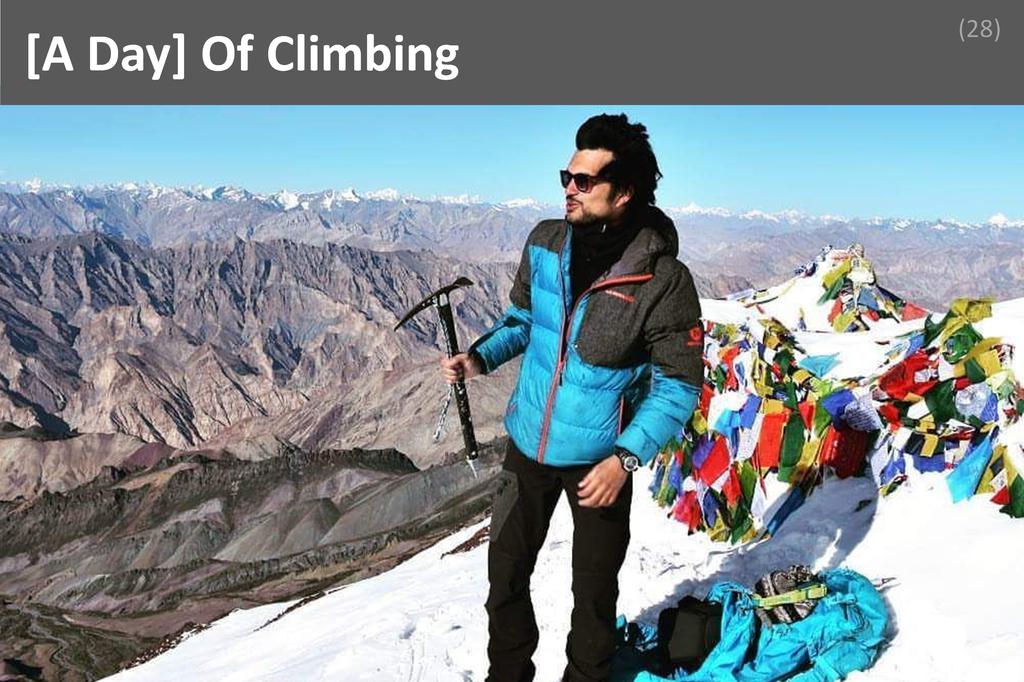
Mountaineering is the pursuit of climbing mountains, combining physical endurance, technical skills, and navigation to ascend challenging terrains. It involves traversing rock, ice, and snow, often in remote and high-altitude environments. This activity requires preparation, specialized equipment, and knowledge of safety practices to overcome natural obstacles and reach summits.
Mountaineering holds significant value for those who choose it as a profession, shaping both their physical and mental resilience. It fosters a deep connection with nature and demands continuous learning and adaptation to changing environments. The career impacts professionals by enhancing their leadership, decision-making, and teamwork abilities, as they often operate in high-risk situations where collaboration is essential. One major benefit is the development of exceptional problem-solving skills, as mountaineers must assess and respond to unpredictable conditions. Another benefit is the improvement of physical fitness and overall health, as the activity requires strength, stamina, and agility. Finally, mountaineering offers a profound sense of accomplishment and personal growth, as reaching a summit often represents the culmination of intense preparation and perseverance.
A professional mountaineer might be hired to guide a group of climbers up a renowned peak such as Mount Kilimanjaro. In this role, the mountaineer uses their expertise to plan the route, assess weather conditions, and ensure the safety of the team throughout the ascent. They teach clients essential climbing techniques, manage equipment, and provide motivation during physically demanding stretches. When unexpected challenges arise, such as sudden storms or altitude sickness, the mountaineer must make quick, informed decisions to protect the group. Through this experience, the professional not only demonstrates technical proficiency but also leadership and adaptability, showcasing the multifaceted nature of a career in mountaineering.
Education
Mountaineering Courses
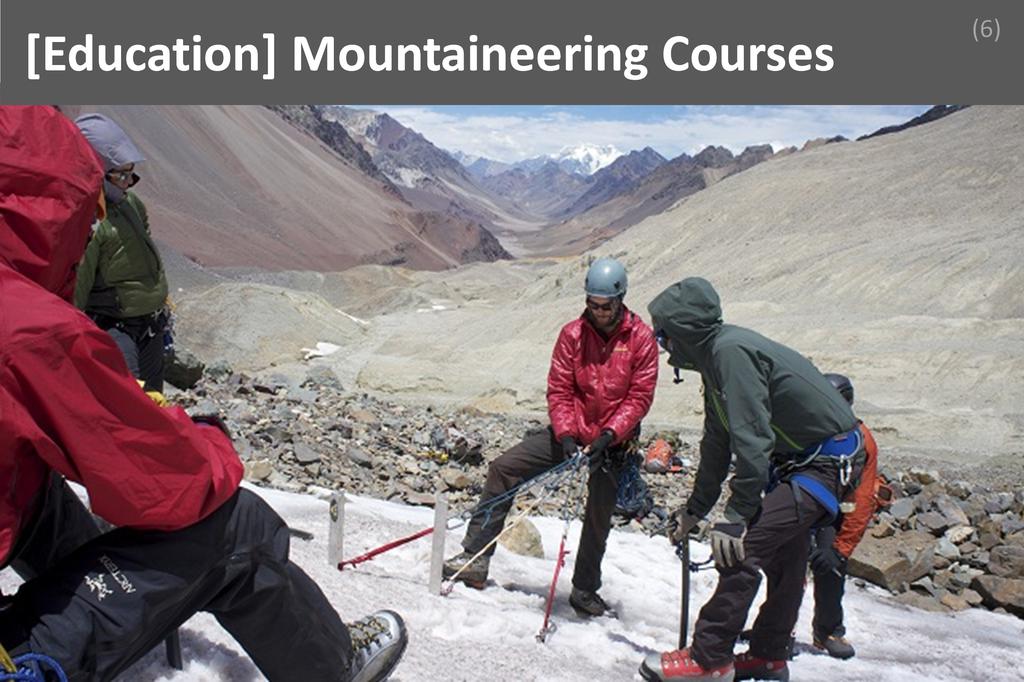
Mountaineering Courses are structured educational programs designed to teach the essential skills, techniques, and safety protocols required for climbing mountains. These courses cover topics such as navigation, rope work, survival strategies, and environmental awareness, forming a critical part of both academic study and professional training in the field of mountaineering.
Understanding Mountaineering Courses is vital for anyone aspiring to excel in the field of mountaineering, as these courses provide the theoretical and practical foundation necessary for safe and effective mountain expeditions. They introduce learners to the complexities of high-altitude environments, risk management, and technical climbing skills, all of which are indispensable for both personal safety and group leadership. Mastery of these concepts not only enhances individual competence but also builds credibility and trust among peers and clients. Over the long term, professionals who have completed comprehensive mountaineering courses are better equipped to adapt to evolving challenges, pursue advanced certifications, and take on leadership roles within the industry.
Consider a professional mountaineer leading a group expedition in the Himalayas. Drawing on their knowledge from mountaineering courses, they assess weather patterns, select the safest routes, and implement proper rope techniques to navigate treacherous terrain. When a sudden snowstorm arises, their training in emergency response and survival skills enables them to keep the team calm, establish a secure shelter, and ration supplies effectively. Their ability to apply theoretical concepts in real-time not only ensures the safety and success of the expedition but also reinforces their reputation as a competent and reliable leader in the mountaineering community.
History of Mountaineering
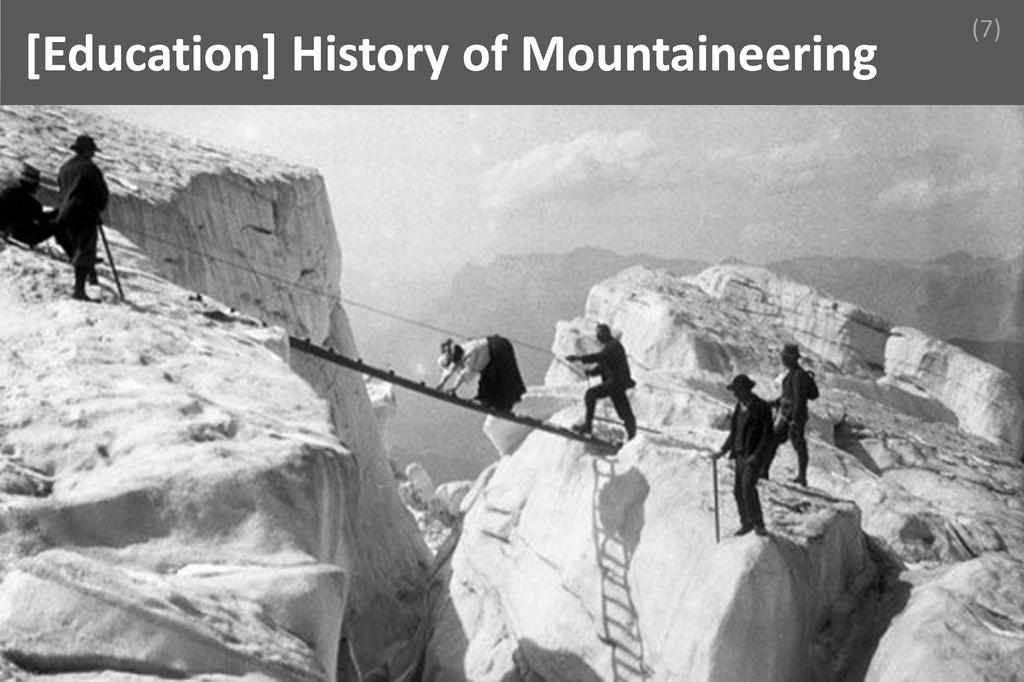
History of Mountaineering is the study of the evolution, milestones, and cultural significance of climbing mountains, encompassing early expeditions, technological advancements, and the development of mountaineering ethics. This subject is integral to both academic study and professional practice, providing essential context and insight for anyone involved in mountaineering.
Understanding the history of mountaineering is vital because it connects professionals to the roots of their discipline, highlighting the achievements, failures, and lessons learned by past climbers. This knowledge fosters a deep respect for the mountains and the pioneers who shaped modern techniques and safety standards. By studying historical expeditions and the progression of equipment and ethics, mountaineers gain a comprehensive perspective that informs their decision-making and risk assessment. This foundation not only enhances technical competence but also cultivates a sense of responsibility and stewardship for the environment. Over the long term, professionals who are well-versed in the history of mountaineering are better equipped to innovate, mentor others, and contribute meaningfully to the ongoing evolution of the field.
Imagine a professional mountaineering guide leading a group on a challenging ascent in the Alps. Drawing on their knowledge of the history of mountaineering, the guide shares stories of early explorers who first charted the route, explaining how their experiences led to the development of modern climbing techniques and safety protocols. When faced with a difficult decision about whether to proceed in changing weather conditions, the guide recalls historical incidents where similar choices led to both triumph and tragedy. This historical perspective informs the guide’s judgment, helping them balance ambition with caution. By integrating lessons from the past, the guide not only ensures the safety and enrichment of their clients but also honors the legacy of those who paved the way.
Map Reading & Navigation
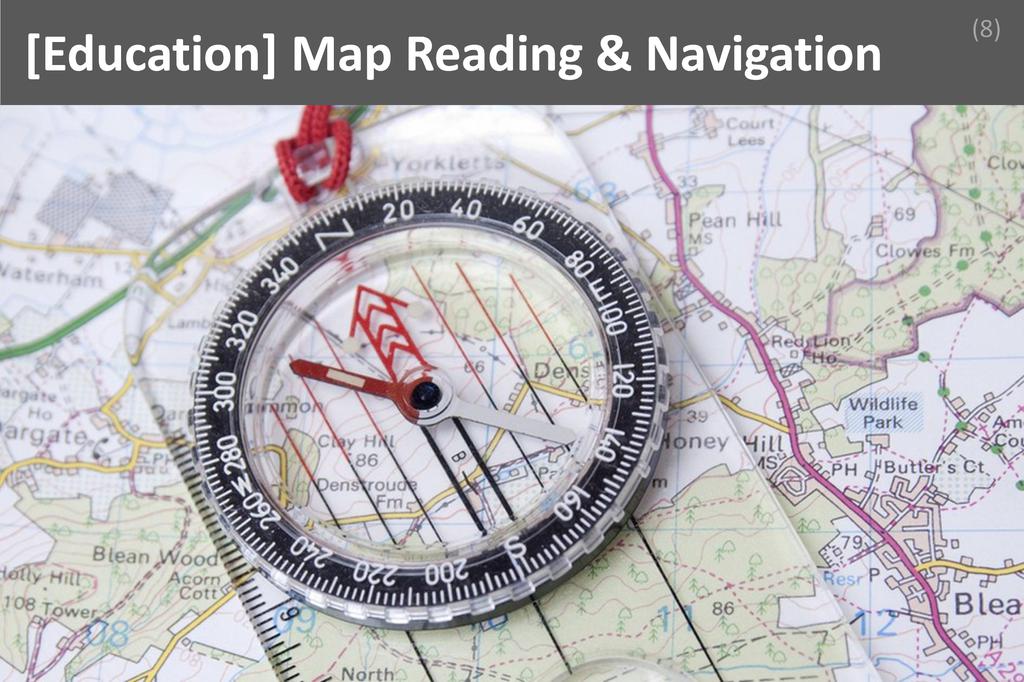
Map Reading & Navigation is the skill of interpreting topographical maps and using navigational tools to determine one’s position, plan routes, and move safely through unfamiliar terrain. In mountaineering, it is a core academic and practical competency, essential for both personal safety and effective leadership in challenging and dynamic environments.
Understanding map reading and navigation is crucial for anyone pursuing a career in mountaineering. This knowledge enables professionals to accurately assess terrain, anticipate hazards, and make informed decisions in remote or unpredictable settings. Mastery of these skills forms the backbone of safe expedition planning and execution, reducing reliance on technology that may fail in harsh conditions. Over time, proficiency in navigation not only enhances personal safety but also builds credibility and trust among peers and clients. It is a foundational skill that supports advanced mountaineering techniques, risk management, and leadership, making it indispensable for both aspiring and experienced mountaineers seeking long-term success and advancement in the field.
Imagine a mountaineering guide leading a group through a remote alpine region where weather conditions suddenly deteriorate, obscuring visibility and rendering GPS devices unreliable. Drawing on their expertise in map reading and navigation, the guide consults a topographical map and uses a compass to determine their current location relative to known landmarks. By interpreting contour lines and natural features, the guide identifies a safe route to descend to lower ground, avoiding potential avalanche zones and hazardous cliffs. This practical application of theoretical knowledge ensures the group’s safety and demonstrates the critical importance of navigation skills in real-world mountaineering operations, where quick, informed decisions can mean the difference between a successful expedition and a dangerous situation.
Equipment Knowledge
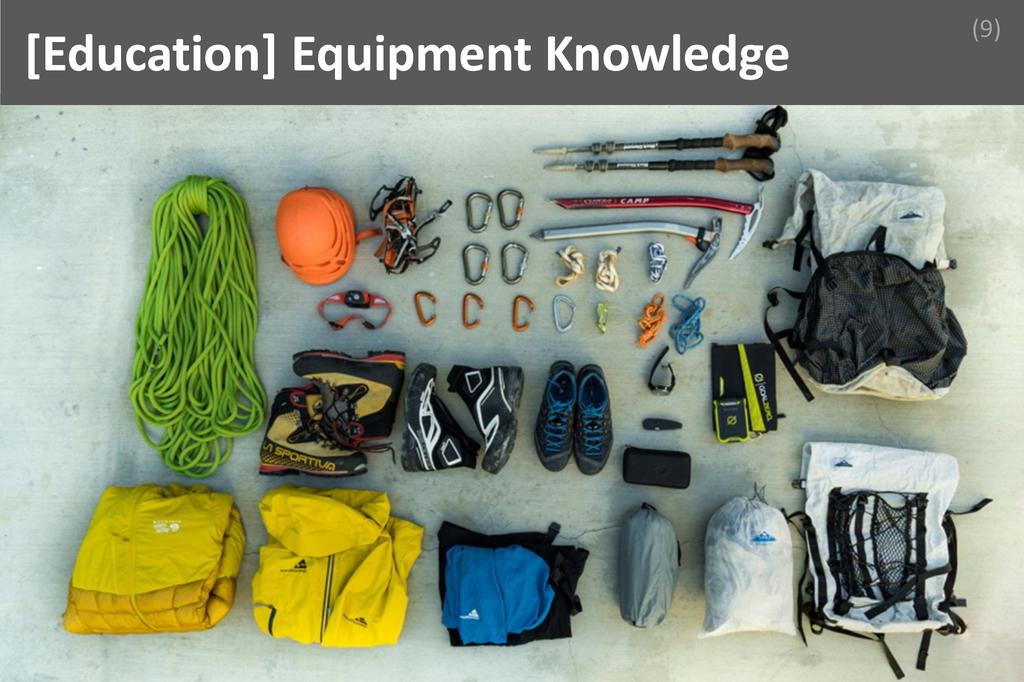
Equipment Knowledge refers to the comprehensive understanding of the selection, use, maintenance, and limitations of specialized gear essential for mountaineering activities. This knowledge is a critical component of both academic study and professional practice in mountaineering, ensuring safety, efficiency, and adaptability in challenging and often unpredictable environments.
Developing a deep understanding of mountaineering equipment is vital for anyone entering or advancing in this field. Mastery of equipment knowledge allows professionals to make informed decisions about gear selection based on terrain, weather, and expedition objectives. It also underpins the ability to maintain and troubleshoot equipment, which is crucial for safety and operational success. This subject forms the backbone of professional competence, as improper use or misunderstanding of gear can lead to accidents or mission failure. Over time, expertise in equipment knowledge enhances a mountaineer’s confidence, adaptability, and leadership potential, opening doors to advanced roles such as expedition leader, instructor, or gear consultant within the outdoor industry.
Imagine a mountaineering guide leading a team up a glaciated peak. Before departure, the guide inspects all harnesses, ropes, crampons, and ice axes, identifying a worn carabiner that could compromise safety. Drawing on their equipment knowledge, the guide replaces the faulty gear and adjusts the team’s rope system to suit the day’s conditions. During the ascent, changing weather requires a quick switch from standard boots to insulated models, a decision made confidently thanks to the guide’s understanding of gear performance in cold environments. Throughout the expedition, the guide’s expertise ensures not only the safety of the group but also the efficient use of resources, demonstrating how theoretical knowledge directly informs practical, real-world mountaineering operations.
First Aid
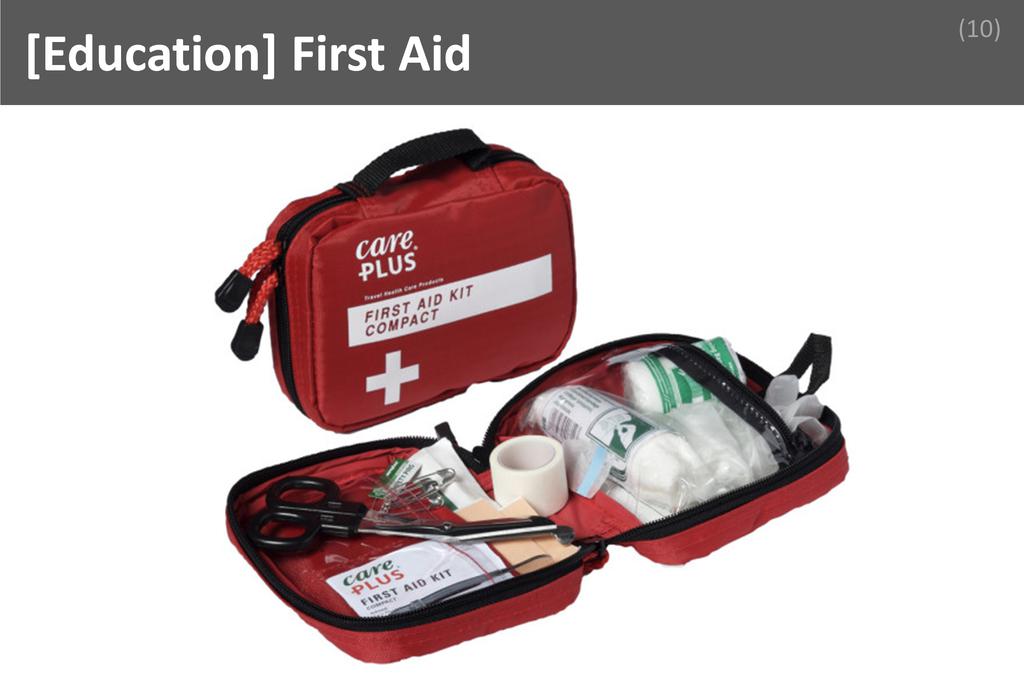
First Aid is the immediate, temporary care given to an injured or ill person before professional medical help arrives. In mountaineering, it is a critical academic and practical discipline, forming part of the essential knowledge required to manage emergencies in remote, high-risk environments where access to medical facilities is limited or delayed.
Understanding First Aid is vital for anyone involved in mountaineering because the environment is inherently unpredictable and often far from immediate medical assistance. Mastery of First Aid principles equips mountaineers with the ability to assess situations, stabilize injuries, and prevent complications until further help is available. This foundational knowledge is not only a safety requirement but also a professional standard in the field, enhancing credibility and employability. Over the course of a mountaineering career, proficiency in First Aid fosters confidence, leadership, and the ability to make critical decisions under pressure. It also demonstrates a commitment to the well-being of team members, which is highly valued in both guiding and expedition roles.
Imagine a mountaineering guide leading a group across a glacier when a team member slips and suffers a deep laceration on their leg. Drawing on their First Aid training, the guide quickly assesses the severity of the injury, applies direct pressure to control bleeding, and uses a sterile dressing from their kit to prevent infection. They immobilize the leg to minimize further damage and monitor the injured person for signs of shock, all while coordinating a safe evacuation plan. This scenario highlights how theoretical First Aid knowledge is translated into decisive, life-preserving action in the field, ensuring the safety and survival of individuals in challenging, isolated conditions.
Skills
Physical & Mental Fitness
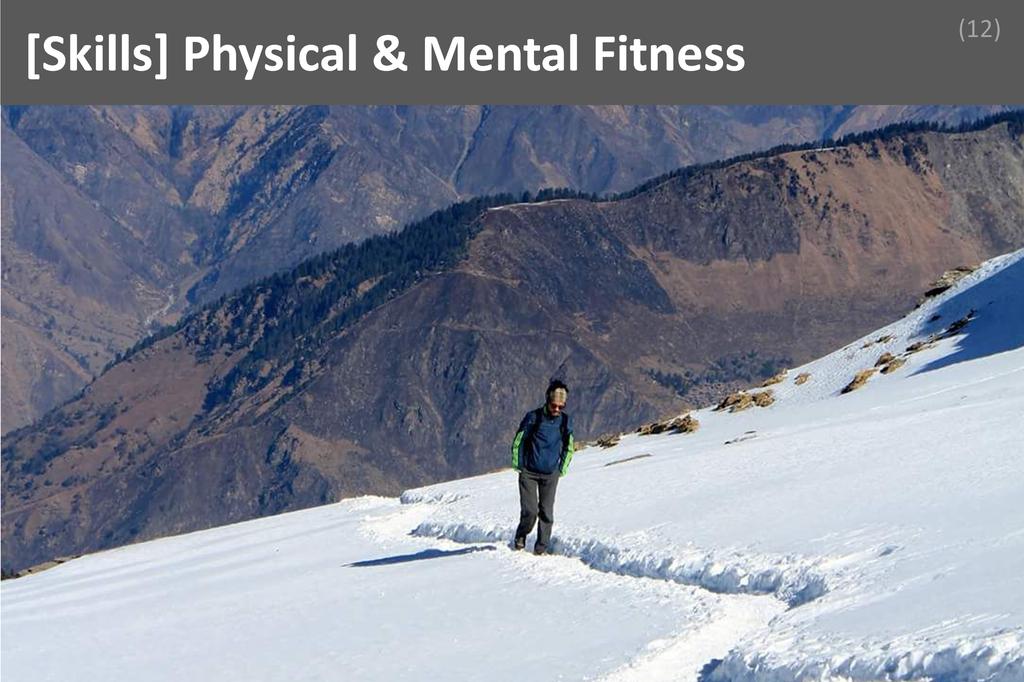
Physical & Mental Fitness refers to the combined state of bodily strength, endurance, and flexibility, alongside psychological resilience, focus, and emotional stability. In mountaineering, this dual fitness enables professionals to withstand harsh environments, make sound decisions under pressure, and maintain safety and performance during physically and mentally demanding expeditions.
Physical & Mental Fitness is fundamental to mountaineering because it directly impacts a climber’s ability to endure long ascents, adapt to rapidly changing weather, and respond to emergencies. Employers and clients highly value this skill, as it ensures reliability, reduces risk, and increases the likelihood of successful expeditions. Cultivating this skill involves regular cardiovascular and strength training, flexibility exercises, and mental conditioning through mindfulness, stress management, and scenario-based training. Over time, consistent practice and real-world experience help mountaineers build the stamina and psychological fortitude required to excel in challenging conditions, making them trusted leaders and valuable team members in the field.
Imagine a mountaineer leading a team up a high-altitude peak when a sudden snowstorm hits, drastically reducing visibility and dropping temperatures. The leader’s physical fitness allows them to continue moving efficiently despite fatigue and cold, while their mental fitness helps them remain calm, assess the situation rationally, and make critical decisions about navigation and safety. By staying composed and physically capable, the mountaineer successfully guides the team to a safe shelter, demonstrating how physical and mental fitness are not just assets but essential tools for overcoming adversity and ensuring the well-being of everyone involved in the expedition.
Climbing Skills
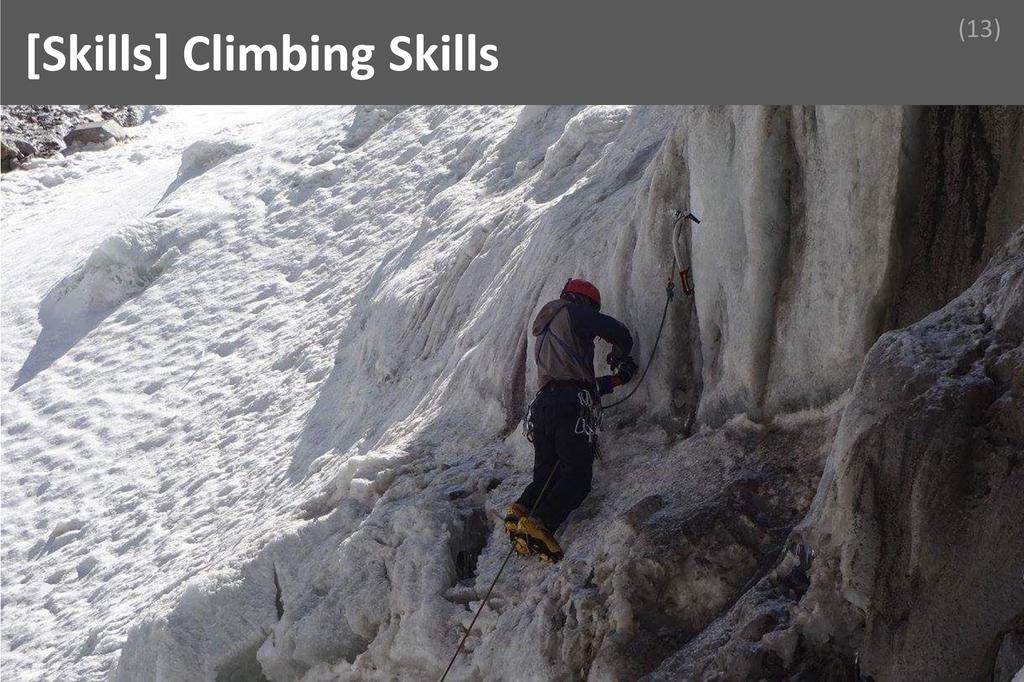
Climbing skills encompass the technical abilities, physical strength, balance, and mental focus required to ascend and descend various terrains safely and efficiently. These skills include proficiency in rope work, movement on rock, ice, or mixed surfaces, and the ability to assess and adapt to changing conditions, forming the foundation of mountaineering expertise.
Climbing skills directly enhance a mountaineer's performance by enabling safe navigation of challenging routes, efficient use of equipment, and quick adaptation to unpredictable environments. Clients and employers highly value these abilities because they ensure safety, reduce risk, and increase the likelihood of successful expeditions. Mastery of climbing skills demonstrates professionalism, reliability, and preparedness, all of which are critical in high-stakes environments. Developing these skills requires consistent practice, ongoing education, and exposure to diverse climbing scenarios. Participating in guided climbs, attending technical courses, and learning from experienced mentors all contribute to skill growth. Over time, climbers refine their techniques, build confidence, and expand their capacity to tackle increasingly complex challenges, making them indispensable assets to any mountaineering team.
Imagine a mountaineering guide leading a group across a steep, icy ridge when sudden weather changes create hazardous conditions. The guide’s advanced climbing skills become crucial as they quickly assess the safest route, set up secure anchors, and demonstrate proper movement techniques to the group. By efficiently managing ropes and providing clear instructions, the guide ensures everyone’s safety and maintains group morale. Their expertise allows them to adapt to the evolving situation, avoid potential accidents, and successfully lead the team to a safe zone. In this scenario, the guide’s climbing skills not only solve an immediate critical issue but also reinforce trust and confidence among clients, highlighting the indispensable nature of this core competency in mountaineering.
Survival Skills
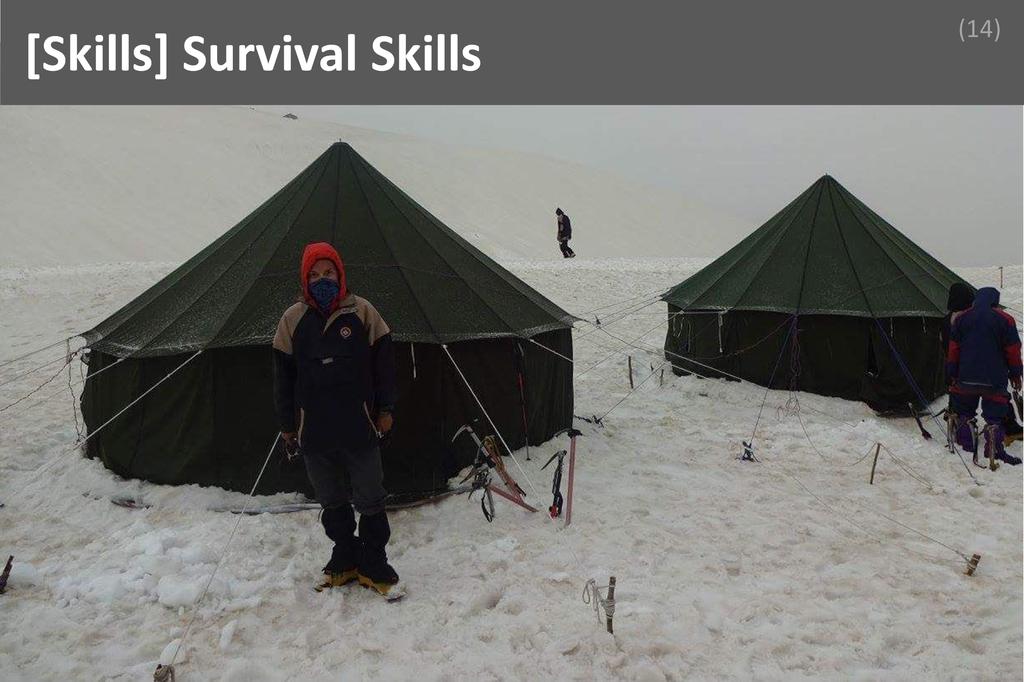
Survival skills encompass the knowledge and practical abilities required to stay alive and safe in challenging, unpredictable, or life-threatening environments. For mountaineering professionals, these skills include navigation, first aid, shelter construction, water sourcing, and emergency response, forming a crucial foundation for managing risks and ensuring expedition safety.
Mastering survival skills directly enhances a mountaineer’s performance by enabling quick, effective responses to emergencies such as sudden weather changes, injuries, or equipment failures. Clients and employers highly value these abilities because they translate to increased safety, reliability, and confidence during expeditions. A mountaineer who demonstrates strong survival skills reassures clients and team members, often making the difference between a successful journey and a dangerous ordeal. Cultivating these skills requires a combination of formal training, hands-on practice, and continuous learning from real-world experiences. Regular participation in survival courses, scenario-based drills, and reflection on past expeditions help mountaineers refine their abilities and stay prepared for any situation.
Imagine a mountaineering guide leading a group when a sudden snowstorm engulfs the team, obscuring trails and dropping temperatures rapidly. Relying on survival skills, the guide quickly assesses the situation, locates a safe area, and constructs an emergency shelter using available materials. The guide then manages the group’s resources, ensures everyone stays warm, and administers basic first aid to a member showing signs of hypothermia. By maintaining composure and applying survival knowledge, the guide not only protects the group from immediate danger but also preserves morale until rescue or safe conditions return. This scenario highlights how survival skills are not just about individual safety, but also about leadership and responsibility in high-stakes environments.
Expedition Planning
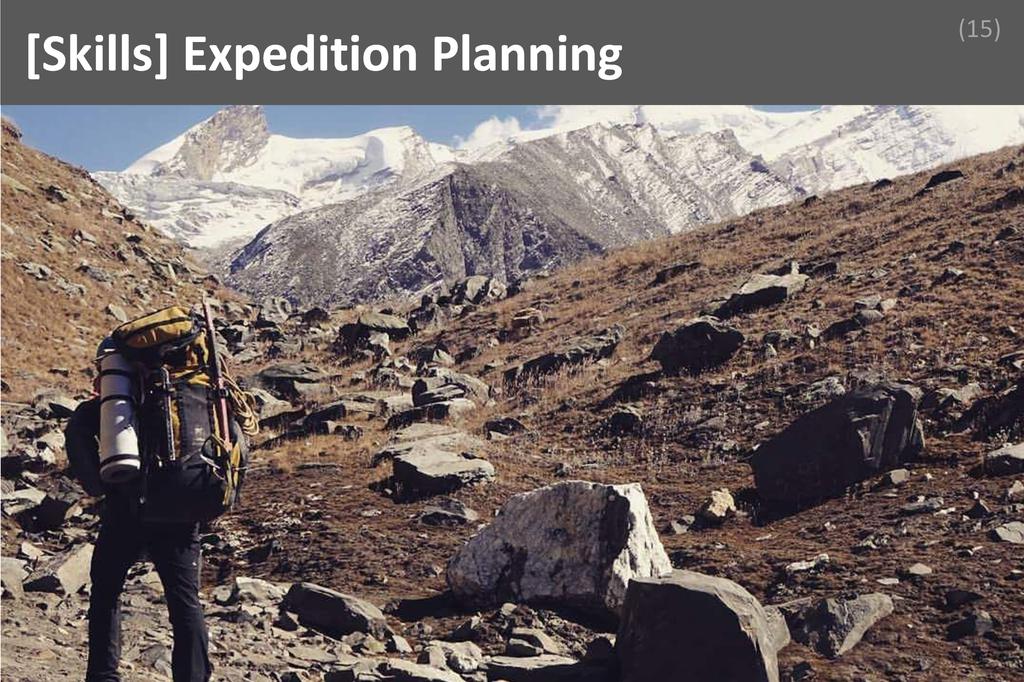
Expedition Planning is the systematic process of organizing, preparing, and coordinating all aspects of a mountaineering journey, including route selection, logistics, risk assessment, resource allocation, and contingency strategies. This skill enables mountaineers to anticipate challenges, optimize safety, and ensure the efficient use of time and resources throughout an expedition.
Mastering Expedition Planning significantly enhances a mountaineer’s performance by reducing uncertainty and minimizing risks associated with unpredictable environments. Clients and employers highly value this skill because it demonstrates professionalism, reliability, and a commitment to safety, all of which are crucial in high-stakes outdoor pursuits. Developing this skill involves a combination of formal training, mentorship, and hands-on experience. Over time, mountaineers refine their planning abilities by analyzing past expeditions, learning from both successes and failures, and staying updated on best practices and technological advancements. Consistent practice and reflection help professionals anticipate potential obstacles, adapt to changing conditions, and make informed decisions that contribute to the overall success of any mountaineering venture.
Imagine a mountaineering guide tasked with leading a team up a challenging peak during an unpredictable weather season. Through meticulous Expedition Planning, the guide researches weather patterns, prepares alternative routes, and ensures all necessary equipment is accounted for. When a sudden storm threatens the original ascent path, the guide quickly implements a pre-planned contingency route, keeping the team safe and on schedule. This proactive approach not only averts potential danger but also instills confidence in the clients, demonstrating the critical importance of thorough planning. By relying on well-developed Expedition Planning skills, the guide successfully navigates unforeseen challenges and achieves the expedition’s objectives.
Rescue Techniques
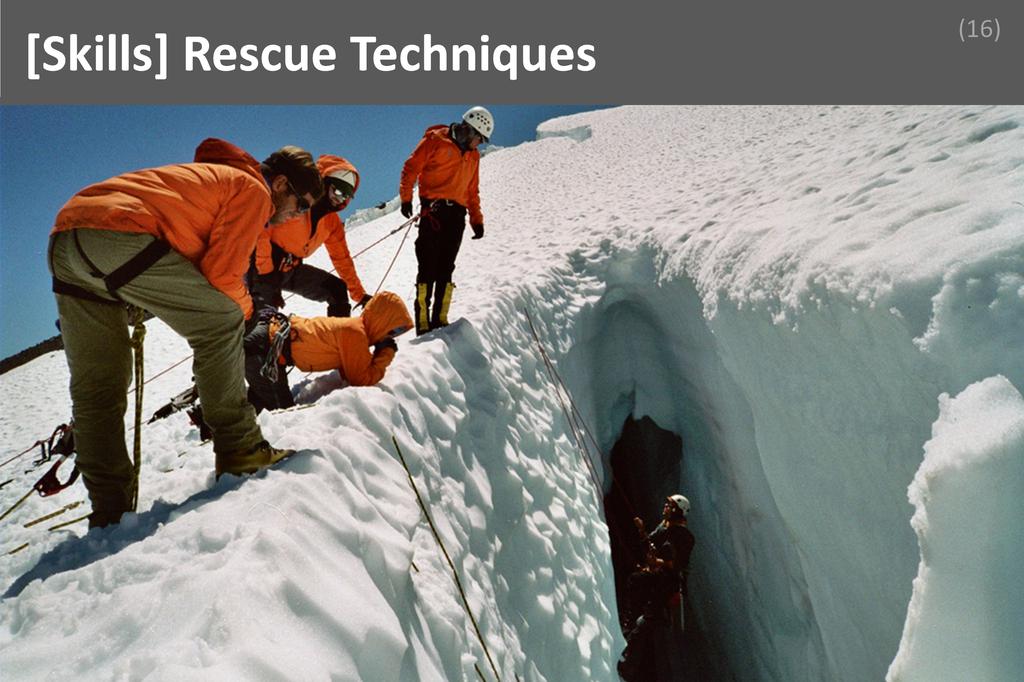
Rescue Techniques encompass the knowledge and practical skills required to safely extract oneself or others from dangerous situations in mountainous environments. This includes rope work, first aid, navigation, and emergency response. For mountaineering professionals, mastery of these techniques is vital for ensuring safety, managing risks, and responding effectively to unforeseen incidents.
Proficiency in Rescue Techniques directly enhances a mountaineer’s ability to manage emergencies and protect both themselves and their team. Clients and employers highly value this skill because it demonstrates a commitment to safety and preparedness, which are crucial in high-risk environments. Developing expertise in rescue methods involves formal training, regular practice, and continuous learning to stay updated with the latest protocols and equipment. Over time, repeated exposure to simulated and real-life scenarios builds confidence and sharpens decision-making abilities. As a result, professionals who invest in this skill are better equipped to handle crises, inspire trust, and maintain a strong reputation in the mountaineering community.
Imagine a mountaineering guide leading a group across a glacier when a team member suddenly falls into a concealed crevasse. The guide immediately assesses the situation, communicates with the group to ensure everyone’s safety, and employs crevasse rescue techniques to secure the fallen climber. Using rope systems and pulleys, the guide carefully extracts the individual while providing reassurance and first aid as needed. This swift, competent response not only prevents further injury but also demonstrates the guide’s expertise and preparedness. The successful rescue reinforces the importance of mastering rescue techniques, as it transforms a potentially tragic event into a testament of professionalism and skill in the field.
Photography Skills
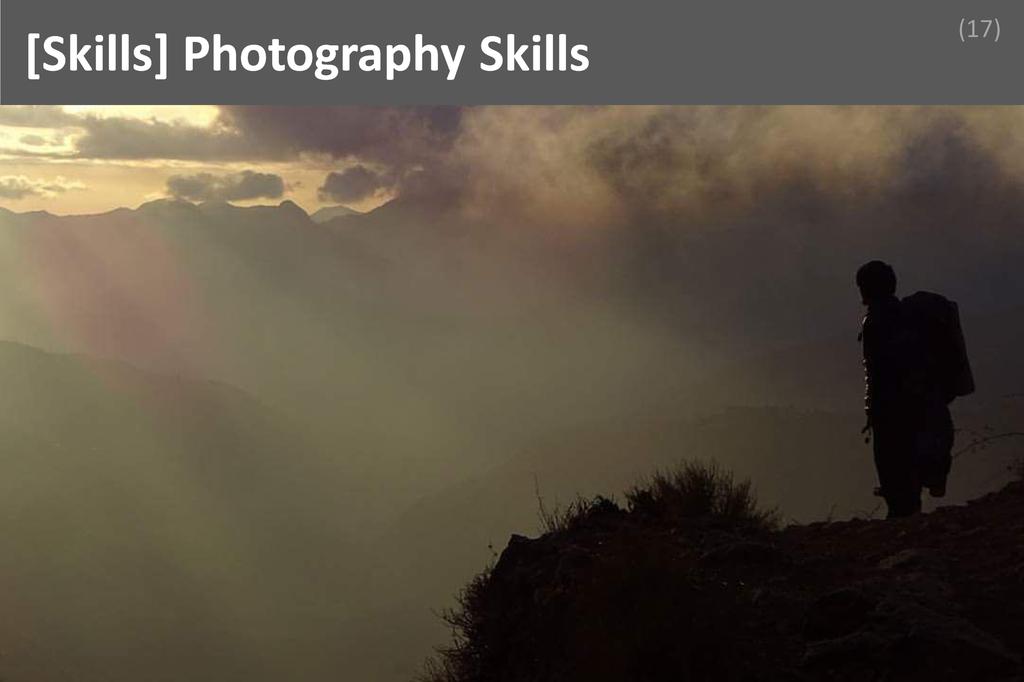
Photography skills encompass the technical and creative ability to capture, compose, and edit images that effectively communicate stories, document experiences, and highlight important moments. In mountaineering, these skills are vital for recording expeditions, sharing achievements, and providing visual evidence of routes, conditions, and accomplishments, enhancing both safety and storytelling.
Mastering photography in mountaineering directly enhances a professional’s performance by enabling them to document routes, capture environmental changes, and create compelling visual content for reports or promotional materials. Clients and employers highly value these skills because high-quality images can attract sponsorships, promote expeditions, and provide crucial information for future planning. To cultivate photography skills, mountaineers should practice regularly in diverse lighting and weather conditions, study composition techniques, and familiarize themselves with camera equipment suitable for rugged environments. Over time, consistent practice and feedback help refine both technical proficiency and creative vision, making photography an indispensable asset for career advancement in mountaineering.
Imagine a mountaineering guide leading a team through a challenging, rarely climbed route. Midway, the group encounters an unexpected crevasse field. The guide uses advanced photography skills to document the terrain, capturing detailed images of the hazards and safe passage points. These photographs are later shared with other teams and expedition planners, providing critical visual data for route assessment and risk management. Additionally, the guide’s compelling images are used in presentations and social media, attracting new clients and sponsors by showcasing the adventure’s unique challenges and successes. In this scenario, photography skills not only solve immediate safety concerns but also contribute to the guide’s professional reputation and future opportunities.
Positives
Satisfaction
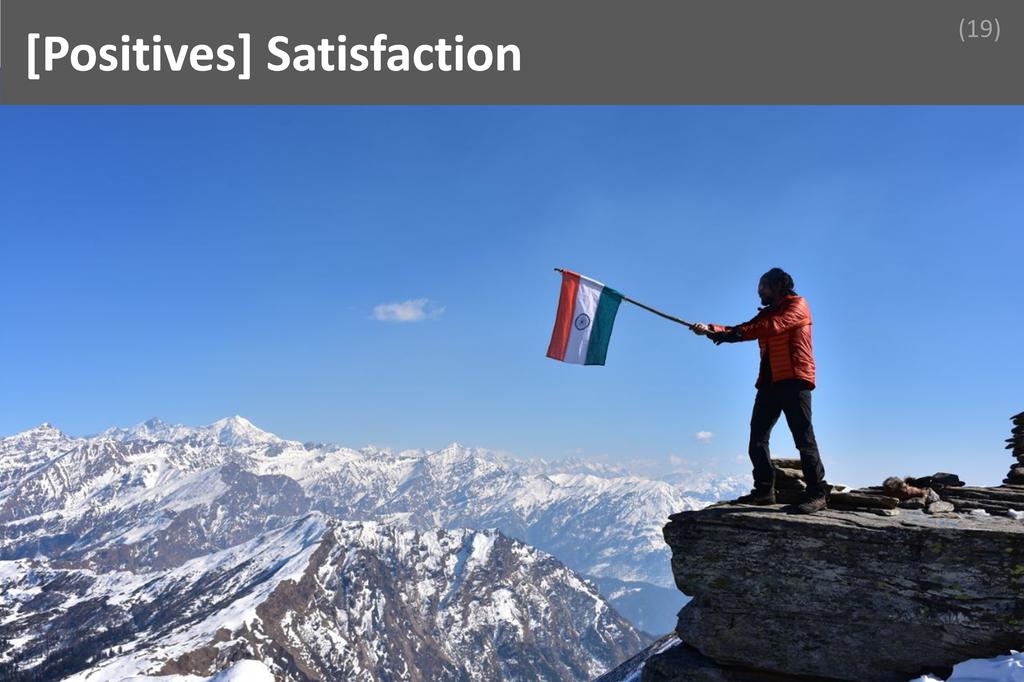
Satisfaction is the deep sense of fulfillment and contentment that arises from achieving personal or professional goals, overcoming challenges, and making meaningful progress. In mountaineering, satisfaction stems from conquering physical and mental obstacles, reaching new heights, and witnessing the breathtaking beauty of nature, all of which contribute to a profound sense of accomplishment.
Satisfaction is a cornerstone of a rewarding career in mountaineering because it fuels motivation, resilience, and personal growth. When climbers experience satisfaction after a successful ascent or a well-executed expedition, it reinforces their passion for the profession and encourages them to pursue even greater challenges. This positive feeling helps mountaineers cope with the demanding and sometimes perilous nature of their work, transforming hardships into valuable learning experiences. The daily pursuit of satisfaction drives professionals to refine their skills, foster teamwork, and maintain a strong connection with the natural world. Ultimately, satisfaction not only enhances job enjoyment but also contributes to long-term career fulfillment and personal well-being.
Imagine a seasoned mountaineer guiding a group to the summit of a challenging peak after weeks of preparation and days of arduous climbing. As they reach the top, the climber feels an overwhelming sense of satisfaction, knowing that their expertise, perseverance, and leadership have enabled the team to succeed. The panoramic view, crisp mountain air, and shared joy among the group create a moment of pure fulfillment. This experience reaffirms the mountaineer’s dedication to their craft and highlights the unique rewards of their profession. Each successful expedition becomes a testament to their growth and passion, making every challenge worthwhile and inspiring them to continue exploring new heights.
Close to Nature
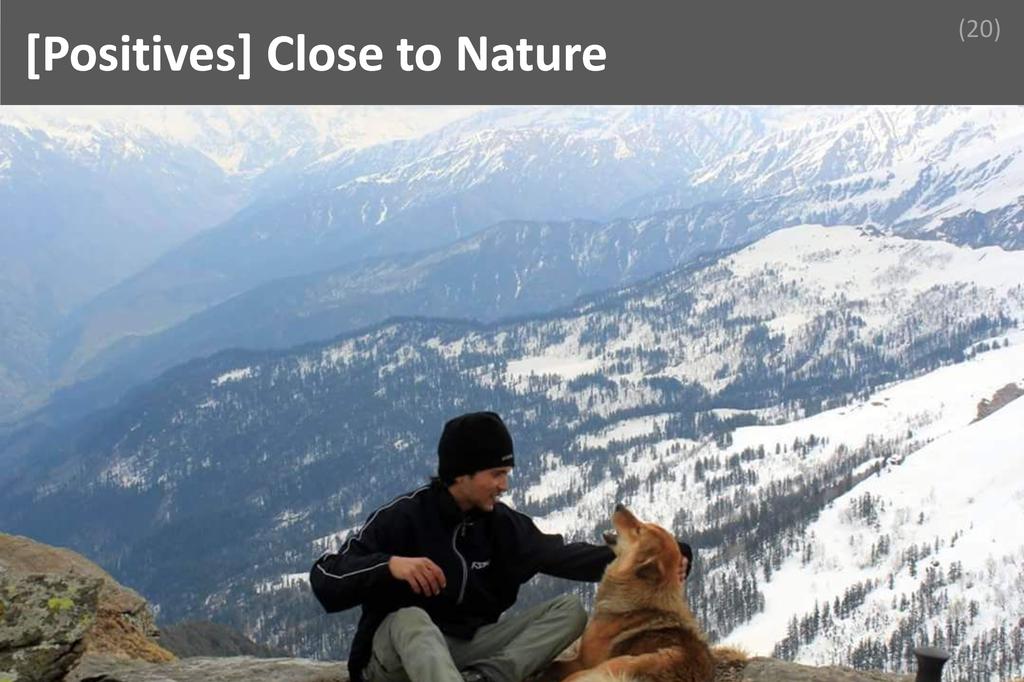
"Close to Nature" means being deeply immersed in the natural world, surrounded by untouched landscapes, fresh air, and the raw beauty of mountains. In mountaineering, this connection fosters a sense of awe, tranquility, and respect for the environment, enhancing both personal well-being and professional fulfillment in profound ways.
The opportunity to be close to nature is a defining advantage for those pursuing a career in mountaineering. This constant exposure to pristine wilderness not only nurtures mental and physical health but also instills a unique sense of purpose and perspective. The daily experience of breathtaking vistas and changing weather conditions keeps the work dynamic and invigorating, preventing monotony and burnout. Being surrounded by nature encourages mindfulness and resilience, qualities that are essential for personal growth and professional success in this demanding field. As mountaineers guide others or conduct research, their deep connection to the environment enhances their expertise and credibility, making their work more meaningful and impactful.
Imagine a professional mountaineer leading a group at dawn, the world still hushed and the sky painted with the first light. As they ascend a rugged trail, the only sounds are the crunch of boots on frost and the distant call of an eagle. In that moment, the mountaineer feels a profound sense of peace and accomplishment, knowing their office is the open sky and their daily routine is shaped by the rhythms of the earth. This intimate connection to nature not only inspires them but also allows them to share this wonder with others, making every climb a deeply rewarding experience that goes far beyond the physical challenge.
Living on the Edge
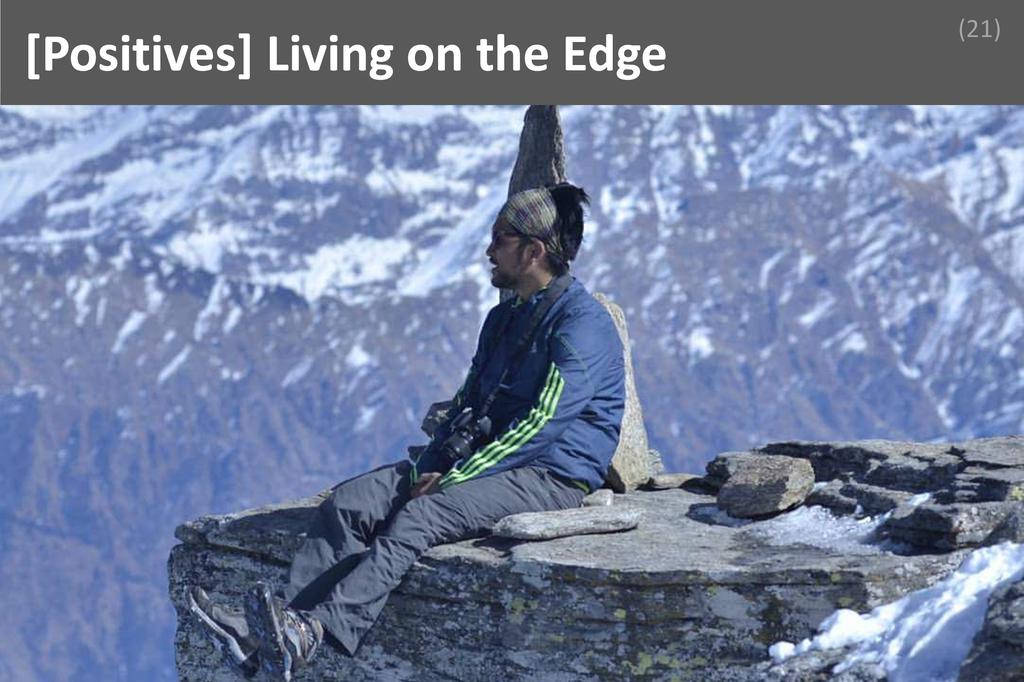
"Living on the Edge" in mountaineering means embracing the constant presence of risk, uncertainty, and challenge while navigating extreme environments. It is the act of pushing personal boundaries, making critical decisions under pressure, and thriving in situations where both physical and mental limits are tested. This mindset fosters growth and resilience.
Living on the edge is a defining feature that makes a career in mountaineering deeply rewarding. The ever-present challenges demand adaptability, quick thinking, and courage, which in turn foster a profound sense of accomplishment and self-discovery. Each expedition becomes a journey of personal growth, as mountaineers learn to trust their instincts and skills. The adrenaline and excitement of facing the unknown create a unique sense of fulfillment that few other professions can offer. This constant engagement with risk and reward not only boosts job satisfaction but also sharpens leadership and problem-solving abilities. For mountaineers, every day brings new opportunities to overcome obstacles, making their work both meaningful and exhilarating.
Imagine a professional mountaineer guiding a team up a remote, icy peak. As a sudden storm rolls in, visibility drops and the path forward becomes treacherous. Drawing on years of experience and a calm mindset, the mountaineer assesses the situation, makes swift decisions, and leads the group to safety. In that moment, living on the edge transforms from a theoretical concept into a tangible, life-affirming experience. The guide’s ability to navigate danger and uncertainty not only ensures the team’s well-being but also delivers an unparalleled sense of achievement. This scenario encapsulates how living on the edge provides mountaineers with daily opportunities to test their limits and find deep professional fulfillment.
Exploring New Regions
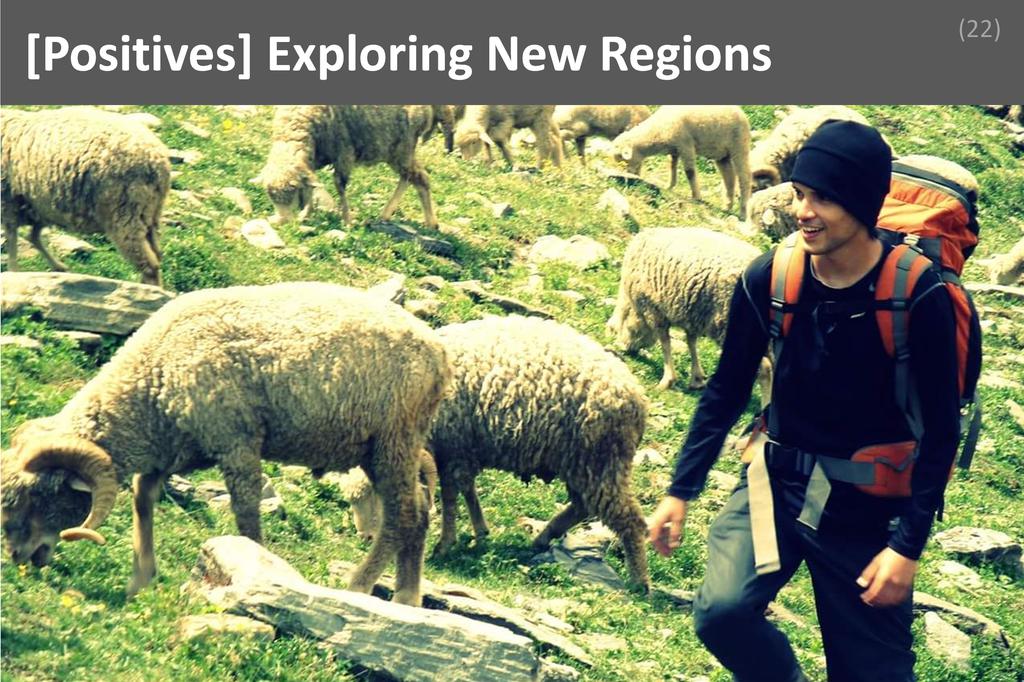
Exploring new regions in mountaineering means venturing into unfamiliar landscapes, discovering untouched peaks, and navigating routes that few have traveled before. This pursuit of the unknown fosters a sense of adventure and curiosity, allowing mountaineers to constantly challenge themselves and expand their horizons, both geographically and personally.
The opportunity to explore new regions is a cornerstone of what makes a career in mountaineering so deeply rewarding. Each new location presents unique challenges, breathtaking scenery, and the thrill of discovery, which keeps the work fresh and invigorating. This constant change prevents monotony and encourages continuous learning, as mountaineers adapt to different terrains, climates, and cultures. The sense of accomplishment that comes from conquering a previously unvisited peak or mapping a new route is unparalleled, fueling personal growth and professional pride. For many, the daily anticipation of what lies beyond the next ridge or valley is a powerful motivator, making every expedition a chance to achieve something extraordinary and to inspire others with stories of exploration.
Imagine a seasoned mountaineer leading an expedition into a remote mountain range in Central Asia, where few climbers have set foot. As the team navigates uncharted passes and encounters local wildlife and communities, the mountaineer experiences a profound sense of fulfillment. Each day brings new discoveries, from hidden glaciers to ancient rock formations, and the challenge of adapting to unpredictable weather and terrain sharpens their skills. Sharing these experiences with teammates and documenting the journey for future explorers, the mountaineer not only advances their own expertise but also contributes valuable knowledge to the broader climbing community. This tangible impact and the excitement of the unknown make exploring new regions a truly transformative aspect of the profession.
Challenges
Risk Factors
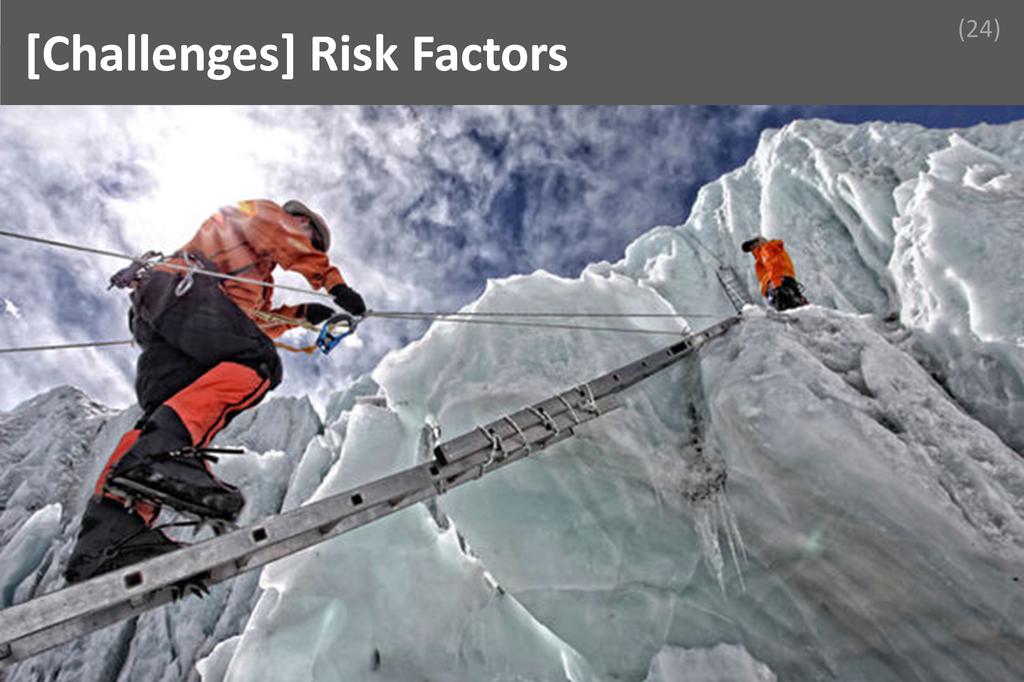
Risk factors in mountaineering refer to the unpredictable and potentially hazardous elements such as weather changes, avalanches, altitude sickness, and equipment failure that can threaten safety and success. These factors are demanding because they require constant vigilance, rapid decision-making, and the ability to adapt to evolving, often life-threatening, situations.
Risk factors profoundly shape the daily routines and mental outlook of mountaineering professionals. Every ascent involves assessing environmental conditions, monitoring physical well-being, and making critical decisions under pressure. This constant exposure to danger demands exceptional resilience, as professionals must balance ambition with caution. Successful mountaineers manage these constraints by cultivating deep knowledge of terrain and weather, maintaining rigorous physical and mental preparation, and fostering strong communication within their teams. They also develop contingency plans and practice self-discipline to turn back when conditions become unsafe, understanding that survival and long-term success depend on prudent judgment rather than bravado. Through experience and ongoing learning, they build the confidence and adaptability needed to navigate the ever-present risks of their profession.
Consider an experienced mountaineer leading an expedition on a challenging Himalayan peak. Midway through the climb, the team encounters rapidly deteriorating weather, with high winds and falling temperatures increasing the risk of frostbite and disorientation. Drawing on years of experience, the leader quickly assesses the situation, consults with team members, and decides to establish an emergency camp rather than push for the summit. By prioritizing safety and maintaining clear communication, the leader ensures that everyone conserves energy and avoids unnecessary exposure. When conditions improve, the team is able to continue safely, ultimately reaching their goal. This scenario highlights how proactive risk management, adaptability, and sound decision-making enable mountaineering professionals to overcome the inherent dangers of their field.
Weather
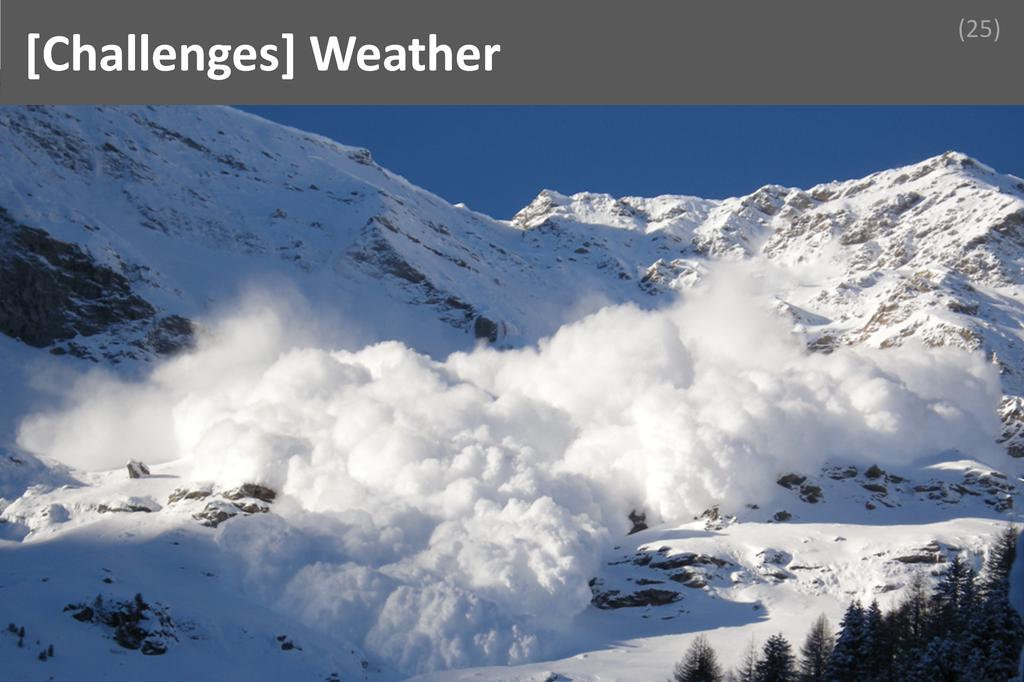
Weather in mountaineering refers to the constantly changing atmospheric conditions encountered at high altitudes, including temperature, wind, precipitation, and visibility. These elements are demanding because they can shift rapidly, create hazardous situations, and directly impact safety, decision-making, and the overall success of any expedition in mountainous environments.
The unpredictability of weather profoundly shapes the daily routines and decisions of mountaineering professionals. Sudden storms, whiteouts, or temperature drops can halt progress, increase the risk of accidents, and even threaten survival. This challenge demands unwavering resilience, adaptability, and vigilance. Professionals must continuously monitor forecasts, interpret environmental cues, and adjust plans accordingly. They often develop contingency routes, carry specialized gear, and maintain open communication within their teams to respond swiftly to changing conditions. By fostering a mindset of flexibility and preparedness, mountaineers can minimize risks and make informed choices, ensuring both safety and the possibility of achieving their objectives despite adverse weather.
During an ascent of Mount Denali, a professional mountaineer encountered an unexpected blizzard that reduced visibility to near zero and dropped temperatures dangerously low. Recognizing the signs of worsening weather, the climber quickly established a secure camp, reinforced tents, and rationed supplies. Instead of pushing forward, the team waited out the storm, using their experience to stay warm and safe. Once the weather cleared, they reassessed the route and continued their climb, ultimately reaching the summit. This scenario illustrates how preparedness, patience, and sound judgment enable mountaineers to overcome severe weather, turning a potentially life-threatening obstacle into a manageable challenge.
Lack of Funds & Sponsorships

Lack of Funds & Sponsorships in mountaineering refers to the persistent difficulty of securing adequate financial resources and external backing necessary for expeditions, equipment, and training. This challenge is demanding because it limits access to essential gear, travel, and safety measures, often determining whether a climber can pursue their ambitions at all.
The scarcity of funds and sponsorships directly impacts a mountaineer’s ability to plan and execute expeditions, often forcing professionals to make tough choices about equipment quality, travel logistics, and even safety. This financial constraint demands significant resilience, as it requires individuals to balance their passion with practical limitations. Successful mountaineers often respond by diversifying their income streams, seeking alternative funding sources such as crowdfunding, and building strong personal brands to attract potential sponsors. They also develop resourcefulness, learning to maximize limited resources and collaborate with others to share costs. By maintaining persistence and adaptability, these professionals find creative solutions to financial barriers, allowing them to continue pursuing their goals despite ongoing monetary challenges.
Consider a professional mountaineer who dreams of summiting a remote Himalayan peak but faces a lack of sponsorship and limited personal funds. Instead of abandoning the goal, the climber leverages social media to document training and previous climbs, gradually building a dedicated following. Through engaging storytelling and consistent outreach, the mountaineer attracts small-scale sponsors and launches a crowdfunding campaign, inviting supporters to become part of the journey. By carefully budgeting, borrowing gear, and partnering with other climbers to split costs, the mountaineer manages to fund the expedition. This approach not only secures the necessary resources but also strengthens the climber’s network and reputation, paving the way for future opportunities despite initial financial constraints.
A Day Of
Mountaineering
Before most people have even reached for their morning coffee, a mountaineering professional is already immersed in a world where the stakes are measured in altitude and every decision can mean the difference between triumph and peril. The day unfolds not in the hum of office chatter, but in the crisp silence of dawn, the crunch of boots on frost, and the ever-present awareness of shifting weather and terrain. Here, the pace is dictated by the mountain itself—demanding vigilance, adaptability, and a deep respect for both the environment and the team. Each day is a blend of meticulous preparation, physical endurance, and split-second judgment calls, all set against a backdrop of breathtaking vistas and ever-changing conditions.
Long before sunrise, the mountaineering professional is awake, methodically checking gear, reviewing route plans, and scanning the latest weather updates. This early hour is reserved for final equipment inspections, ensuring that harnesses, ropes, and safety devices are in perfect working order. The team gathers for a detailed briefing, discussing the day’s objectives, potential hazards, and emergency protocols. In these quiet moments, focus sharpens and camaraderie builds, setting the tone for the demanding hours ahead.
With the first light breaking over the peaks, the core activity of the day begins: the ascent. This is when technical skills and physical stamina are put to the test, as the team navigates challenging terrain, manages rope systems, and responds to the unpredictable elements. Communication is constant, whether signaling across a rock face or coordinating movements on a glacier. Every step is a calculated risk, requiring acute awareness of both the environment and the well-being of every team member. The mountain offers no shortcuts, and the hours spent climbing are a testament to resilience and expertise.
By early afternoon, the group approaches critical decision points—perhaps a summit attempt or a complex traverse. Collaboration intensifies as the team assesses conditions, shares observations, and adapts plans in real time. This phase demands clear leadership and trust, as everyone contributes to route finding, safety checks, and morale. The physical exertion is matched by mental focus, with each member supporting the others through the most challenging sections of the climb. Success here is measured not just in meters gained, but in the seamless execution of skills and teamwork.
As the day winds down, attention shifts to a safe descent and thorough debrief. The team retraces their steps, carefully managing fatigue and remaining vigilant for late-day weather changes. Once back at base or camp, there’s time to review the day’s achievements and challenges, document observations, and update logs. Administrative tasks, such as equipment maintenance and route reporting, are completed with the same diligence as the climb itself. Finally, plans are laid for the next day, with lessons learned shaping strategies for future success. In the fading light, the mountaineering professional reflects on a day spent not just working, but truly living at the edge of possibility. |


 Home
Home Abroad
 Plan
Plan Philosophy
 Seminar
 Pages
Pages Advisors
 Testimonials















 Workshop
 Discuss
 Meet
Meet
 Advisor
 Story
Story
 Fine Print
 Links
Links
 Blog
Blog
 Follow
