Career Counselling 2.0 HomeHomeCareer Counselling 2.0 AbroadAbroadCareer Counselling 2.0 PlanPlanCareer Counselling 2.0 | TalksTalksCareer Counselling 2.0 PhilosophyPhilosophyCareer Counselling 2.0 SeminarSeminarCareer Counselling 2.0 PagesPagesCareer Counselling 2.0 AdvisorsAdvisorsCareer Counselling 2.0 TestimonialsTestimonials

News Anchoring

Anchor and Producer Mradul Sharma talks about News Anchoring course, what is News Anchoring and other details about a Career in News Anchoring.


News Anchoring

Mradul Sharma | Anchor and Producer | Zee Media


What is News Anchoring?


You may be curious about a Career in News Anchoring. Understanding Why one wants to choose a Career in News Anchoring is phenomenally more important than figuring out How to get into News Anchoring. It is best to learn about News Anchoring from a real professional, this is akin to getting it from the horse's mouth.

Anchor and Producer Mradul Sharma is an experienced professional with 5 years & 7 months in News Anchoring. According to Anchor and Producer Mradul Sharma, News Anchoring is:

A news presenter also known as a newsreader, news anchor or simply an anchor is a person who presents news during a news program on television, on the radio or on the Internet. News presenters most often work from a television studio or radio studio.


How Anchor and Producer Mradul Sharma got into News Anchoring?


After completing my graduation, I started working as a news presenter. I have worked as a voice over artist with DB Digital, Dainikhaskar Group. I have worked as news presenter for various news channels like Bansal News, Ind24, SMBC and Zee News. It has been 6 years working as News Anchor and Producer.


Anchor and Producer Mradul Sharma's Talk on News Anchoring


Session Image
The Journey of News Anchoring


What Is News Anchoring

News Anchoring

### News Anchoring Image
What is
News anchoring is the professional practice of presenting news stories and updates on television, radio, or digital platforms. Anchors deliver information to the public, guide live broadcasts, interview guests, and provide context for current events, serving as the primary link between news organizations and their audiences.

Concept
News anchoring plays a crucial role in shaping public understanding of current events, ensuring that information is communicated clearly, accurately, and responsibly. For professionals, it offers the opportunity to influence public discourse, build trust with viewers, and develop a recognizable personal brand. Anchors often become authoritative voices in their communities, gaining access to exclusive stories and interviews. The career also fosters strong communication and critical thinking skills, as anchors must quickly analyze breaking news and adapt to fast-paced environments. Additionally, news anchoring provides a platform for advocacy and raising awareness about important issues, allowing professionals to make a meaningful impact on society while advancing their own careers.

Real World Example
A news anchor working for a major television network begins their day by reviewing the latest news updates and collaborating with producers to finalize the evening broadcast lineup. During the live show, the anchor introduces breaking news stories, interviews a government official about new policy changes, and provides analysis on a developing international event. When unexpected news breaks, the anchor seamlessly transitions to live coverage, asking insightful questions to field reporters and experts. Throughout the broadcast, the anchor maintains composure, ensures information is accurate, and engages viewers with clear, concise delivery. This daily routine highlights how news anchors use their skills to inform the public, manage live situations, and uphold journalistic standards in a dynamic environment.

Education


News Sense

### News Sense Image
What is
News Sense is the intuitive ability to identify, evaluate, and prioritize information that is timely, relevant, and significant to the public. It bridges academic theories of journalism with the practical demands of newsrooms, forming a crucial part of the knowledge base required for effective and responsible news anchoring.

Concept
Understanding News Sense is vital for anyone preparing for or working in news anchoring because it underpins every editorial decision made on air. This subject teaches professionals how to distinguish between what is truly newsworthy and what is not, ensuring that the information delivered is both relevant and impactful. Mastery of News Sense allows anchors to quickly assess unfolding events, ask pertinent questions, and adapt to dynamic situations, all while maintaining journalistic integrity. Over the long term, a well-developed News Sense enhances credibility, audience trust, and career advancement, as it demonstrates a consistent ability to deliver news that matters most to viewers.

Real World Example
Imagine a news anchor preparing for a live broadcast when breaking news about a local disaster emerges. Drawing on their News Sense, the anchor rapidly evaluates the significance of the event, determines its immediate relevance to the audience, and decides to prioritize it over previously scheduled stories. During the broadcast, the anchor skillfully contextualizes the event, asks insightful questions to field reporters, and provides viewers with clear, accurate updates. This ability to swiftly recognize and respond to what is most newsworthy, while maintaining composure and clarity, exemplifies how theoretical understanding of News Sense is applied in real-world news anchoring operations.

Factual Knowledge

### Factual Knowledge Image
What is
Factual Knowledge refers to the accumulation of verifiable information, data, and objective truths about events, people, places, and concepts. In the context of News Anchoring, it represents the essential base of accurate details and context that anchors must possess to report, interpret, and communicate news stories reliably and credibly to the public.

Concept
For news anchors, mastering factual knowledge is indispensable because it underpins every aspect of their professional responsibilities. Anchors are tasked with delivering news that is not only timely but also accurate and trustworthy. A strong grasp of factual knowledge ensures that they can distinguish between verified information and speculation, thereby maintaining journalistic integrity. This foundational knowledge base allows anchors to contextualize breaking news, provide background information, and answer follow-up questions with confidence. Over time, the ability to consistently present facts builds a reputation for reliability and authority, which is crucial for career advancement in the highly competitive field of broadcast journalism. Furthermore, it helps anchors avoid the pitfalls of misinformation, which can damage both personal credibility and the reputation of their news organization.

Real World Example
Consider a news anchor covering a developing story about a government policy change. As updates come in, the anchor must quickly reference their factual knowledge about the policy’s history, relevant statistics, and key stakeholders. This enables them to accurately summarize the situation, clarify complex details for viewers, and correct any misinformation that may arise during live coverage. When interviewing experts or officials, the anchor’s command of factual knowledge allows them to ask insightful questions and challenge dubious claims, ensuring the audience receives a clear and truthful account. In this way, the anchor’s theoretical understanding of factual knowledge is directly applied to uphold journalistic standards and foster public trust during the fast-paced demands of a live broadcast.

Language Proficiency

### Language Proficiency Image
What is
Language proficiency is the ability to use a language accurately, fluently, and appropriately in various contexts, encompassing reading, writing, speaking, and listening skills. In news anchoring, it is a fundamental academic and professional requirement, enabling anchors to communicate information clearly, engage audiences, and maintain credibility on both national and international platforms.

Concept
For news anchors, mastering language proficiency is essential because it underpins every aspect of their role. The ability to articulate thoughts clearly, interpret complex information, and convey news stories with precision ensures that the audience receives accurate and unbiased information. Language proficiency also allows anchors to adapt their communication style to suit different topics, audiences, and cultural contexts, which is crucial in a diverse media landscape. Over time, strong language skills contribute to professional growth, enhance on-air confidence, and open doors to broader career opportunities, such as international reporting or editorial leadership. Ultimately, language proficiency is not just a technical skill but a cornerstone of trust and authority in the field of news anchoring.

Real World Example
Consider a news anchor covering a breaking news event with limited information available. Their language proficiency enables them to quickly synthesize updates from various sources, paraphrase complex statements, and deliver concise, coherent reports under pressure. During live broadcasts, the anchor must also listen attentively to correspondents, ask relevant follow-up questions, and clarify details for viewers, all while maintaining composure and professionalism. If a guest or interviewee uses technical jargon or ambiguous language, the anchor’s command of language allows them to rephrase or explain terms for the audience, ensuring clarity and accessibility. This daily application of language proficiency directly impacts the quality and reliability of news delivery.

Reading & Writing

### Reading & Writing Image
What is
Reading & Writing refers to the ability to comprehend, interpret, and produce written language effectively. In the context of news anchoring, it encompasses understanding complex texts, synthesizing information, and communicating clearly to a broad audience. This skill is essential for processing news scripts, reports, and live updates with accuracy and clarity.

Concept
A strong foundation in reading and writing is indispensable for anyone pursuing a career in news anchoring. Anchors must quickly absorb large volumes of information, discern key details, and present them in a concise, engaging manner. Mastery of these skills ensures that news is delivered accurately and responsibly, maintaining the trust of the audience. Furthermore, the ability to write clearly and persuasively allows anchors to contribute to scriptwriting, editorial decisions, and even social media engagement. Over time, these competencies enhance professional credibility, open doors to advanced roles such as editorial leadership, and foster adaptability in a rapidly evolving media landscape.

Real World Example
Consider a news anchor preparing for a live broadcast covering a breaking political event. The anchor receives a series of reports from field journalists, official statements, and background documents. Drawing on their reading skills, the anchor quickly identifies the most relevant facts and underlying context. Using their writing expertise, they synthesize this information into a coherent script, ensuring clarity and neutrality. During the broadcast, the anchor may need to adapt the script on the fly as new information arrives, seamlessly integrating updates while maintaining a professional tone. This scenario highlights how theoretical knowledge of reading and writing directly translates into effective, real-time communication under pressure.

Skills


Presentation

### Presentation Image
What is
Presentation is the ability to effectively communicate information, ideas, and emotions to an audience through verbal and non-verbal means, including voice modulation, body language, clarity, and visual cues. In news anchoring, presentation ensures that news is delivered accurately, engagingly, and credibly, fostering trust and understanding among viewers.

Concept
Mastering presentation directly enhances a news anchor’s performance by enabling clear, confident, and engaging delivery of information, even under pressure. Employers and clients highly value this skill because it shapes the public’s perception of the news organization and builds audience loyalty. A strong presenter can maintain viewer interest, convey complex stories simply, and handle live situations with poise. To cultivate this skill, aspiring anchors should practice public speaking, seek feedback, study experienced professionals, and continually refine their on-camera presence. Over time, consistent rehearsal, self-assessment, and adaptation to audience feedback help anchors develop a distinctive and effective presentation style that sets them apart in a competitive field.

Real World Example
Imagine a news anchor faced with breaking news about a natural disaster, with limited verified information and a rapidly evolving situation. The anchor’s presentation skills become crucial as they must remain calm, articulate, and authoritative while delivering updates. By using clear language, steady eye contact, and controlled body language, the anchor reassures viewers and conveys essential facts without causing panic. Their ability to present information thoughtfully and empathetically helps the audience understand the gravity of the situation and trust the coverage. In this high-pressure moment, strong presentation not only informs but also comforts the public, demonstrating the anchor’s professionalism and the indispensable value of this core skill.

Wittiness

### Wittiness Image
What is
Wittiness is the ability to think quickly, respond cleverly, and inject humor or sharp insight into conversation, often under pressure. For a news anchor, wittiness means being agile-minded, adaptable, and engaging, allowing them to handle unexpected situations, connect with audiences, and maintain composure while delivering information with clarity and charm.

Concept
Wittiness directly enhances a news anchor’s performance by enabling them to navigate live broadcasts, breaking news, and unpredictable interviews with poise and relatability. Employers and viewers alike value anchors who can diffuse tension, recover from on-air mistakes, and keep programming lively and memorable. This skill fosters trust and rapport, making the anchor more approachable and credible. Cultivating wittiness involves staying well-informed, practicing improvisational speaking, and observing seasoned communicators. Over time, exposure to diverse topics and real-time feedback sharpens one’s ability to craft timely, appropriate responses, ensuring the anchor remains both authoritative and personable in any situation.

Real World Example
Imagine a news anchor conducting a live interview when a technical glitch causes the guest’s audio to cut out unexpectedly. Rather than appearing flustered or allowing awkward silence, the anchor quickly quips about the unpredictability of technology, smoothly transitions to a related anecdote, and reassures viewers that the issue is being resolved. This witty response not only fills the gap but also keeps the audience engaged and at ease. The anchor’s ability to think on their feet and inject light humor transforms a potential disruption into a memorable moment, showcasing professionalism and reinforcing their reputation as a confident, relatable broadcaster.

Diction

### Diction Image
What is
Diction refers to the clarity, precision, and effectiveness with which words are pronounced and articulated during speech. In news anchoring, diction ensures that every word is easily understood by the audience, eliminating ambiguity and misinterpretation. It is a cornerstone of professional communication, fostering trust and authority in news delivery.

Concept
Mastering diction directly enhances a news anchor’s performance by ensuring that information is conveyed clearly, regardless of the complexity or urgency of the news. Clients and employers highly value this skill because it minimizes misunderstandings, maintains the credibility of the news organization, and keeps viewers engaged. A news anchor with excellent diction can handle live broadcasts, breaking news, and sensitive topics with confidence, knowing their message will be received as intended. Cultivating this skill involves consistent practice, such as reading aloud, working with speech coaches, and recording oneself to identify areas for improvement. Over time, deliberate effort in refining pronunciation, enunciation, and pacing leads to natural, effective communication that stands out in the competitive field of news media.

Real World Example
Imagine a news anchor covering a rapidly developing emergency, such as a natural disaster, where accurate and timely information is crucial. In this high-pressure situation, the anchor must deliver updates with absolute clarity to avoid causing panic or confusion among viewers. By relying on precise diction, the anchor ensures that names of affected locations, instructions from authorities, and safety guidelines are all communicated without error. This careful articulation allows the audience to quickly grasp essential details, make informed decisions, and trust the information being provided. In such moments, strong diction not only upholds the anchor’s professionalism but also plays a vital role in public safety and effective crisis communication.

Dedication

### Dedication Image
What is
Dedication is the unwavering commitment to consistently pursue excellence, overcome challenges, and fulfill responsibilities with passion and perseverance. In news anchoring, dedication is the driving force that ensures accuracy, reliability, and professionalism, even under pressure. It empowers anchors to deliver trustworthy news and maintain credibility with their audience.

Concept
Dedication directly enhances a news anchor’s performance by fostering resilience, attention to detail, and a strong work ethic. Employers and clients highly value this trait because it guarantees that anchors will go the extra mile to verify facts, meet tight deadlines, and adapt to breaking news situations. Dedication is cultivated through setting clear goals, embracing feedback, and maintaining a genuine interest in current events. Over time, consistently showing up prepared, staying informed, and pushing through demanding circumstances helps anchors build a reputation for reliability and trustworthiness. This ongoing commitment not only benefits the individual’s career growth but also strengthens the overall integrity of the news organization.

Real World Example
Imagine a news anchor faced with a rapidly developing crisis late at night, just hours before a major broadcast. Despite fatigue and the pressure of limited information, the anchor remains dedicated, working closely with producers and reporters to gather verified updates. They meticulously review every detail, rehearse their delivery, and ensure all facts are accurate before going live. Their dedication enables them to present the story with clarity and composure, providing viewers with essential information during a critical moment. This steadfast commitment not only reassures the audience but also earns the respect of colleagues and supervisors, highlighting how dedication is indispensable in navigating high-stakes situations in news anchoring.

Patience

### Patience Image
What is
Patience is the ability to remain calm, composed, and persistent in the face of delays, challenges, or provocation, without becoming frustrated or agitated. In news anchoring, patience is crucial for handling breaking news, unexpected technical issues, and the fast-paced demands of live broadcasting, ensuring professionalism and accuracy.

Concept
Patience directly enhances a news anchor’s performance by allowing them to maintain composure during high-pressure situations, such as breaking news or technical glitches. Employers and clients value this quality because it ensures that anchors deliver information accurately and calmly, regardless of external stressors. Patience also fosters better teamwork, as anchors often collaborate with producers, reporters, and technical staff who may face their own challenges. Cultivating patience involves practicing mindfulness, learning to manage stress, and gaining experience in live environments where unpredictability is the norm. Over time, seasoned anchors develop a steady presence that reassures viewers and colleagues alike, making them invaluable assets to any newsroom.

Real World Example
Imagine a news anchor is live on air when a major story breaks, but the newsroom is still verifying details and technical staff are scrambling to establish a connection with a field reporter. The anchor must fill airtime, respond to incomplete information, and remain composed while producers relay updates through an earpiece. In this scenario, patience enables the anchor to avoid speculation, maintain credibility, and calmly guide the broadcast until all facts are confirmed. By staying patient, the anchor reassures viewers, supports the team, and upholds the station’s reputation for reliable reporting, demonstrating how patience is not just a personal virtue but a professional necessity in news anchoring.

Confidence

### Confidence Image
What is
Confidence is the assured belief in one’s abilities, decisions, and presence, enabling individuals to act decisively and communicate effectively, even under pressure. In news anchoring, confidence is the anchor’s ability to deliver information clearly and authoritatively, fostering trust with the audience and ensuring the smooth flow of live broadcasts.

Concept
Confidence directly enhances a news anchor’s performance by enabling them to present stories with clarity, poise, and credibility, even when faced with breaking news or unexpected technical issues. Employers and clients highly value this trait because it reassures viewers, maintains the station’s reputation, and ensures seamless broadcasts. Cultivating confidence involves consistent practice, thorough preparation, and seeking constructive feedback. Over time, anchors build self-assurance by mastering their subject matter, refining their on-air presence, and learning to manage nerves. This ongoing development not only improves delivery but also helps anchors adapt quickly to dynamic newsroom environments, making them reliable assets to any news organization.

Real World Example
Imagine a news anchor is live on air when breaking news interrupts the scheduled program. The teleprompter malfunctions, and the anchor must rely on memory and quick thinking to deliver accurate information. Drawing on their confidence, the anchor maintains composure, addresses the audience directly, and seamlessly transitions between updates. Their assured demeanor reassures viewers and colleagues alike, turning a potentially chaotic situation into a demonstration of professionalism. By trusting their training and instincts, the anchor not only preserves the broadcast’s integrity but also strengthens their reputation as a dependable and authoritative voice in journalism. This scenario highlights how confidence is indispensable in overcoming challenges and achieving success in news anchoring.

Group Discussions

### Group Discussions Image
What is
Group Discussions refer to structured conversations where multiple participants share ideas, opinions, and information on a specific topic, aiming to reach a consensus or deeper understanding. In news anchoring, group discussions are vital for fostering collaboration, ensuring diverse viewpoints, and facilitating quick, informed decision-making during live broadcasts or editorial meetings.

Concept
Mastering group discussions significantly enhances a news anchor’s ability to communicate effectively, think on their feet, and synthesize diverse perspectives under pressure. Employers and clients value this skill because it leads to more balanced reporting, efficient teamwork, and the ability to handle breaking news situations with composure. To cultivate this skill, aspiring news anchors should actively participate in team meetings, seek feedback, and observe experienced professionals in action. Over time, consistent practice helps anchors become more adept at steering conversations, managing differing viewpoints, and ensuring that all voices are heard, which ultimately results in more comprehensive and engaging news coverage.

Real World Example
Imagine a breaking news situation where conflicting reports are emerging about a major event. The news anchor must quickly convene a group discussion with field reporters, producers, and subject matter experts to verify facts and determine the most accurate narrative. By facilitating this discussion, the anchor ensures that misinformation is filtered out and the broadcast delivers reliable updates to the audience. This collaborative approach not only upholds journalistic integrity but also demonstrates the anchor’s leadership and ability to manage high-pressure situations, ultimately contributing to the credibility and success of the news organization.

Credibility

### Credibility Image
What is
Credibility is the quality of being trusted, believable, and reliable, rooted in honesty, accuracy, and consistency. In news anchoring, credibility ensures that audiences accept information as truthful and unbiased. It forms the foundation of a news anchor’s relationship with viewers, fostering trust and loyalty essential for long-term professional success.

Concept
Credibility directly enhances a news anchor’s performance by ensuring that every report, interview, or breaking news update is received with trust and seriousness. Employers and clients highly value this trait because it safeguards the reputation of their news organization and attracts a loyal audience. To cultivate credibility, a news anchor must consistently verify facts, maintain impartiality, and communicate transparently, even under pressure. Over time, demonstrating accountability for mistakes and a commitment to ethical journalism further strengthens this skill. Continuous learning, seeking feedback, and upholding journalistic standards are also crucial for building and maintaining credibility throughout one’s career.

Real World Example
Imagine a news anchor covering a rapidly developing political scandal. Rumors and unverified claims begin circulating on social media, creating confusion among the public. The anchor, relying on their credibility, chooses to report only confirmed facts, clearly distinguishing between verified information and speculation. By maintaining composure and transparency, the anchor reassures viewers, providing clarity amid chaos. This approach not only prevents the spread of misinformation but also reinforces the audience’s trust in the anchor and the news organization. Ultimately, the anchor’s credibility becomes the decisive factor in guiding the public through uncertainty and upholding the integrity of the broadcast.

Positives


Recognition

### Recognition Image
What is
Recognition is the acknowledgment and appreciation of an individual’s skills, efforts, and achievements by peers, viewers, and the broader community. In news anchoring, recognition manifests through public trust, professional respect, and audience engagement. This positive reinforcement not only validates the anchor’s hard work but also fuels their passion and commitment to the profession.

Concept
The power of recognition in news anchoring cannot be overstated. When anchors are recognized for their clarity, credibility, and dedication, it enhances their sense of purpose and belonging within the industry. This acknowledgment often leads to increased confidence, motivation, and professional growth, as anchors strive to maintain and exceed the standards that earned them respect. Daily, anchors experience recognition through viewer feedback, social media interactions, and professional accolades, which reinforce their value and inspire them to deliver news with integrity and excellence. Ultimately, recognition transforms the demanding nature of news anchoring into a deeply rewarding career, where personal fulfillment and professional advancement go hand in hand.

Real World Example
Consider a news anchor who, after covering a challenging breaking news event with composure and empathy, receives heartfelt messages from viewers expressing gratitude for clear and compassionate reporting. Colleagues commend the anchor’s professionalism during the newsroom’s daily debrief, and the station’s management highlights their performance in a staff meeting. This wave of recognition not only boosts the anchor’s morale but also strengthens their connection to the audience and team. The anchor feels a renewed sense of pride and responsibility, knowing their work has made a meaningful impact. This daily experience of recognition becomes a driving force, motivating the anchor to continue striving for excellence and to embrace the unique challenges of their role.

Responsibility

### Responsibility Image
What is
Responsibility is the commitment to act with integrity, reliability, and accountability, ensuring that one’s actions and decisions positively impact others and uphold ethical standards. In news anchoring, responsibility means delivering accurate information, maintaining public trust, and being a reliable source for the community, which elevates the profession’s significance.

Concept
Embracing responsibility in news anchoring transforms the role into more than just reading headlines; it becomes a mission to inform, educate, and empower society. This sense of duty fosters deep job satisfaction, as anchors know their work shapes public opinion and awareness. The weight of responsibility encourages continuous learning, ethical decision-making, and personal growth, making each day meaningful. Professionals experience the benefit of responsibility through the respect and trust they earn from viewers, the pride in upholding journalistic standards, and the motivation to strive for excellence. This daily commitment not only enhances their credibility but also opens doors for career advancement and personal fulfillment, as they become pillars of truth in their communities.

Real World Example
Imagine a news anchor preparing to report on a developing crisis. With the world watching, the anchor carefully verifies facts, consults experts, and chooses words that inform without inciting panic. In this moment, the anchor’s sense of responsibility is palpable; they understand the power their broadcast holds. By prioritizing accuracy and empathy, the anchor not only delivers crucial information but also reassures the public and helps guide community response. The gratitude expressed by viewers and the knowledge that their work made a positive difference reinforce the anchor’s sense of purpose. This experience exemplifies how responsibility in news anchoring is both a profound privilege and a deeply rewarding aspect of the profession.

Monetary Potential

### Monetary Potential Image
What is
Monetary Potential refers to the capacity of a profession to provide substantial financial rewards, including competitive salaries, bonuses, and opportunities for increased earnings through career advancement and personal branding. In news anchoring, this potential is a significant motivator, offering professionals the chance to achieve financial stability and long-term prosperity.

Concept
The monetary potential in news anchoring is a powerful driver of job satisfaction and professional growth. Knowing that their skills and presence can command impressive compensation, news anchors are motivated to continually refine their craft, pursue higher-profile assignments, and build a strong personal brand. This financial incentive not only rewards their dedication and expertise but also provides a sense of security and accomplishment. As anchors progress in their careers, the prospect of increased earnings through promotions, endorsements, and speaking engagements becomes a tangible reality. This ongoing potential for financial growth encourages anchors to remain passionate and committed, fostering a dynamic and ambitious work environment where excellence is consistently recognized and rewarded.

Real World Example
Consider a news anchor who starts their career at a local station, earning a modest salary but demonstrating exceptional talent and dedication. Over time, their reputation grows, leading to opportunities at larger networks with significantly higher compensation packages. As their visibility increases, they are invited to host special segments, participate in high-profile interviews, and even secure endorsement deals. This progression not only elevates their professional standing but also dramatically enhances their financial well-being. The anchor experiences firsthand how the monetary potential of their career translates into greater personal freedom, the ability to support their family, and the satisfaction of being rewarded for their hard work and expertise.

Staying Updated

### Staying Updated Image
What is
Staying updated means consistently being aware of the latest developments, trends, and events locally and globally, ensuring that information is accurate, timely, and relevant. In news anchoring, this practice is essential because it empowers professionals to deliver credible news, foster public trust, and maintain a dynamic connection with the world.

Concept
The ability to stay updated is a cornerstone of success in news anchoring, as it directly influences both personal and professional growth. Anchors who are well-informed can confidently engage with breaking stories, conduct insightful interviews, and provide meaningful context to viewers. This ongoing learning process keeps the work intellectually stimulating and prevents monotony, making each day unique and exciting. The constant influx of new information challenges anchors to think critically and adapt quickly, which enhances their communication skills and broadens their worldview. As a result, staying updated not only boosts job satisfaction but also opens doors to career advancement, as professionals become recognized for their expertise and reliability in delivering news that matters.

Real World Example
Imagine a news anchor starting their day by scanning global headlines, monitoring social media trends, and attending editorial meetings to discuss emerging stories. During a live broadcast, a major event unfolds unexpectedly. Because the anchor has stayed updated throughout the day, they can immediately provide accurate details, context, and expert analysis, guiding viewers through the unfolding situation with clarity and confidence. This ability to respond in real-time, armed with the latest information, not only enhances the anchor’s credibility but also brings a deep sense of fulfillment. The anchor knows they are making a real impact by keeping the public informed and empowered, all thanks to their commitment to staying updated.

Exposure

### Exposure Image
What is
Exposure, in the context of news anchoring, refers to the continuous interaction with diverse people, ideas, and events, as well as the public visibility and recognition that come with the role. This dynamic environment fosters personal growth, broadens perspectives, and enhances communication skills, making the profession both stimulating and rewarding.

Concept
The exposure gained in news anchoring is a powerful catalyst for professional and personal development. Anchors are constantly immersed in current events, engaging with experts, and connecting with audiences from all walks of life. This daily interaction sharpens their understanding of the world, encourages adaptability, and builds confidence. The visibility that comes with the job often opens doors to new opportunities, from public speaking engagements to collaborations with influential figures. Such exposure not only enhances job satisfaction by making each day unique and intellectually stimulating, but also accelerates career growth. News anchors find themselves at the forefront of information, shaping public discourse and enjoying the fulfillment that comes from being trusted voices in society.

Real World Example
Imagine a news anchor preparing for a live interview with a renowned climate scientist. In the process, the anchor researches the latest environmental issues, consults with producers, and crafts insightful questions. During the broadcast, the anchor interacts directly with the expert, translating complex information for viewers in real time. After the segment airs, the anchor receives feedback from viewers and colleagues, further expanding their understanding and network. This experience not only deepens the anchor’s knowledge and communication skills but also increases their visibility and credibility in the field. Such daily exposure to influential people and important topics makes the profession deeply fulfilling and continually inspiring.

Challenges


Delivering Truth

### Delivering Truth Image
What is
Delivering Truth in news anchoring means presenting information accurately, impartially, and without distortion, even under pressure from external influences or personal biases. This responsibility is demanding because it requires constant vigilance, ethical judgment, and the courage to report facts that may be unpopular, controversial, or subject to manipulation.

Concept
The challenge of delivering truth profoundly shapes the daily routines of news anchors, who must constantly verify sources, fact-check stories, and resist pressures from stakeholders seeking to sway coverage. This ongoing scrutiny can be mentally taxing, demanding resilience to withstand criticism, public scrutiny, and even threats. Successful professionals develop robust editorial standards and cultivate a strong ethical compass, enabling them to navigate conflicting interests and maintain credibility. They rely on teamwork, transparent communication, and continual professional development to stay informed about best practices in journalism. By fostering a culture of accountability and prioritizing factual accuracy, seasoned anchors manage to uphold the integrity of their reporting, even when faced with complex or contentious issues.

Real World Example
Consider a news anchor covering a politically sensitive election where misinformation is rampant and public sentiment is highly polarized. Despite pressure from political groups and social media backlash, the anchor insists on verifying every claim, consulting multiple independent sources, and presenting balanced viewpoints. When confronted with unverified allegations, the anchor transparently communicates the limitations of available information to viewers, emphasizing the importance of evidence over speculation. By maintaining composure and adhering strictly to journalistic standards, the anchor not only delivers truthful reporting but also earns the trust of the audience. This approach demonstrates how steadfast commitment to truth can prevail, even amid intense external pressures.

Tough Locations

### Tough Locations Image
What is
In news anchoring, "Tough Locations" refers to environments that are physically, logistically, or emotionally challenging for live reporting. These can include disaster zones, conflict areas, remote regions, or places with extreme weather. Such settings demand adaptability, quick thinking, and composure, as they often lack comfort, safety, and reliable resources.

Concept
Tough locations can significantly disrupt the daily workflow of news anchors, introducing unpredictable variables such as unstable connectivity, safety hazards, and limited access to technical support. These conditions require anchors to remain calm under pressure, think on their feet, and maintain professionalism despite discomfort or danger. Resilience becomes essential, as anchors must adapt rapidly to changing circumstances, often improvising solutions to technical or environmental setbacks. Successful professionals prepare thoroughly, relying on strong teamwork and clear communication with their crew. They also cultivate mental and emotional fortitude, drawing on experience and training to deliver accurate, composed reporting, even when the situation is far from ideal.

Real World Example
Consider a news anchor dispatched to cover a major hurricane’s aftermath in a coastal town. The area is flooded, power lines are down, and communication networks are unreliable. Despite these obstacles, the anchor coordinates closely with the technical team to find a safe broadcast spot, improvises with battery-powered equipment, and maintains contact with the newsroom via satellite phone. The anchor’s ability to stay composed, adapt to rapidly shifting conditions, and deliver clear, empathetic updates ensures viewers receive vital information. This scenario demonstrates how professionalism, preparation, and resilience enable news anchors to overcome the formidable challenges posed by tough locations.

Handling Resources & People

### Handling Resources & People Image
What is
Handling Resources & People in news anchoring involves efficiently managing technical equipment, studio resources, and coordinating with diverse teams under tight deadlines. This challenge is demanding because it requires balancing logistical constraints, adapting to unpredictable situations, and maintaining clear communication, all while delivering accurate and engaging news broadcasts in real time.

Concept
The difficulty of handling resources and people in news anchoring can disrupt workflow, cause delays, and increase stress, especially when equipment malfunctions or team members miscommunicate. This environment demands resilience, as anchors must remain composed and adaptable amid constant changes. Successful professionals mitigate these challenges by fostering strong relationships with technical crews, producers, and reporters, ensuring open lines of communication. They also develop a deep understanding of the studio’s technical setup and workflows, allowing them to troubleshoot minor issues independently. By cultivating trust and collaboration within the team, news anchors can anticipate potential problems and respond quickly, ensuring the broadcast runs smoothly even when unexpected obstacles arise.

Real World Example
Consider a news anchor preparing for a live segment when a key teleprompter malfunctions moments before airtime. Instead of panicking, the anchor quickly communicates with the technical team, delegating tasks to address the issue while simultaneously coordinating with producers to adjust the segment’s flow. Drawing on their familiarity with the script and the team’s capabilities, the anchor improvises, delivering the news confidently from memory until the teleprompter is restored. This scenario demonstrates how effective management of resources and people, combined with calm leadership and adaptability, enables a news anchor to overcome disruptions and maintain the professionalism expected in live broadcasting.

Externalities

### Externalities Image
What is
Externalities in News Anchoring refer to unforeseen factors or influences outside the anchor’s control that impact the broadcast, such as breaking news, technical glitches, or public sentiment shifts. These external forces are demanding because they require anchors to adapt instantly, maintain composure, and deliver accurate information despite unpredictable disruptions.

Concept
The presence of externalities in news anchoring means that even the most meticulously planned broadcasts can be disrupted at a moment’s notice. Anchors must be prepared to handle sudden changes, such as live updates or technical failures, which can create stress and pressure. This environment demands resilience, quick thinking, and the ability to remain calm under pressure. Successful professionals develop strong situational awareness and cultivate a flexible mindset, allowing them to pivot seamlessly when externalities arise. They rely on clear communication with their production teams and draw on their experience to prioritize information, ensuring the audience receives accurate and timely news regardless of the circumstances.

Real World Example
Consider a news anchor reporting live during a scheduled segment when a major, unexpected event occurs, such as a natural disaster. The anchor must immediately shift focus, gather verified details from the newsroom, and communicate updates to viewers in real time. Despite the chaos and limited information, the anchor maintains composure, asks pertinent questions to field reporters, and provides context to help the audience understand the developing situation. By staying calm, relying on their training, and working closely with the production team, the anchor successfully manages the externality, ensuring the broadcast remains informative and trustworthy even in the face of unpredictability.

Emotional Stigma

### Emotional Stigma Image
What is
Emotional Stigma in News Anchoring refers to the societal expectation that anchors must suppress personal feelings and maintain composure, even when reporting distressing or traumatic events. This demand for emotional restraint can be isolating and mentally taxing, as anchors are often judged for displaying vulnerability or empathy on air.

Concept
The pressure to mask genuine emotions can lead to emotional fatigue, detachment, and even burnout among news anchors. Each day, professionals must report on tragedies, disasters, and sensitive issues while projecting calmness and neutrality. This emotional labor requires significant resilience, as anchors must process their own reactions privately, often without visible support. Successful professionals manage this challenge by developing strong emotional boundaries, seeking peer support, and engaging in regular self-care. They also benefit from newsroom cultures that acknowledge the psychological toll of the job, allowing for open conversations about mental health. By recognizing their emotional limits and practicing self-compassion, anchors can maintain both their professionalism and well-being.

Real World Example
Consider a news anchor tasked with covering a devastating natural disaster, where images and stories of loss are overwhelming. Despite feeling deeply affected, the anchor maintains composure on air, delivering updates with clarity and empathy. Off-camera, the anchor seeks support from colleagues and utilizes counseling services provided by the network. By openly discussing the emotional impact with trusted peers, the anchor finds validation and relief, preventing feelings of isolation. Through these strategies, the anchor successfully balances the demands of professionalism with personal well-being, demonstrating that acknowledging and addressing emotional stigma is not only possible but essential for long-term success in the field.

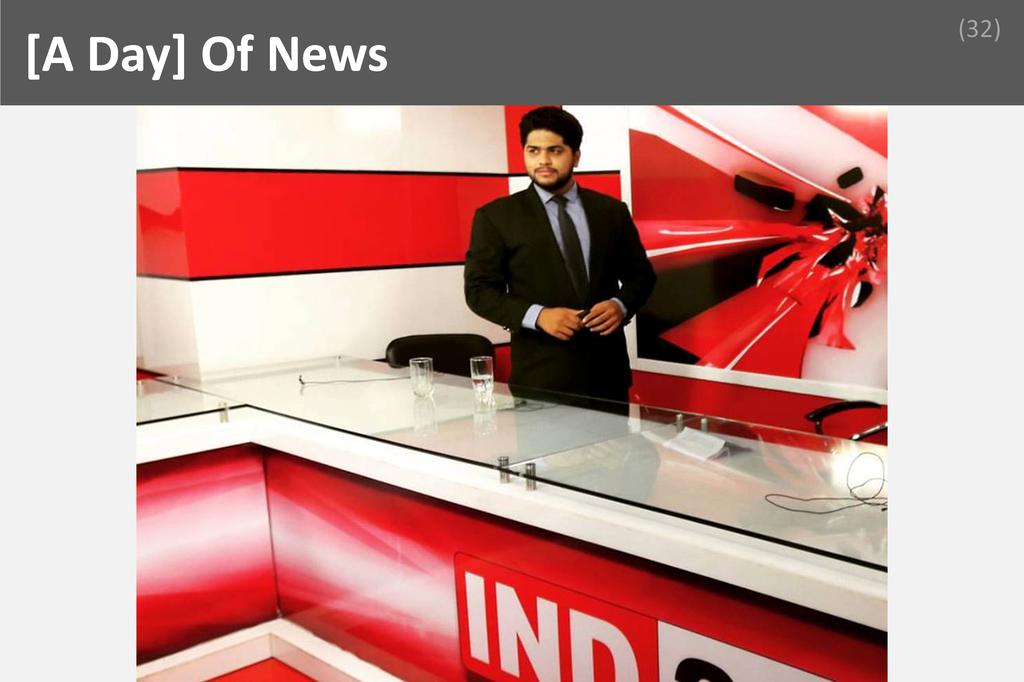
A Day Of


News Anchoring

What is
In the world of news anchoring, the day unfolds at a relentless pace, driven by the pulse of breaking stories and the ever-ticking clock. The newsroom hums with anticipation long before the cameras roll, as anchors juggle the demands of accuracy, composure, and immediacy. Each moment is a blend of high-stakes preparation and on-the-spot adaptability, where every word spoken can shape public perception. For a news anchor, no two days are ever quite the same, but each one is defined by a dynamic rhythm that demands both poise and passion from the first coffee to the final sign-off.

Concept
Long before most of the city stirs, a news anchor’s day begins in the quiet hours of the early morning. The anchor arrives at the studio, greeted by the glow of monitors and the low murmur of producers discussing overnight developments. This is a crucial window for reviewing scripts, scanning the latest wire updates, and coordinating with writers to ensure every segment is accurate and up-to-the-minute. Makeup artists and wardrobe stylists work their magic while the anchor mentally rehearses key stories, preparing to deliver the news with clarity and confidence as the world wakes up.

Real World Example
As the clock strikes seven, the newsroom shifts into high gear. The anchor takes their place behind the desk, earpiece in place, ready to navigate the fast-moving landscape of live television. Headlines change in real time, and breaking news can upend the rundown in seconds. The anchor must think on their feet, seamlessly transitioning between stories, conducting live interviews, and responding to cues from the control room. The energy is electric, and every second counts as the anchor becomes the trusted voice guiding viewers through the day’s most pressing events.

With the morning broadcast behind them, the afternoon brings a different kind of intensity. The anchor joins producers, reporters, and editors in editorial meetings to debrief on the morning’s coverage and strategize for upcoming segments. This is a time for collaborative brainstorming, refining story angles, and discussing feedback from viewers and network executives. The anchor may also record promotional spots, conduct pre-taped interviews, or work on special reports, ensuring that the station’s content remains fresh and engaging for the next broadcast cycle.

As the day winds down, the anchor shifts focus to wrapping up administrative duties and preparing for tomorrow’s challenges. This involves reviewing audience analytics, responding to emails, and researching developing stories that may shape the next day’s news agenda. The anchor often meets briefly with producers to outline priorities and flag potential updates, ensuring a seamless handoff to the evening team. With the studio lights dimming and the newsroom quieting, the anchor reflects on the day’s impact, knowing that tomorrow will bring a new set of stories—and a fresh opportunity to inform and inspire.


Install the LifePage App to:


  1. (for Free) Watch Anchor and Producer Mradul Sharma’s full News Anchoring Career Talk

  2. ₹ Do a Self Assessment on News Anchoring to calculate your Dream Index, which is defined as:

    According to Mradul Sharma your chances of success in News Anchoring is __%

  3. Access your personalized Dream Index Report which will have all your Dream Indices sorted in descending order.

Career Counselling 2.0


<?php echo $altimage; ?>


<?php echo $altimage; ?>


How to get into

News Anchoring?


If you are want to get into News Anchoring, start by investing in a Career Plan.

The 14 hour process, guided by a LifePage Career Advisor, will help you introspect and check whether your interest in News Anchoring is merely an infatuation or is it truly something you wish to do for the rest of your life.

Next, your Career Advisor will help you document how you can get into News Anchoring, what education and skills you need to succeed in News Anchoring, and what positives and challenges you will face in News Anchoring.

Finally, you will get a Career Plan stating which Courses, Certifications, Trainings and other Items you need to do in the next 7 years to become world’s best in News Anchoring.


LifePage Career Plan

14 hour personalized guidance program


Your LifePage Career Advisor facilitates your guided introspection so that you systematically explore various Career options to arrive at a well thought out Career choice.

Next: your Advisor helps you figure out how you will get into your chosen Career and how will you develop the skills needed for success in your Chosen Career.

LifePage Plan will not stop at saying "to become an Architect study Architecture". It will guide you on which Certifications, Trainings and Other items you need to do along with your Architecture education to become the world's best Architect.


Links for this Talk


Anchor and Producer Mradul Sharma's LifePage:


Career Counselling 2.0
[LifePage]
https://www.lifepage.in/page/mradulsharma


LifePage Career Talk on News Anchoring


Career Counselling 2.0
[Career]
https://www.lifepage.in/careers/news-anchoring-2


Career Counselling 2.0
[Full Talk]
https://lifepage.app.link/20180111-0001


Career Counselling 2.0
[Trailer]
https://www.youtube.com/watch?v=bO_YLLu76PY


(News Anchoring, Mradul Sharma, Zee Media, Anchoring, News Presenting, Reporter, News Reporting, TV, Media House)


Similar Talks



Career in Journalism
Journalism
Anupma Khanna
Senior Feature Writer | The Pioneer
[ 9 years & 2 months Experience ]

Journalism is all about gathering and broadcasting the News.

"After finishing my school I went to Delhi to pursue my B A in Journalism (H) from Delhi University and I topped in the college. Following that I also have a degree in management and law. After that I came back to Dehradun and joined core team of journalism in Dehradun. I have been doing journalism since 2008, specialized in print media."


Career Counselling 2.0 Career Counselling 2.0 Career Counselling 2.0 Career Counselling 2.0 Career Counselling 2.0


Career in News Anchoring
News Anchoring
Divyadarshini Bisht
News Anchor | HNN 24*7
[ 1 year Experience ]

News Anchoring is about how you deliver a particular news weather it is sad, soft or harsh news. How do you present the news is news anchoring.

"After working at different places, I started working with HNN 24*7 as a English News Anchor."


Career Counselling 2.0 Career Counselling 2.0 Career Counselling 2.0 Career Counselling 2.0 Career Counselling 2.0


Career in Journalism
Journalism
Anil Upadhyaya
Journalist | Dainik Jagran
[ 22 years & 9 months Experience ]

Journalism is the activity or profession of writing for newspapers, magazines, or news websites or preparing news to be broadcast.

"After completing my graduation in Hindi, English Literature and Sociology, I started my career with Amar Ujala in 1996. I have worked there for almost 3 years and during that period I have covered youth activities, education and Social affairs. After that I have also worked with Zee News, India TV and Times Now. Since 2006 I am working with Dainik Jagran."


Career Counselling 2.0 Career Counselling 2.0 Career Counselling 2.0 Career Counselling 2.0 Career Counselling 2.0


Career in Entertainment Anchoring
Entertainment Anchoring
Punita Singh
Anchor & Producer | HNN 24*7
[ 3 years & 8 months Experience ]

Entertainmnet Anchoring is all about informing the public on, what is happing in the entertainment industry.Entertainment anchors, also referred to as news analysts, inform the public about news and events happening Local, National and International Entertainment Industry.

"I was interested in the media field since my childhood so I did Mass Communication from DAV College and after that, I started working with HNN 24*7 as a Entertainment Anchor and Producer. I have been working with HNN 24*7 since 2015 and anchoring two entertainment shows called Bollywood Chugli and Tamansha TVKa."


Career Counselling 2.0 Career Counselling 2.0 Career Counselling 2.0 Career Counselling 2.0 Career Counselling 2.0


Career in Photojournalism
Photojournalism
Raju Pushola
Photojournalist | Dainik Jagran
[ 10 years & 10 months Experience ]

Photo Journalism is telling a news or a story with the help of a photograph. The basic difference betwween photoo journalism and photography is that in photography one shows only what he has to, whereas in photojournalism photographs tell a story.

"After completing my graduation, I developed my love for camera. I have covered Nanda Raj Jat Yatra, Haridwar Kumbh, Ardh Kumbh & Kedarnath Tragedy."


Career Counselling 2.0 Career Counselling 2.0 Career Counselling 2.0 Career Counselling 2.0 Career Counselling 2.0


Career in Journalism
Journalism
Ranjona Banerji
Journalist | Various Reporting Assignments
[ 34 years & 3 months Experience ]

The New York Times calls it “All the news that’s fit to print". That is, providing the reader/viewer with information and opinion and Keeping readers/viewers updated with events as they happen.

"I did diploma in Journalism (XIC). I worked in a number of capacities from sub-editor upwards in Bombay Magazine, India Today, Gentleman Magazine, Mid-Day, The Times of India and DNA. Currently I am working Columnist for media website mxmindia.com, Mid-Day, write for Asian Age, scroll.in etc."


Career Counselling 2.0 Career Counselling 2.0 Career Counselling 2.0 Career Counselling 2.0 Career Counselling 2.0


Career in News Anchoring
News Anchoring
Harsh Tyagi
News Anchor | HNN 24*7
[ 2 years & 9 months Experience ]

A news anchor also known as a newsreader, newscaster, anchorman or anchorwoman, news anchor or simply an anchor, is a person who presents news during a news program on television, on the radio or on the Internet.

"After completing my graduation and post graduation (Mass Communication), I started working with HNN 24*7 and have working with HNN 24*7 since 2016."


Career Counselling 2.0 Career Counselling 2.0 Career Counselling 2.0 Career Counselling 2.0 Career Counselling 2.0


Career in Journalism
Journalism
Nitin Saxena
Journalist | Various Assignments
[ 40 years & 7 months Experience ]

Journalism is the production and distribution of reports on the interaction of events, facts, ideas, and people that are the "news of the day" and that impacts society to at least some degree. The word applies to the occupation (professional or not), the methods of gathering information, and the organizing literary styles. Journalistic media include: print, television, radio, Internet, and, in the past, newsreels.

"After completing my diploma in Journalism, I started working as a Journalist with Morning Echo (Hindustan Times) in 1977. I have been working since last 40 years in various newspapers and magazines at different profiles. With the thought of sharing this experience, I have started teaching Journalism in various Universities and Institutions."


Career Counselling 2.0 Career Counselling 2.0 Career Counselling 2.0 Career Counselling 2.0 Career Counselling 2.0


Career in Automobile Journalism
Automobile Journalism
Gaurav Aneja
Auto Journalist | Gaadi.com, Oncars.in & CarDekho.com
[ 4 years & 4 months Experience ]

Automobile Journalism is reviewing and reporting on new cars and developments in the motor vehicle industry. Automobile Journalists often test drive new cars, and provide opinions to consumers through magazines, newsletters, newspapers, websites and broadcast media such as television and radio.

"I have done B Tech in Mechanical Engineering from Rayat Bahra College, Rohtak. I work as an Automobile Journalist with companies like Gaadi.com, Oncars.in & CarDekho.com."


Career Counselling 2.0 Career Counselling 2.0 Career Counselling 2.0 Career Counselling 2.0 Career Counselling 2.0


Career in Broadcast Journalism
Broadcast Journalism
Veena Krishna
Deputy Editor | TV 18 Broadcast Ltd
[ 19 years & 3 months Experience ]

Broadcast Journalism is all news that you see or in other words that is broadcast on TV. So it is about collecting, packaging and presenting news on TV.

"After my education I worked at the broadcast station CNBC-TV18, a business channel for 15 years."


Career Counselling 2.0 Career Counselling 2.0 Career Counselling 2.0 Career Counselling 2.0 Career Counselling 2.0


Career in News Input Desk
News Input Desk
Asif Khan
Assignment In charge | HNN News 24x7
[ 5 years & 8 months Experience ]

News Input Desk is basically the backbone of the news channels. This basically entails getting all the information such as breaking news, other incidents through a team in order to broadcast on the news channel. Various teams are placed in different districts and even the Vidhan Sabha, after which information is sourced out and passed on to the particular news channel.

"After doing my BA and Masters in Mass Communication, I worked with several news channels such as Network 10, News 1 India and then started working with HNN 24x7 since 2016"


Career Counselling 2.0 Career Counselling 2.0 Career Counselling 2.0 Career Counselling 2.0 Career Counselling 2.0


Career in News Anchoring
News Anchoring
Asif Khan
Journalist and Anchor | Various Assignments
[ 19 years Experience ]

A news presenter is also known as a newsreader, newscaster, anchorman or anchorwoman, news anchor or simply an anchor is a person who presents news during a news program on the television, on the radio or on the Internet.

"After doing my schooling from Saharanpur, I did my B Sc & M Sc from Meerut University. After that, I did my PGD in TV journalism from CMAC, Rai University, Delhi and then did a certification course in Anchoring from IAAN School of Mass Communication, Delhi. I started my career with Doordarshan as an Anchor and Writer for various shows. Thereafter, I worked with various organizations like Zee Entertainment Enterprises, LLT, ETV, News network, NDTV Imagine and others. I like writing and have written a Poetry Book named Bikhre Moti. I am working as an Anchor & Associate Editor for recently launched Urdu TV channel named Tehzeeb."


Career Counselling 2.0 Career Counselling 2.0 Career Counselling 2.0 Career Counselling 2.0 Career Counselling 2.0


Career in News Input Desk
News Input Desk
Abhishek Kumar
Assignment Production | HNN 24*7
[ 4 years Experience ]

News Input Desk is a central place to gather news to be published in a newspaper or an online newspaper or magazine, or broadcast on radio, television, or cable.

"After finishing my graduation and post graduation, I did my internship from Kasish News, Bihar. Later on I started working with HNN 24*7 and I have been Working with HNN 24*7 since 2016 as Assignment Producer."


Career Counselling 2.0 Career Counselling 2.0 Career Counselling 2.0 Career Counselling 2.0 Career Counselling 2.0


Career in Journalism
Journalism
Satabhisa Bhaumik
Journalist | Times of India
[ 0 years & 9 months Experience ]

Journalism is the production and distribution of reports on the interaction of events, facts, ideas and people that are the news of the day and that impacts society to at least some degree.

"After doing my schooling from Delhi Public school, I did my BA from Lady Shri Ram College and thereafter I did my Post Graduate Diploma in Integrated Journalism from Times School of Journalism, Delhi. I worked with Times of India as a journalist in 2013."


Career Counselling 2.0 Career Counselling 2.0 Career Counselling 2.0 Career Counselling 2.0 Career Counselling 2.0


Career in Field Reporting
Field Reporting
Dheeraj Sajwan
Reporter | HNN 24*7
[ 6 years & 8 months Experience ]

Field reporting is the backbone of journalism. It is the production and distribution of reports on the interaction of events, facts, ideas, and people that are the "news of the day" and that impacts society to at least some degree.

"I used to watch a local news channel of Mussoorie and got interested in the field of media. Then I worked for that Mussorie local news channel and there only I thought that I should choose media field as a profession and did Mass Communication. After completing Mass Comm and learning so many things about media field, I worked for many media houses. In the year 2015, I started working with HNN 24*7 as a Reporter."


Career Counselling 2.0 Career Counselling 2.0 Career Counselling 2.0 Career Counselling 2.0 Career Counselling 2.0


Career in Lifestyle Journalism
Lifestyle Journalism
Farvi Wadhwa
Managing Editor | Wedding Vows
[ 9 years & 4 months Experience ]

Lifestyle journalism is an umbrella term for more specialized beats of journalism such as travel journalism, fashion journalism, or food journalism.

"I did Bachelors in English Honors and Masters in Mass Comm Journalism. I also did a Diploma in Event Management. I have worked with various firms like Youth Eye, Buzzintown.com, Pune Mirror, Mumbai Mirror, DNA, Times of India as a journalist or content writer. I am Managing Editor at Wedding Vows and Features Writer with Doon Page-3 magazine."


Career Counselling 2.0 Career Counselling 2.0 Career Counselling 2.0 Career Counselling 2.0 Career Counselling 2.0


Career in News Reporting
News Reporting
Nalini Gosain
Sub Editor & Reporter | Amar Ujala
[ 11 years & 5 months Experience ]

News reports are found in newspapers and their purpose is to inform readers of what is happening in the world around them.

"After completing my graduation and post graduation from DAV College, Dehradun, I started working as a News Reporter. I have been working as a Reporter since 2007."


Career Counselling 2.0 Career Counselling 2.0 Career Counselling 2.0 Career Counselling 2.0 Career Counselling 2.0


Career in Journalism
Journalism
Pradeep Sharma
Journalist | Various Assignments
[ 20 years Experience ]

Journalism refers to the production and distribution of reports on recent events. The word journalism applies to the occupation (professional or not), the methods of gathering information and organizing literary styles. Journalistic mediums include print, television, radio, Internet and in the past: newsreels. In other words, the collection and editing of news for presentation through the media.

"After completing my schooling from Govt Boys School Mandsaur, I did my BA from Vikram University, Ujjain. Thereafter, I did my D Ed from Govt District Education Institute of Mandsaur, MP. After which I started teaching, while teaching I also wrote articles for newspapers and local Magazine. Then, I joined the distance learning PGD Course in Journalism from Makhanlal Chaturvedi National University, Bhopal. I worked for various organizations named NDTV India, Sahara Samay, Voice of India, Times Today channel and others as a Stinger, Reporter, Anchor, Special Correspondent and Desk Editor for about 16 years. I am working on few movie projects, one of them named Yashodharman, The Great Warrior which is written and directed by me would soon release in Movie Theaters."


Career Counselling 2.0 Career Counselling 2.0 Career Counselling 2.0 Career Counselling 2.0 Career Counselling 2.0


Career in Photojournalism
Photojournalism
Taresh Dutta
Photojournalist | Times of India
[ 5 years Experience ]

Photojournalism is a particular form of journalism that employs images in order to tell a news story. It is now usually understood to refer only to still images, but in some cases the term also refers to video used in broadcast journalism.

"After my graduation in commerce, I picked up photography. I got selected at Times of India in 2014 and have been working with them as a photojournalist since then. I am also a freelance content writer, wedding photographer and product photographer. I am called to various colleges as an external examiner for journalism and photography courses."


Career Counselling 2.0 Career Counselling 2.0 Career Counselling 2.0 Career Counselling 2.0 Career Counselling 2.0


Career in Journalism
Journalism
Gaurav Bhatt
Senior Promo Producer | CNN-NEWS 18
[ 14 years & 2 months Experience ]

Journalism refers to the production and distribution of reports on recent events. The word journalism applies to the occupation, using methods of gathering information and utilizing literary techniques. Various forms of journalistic mediums include: print, television, radio, Internet and in the past: newsreels.

"After doing my schooling from Ranchi, Jharkhand, I did BJMC from Indraprastha University, Delhi. After that, I did my M Sc in mass Communication from Punjab Technical University and then my post graduate diploma in Direction & Film Making from AAFT, Noida. I am working as a Senior Promo Producer for CNN- NEWS 18 since 20004. In 2015, I started my own Production House named Octopus Films."


Career Counselling 2.0 Career Counselling 2.0 Career Counselling 2.0 Career Counselling 2.0 Career Counselling 2.0


Career in Mass Media
Mass Media
Babeetta Sakxena
Journalist | Various Assignments
[ 42 years Experience ]

Mass Media refers to a diverse array of media technologies that reaches a large audience via mass communication. The technologies through which this communication takes place including a variety of outlets. Mass media transmits information electronically via media such as films, radio, recorded music, or television and Print media transmits information via physical objects, such as books, comics, magazines, newspapers, or pamphlets.

"After doing my schooling from Loreto Convent School, Lucknow, I did BA from Avadh Girls Degree College, Lucknow. Thereafter, I did my Post Graduate Diploma in Journalism from Lal Bahdur Shastri Institute of Management and Development Studies affiliated by Bhartiya Vidya Bhawan, Mumbai. I started working at very early age as a child artist for Lucknow Doordarshan and then while doing my journalism course I worked as a Trainee Sub Editor with Lucknow City Magazine. I have spent more than four decades in various sectors like Television, Radio, Print and Web media and now working as a social worker. I am Founder and Director of Value Your Image and Let�s Give Back."


Career Counselling 2.0 Career Counselling 2.0 Career Counselling 2.0 Career Counselling 2.0 Career Counselling 2.0


Career in Journalism
Journalism
Vijaypal Rawat
Journalist | Various Assignments
[ 8 years & 5 months Experience ]

Journalism refers to the production and distribution of reports on recent events. The word journalism applies to the occupation, using methods of gathering information and utilizing literary techniques. Journalistic media include print, television, radio, Internet, and, in the past, newsreels.

"After completing graduation, Masters in Mass Communication and a Diploma in Journalism, I started my career with Dainik Jagran and worked as a journalist for some time. I now work independently as a journalist."


Career Counselling 2.0 Career Counselling 2.0 Career Counselling 2.0 Career Counselling 2.0 Career Counselling 2.0


Career in Anchoring
Anchoring
Deepika Dutt
Anchor | Doordarshan
[ 19 years & 3 months Experience ]

An anchor is a person who is considered as the main pillar of the program. She must have full knowledge about the program which she is hosting. An anchor should know when and how much to speak to a particular audience.

"In 2000, I started working at Doordarshan as an anchor. I used to talk on various topics related to NGO's and various problems related to women. I also do anchoring for various programs such as Mahila Jagat, Ek Bharat Shrestha Bharat and many more."


Career Counselling 2.0 Career Counselling 2.0 Career Counselling 2.0 Career Counselling 2.0 Career Counselling 2.0


Career in Journalism
Journalism
John Dayal
Journalist | Various Assignments
[ 48 years & 6 months Experience ]

Journalism refers to the production and distribution of reports on recent events. The word journalism applies to the occupation, using methods of gathering information and utilizing literary techniques. Various forms of journalistic mediums include: print, television, radio,Internet and in the past newsreels.

"After my schooling from Shimla and Dehradhun, I did B.sc (Physics) from St. Stephens College Delhi University and a diploma in journalism. I started reporting in 1969 as a field Journalist and served as War Correspondent or Foreign Correspondent in the Middle East, North Africa, South Asia and Europe. Later became editor and CEO of the Delhi Mid Day, a small afternoon newspaper, and treasurer of the Editors' Guild of India. I continue to provide commentary and analysis in print and on national TV and radio. Also headed the governing boards of several colleges of Delhi University, and have taught as a visiting teacher at several universities in north India. I am Indian human rights and political activist, a member of the National Integration Council (NIC) of India, Secretary-General of the All India Christian Council and a past president of the All India Catholic Union."


Career Counselling 2.0 Career Counselling 2.0 Career Counselling 2.0 Career Counselling 2.0 Career Counselling 2.0


[Install the LifePage App to access all Talks]


<?php echo $altimage; ?>


<?php echo $altimage; ?>


&mbsp;


Career Counselling 2.0 | Home   Home  
Career Counselling 2.0 | Abroad   Abroad  
Career Counselling 2.0 | Plan   Plan  
Career Counselling 2.0 | Talks   Talks  
Career Counselling 2.0 | Philosophy   Philosophy  
Career Counselling 2.0 | Seminar   Seminar  
Career Counselling 2.0 | Workshop   Workshop  
Career Counselling 2.0 | Pages   Pages  
Career Counselling 2.0 | Advisors   Advisors  
Career Counselling 2.0 | Discuss   Discuss  
Career Counselling 2.0 | Meet   Meet  
Career Counselling 2.0 | Advisor   Advisor  
Career Counselling 2.0 | Story   Story  
Career Counselling 2.0 | Fine Print   Fine Print  
Career Counselling 2.0 | Links   Links  
Career Counselling 2.0 | Blog   Blog  
Career Counselling 2.0 | Testimonials   Testimonials  
Career Counselling 2.0 | Follow   Follow  
 
[ Site Visits ]


Career Counselling 2.0