Career Counselling 2.0 HomeHomeCareer Counselling 2.0 AbroadAbroadCareer Counselling 2.0 PlanPlanCareer Counselling 2.0 | TalksTalksCareer Counselling 2.0 PhilosophyPhilosophyCareer Counselling 2.0 SeminarSeminarCareer Counselling 2.0 PagesPagesCareer Counselling 2.0 AdvisorsAdvisorsCareer Counselling 2.0 TestimonialsTestimonials

Teaching Geography

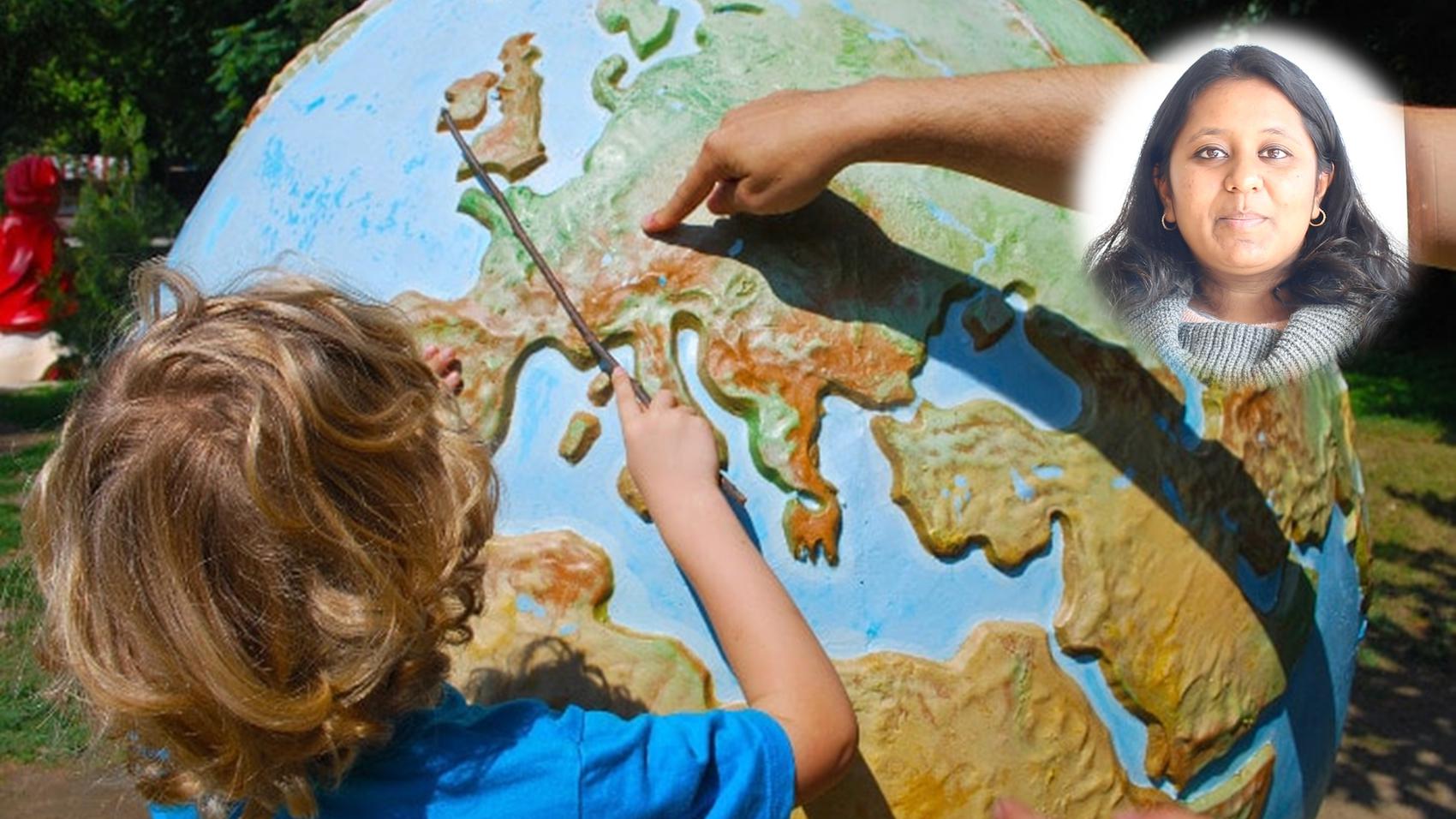
Trained Graduate Teacher Sunaina Sangal talks about Teaching Geography course, what is Teaching Geography and other details about a Career in Teaching Geography.


Teaching Geography

Sunaina Sangal | Trained Graduate Teacher | Summer Valley School


What is Teaching Geography?


You may be curious about a Career in Teaching Geography. Almost everyone seems to be talking about How to start a Career in Teaching Geography, while one should first develop an understanding of What is a Career in Teaching Geography. It is best to learn about Teaching Geography from a real professional, this is akin to getting it from the horse's mouth.

Trained Graduate Teacher Sunaina Sangal has 3 years of professional experience in Teaching Geography. According to Trained Graduate Teacher Sunaina Sangal, Teaching Geography is:

Teaching Geography offers a foundation in geographic content and inquiry learning that readily translates into engaging lessons for the classroom.


How Trained Graduate Teacher Sunaina Sangal got into Teaching Geography?


After completing my Schooling from Welham Girls' School, I did my Graduation from LSR in History, Political Science and English. I came back to Dehradun and did my B Ed from Patrician College of Education. I am a Geography Teacher at Summer Valley School.


Trained Graduate Teacher Sunaina Sangal's Talk on Teaching Geography


Session Image
The Journey of Teaching Geography


What Is Teaching Geography


Teaching Geography

### Teaching Geography Image
What is
Teaching Geography is the practice of educating students about the physical features of the Earth, human-environment interactions, cultural landscapes, and spatial relationships. It involves developing learners’ understanding of global issues, map skills, and geographic thinking, fostering curiosity about the world and preparing students to become informed global citizens.

Concept
Teaching Geography plays a crucial role in shaping how students perceive and interact with the world around them. It equips learners with the ability to analyze complex global issues such as climate change, migration, and resource distribution. For professionals, teaching geography fosters critical thinking, cultural awareness, and problem-solving skills in their students. One major benefit is the development of spatial literacy, which is essential for navigating and understanding both local and global environments. Another benefit is the promotion of environmental stewardship, encouraging students to make responsible decisions about the planet. Additionally, teaching geography helps cultivate empathy and appreciation for diverse cultures, preparing students to thrive in an interconnected world.

Real World Example
A high school geography teacher might design a project where students investigate the impact of urbanization on local ecosystems. The teacher guides students in collecting data, analyzing maps, and conducting interviews with community members. Through this hands-on approach, the teacher demonstrates how geographic concepts apply to real-life situations, helping students understand the consequences of human actions on the environment. By integrating technology, such as Geographic Information Systems (GIS), the teacher enables students to visualize spatial data and draw meaningful conclusions. This practical application of teaching geography not only deepens students’ understanding of the subject but also empowers them to think critically about solutions to contemporary challenges in their own communities.

Education


Maps

### Maps Image
What is
Maps are visual representations of spatial information, depicting geographic features, locations, and relationships on the Earth's surface. In the context of Teaching Geography, maps serve as essential tools for illustrating physical and human phenomena, enabling educators and students to analyze patterns, interpret data, and develop spatial awareness critical to geographic literacy.

Concept
Understanding maps is fundamental for anyone preparing to teach geography, as maps are the primary medium through which geographic information is communicated and explored. Mastery of map reading, interpretation, and creation equips educators with the ability to convey complex spatial concepts in accessible ways. This foundational knowledge supports curriculum development, lesson planning, and the facilitation of engaging classroom activities. Furthermore, proficiency with maps fosters critical thinking and analytical skills, both for teachers and their students, by encouraging the exploration of spatial relationships and global interconnections. Over the course of a teaching career, expertise in maps enhances professional credibility, supports interdisciplinary teaching, and ensures educators can adapt to evolving technologies and methodologies in geographic education.

Real World Example
A geography teacher preparing a lesson on climate zones uses a variety of maps to help students visualize and compare global temperature patterns. By integrating physical maps, thematic climate maps, and digital mapping tools, the teacher guides students through interpreting map legends, scales, and symbols. During class discussions, the teacher encourages students to analyze how climate zones correspond with latitude and physical features such as mountains and oceans. This practical application of map skills not only deepens students’ understanding of the topic but also demonstrates how maps are indispensable for making sense of complex geographic data. The teacher’s expertise in maps thus transforms abstract concepts into tangible learning experiences, fostering curiosity and comprehension.

Continents and Countries

### Continents and Countries Image
What is
"Continents and Countries" refers to the study of Earth's major landmasses—continents—and the sovereign states—countries—within them. This subject encompasses their locations, boundaries, physical features, and cultural distinctions. For those teaching geography, it forms a core component of academic and professional expertise, underpinning broader geographic literacy and global awareness.

Concept
Understanding continents and countries is essential for anyone preparing to teach geography, as it provides the structural framework for all subsequent geographic study. Mastery of this subject allows educators to accurately convey the spatial organization of the world, fostering students’ comprehension of global interconnections and diversity. It also equips teachers to address questions about current events, migration, environmental issues, and cultural differences with authority and context. Over the long term, this foundational knowledge supports professional growth by enabling educators to design comprehensive curricula, participate in interdisciplinary projects, and adapt to evolving educational standards that emphasize global competence and cross-cultural understanding.

Real World Example
A geography teacher preparing a lesson on world climates uses their knowledge of continents and countries to illustrate how climate zones vary across different regions. During class, the teacher references specific countries within each continent to help students connect abstract climate concepts to real-world locations. When a student asks why certain countries experience monsoons while others do not, the teacher draws on their understanding of continental positions and boundaries to explain the influence of geography on weather patterns. This practical application not only clarifies complex ideas but also encourages students to think critically about the relationship between physical geography and human societies, demonstrating the everyday importance of mastering continents and countries in the teaching profession.

Topographical Sheets

### Topographical Sheets Image
What is
Topographical Sheets are detailed, large-scale maps that represent the Earth's surface features, including natural landforms, water bodies, vegetation, and man-made structures, using contour lines and symbols. In Teaching Geography, understanding these sheets is essential for interpreting landscapes, analyzing spatial relationships, and fostering map-reading skills among students.

Concept
A thorough grasp of topographical sheets is indispensable for anyone preparing to teach Geography. These maps serve as the foundation for understanding physical geography, spatial analysis, and environmental studies. By mastering topographical sheets, educators can effectively explain concepts such as elevation, slope, drainage patterns, and land use. This expertise not only enhances classroom instruction but also equips teachers to design engaging fieldwork and practical exercises. Over time, proficiency in interpreting topographical sheets builds credibility and confidence, enabling geography teachers to guide students in developing critical thinking and analytical skills. Furthermore, this knowledge remains relevant throughout a teaching career, as it supports curriculum development, assessment design, and the integration of real-world examples into lessons.

Real World Example
Consider a geography teacher preparing a lesson on river systems and landforms. Using topographical sheets, the teacher demonstrates how to identify river courses, floodplains, and surrounding terrain by interpreting contour lines and map symbols. During class, students are guided through exercises where they locate features such as valleys, hills, and settlements, fostering hands-on learning. The teacher also uses these sheets to plan a field trip, selecting a route that highlights key geographical features visible on the map. By connecting theoretical knowledge with practical application, the teacher not only deepens students’ understanding of physical geography but also cultivates essential map-reading and observational skills that are valuable for academic success and everyday life.

Globes

### Globes Image
What is
Globes are three-dimensional, spherical representations of the Earth, accurately depicting continents, oceans, and geographic features in proportion and spatial relationship. In the context of Teaching Geography, globes serve as essential educational tools, enabling educators and students to visualize the planet’s layout, understand spatial concepts, and foster geographic literacy in academic settings.

Concept
Understanding globes is fundamental for anyone preparing to teach geography because it provides the most accurate model of Earth’s surface. Unlike flat maps, globes eliminate distortions of shape, size, and distance, allowing educators to convey true spatial relationships. Mastery of globes equips teachers to explain complex concepts such as latitude, longitude, time zones, and global patterns of climate and population. This foundational knowledge not only enhances classroom instruction but also builds credibility and confidence in professional practice. Over time, proficiency with globes supports curriculum development, fosters critical thinking, and helps educators inspire curiosity about the world, making it a long-term asset in a geography teaching career.

Real World Example
A geography teacher preparing a lesson on world climates uses a globe to demonstrate how the tilt of the Earth’s axis affects sunlight distribution and, consequently, seasonal changes. By rotating the globe and pointing out the equator, poles, and lines of latitude, the teacher helps students visualize why certain regions experience different weather patterns. During class discussions, the teacher refers to the globe to clarify misconceptions about distances between continents and the orientation of countries. This hands-on approach not only reinforces theoretical knowledge but also engages students, making abstract concepts tangible and easier to grasp. The globe thus becomes an indispensable tool in the teacher’s daily instructional practice.

Google Maps

### Google Maps Image
What is
Google Maps is a web-based mapping service developed by Google that provides detailed geographical information, satellite imagery, street maps, and route planning for travel by foot, car, bicycle, or public transportation. In Teaching Geography, it serves as a crucial digital tool for spatial analysis and interactive learning experiences.

Concept
Understanding Google Maps is essential for anyone preparing for or working in Teaching Geography because it bridges theoretical geographic concepts with practical, real-world applications. Mastery of this tool enables educators to illustrate spatial relationships, analyze human-environment interactions, and foster geographic literacy among students. By integrating Google Maps into lessons, teachers can create engaging, interactive activities that help students visualize and comprehend complex geographic phenomena. This proficiency not only enhances classroom instruction but also equips educators with the digital skills increasingly demanded in modern educational environments. Over the long term, familiarity with Google Maps supports professional growth by keeping educators current with technological advancements and preparing them to adapt to evolving curriculum standards.

Real World Example
A geography teacher preparing a lesson on urban development might use Google Maps to guide students through a virtual exploration of different cities around the world. By examining satellite imagery and street views, the teacher can highlight patterns of land use, transportation networks, and population density. During class, students might be tasked with comparing their own city to another by analyzing features such as green spaces, road layouts, and proximity to water bodies. This hands-on approach not only makes abstract concepts tangible but also encourages critical thinking and spatial reasoning. Through such activities, the teacher demonstrates the practical application of Google Maps, making geography both accessible and relevant to students’ everyday lives.

Skills


Love for Nature

### Love for Nature Image
What is
Love for Nature is a deep appreciation and respect for the natural world, encompassing curiosity, empathy, and a desire to protect and understand the environment. In Teaching Geography, this passion fuels engagement, inspires students, and fosters a meaningful connection between academic content and real-world environmental issues, enriching the learning experience.

Concept
A genuine love for nature enhances a geography teacher’s ability to bring lessons to life, making abstract concepts tangible and relatable. Employers and educational institutions value this quality because it translates into enthusiastic teaching, increased student motivation, and a classroom culture that values sustainability and global awareness. Teachers who embody this passion are more likely to create immersive field experiences, integrate current environmental topics, and encourage critical thinking about human-environment interactions. Cultivating this skill involves spending time outdoors, staying informed about environmental issues, and reflecting on personal experiences with nature. Over time, this ongoing engagement deepens one’s appreciation and ability to communicate the importance of geography in understanding and protecting our planet.

Real World Example
Imagine a geography teacher faced with disengaged students during a unit on ecosystems. Drawing on their love for nature, the teacher organizes a local field trip to a nearby wetland, sharing personal stories and observations about the area’s biodiversity. Their enthusiasm becomes contagious, sparking curiosity and prompting students to ask insightful questions. The teacher’s deep connection with the environment helps students see the relevance of classroom concepts in the real world, transforming passive learning into active exploration. As a result, students not only grasp the academic content more effectively but also develop a newfound respect for nature, illustrating how a teacher’s passion can overcome challenges and inspire lasting interest in geography.

Love for Travelling

### Love for Travelling Image
What is
Love for travelling is an intrinsic curiosity and enthusiasm for exploring new places, cultures, and environments, both near and far. It involves a genuine desire to experience the world firsthand, seek out diverse perspectives, and embrace unfamiliar settings. For geography teachers, this passion enriches their understanding and teaching. In the context of teaching geography, a love for travelling equips educators with authentic experiences and insights that textbooks alone cannot provide. It allows them to bring real-world examples into the classroom, making abstract concepts tangible and relatable. This core skill fosters a deeper connection with the subject matter, inspiring students and enhancing the overall learning experience.

Concept
A love for travelling directly enhances a geography teacher’s effectiveness by allowing them to draw from personal experiences when explaining geographical concepts, cultural differences, or environmental issues. Employers and educational institutions value this skill because it demonstrates a teacher’s commitment to lifelong learning and their ability to provide students with vivid, real-world perspectives. Teachers who travel can share stories, photographs, and artifacts, making lessons more engaging and memorable. Cultivating this skill involves nurturing curiosity, seeking out travel opportunities, and reflecting on each journey’s educational value. Even local explorations or virtual travel experiences can broaden a teacher’s horizons, ensuring they remain passionate and informed about the ever-changing world.

Real World Example
Imagine a geography teacher faced with the challenge of explaining the complexities of climate adaptation in coastal regions. Drawing on their own travels to various coastlines, the teacher shares firsthand observations of erosion, local adaptation strategies, and community resilience. This personal narrative captivates students, transforming abstract textbook information into vivid, relatable stories. When a student asks about the impact of rising sea levels in a specific country, the teacher recalls a recent visit, describing conversations with local residents and showing photographs taken during the trip. This approach not only answers the student’s question but also sparks curiosity and empathy, demonstrating how a love for travelling can turn a routine lesson into an inspiring educational experience.

Communication

### Communication Image
What is
Communication is the process of exchanging information, ideas, and feelings through speaking, writing, or other mediums to ensure understanding between individuals or groups. In Teaching Geography, communication is fundamental for conveying complex concepts, engaging students, and fostering an environment where learners can ask questions and express their perspectives effectively.

Concept
Strong communication skills enable geography teachers to present information clearly, adapt explanations to different learning styles, and create interactive lessons that resonate with students. Employers and educational institutions highly value this skill because it directly impacts student comprehension and engagement, leading to better learning outcomes. Effective communicators can bridge gaps between diverse student backgrounds, making geography accessible and relevant. To cultivate communication skills, teachers can seek feedback, participate in professional development workshops, and practice active listening. Over time, reflecting on classroom interactions and adapting to student needs further enhances a teacher’s ability to communicate complex geographical ideas with clarity and enthusiasm.

Real World Example
Imagine a geography teacher introducing the concept of climate change to a class with varying levels of prior knowledge. Some students struggle to grasp the scientific terminology, while others are disengaged. The teacher recognizes this and adapts their communication style by using relatable analogies, visual aids, and encouraging questions. Through open dialogue and clear explanations, the teacher ensures all students understand the topic and feel comfortable participating. This approach not only clarifies misconceptions but also builds a supportive classroom atmosphere. By relying on strong communication skills, the teacher successfully bridges knowledge gaps, fosters curiosity, and motivates students to explore geography beyond the classroom.

Interpersonal

### Interpersonal Image
What is
Interpersonal refers to the ability to effectively communicate, collaborate, and build positive relationships with others through empathy, active listening, and mutual respect. In the context of Teaching Geography, this skill enables educators to connect with students, colleagues, and parents, fostering an engaging and supportive learning environment.

Concept
Interpersonal skills are fundamental for geography teachers because they facilitate clear communication of complex concepts, encourage student participation, and help manage classroom dynamics. Employers and educational institutions value teachers who can build rapport with diverse learners, address individual needs, and collaborate with colleagues on curriculum development. These skills can be cultivated through reflective practice, seeking feedback, and participating in professional development workshops focused on communication and emotional intelligence. Over time, teachers who invest in their interpersonal abilities become more adaptable, approachable, and effective in guiding students through challenging topics, ultimately enhancing educational outcomes and contributing to a positive school culture.

Real World Example
Imagine a geography teacher noticing that a group of students is disengaged during a lesson on climate change. By drawing on strong interpersonal skills, the teacher initiates a conversation to understand their perspectives and concerns. Through empathetic listening and open dialogue, the teacher discovers that the students feel overwhelmed by the topic’s complexity. The teacher then adapts the lesson to include more relatable examples and interactive activities, making the content accessible and relevant. This approach not only re-engages the students but also builds trust and encourages active participation. The teacher’s interpersonal skills transform a potential classroom challenge into an opportunity for meaningful learning and connection.

Positives


Self Satisfaction

### Self Satisfaction Image
What is
Self satisfaction is the deep sense of fulfillment and contentment that arises from achieving personal and professional goals, knowing one’s efforts have made a meaningful difference. In teaching geography, self satisfaction emerges from inspiring curiosity, nurturing understanding, and witnessing students connect with the world in new, insightful ways. This positive feeling fuels motivation, resilience, and a genuine passion for the profession, making every challenge worthwhile.

Concept
Self satisfaction is a cornerstone of a rewarding career in teaching geography because it transforms daily tasks into meaningful experiences. When educators see their students grasp complex concepts, develop critical thinking skills, and grow into informed global citizens, they feel a profound sense of accomplishment. This intrinsic reward not only boosts job satisfaction but also encourages continuous professional growth and innovation. Teachers who experience self satisfaction are more likely to remain enthusiastic and dedicated, fostering a positive classroom environment. The daily impact of knowing that their work shapes young minds and contributes to a better understanding of the world sustains their passion and commitment, making the profession both personally and professionally enriching.

Real World Example
Imagine a geography teacher guiding students through a project on climate change. As the class presents their findings, the teacher observes students confidently discussing global patterns, local impacts, and possible solutions. The students’ engagement and newfound awareness are clear indicators of their growth. In that moment, the teacher experiences a wave of self satisfaction, knowing their guidance has sparked curiosity and empowered students to think critically about real-world issues. This sense of fulfillment is not tied to external rewards, but to the realization that their efforts have made a lasting difference in their students’ lives. Such moments reaffirm the teacher’s passion for geography and the value of their role in education.

Networking

### Networking Image
What is
Networking is the process of building and nurturing professional relationships that foster the exchange of ideas, resources, and support within a community. In teaching geography, networking connects educators with colleagues, experts, and organizations, enabling them to share best practices, collaborate on projects, and stay updated on the latest developments in the field. This interconnectedness enriches the teaching experience and opens doors to new opportunities.

Concept
The power of networking in teaching geography lies in its ability to create a vibrant professional community. Teachers who actively engage with peers and experts gain access to innovative teaching strategies, fresh resources, and collaborative opportunities that enhance their classroom effectiveness. This ongoing exchange of knowledge not only keeps educators inspired but also helps them adapt to changing curricula and student needs. Networking fosters a sense of belonging and professional support, which can be especially valuable during challenging times. As teachers share experiences and solutions, they build confidence and resilience, leading to greater job satisfaction and a deeper sense of purpose in their work.

Real World Example
Imagine a geography teacher attending a regional education conference where they meet fellow educators passionate about environmental sustainability. Through conversations and shared workshops, they discover new lesson plans and digital tools that make complex topics more engaging for students. Inspired by these connections, the teacher collaborates with a colleague from another school to organize a joint field trip, providing students with a hands-on learning experience. This partnership not only enriches the curriculum but also creates lasting professional friendships. The teacher returns to their classroom energized, equipped with fresh ideas and a supportive network, illustrating how networking transforms daily teaching into a more dynamic and fulfilling career.

Putting Forward Your View

### Putting Forward Your View Image
What is
Putting Forward Your View means confidently sharing your own perspectives, interpretations, and insights on geographical topics, encouraging open dialogue and critical thinking among students. In teaching geography, this approach fosters a dynamic learning environment where educators inspire curiosity, challenge assumptions, and help students connect global issues to their own lives and communities.

Concept
The ability to put forward your view is a cornerstone of teaching geography, as it transforms lessons into engaging discussions rather than one-way lectures. This not only enriches the classroom experience but also empowers teachers to bring their passion and expertise to the forefront. By sharing their unique viewpoints, geography teachers model intellectual curiosity and independent thinking, which motivates students to develop their own informed opinions. This ongoing exchange of ideas leads to deeper understanding and retention of complex concepts. For educators, the freedom to express their views enhances job satisfaction, fuels professional growth, and creates a sense of purpose, as they witness their influence on shaping thoughtful, globally aware citizens every day.

Real World Example
Imagine a geography teacher leading a lesson on climate change. Instead of simply presenting facts, the teacher shares their personal observations from fieldwork and discusses how climate change has affected their own community. This sparks a lively classroom debate, with students asking questions, sharing their experiences, and considering diverse perspectives. The teacher’s willingness to put forward their view encourages students to think critically and engage more deeply with the topic. As the discussion unfolds, the teacher feels a profound sense of fulfillment, knowing they have inspired students to care about real-world issues and empowered them to form their own opinions. This daily opportunity to influence young minds makes teaching geography truly rewarding.

Motivating

### Motivating Image
What is
Motivating is the ability to inspire enthusiasm, curiosity, and a desire to learn in others, fostering a positive and engaging environment. In teaching geography, motivating means sparking students’ interest in the world, encouraging them to explore diverse cultures, environments, and global issues, and empowering them to become informed global citizens.

Concept
Motivating is a cornerstone of job satisfaction for geography teachers because it transforms the classroom into a dynamic space where learning is alive and meaningful. When teachers successfully motivate their students, they witness firsthand the excitement of discovery and the growth of critical thinking skills. This daily interaction not only reinforces the teacher’s passion for geography but also creates a ripple effect, as motivated students are more likely to participate, ask questions, and pursue further knowledge. The sense of accomplishment that comes from igniting curiosity and guiding students toward understanding the world’s complexities leads to personal and professional growth, making the teaching journey deeply rewarding.

Real World Example
Imagine a geography teacher introducing a lesson on climate change by connecting it to students’ local experiences and global events. As the discussion unfolds, students become eager to share their observations, ask insightful questions, and propose solutions. The teacher sees their initial curiosity blossom into genuine engagement, with students collaborating on projects and seeking information beyond the classroom. This transformation, fueled by the teacher’s motivating approach, not only enhances students’ learning but also affirms the teacher’s purpose. Witnessing students develop a passion for geography and a commitment to understanding the world is a powerful reminder of the profound impact motivating can have in shaping informed, thoughtful individuals.

Challenges


Updated With Modern Maps

### Updated With Modern Maps Image
What is
"Updated With Modern Maps" refers to the ongoing necessity for geography educators to access, interpret, and teach with the most current cartographic resources. This is demanding because geopolitical boundaries, environmental features, and urban developments change frequently, requiring teachers to constantly update materials and ensure students learn from accurate, relevant information.

Concept
The challenge of staying updated with modern maps significantly affects the daily work of geography teachers. Outdated maps can lead to misinformation, confusion, and a lack of engagement among students who may notice discrepancies with current events or digital resources. This issue demands resilience, as teachers must regularly seek out new materials, adapt lesson plans, and sometimes invest personal time in professional development. Successful professionals overcome this by leveraging digital map platforms, collaborating with colleagues, and integrating real-time data into their teaching. They remain flexible, resourceful, and proactive, ensuring their classrooms reflect the dynamic nature of the world’s geography, despite the constraints of limited budgets or institutional support.

Real World Example
A high school geography teacher noticed that her classroom atlases no longer reflected recent changes in national borders and urban growth. Recognizing the importance of accuracy, she incorporated free online mapping tools and government GIS resources into her lessons. She guided students in comparing printed maps with digital versions, fostering critical thinking about how and why maps change. By inviting students to research recent geopolitical events and update classroom displays, she turned the challenge into a collaborative learning opportunity. This approach not only kept her teaching materials current but also empowered students to engage actively with the evolving world, demonstrating how adaptability and resourcefulness can overcome the obstacle of staying updated with modern maps.

Checking the Map Books

### Checking the Map Books Image
What is
"Checking the Map Books" in Teaching Geography refers to the meticulous process of reviewing, marking, and providing feedback on students’ map-based assignments and exercises. This task is demanding because it requires careful attention to detail, deep subject knowledge, and significant time investment to ensure accuracy and meaningful guidance for each student.

Concept
The challenge of checking map books can significantly affect a geography teacher’s daily workload, often leading to extended hours and mental fatigue. The repetitive nature of the task, combined with the need for precision, can make it both monotonous and stressful. This responsibility demands resilience, as teachers must maintain high standards while managing large class sizes and diverse student abilities. Successful professionals address this constraint by developing efficient routines, such as setting aside dedicated time slots, using rubrics for consistency, and leveraging peer review where appropriate. They also prioritize self-care and seek support from colleagues to share best practices, ensuring that the quality of feedback remains high without compromising their own well-being.

Real World Example
Consider a geography teacher responsible for multiple classes, each submitting weekly map assignments. To manage the overwhelming task of checking map books, the teacher establishes a structured schedule, allocating specific periods each day solely for reviewing maps. She creates a clear feedback template, allowing her to quickly note common errors and provide targeted suggestions. By occasionally organizing peer assessment sessions, she encourages students to learn from each other while reducing her own workload. Through these strategies, she not only maintains the quality and timeliness of her feedback but also fosters a collaborative classroom environment, turning a daunting challenge into an opportunity for growth and engagement.

A Day Of


Teaching Geography

What is
The day begins before the first bell rings, as the geography classroom hums with anticipation. Maps line the walls, globes perch on shelves, and the faint scent of dry-erase markers lingers in the air. For a teaching geography professional, each day is a dynamic blend of discovery, connection, and adaptation. The pace is brisk, driven by the ever-changing needs of students and the evolving world outside the classroom window. From early morning preparations to late afternoon reflections, the rhythm of the day is shaped by a passion for making the world’s complexities accessible and engaging for every learner.

Concept
As the sun rises, the geography teacher arrives early, coffee in hand, to review lesson plans and set up engaging materials. This quiet time is spent arranging interactive maps, prepping digital resources, and scanning the latest news for current events that can be woven into the day’s lessons. There’s a quick check of emails from colleagues or parents, and a final review of student progress to tailor the morning’s activities. The classroom transforms into a launchpad for exploration, ready to inspire curiosity about distant lands and global issues.

Real World Example
By mid-morning, the classroom buzzes with energy as students file in, eager for the day’s adventure. The geography teacher leads lively discussions, facilitates group projects, and orchestrates hands-on activities that bring continents, cultures, and climates to life. Whether it’s analyzing satellite images, debating the impact of human migration, or simulating natural disasters, this is the heart of the day—where knowledge is built, questions are encouraged, and connections to the real world are forged. The teacher adapts on the fly, responding to student curiosity and guiding them through the complexities of our interconnected planet.

After lunch, the focus shifts to collaboration and practical application. The geography teacher meets with colleagues to plan interdisciplinary projects, shares insights during department meetings, or mentors new educators. There may be time spent supervising student clubs, organizing field trips, or coordinating with community partners for guest presentations. This phase is about building bridges—between subjects, between school and community, and between theory and practice—ensuring that geography education remains relevant and impactful.

As the school day winds down, the geography teacher turns to reflection and preparation. Grading assignments, updating lesson plans, and researching new teaching strategies fill the late afternoon hours. There’s a moment to review what worked well and what could be improved, followed by planning engaging activities for the next day. The teacher might catch up on professional development or connect with parents about student progress. As the classroom quiets, the sense of accomplishment is paired with anticipation for tomorrow’s journey, knowing that each day brings new opportunities to inspire a deeper understanding of the world.


Install the LifePage App to:


  1. (for Free) Watch Trained Graduate Teacher Sunaina Sangal’s full Teaching Geography Career Talk

  2. ₹ Do a Self Assessment on Teaching Geography to calculate your Dream Index, which is defined as:

    According to Sunaina Sangal your chances of success in Teaching Geography is __%

  3. Access your personalized Dream Index Report which will have all your Dream Indices sorted in descending order.

Career Counselling 2.0


<?php echo $altimage; ?>


<?php echo $altimage; ?>


How to get into

Teaching Geography?


If you are want to get into Teaching Geography, start by investing in a Career Plan.

The 14 hour process, guided by a LifePage Career Advisor, will help you introspect and check whether your interest in Teaching Geography is merely an infatuation or is it truly something you wish to do for the rest of your life.

Next, your Career Advisor will help you document how you can get into Teaching Geography, what education and skills you need to succeed in Teaching Geography, and what positives and challenges you will face in Teaching Geography.

Finally, you will get a Career Plan stating which Courses, Certifications, Trainings and other Items you need to do in the next 7 years to become world’s best in Teaching Geography.


LifePage Career Plan

14 hour personalized guidance program


Your LifePage Career Advisor facilitates your guided introspection so that you systematically explore various Career options to arrive at a well thought out Career choice.

Next: your Advisor helps you figure out how you will get into your chosen Career and how will you develop the skills needed for success in your Chosen Career.

LifePage Plan will not stop at saying "to become an Architect study Architecture". It will guide you on which Certifications, Trainings and Other items you need to do along with your Architecture education to become the world's best Architect.


Links for this Talk


Trained Graduate Teacher Sunaina Sangal's LifePage:


Career Counselling 2.0
[LifePage]
https://www.lifepage.in/page/sunainasangal


LifePage Career Talk on Teaching Geography


Career Counselling 2.0
[Career]
https://www.lifepage.in/careers/teaching-geography-1


Career Counselling 2.0
[Full Talk]
https://lifepage.app.link/20180108-0001


Career Counselling 2.0
[Trailer]
https://www.youtube.com/watch?v=k0etgnIy4IE


(Teaching Geography, Sunaina Sangal, Summer Valley School, Educationist, Geography Teacher, Geography Maps)


Similar Talks


Career in Residential School Teaching
Residential School Teaching
Priyanka Bhattacharyya
Head of Department | The Doon School
[ 15 years & 2 months Experience ]

Residential School Teaching is a unique mix of academic teaching and pastoral care.

"After completing my education I joined Doon School as a Residential Teacher. I have been working at Doon School since 2005."


Career Counselling 2.0 Career Counselling 2.0 Career Counselling 2.0 Career Counselling 2.0 Career Counselling 2.0


Career in Teaching Primary Kids
Teaching Primary Kids
Shalini Rawat
Teacher | Various Schools
[ 24 years & 9 months Experience ]

Teaching primary kids means dealing with kids who are 3+ and have just entered the school for the first time. A teacher has to equip a child with 24th century skills, because the child has a very limited world.

"After completing my B Ed from Lucknow University, I started my teaching career in 1994 and continuing till date."


Career Counselling 2.0 Career Counselling 2.0 Career Counselling 2.0 Career Counselling 2.0 Career Counselling 2.0


Career in Teaching
Teaching
Sushma Badoni
Teacher | Government Girls Junior High School, Mehuwala
[ 26 years & 5 months Experience ]

A teacher is a person who helps others to acquire knowledge, competences or values. When deciding what teaching method to use, teachers consider student's background knowledge, environment, and their learning goals as well as standardized curriculum as determined by the relevant authority.

"I have done BA and MA in Hindi from MKP College, Dehradun. I started teaching at a school in Pauri, Garhwal before shifting to a school in Dehradun. I am a teacher at Government Girls Junior High School, Mehuwala, Dehradun."


Career Counselling 2.0 Career Counselling 2.0 Career Counselling 2.0 Career Counselling 2.0 Career Counselling 2.0


Career in Teaching
Teaching
Sunaina Kuhn
Teacher | Teach For India
[ 2 years Experience ]

Teaching is Ideas or principles taught by an authority.

"After completing my Schooling from Woodstock, I did my Bachelors in Political Science from Purdue University. I taught Business English for a year in Budapest. After that I came back to India and worked as a Teacher with Teach for India for 2 years."


Career Counselling 2.0 Career Counselling 2.0 Career Counselling 2.0 Career Counselling 2.0 Career Counselling 2.0


Career in Teaching
Teaching
Anshuman Shukla
Fellow | Teach for India
[ 2 years Experience ]

A teacher (or an educator) is a person who helps others to acquire knowledge, competences or values.

"I completed my schooling from SJA, Dehradun and went on to graduate in Management Studies from University of Mumbai. I completed Masters in Finance from University of Leeds, UK. Between 2010 and 2012, I was a Teaching Fellow at Teach for India."


Career Counselling 2.0 Career Counselling 2.0 Career Counselling 2.0 Career Counselling 2.0 Career Counselling 2.0


Career in School Teaching
School Teaching
Shakti Manocha
School Teacher | St Josephs Academy
[ 29 years Experience ]

A teacher is a person who helps others to acquire knowledge, competences or values.

"After completing my schooling from St Mary, Dehradun, I did my Graduation from MKP and Post Graduation in English Literature. I have also pursued B Ed. I did my MA in English Literature and started my career as a School Teacher in 1987."


Career Counselling 2.0 Career Counselling 2.0 Career Counselling 2.0 Career Counselling 2.0 Career Counselling 2.0


Career in Teaching Geography
Teaching Geography
Aruna
Associate Professor | Government PG College
[ 27 years Experience ]

Geography is a field of science devoted to the study of the lands, the features, the inhabitants, and the phenomena of Earth. It is an all-encompassing discipline that seeks an understanding of the Earth and its human and natural complexities not merely where objects are, but how they have changed and come to be.

"After my Masters and M Phil from Aligarh Muslim University, I started teaching Geography in schools 1990 onwards. After qualifying for the exam conducted by U P Public Service Commission, Allahabad, I qualified as a lecturer to teach in higher education institutions. I am working as Associate Professor of Geography in Government PG College, Doiwala."


Career Counselling 2.0 Career Counselling 2.0 Career Counselling 2.0 Career Counselling 2.0


Career in Teaching Small Children
Teaching Small Children
Nikita Thapa
Teacher | Olive International School
[ 8 years & 6 months Experience ]

Kindergarten teaching is integrating young children into the world of learning by teaching them social skills, personal hygiene, basic reading skills, art, and music.

"After doing my graduation from St Bedes College Shimla, I did my B Ed from Kurukshetra University. Working as a teacher at Olive International School, Qatar."


Career Counselling 2.0 Career Counselling 2.0 Career Counselling 2.0 Career Counselling 2.0 Career Counselling 2.0


Career in Teaching Calligraphy
Teaching Calligraphy
Shraddha Jain
Founder | Shaddy Creative Classes
[ 12 years Experience ]

Calligraphy is the design and execution of lettering with a broad tip instrument, brush, or other writing instruments. A contemporary calligraphic practice can be defined as "the art of giving form to signs in an expressive, harmonious, and skillful manner". Teacher is a person who has expertise in his or her respective subject and helps others to acquire knowledge, competences or values related to that.

"After doing my schooling from Central School Dewas, Madhya Pradesh, I did my B Com and M Com from Maharani Pushp Mala Raje Paur Govt Girls Degree College Dewas. Thereafter, I worked for a couple of years in the same stream and later did a diploma course in Calligraphy & Mural Arts. In 2006, I started my own classes by the name Shaddy Creative Classes in Mandsaur where I teach Art & Craft courses to students and professionals. I also take workshops in schools and Institutions."


Career Counselling 2.0 Career Counselling 2.0 Career Counselling 2.0 Career Counselling 2.0 Career Counselling 2.0


Career in Teaching Small Children
Teaching Small Children
Claudia Amado
Teacher | Instituto Vocacional Concepcion
[ 27 years & 3 months Experience ]

Being a Kindergarden teacher is to work educating children in their first years of life, that is, from 3 years old and up to 5 years old.

"I Studied the initial level teacher career and have been working for 27 years. I started working in a public school and after 2 years I began teaching in a private school. I worked for 25 years with four year old children and only in 2016 I was appointed the three year old children class. The truth is I did not think this was my vocation, but I studied it anyway and then working I realized that I do not see myself doing anything else, I love what I do."


Career Counselling 2.0 Career Counselling 2.0 Career Counselling 2.0 Career Counselling 2.0


Career in Teaching Economics
Teaching Economics
Ridhima Khurana
Teacher | Zest Education Center
[ 9 years & 11 months Experience ]

Teaching Economics refers to teaching the Economics subject to students using various teaching strategies. It can include teaching in school, organization and as a tutor for personal and group coachings.

"After completing my graduation, I worked for one year in HR sector, however, I did not like it and started my own coaching centre and started teaching economics there. Gradually, I stepped in completely into this profession and started teaching in school as a PGT and various coaching centres too. It's been almost 9 years, I am teaching economics."


Career Counselling 2.0 Career Counselling 2.0 Career Counselling 2.0 Career Counselling 2.0 Career Counselling 2.0


Career in Teaching and Learning
Teaching and Learning
Diksha Ahi
Fellow | Teach for India
[ 2 years Experience ]

In the course of teaching, teachers too learn from students just as students learn from their teachers. And when teaching and learning become shared experiences, it becomes evident that it is a two-way process.

"After completing my Schooling from Seven Oaks, Dehradun, I did my Graduation from Punjab University. I worked at a start up called Towno.in for 6 Months. I joined Teach for India in 2016, and I am working as a Fellow there."


Career Counselling 2.0 Career Counselling 2.0 Career Counselling 2.0 Career Counselling 2.0 Career Counselling 2.0


Career in Teaching English
Teaching English
Parul Ahuja
Primary Teacher | St. Giri Public School
[ 14 years & 2 months Experience ]

Teaching English Language is based on the idea that the goal of language acquisition is communicative competence. It adopts concepts, techniques, and methods in classroom for recognizing and managing the communicative needs of the language learners.

"After doing my schooling from Mount Mary Convent High School Mumbai, I did my B Com from Osmania University, Hyderabad. Thereafter, I worked as a front office manager in hotels named Le Meridien & The Surya and then as an administration manager for Belgundi Group of Companies, Delhi. Later, I did my B Ed from Dehradun University and in 2004, I started working for St. Giri Public School as a Primary Teacher."


Career Counselling 2.0 Career Counselling 2.0 Career Counselling 2.0 Career Counselling 2.0 Career Counselling 2.0


Career in Teaching Small Children
Teaching Small Children
Savitri Narayanan
Principal | John Martyn Memorial School
[ 10 years & 3 months Experience ]

Teaching is helping children develop their potential and actualize their abilities. To be able to do this we need to observe the children and give them right inputs because every child is different and we have to cater to individual needs.

"I started teaching in 1986. I have taught in many places like Mumbai, Kerala, Indonesia and Dehradun. Currently, I am working as a principal at John Martyn Memorial School, Dehradun."


Career Counselling 2.0 Career Counselling 2.0 Career Counselling 2.0 Career Counselling 2.0 Career Counselling 2.0


Career in After School Education
After School Education
Anita Nautiyal
Co-founder | Ananda Vatika Green Gurukulam
[ 3 years & 2 months Experience ]

An after-school activity is any organized program that youth can participate in outside of the traditional school day. After-school youth programs can occur inside a school building or elsewhere in the community, for instance at a community center, church, library, or park. After-school activities are a cornerstone of concerted cultivation, which is a style of parenting that emphasizes children gaining leadership experience and social skills through participating in organized activities.

"I have done B Sc in Zoolgy and Botany and thereafter I started teaching. I have served as Centre Head at Ahmedabad International School, Curriculum Head and Teacher Trainer at Rajkot, Dean of Academics at Kashipur and Principal at Rishikesh International School. I am a Convenor of women's network of Green Party. I co-founded Ananda Vatika Green Gurukulum (AVGG) in 2016 which imparts education to school children after their school hours."


Career Counselling 2.0 Career Counselling 2.0 Career Counselling 2.0 Career Counselling 2.0 Career Counselling 2.0


Career in Clinical Psychology
Clinical Psychology
Babita Prusty
Assistant Professor Grad III | Amity University
[ 13 years & 8 months Experience ]

Clinical psychology is the branch of psychology concerned with the assessment and treatment of mental illness, abnormal behavior, and psychiatric problems. This field integrates the science of psychology with the treatment of complex human problems, making it an exciting career choice for people who are looking to work in a challenging and rewarding field.

"After doing my schooling from Bhubaneshwar, Odisha, I did my BA, MA & M Phil in Psychology from Utkal University, Odisha. Thereafter, I did B Ed in Special Education from Bhoj University, Bhopal and after that I did Ph D from IGNOU. In 2005, I joined Amity University as a lecturer in Psychology Department. I have more than 25 National and International papers published and presented more than 15 research papers in National and International conferences. I have guided more than 75 students in Masters & M Phil Dissertation. I have completed 13 wonderful years in Amity University."


Career Counselling 2.0 Career Counselling 2.0 Career Counselling 2.0 Career Counselling 2.0 Career Counselling 2.0


Career in Teaching Political Science
Teaching Political Science
Dr. Pravesh Kumar
Assistant Professor | JNU
[ 8 years Experience ]

Political science is a social science which deals with systems of governance, and the analysis of political activities, political thoughts, and political behavior. It deals extensively with the theory and practice of politics which is commonly thought of as determining of the distribution of power and resources.

"After doing my schooling from Sarvodya School New Delhi, I did BA, MA, M Phil and Ph D in Political Science from Delhi University. I taught Political Science in Dyal Singh College, Delhi University and then started teaching Comparative Politics in JNU, New Delhi. I have written four books and more than 30 articles."


Career Counselling 2.0 Career Counselling 2.0 Career Counselling 2.0 Career Counselling 2.0 Career Counselling 2.0


Career in Teaching Economics
Teaching Economics
Bina Jha
Post Graduate Teacher | Kothari International School
[ 8 years Experience ]

Teaching Economics focuses on teaching students about the economy and different policies that keep changing, making them financially aware. There are various strategies used to teach Economics be it in school, organization and as a tutor for personal and group coachings.

"After completing my Schooling from Assembly of Gods Church, Kolkata, I did my Graduation in Economics, Political Science and History from Rani Birla Girls College, Kolkata. After that I did my Masters in Economics from BK Ambedkar University. I also did my B Ed from Kurukshetra University. I have taught in DAV, and currently I teach Economics at Kothari International School."


Career Counselling 2.0 Career Counselling 2.0 Career Counselling 2.0 Career Counselling 2.0 Career Counselling 2.0


Career in Teaching Social Sciences
Teaching Social Sciences
Rajesh Sharma
Assistant Professor | Himachal Pradesh University, Shimla
[ 15 years & 4 months Experience ]

Social science is a major category of academic disciplines, concerned with society and the relationships among individuals within a society. It in turn has many branches, each of which is considered a social science.

"I have done BA in Philosophy, B Ed in Social Science & English, MA in Sociology, MA in Education & PG Diploma in Guidance & Counselling from Himachal Pradesh University. I have also done a Course in Advanced Programming & Application from NIIT, Delhi. I have written 15 Research Papers, 7 Self Learning Material Books and 1 Reference Book. I am an Assistant Professor at Himachal Pradesh University, Shimla."


Career Counselling 2.0 Career Counselling 2.0 Career Counselling 2.0 Career Counselling 2.0 Career Counselling 2.0


Career in Teacher Training
Teacher Training
Renuka Barara Chhabra
Teacher Trainer | Various Assignments
[ 9 years & 4 months Experience ]

Teacher education or teacher training refers to the policies, procedures, and provision designed to equip (prospective) teachers with the knowledge, attitudes, behaviors, and skills they require to perform their tasks effectively in the classroom, school, and wider community.

"After doing my BA, MA & B Ed from Delhi University, I did my PGD in Management & PR from Madras University. I also did certification in MS Office from APTECH & Leader Certification for Professional Development of Teachers from Cambridge. I am also a certified IELTS Trainer from British Council. I started my career in education sector and worked in various profiles like Teacher, Education officer and Principal. In 2006, I started working as a Personality Development & Soft Skills Trainer in corporate sector. I am assisting Underprivileged Children to Develop Language and Numerical Skills in Delhi."


Career Counselling 2.0 Career Counselling 2.0 Career Counselling 2.0 Career Counselling 2.0 Career Counselling 2.0


Career in School Teaching
School Teaching
Lokesh Ohri
Teacher | INTACH
[ 22 years Experience ]

A teacher (also called a school teacher or, in some contexts, an educator) is a person who helps others to acquire knowledge, competences or values.

"After working for a few years in Kolkata, I decided to come back to Dehradun because I wanted to teach. I was running a school as well as teaching in it but then over the years I realized that my real passion was in the field of Art and Culture so therefore I took up Heritage Conservation as a profession and started working for INTACH"


Career Counselling 2.0 Career Counselling 2.0 Career Counselling 2.0 Career Counselling 2.0 Career Counselling 2.0


Career in Primary Teaching
Primary Teaching
Kanika Grover
Primary Teacher | Frank Anthony Public School
[ 9 years & 9 months Experience ]

Primary Education is the initial stage of education and involves the social, intellectual, physical and moral development of all children, regardless of age, gender or country of origin.

"After doing my schooling, I did my BA from Lady Shri Ram College, Delhi and MA from Annamalai University, thereafter I did my B Ed from Indraprastha University, Delhi. I am working as a Primary Teacher at Frank Anthony Public School, Delhi since 2009."


Career Counselling 2.0 Career Counselling 2.0 Career Counselling 2.0 Career Counselling 2.0 Career Counselling 2.0


Career in Teaching Social Science
Teaching Social Science
Harpreet Kaur
Teacher & Coordinator | St Giri Public School & Humanities Hub
[ 2 years & 5 months Experience ]

Teaching is the process of attending to people's needs, experiences and feelings, and making specific interventions to help them learn particular things. Teaching Social Science is a generic term covering the scientific study of man. It is a discipline or branch of science that deals with the socio-cultural aspects of human behavior. Social Sciences generally include History, Cultural Anthropology, Economics, Political Science, Sociology, Geography etc.

"After doing my schooling from Model High School, Patiala, I did BA from Govt College of Girls, Patiala. Thereafter, I did my MA & M Phil in Political Science from Punjab University. I always wanted to become a teacher so I did my B Ed from State College of Education, Patiala. I worked as a teacher and coordinator for St Anthony, Patna & St Giri Public School, Delhi for almost 16 years. In 2016, I started my own tuition classes named Humanities Hub at Sarita Vihar, Delhi."


Career Counselling 2.0 Career Counselling 2.0 Career Counselling 2.0 Career Counselling 2.0 Career Counselling 2.0


Career in Teaching History
Teaching History
Sunaina Sangal
Trained Graduate Teacher | Summer Valley School
[ 3 years Experience ]

A History teacher is a person who helps others to acquire knowledge, competences or values. Informally the role of teacher may be taken on by anyone.

"After completing my Schooling from Welham Girls' School, I did my graduation from LSR in History, Political Science and English. I came back to Dehradun and did my B Ed from Patrician College of Education. I am an English and History Teacher at Summer Valley School."


Career Counselling 2.0 Career Counselling 2.0 Career Counselling 2.0 Career Counselling 2.0 Career Counselling 2.0


Career in Teaching History
Teaching History
Neelam Kumar
Teacher | Doon International School
[ 27 years & 10 months Experience ]

History is the study of the past as it is described in written documents. It relates to past events as well as the memory, discovery, collection, organization, presentation, and interpretation of information about these events.

"After completing my Bachelors and Masters in History, I started working as a teacher in 1989. I am teaching history at Doon International School, Dehradun."


Career Counselling 2.0 Career Counselling 2.0 Career Counselling 2.0 Career Counselling 2.0 Career Counselling 2.0


Career in Teaching Political Science
Teaching Political Science
Jyoti Hirani
PGT Political Science Teacher | The Mother's International School
[ 33 years & 2 months Experience ]

Teaching is the process of attending to people s needs, experiences and feelings, and making specific interventions to help them learn particular things. They are grouping together teaching, learning and assessment. Political science is a subject which deals with systems of governance, and the analysis of political activities, political thoughts, and political behavior. It deals extensively with the theory and practice of politics which is commonly thought of as determining of the distribution of power and resources.

"After doing my schooling from St. Mary Convent Senior Secondary School, Ajmer, I did my BA (Honors) & MA in Political Science from Govt College, Ajmer. Thereafter, I did my B Ed from DAV College, Ajmer and then did Ph D in Political Awakening and Freedom Movement in Ajmer (1857-1947) from University of Rajasthan. In 1985, I started teaching as a PGT Political Science at St Anthony Senior Secondary school and currently teaching at The Mother s international School, New Delhi. I have more than 30 years of experience in teaching. I received the State Teachers Awards in 2015 by the Delhi Government for my exceptional devotion and was also awarded National Teacher's Award in 2017 by CBSC. I have written a book named Political Theory based on class XI syllabus and my book was appreciated & awarded by NCERT."


Career Counselling 2.0 Career Counselling 2.0 Career Counselling 2.0 Career Counselling 2.0 Career Counselling 2.0


Career in Teaching History
Teaching History
Nilaya Mishra
Assistant Professor | UPES
[ 10 years & 8 months Experience ]

History is the study of the past as it is described in written documents. History can also refer to the academic discipline which uses a narrative to examine and analyse a sequence of past events, and objectively determine the patterns of cause and effect that determine them.

"After completing my B Com from DAV PG College, I did MA in History & MA in Economics from Dayanand Anglo Vedic College Dehradun. I also hold a Ph D in History of Arts from University of Allahabad. I am experienced Visiting Professor with a demonstrated history of working in the education management industry and skilled in Photography, Printmaking, Art Education, Guitar Playing, and Lecturing. I am an Assistant Professor at UPES and I teach Indian and World History to the students of Law and I have also formed a Music Band called Malhaar in 1999 and I am a Lyricist, Composer, and Guitarist. The very first video of the song title PEERAH was broadcasted on Channel MTV Indies."


Career Counselling 2.0 Career Counselling 2.0 Career Counselling 2.0 Career Counselling 2.0 Career Counselling 2.0


Career in Teaching Social Studies
Teaching Social Studies
Bina Venkatesh
Teacher | Welham Boys School
[ 20 years Experience ]

Teaching Social Studies is to enable students to understand, participate in, and make informed decisions about their world

"After completing my Schooling from Nagpur University, I did my Graduation in Commerce from Nagpur University itself. I did my Post Graduation in Public Administration. I have also done my B Ed as a correspondence course. I have been teaching English and Social Studies in Welham Boys."


Career Counselling 2.0 Career Counselling 2.0 Career Counselling 2.0 Career Counselling 2.0 Career Counselling 2.0


Career in Teaching French
Teaching French
Pallavi Barara
Professor & Language Trainer | Alliance Francaise de Delhi (AFD)
[ 13 years & 4 months Experience ]

Teaching is the process of attending to people's needs, experiences and feelings, and making specific interventions to help them learn particular things. They are grouping together teaching, learning and assessments. Teaching French as a Foreign Language requires more than teaching vocabulary and grammar to your students. French teacher introduces students the culture and history of the countries in which the language is spoken. French is a Romance language of the Indo-European family. It descended from the Vulgar Latin. French declarative word order is subject verb object although a pronoun object precedes the verb.

"After completing my schooling from Sadhu Vaswani International School, Delhi, I did BA in English Literature from Delhi University. Thereafter, I did Advance Diploma in French from Alliance Franscaise de Delhi and then I did PGD, MA, MPHIL in French from Jawahar Lal Nehru University, Delhi. I am pursuing my Doctorate (PHD) in French. I started my career as an assistant professor for Amity University in 2007 and after that, I joined Alliance Francaise De Delhi as a professor. I have more than 11 years of work experience in teaching French."


Career Counselling 2.0 Career Counselling 2.0 Career Counselling 2.0 Career Counselling 2.0 Career Counselling 2.0


[Install the LifePage App to access all Talks]


<?php echo $altimage; ?>


<?php echo $altimage; ?>


&mbsp;


Career Counselling 2.0 | Home   Home  
Career Counselling 2.0 | Abroad   Abroad  
Career Counselling 2.0 | Plan   Plan  
Career Counselling 2.0 | Talks   Talks  
Career Counselling 2.0 | Philosophy   Philosophy  
Career Counselling 2.0 | Seminar   Seminar  
Career Counselling 2.0 | Workshop   Workshop  
Career Counselling 2.0 | Pages   Pages  
Career Counselling 2.0 | Advisors   Advisors  
Career Counselling 2.0 | Discuss   Discuss  
Career Counselling 2.0 | Meet   Meet  
Career Counselling 2.0 | Advisor   Advisor  
Career Counselling 2.0 | Story   Story  
Career Counselling 2.0 | Fine Print   Fine Print  
Career Counselling 2.0 | Links   Links  
Career Counselling 2.0 | Blog   Blog  
Career Counselling 2.0 | Testimonials   Testimonials  
Career Counselling 2.0 | Follow   Follow  
 
[ Site Visits ]


Career Counselling 2.0