The Journey of Teaching Yoga
What Is Teaching Yoga
Teaching Yoga

Teaching yoga involves guiding individuals or groups through physical postures, breathing exercises, and meditation techniques rooted in ancient traditions. Yoga instructors create safe, supportive environments to help students improve flexibility, strength, and mindfulness while fostering holistic well-being. This career blends physical instruction with mental and emotional support.
Teaching yoga holds significant value for both instructors and their students. It empowers professionals to foster positive change in others’ lives by promoting physical health, mental clarity, and emotional resilience. Instructors often experience personal growth as they deepen their own practice and understanding of yoga philosophy. The profession offers the benefit of flexible work environments, allowing teachers to work in studios, gyms, or private settings. Additionally, teaching yoga cultivates a sense of community, as instructors build meaningful relationships with students and peers. The ongoing learning and self-development inherent in this career contribute to a fulfilling and dynamic professional journey.
A yoga instructor might begin their day by preparing a sequence tailored to a group of beginners at a local studio. During class, they demonstrate each posture, offer modifications for varying abilities, and encourage mindful breathing. As students progress, the instructor observes their growth, provides constructive feedback, and fosters a supportive atmosphere. Outside of class, the instructor may continue their education through workshops or collaborate with other wellness professionals to design specialized programs, such as yoga for stress relief or injury recovery. Through these activities, the instructor not only imparts physical techniques but also inspires students to integrate mindfulness and self-care into their daily lives, illustrating the holistic impact of teaching yoga.
Education
Asanas

Asanas are physical postures or poses practiced in yoga, designed to promote strength, flexibility, balance, and mental focus. In the academic and professional context of Teaching Yoga, understanding asanas is essential, as they form the core of most yoga classes and are fundamental to safe, effective instruction and student development.
A deep understanding of asanas is vital for anyone preparing to teach yoga because these postures are the primary tools through which yoga’s physical and mental benefits are delivered. Mastery of asanas allows teachers to sequence classes intelligently, adapt poses for diverse student needs, and prevent injuries. This foundational knowledge also enables instructors to explain the purpose and alignment of each posture, fostering a safe and supportive learning environment. Over time, expertise in asanas enhances a teacher’s credibility, expands their ability to work with various populations, and supports ongoing professional growth. As the yoga field evolves, a strong grasp of asanas ensures teachers remain relevant and effective in guiding students toward holistic well-being.
Consider a yoga teacher leading a mixed-level class where some students are beginners and others are more advanced. Drawing on their theoretical understanding of asanas, the teacher demonstrates Downward-Facing Dog, explaining its alignment principles and benefits. They observe students’ forms, offering modifications such as bent knees for those with tight hamstrings and encouraging deeper engagement for advanced practitioners. By understanding the mechanics and variations of the asana, the teacher ensures everyone practices safely and effectively, fostering confidence and progress in each student. This daily application of asana knowledge not only enhances the class experience but also builds trust and rapport between the teacher and their students.
Anatomy

Anatomy is the scientific study of the structure of living organisms, focusing on the physical organization of body parts and their relationships. For those preparing to teach yoga, anatomy provides essential insights into how the human body moves, functions, and responds to various postures, forming a crucial part of their professional expertise.
A solid understanding of anatomy is indispensable for anyone teaching yoga, as it enables instructors to design safe and effective classes tailored to the needs of diverse students. Knowledge of muscles, bones, joints, and connective tissues allows teachers to guide students through poses with proper alignment, minimizing the risk of injury. This foundational knowledge also empowers yoga professionals to modify postures for individuals with specific physical limitations or injuries, ensuring inclusivity and safety. Over the long term, mastery of anatomy enhances a teacher’s credibility, fosters trust with students, and supports ongoing professional development, as it forms the basis for advanced studies in movement, biomechanics, and therapeutic applications within the yoga field.
Imagine a yoga teacher leading a mixed-level class where one student mentions a history of lower back pain. Drawing on their understanding of anatomy, the teacher recognizes the importance of protecting the lumbar spine and suggests modifications for poses such as forward folds and backbends. They might cue the student to engage their core muscles and bend their knees slightly to reduce strain on the lower back. By applying anatomical knowledge in real time, the teacher not only helps the student practice safely but also educates them about their own body, fostering a supportive and informed environment that benefits everyone in the class.
Psychology

Psychology is the scientific study of the mind, behavior, and mental processes, exploring how individuals think, feel, and act. In the context of teaching yoga, psychology provides essential insights into motivation, learning, emotional regulation, and interpersonal dynamics, forming a crucial part of the academic and professional knowledge required for effective instruction and student support.
Understanding psychology is vital for anyone preparing for or working in teaching yoga because it enables instructors to connect deeply with their students, recognize individual needs, and foster a supportive learning environment. Knowledge of psychological principles helps yoga teachers address issues such as anxiety, stress, and motivation, which are common among students. This foundational understanding allows professionals to tailor their teaching methods, create inclusive classes, and support personal growth. Over time, a strong grasp of psychology enhances a teacher’s ability to build trust, encourage positive behavioral change, and maintain student engagement, all of which are essential for long-term success and professional development in the field of yoga instruction.
Consider a yoga teacher who notices a student consistently struggling with relaxation during savasana, the final resting pose. Drawing on their understanding of psychology, the teacher recognizes signs of anxiety and approaches the student with empathy, offering gentle guidance and reassurance. By applying techniques such as mindful breathing and positive reinforcement, the instructor helps the student gradually overcome their discomfort. This psychological awareness not only improves the student’s experience but also strengthens the teacher-student relationship, demonstrating how theoretical knowledge of psychology can be seamlessly integrated into daily teaching practices to support individual well-being and foster a nurturing class environment.
Breathing Techniques

Breathing Techniques, or pranayama, refer to structured methods of controlling and regulating breath to enhance physical, mental, and emotional well-being. In the context of Teaching Yoga, mastery of these techniques is essential, as they form a core component of both the academic curriculum and practical instruction for aspiring and practicing yoga teachers.
Understanding and applying breathing techniques is vital for anyone preparing for or working in the field of Teaching Yoga. These techniques are foundational because they not only support the physical aspects of yoga practice but also foster mental clarity, emotional balance, and overall well-being for both teachers and students. Mastery of breathing techniques enables yoga teachers to guide students safely and effectively, ensuring that each class is both transformative and accessible. Over the long term, proficiency in pranayama enhances a teacher’s credibility, deepens their personal practice, and equips them to address a wide range of student needs, from stress reduction to improved focus and energy management, making it an indispensable skill in a successful yoga teaching career.
Imagine a yoga teacher leading a class of mixed-level students, some of whom are anxious or distracted after a long day. Drawing on their knowledge of breathing techniques, the teacher begins the session with a few minutes of guided diaphragmatic breathing. This helps students shift their focus inward, calm their nervous systems, and prepare mentally for the physical practice ahead. Throughout the class, the teacher integrates specific breathing cues, such as lengthening the exhale during challenging poses, to help students maintain composure and stability. By the end of the session, students report feeling more relaxed and centered, demonstrating how the teacher’s expertise in breathing techniques directly enhances the effectiveness and impact of their teaching.
Sequences & Themes
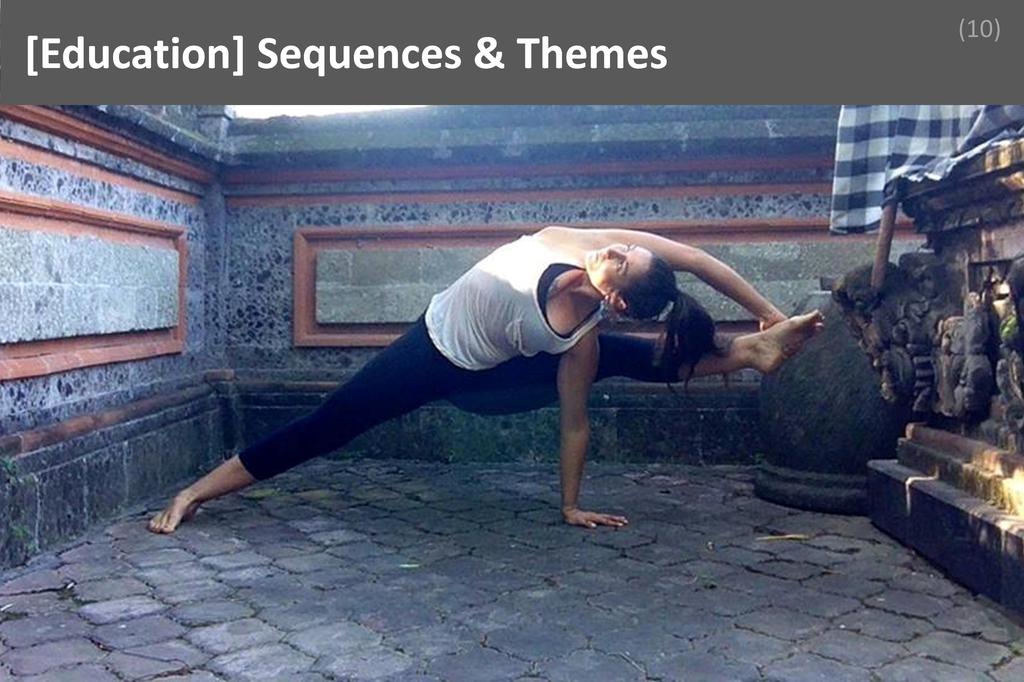
Sequences & Themes in yoga refer to the intentional arrangement of postures (asanas) and the underlying concepts or messages that guide a class. This knowledge enables teachers to create structured, meaningful sessions, integrating physical, mental, and philosophical elements, and is essential in both academic study and professional practice of yoga instruction.
Understanding Sequences & Themes is vital for yoga teachers because it ensures classes are safe, effective, and engaging. Mastery of sequencing allows instructors to guide students through a logical progression of poses, minimizing injury risk and maximizing physical benefits. Thematic teaching deepens the practice, connecting movement with intention or philosophy, which fosters a holistic experience. This foundational knowledge distinguishes skilled professionals, enabling them to adapt classes for diverse needs, levels, and goals. Over time, expertise in sequencing and theming enhances a teacher’s reputation, supports student retention, and opens opportunities for specialized workshops or advanced training, making it a cornerstone of long-term career growth in the yoga field.
A yoga teacher preparing for a morning class decides to focus on the theme of “grounding and stability.” Drawing on their understanding of Sequences & Themes, they design a flow that begins with gentle warm-ups, progresses to standing poses like Warrior II and Tree Pose, and concludes with calming seated stretches. Throughout the session, the teacher weaves in cues and reflections about feeling rooted and present, aligning the physical sequence with the chosen theme. This thoughtful integration not only supports students’ physical alignment and safety but also offers a cohesive, meaningful experience that resonates beyond the mat, demonstrating the practical value of mastering Sequences & Themes in daily teaching.
History of Yoga

History of Yoga is the study of yoga’s origins, evolution, philosophies, and cultural contexts from ancient times to the present. It explores key texts, traditions, and figures that have shaped yoga’s development. For Teaching Yoga, this knowledge is essential for contextualizing practices and fostering informed, respectful instruction.
Understanding the history of yoga is vital for anyone preparing to teach because it provides a comprehensive framework for the discipline’s philosophies, techniques, and ethical foundations. This subject helps professionals appreciate the diversity and depth of yoga traditions, enabling them to teach with authenticity and cultural sensitivity. By grounding their practice in historical context, teachers can better explain the rationale behind various postures, breathing techniques, and meditative practices. This depth of knowledge also supports the development of a personal teaching style that honors yoga’s roots while adapting to contemporary needs. Over the long term, a solid grasp of yoga’s history enhances credibility, fosters lifelong learning, and equips teachers to answer students’ questions with confidence and integrity.
Imagine a yoga instructor leading a class that includes students curious about the origins of certain postures or the meaning behind specific chants. Drawing on their understanding of the history of yoga, the instructor explains how particular asanas evolved from ancient practices described in classical texts, and how chanting connects to spiritual traditions in India. This historical insight not only enriches the students’ experience but also deepens their respect for the practice. The instructor’s ability to weave historical context into daily teaching fosters a more meaningful and engaging learning environment, demonstrating the practical value of historical knowledge in building trust and inspiring students on their own yoga journeys.
Energy

Energy, in the context of yoga, refers to the subtle life force that animates all living beings, often called prana. It encompasses both physical vitality and the more subtle, unseen currents that flow through the body. Understanding energy is essential for teaching yoga, as it underpins movement, breath, and mindfulness practices.
A deep understanding of energy is vital for anyone preparing to teach yoga because it forms the foundation of both the physical and philosophical aspects of the discipline. Knowledge of how energy moves through the body, how it can be cultivated, balanced, and directed, allows teachers to design classes that are safe, effective, and transformative. This expertise helps instructors recognize and respond to students’ energetic needs, whether they require grounding, invigoration, or relaxation. Over time, mastery of energy concepts enhances a teacher’s ability to facilitate deeper experiences for students, fosters personal growth, and supports a sustainable, impactful career in yoga instruction. It also enables teachers to integrate traditional wisdom with modern understanding, making their teaching both authentic and accessible.
Imagine a yoga teacher leading a class where students arrive feeling stressed and scattered after a busy day. Drawing on their understanding of energy, the teacher chooses grounding postures, slow breathwork, and mindful transitions to help students calm their nervous systems and restore balance. Throughout the session, the teacher observes subtle cues, such as restless movements or shallow breathing, and adjusts the sequence to encourage a smoother flow of prana. By the end of class, students feel more centered and relaxed, having experienced a tangible shift in their energy. This practical application of energy knowledge not only enhances the effectiveness of the class but also deepens the teacher’s connection with their students.
Adjustments & Modifications

Adjustments and modifications refer to the techniques and strategies yoga teachers use to help students safely and effectively practice yoga postures. This includes hands-on or verbal guidance to refine alignment, as well as offering alternative poses to accommodate individual needs, abilities, or limitations. Mastery is essential for competent teaching.
Understanding adjustments and modifications is vital for anyone preparing to teach yoga because it ensures inclusivity, safety, and accessibility within the classroom. This knowledge allows teachers to support diverse student populations, including beginners, those with injuries, or individuals with varying physical abilities. By mastering these concepts, yoga professionals build trust and rapport with their students, fostering a positive and supportive learning environment. Over time, this expertise enhances a teacher’s reputation, increases student retention, and opens opportunities for working with specialized groups. Moreover, the ability to adapt classes to meet individual needs is a hallmark of a skilled and compassionate yoga instructor, forming the backbone of a sustainable and impactful teaching career.
Imagine a yoga teacher leading a mixed-level class where one student is recovering from a knee injury. Drawing on their understanding of adjustments and modifications, the teacher offers this student a variation of Warrior II that reduces knee strain, perhaps by shortening the stance or using a chair for support. Simultaneously, the teacher provides hands-on or verbal cues to other students, helping them refine their alignment and deepen their experience safely. This approach ensures that every participant feels seen and supported, regardless of their physical condition. By skillfully applying theoretical knowledge in real time, the teacher creates an inclusive environment where all students can benefit from the practice, demonstrating both professionalism and care.
Types of Meditation

Types of Meditation refers to the various methods and traditions of meditative practice, such as mindfulness, mantra, loving-kindness, and movement-based meditation. Understanding these types is essential for yoga teachers, as it enriches their academic foundation and professional skill set, enabling them to guide diverse student needs effectively.
A comprehensive grasp of the different types of meditation is vital for anyone preparing for or working in teaching yoga. This knowledge allows yoga teachers to tailor their classes to suit the unique backgrounds, goals, and challenges of their students. By understanding the nuances of each meditation type, teachers can integrate appropriate techniques into their sessions, fostering a more inclusive and transformative environment. This foundational expertise not only enhances the quality of instruction but also supports the teacher’s own personal growth and resilience. Over time, mastery of meditation types contributes to professional credibility, expands career opportunities, and ensures the ability to adapt to evolving trends and student expectations within the wellness industry.
Imagine a yoga teacher leading a mixed-level class where some students are seeking stress relief while others are interested in spiritual growth. Drawing on their knowledge of meditation types, the teacher begins the session with a brief mindfulness meditation to help everyone become present. Later, the teacher introduces a loving-kindness meditation, encouraging compassion and connection among participants. By skillfully weaving these different meditation practices into the class, the teacher addresses varied student needs, enhances engagement, and creates a supportive atmosphere. This practical application of theoretical understanding not only elevates the class experience but also demonstrates the teacher’s versatility and depth of expertise in the field of yoga.
Skills
Sensitivity

Sensitivity is the ability to perceive, understand, and respond appropriately to the emotions, needs, and boundaries of others, while remaining aware of subtle cues and differences in individual experiences. In teaching yoga, sensitivity enables instructors to create a safe, inclusive, and supportive environment that fosters personal growth and well-being for every student.
Sensitivity directly enhances a yoga teacher’s effectiveness by allowing them to tailor instruction to the unique physical and emotional needs of each student. Clients and employers value this skill because it ensures that classes are welcoming and accessible, reducing the risk of injury and promoting a sense of trust. A sensitive teacher notices when a student is struggling, anxious, or uncomfortable, and adapts their approach accordingly. Cultivating sensitivity involves active listening, ongoing self-reflection, and a commitment to learning about diverse backgrounds and abilities. Over time, teachers can develop this skill through mindful observation, seeking feedback, and engaging in empathy-building practices, which ultimately lead to stronger teacher-student relationships and more impactful teaching.
Imagine a yoga class where a new student appears hesitant and avoids certain poses. A sensitive teacher observes these subtle signs and gently checks in with the student after class, discovering that the student is recovering from an injury and feels self-conscious about their limitations. Instead of pushing the student to keep up with the group, the teacher offers personalized modifications and words of encouragement, ensuring the student feels supported and included. This approach not only prevents potential harm but also builds the student’s confidence and trust in the teacher. By relying on sensitivity, the instructor transforms a potentially discouraging experience into one of empowerment and growth, benefiting both the individual and the class as a whole.
Compassion & Patience

Compassion and patience together mean understanding others’ struggles without judgment, offering kindness, and allowing time for growth and learning. In the context of teaching yoga, this skill enables instructors to support students at all levels, fostering a safe and nurturing environment where individuals feel respected, accepted, and encouraged to progress at their own pace.
Compassion and patience are vital for yoga teachers because every student arrives with unique abilities, limitations, and emotional states. By embodying these qualities, instructors create a supportive atmosphere that encourages students to explore their practice without fear of failure or embarrassment. Clients and employers highly value teachers who can adapt to diverse needs, respond calmly to setbacks, and motivate students through challenges. Cultivating compassion and patience involves ongoing self-reflection, mindfulness, and empathy, as well as a commitment to personal growth. Over time, teachers can strengthen these qualities by actively listening to students, practicing non-reactivity, and remembering that progress in yoga, as in life, is a gradual journey rather than a race.
Imagine a yoga class where a new student struggles with basic poses and feels frustrated, even considering leaving the session. A teacher who embodies compassion and patience recognizes the student’s discomfort and gently reassures them, offering modifications and encouragement rather than criticism. The instructor takes time to explain that everyone’s journey is different and that progress comes with consistent practice. By patiently guiding the student and celebrating small achievements, the teacher helps rebuild the student’s confidence and fosters a sense of belonging. This approach not only resolves the immediate issue but also strengthens the student’s commitment to yoga, demonstrating how compassion and patience can transform challenges into opportunities for growth and connection.
Teaching

Teaching is the intentional act of imparting knowledge, skills, or understanding to others through clear communication, demonstration, and guidance. In the context of Teaching Yoga, this skill is fundamental because it enables instructors to effectively convey complex concepts, ensure student safety, and foster a supportive learning environment for all participants.
The ability to teach well directly enhances a yoga instructor’s performance by allowing them to communicate postures, breathing techniques, and philosophical principles in ways that are accessible and engaging. Clients and employers highly value this skill because it ensures classes are safe, inclusive, and transformative, leading to positive experiences and student retention. Cultivating teaching skills involves ongoing self-reflection, seeking feedback, attending workshops, and observing experienced instructors. Over time, yoga teachers refine their ability to adapt explanations, offer modifications, and respond empathetically to student needs, thereby building trust and fostering a sense of community within their classes.
Imagine a yoga instructor leading a mixed-level class where a new student struggles with a foundational pose. The instructor notices this and, drawing on their teaching skills, pauses to break down the posture into manageable steps. They offer verbal cues, demonstrate modifications, and check in with the student’s comfort level. By doing so, the instructor not only helps the student gain confidence and avoid injury but also reassures the rest of the class that their learning needs will be met. This scenario highlights how effective teaching transforms potential challenges into opportunities for growth, ensuring that every participant feels supported and empowered throughout their yoga journey.
Creativity

Creativity is the ability to generate original ideas, adapt to new situations, and approach challenges with innovative solutions. In the context of teaching yoga, creativity allows instructors to design engaging classes, tailor practices to diverse needs, and foster a dynamic learning environment that inspires and motivates students.
Creativity enhances a yoga teacher’s effectiveness by enabling them to adapt sequences, modify poses, and introduce fresh themes that keep students engaged and progressing. Clients and employers highly value this skill because it ensures classes remain interesting, inclusive, and responsive to individual or group needs. Creative instructors can better address varying skill levels, physical limitations, and learning preferences, making yoga accessible and enjoyable for everyone. Cultivating creativity involves continuous learning, exploring new teaching methods, and seeking inspiration from different disciplines. Regular self-reflection, attending workshops, and collaborating with peers also help teachers expand their creative repertoire, ultimately leading to more impactful and memorable yoga experiences.
Imagine a yoga teacher faced with a class of mixed abilities, including beginners, advanced practitioners, and individuals with physical limitations. Instead of following a rigid lesson plan, the teacher draws on creativity to adapt poses, offer alternative movements, and weave in mindfulness practices that cater to everyone. By improvising and blending different yoga styles, the instructor ensures each participant feels challenged yet supported. This creative approach not only resolves the challenge of meeting diverse needs but also fosters a sense of community and inclusivity. As a result, students leave the class feeling accomplished and inspired, and the teacher earns a reputation for delivering thoughtful, engaging sessions that stand out in a competitive field.
Public Speaking

Public speaking is the art of effectively communicating ideas, instructions, or information to an audience through spoken words, body language, and vocal modulation. In the context of teaching yoga, public speaking enables instructors to guide, motivate, and connect with students, ensuring clarity, safety, and engagement throughout each session.
Mastering public speaking significantly enhances a yoga teacher’s ability to lead classes with confidence and clarity. When instructors articulate instructions clearly and project their voice, students feel more secure and are less likely to misunderstand poses or sequences. Employers and clients value yoga teachers who can foster a welcoming and inspiring environment, which is often achieved through effective verbal communication. Over time, this skill can be cultivated by practicing in front of small groups, seeking feedback, and observing experienced instructors. Regularly reflecting on one’s delivery style and adapting to different class sizes or student needs also helps refine public speaking abilities, making it an indispensable asset for career growth in yoga instruction.
Imagine a yoga instructor leading a large outdoor class where distractions abound and students are spread out across a wide area. Suddenly, a group of beginners appears uncertain about a challenging pose. The instructor relies on strong public speaking skills to project their voice, offer clear step-by-step guidance, and reassure the group. By confidently addressing the entire class and providing concise, encouraging instructions, the instructor not only resolves confusion but also maintains the flow and energy of the session. This ability to communicate effectively in real time ensures student safety, fosters trust, and elevates the overall experience, demonstrating how public speaking is crucial for success in teaching yoga.
Mental Peace

Mental Peace is a state of inner calm, emotional balance, and clarity of mind, allowing individuals to remain composed and focused regardless of external circumstances. For a Teaching Yoga professional, mental peace is foundational, enabling them to guide students effectively, foster a nurturing environment, and embody the principles of yoga both on and off the mat.
Mental peace enhances a yoga teacher’s ability to remain present, patient, and empathetic with students, even during challenging classes or when unexpected disruptions arise. Clients and employers value this quality because it creates a safe, supportive atmosphere where learning and personal growth can flourish. A teacher who exudes calmness helps students feel more comfortable and engaged, which is essential for building trust and encouraging participation. Cultivating mental peace involves regular personal practice, mindfulness meditation, and ongoing self-reflection. Over time, these habits help teachers manage stress, maintain emotional equilibrium, and respond thoughtfully rather than react impulsively, all of which contribute to their professional effectiveness and reputation.
Imagine a yoga class where a sudden loud noise from nearby construction disrupts the peaceful atmosphere, causing students to lose focus and become agitated. The teacher, drawing on their mental peace, remains composed and gently guides the class back to their breath and the present moment. Instead of reacting with frustration or allowing the disruption to derail the session, the teacher acknowledges the distraction with calm acceptance and uses it as an opportunity to practice mindfulness in real time. This response not only restores the group’s focus but also demonstrates to students how to maintain inner tranquility amid external chaos, reinforcing the core teachings of yoga and enhancing the overall class experience.
Physical Health

Physical health refers to the overall condition and functioning of the body, encompassing strength, flexibility, endurance, and the absence of illness or injury. For a Teaching Yoga professional, physical health is foundational, enabling them to demonstrate poses accurately, maintain energy throughout classes, and serve as a credible role model for students.
Physical health directly enhances a yoga teacher’s ability to perform and instruct a wide range of postures, ensuring classes are both safe and effective. Clients and employers highly value instructors who embody physical wellness, as it inspires trust and motivation among students. Maintaining physical health allows teachers to manage demanding schedules, prevent injuries, and adapt to the varying needs of their clients. Cultivating this skill involves consistent personal practice, balanced nutrition, adequate rest, and ongoing education about body mechanics. Over time, a commitment to physical health not only improves teaching quality but also fosters longevity in the profession, making it a vital asset for career growth and satisfaction.
Imagine a yoga instructor leading a class when a student suddenly struggles with a challenging pose, risking strain or injury. Drawing on their own physical health, the instructor confidently demonstrates a safe modification, guiding the student through proper alignment and breath control. Their strength and flexibility allow them to model the adjustment clearly, while their stamina ensures they can continue supporting the rest of the class without interruption. This scenario highlights how robust physical health enables the teacher to respond effectively to unexpected challenges, maintain class flow, and ensure every participant feels supported and safe. Ultimately, the instructor’s physical well-being directly contributes to a positive learning environment and successful class outcomes.
Positives
Helping People

Helping people means offering guidance, support, and encouragement to others, enabling them to improve their physical, mental, and emotional well-being. In teaching yoga, this involves empowering students to connect with their bodies, manage stress, and cultivate mindfulness. This positive contribution creates a nurturing environment where growth and transformation can flourish.
The ability to help people is a profound source of fulfillment for yoga teachers. Witnessing students progress, overcome challenges, and find peace through yoga brings a deep sense of purpose and satisfaction. This daily interaction fosters meaningful connections and a supportive community, making the work environment uplifting and motivating. As teachers see the tangible results of their guidance—whether it’s a student mastering a new pose, managing anxiety, or simply finding joy in movement—they experience a unique sense of accomplishment. This ongoing cycle of giving and receiving inspiration not only enhances job satisfaction but also encourages personal and professional growth, making teaching yoga a truly rewarding career.
Imagine a yoga teacher working with a student who struggles with anxiety and low self-esteem. Through consistent classes and compassionate instruction, the teacher helps the student develop confidence, resilience, and inner calm. Over time, the student begins to share how yoga has improved their daily life, from better sleep to reduced stress. The teacher witnesses this transformation firsthand, feeling immense pride and gratitude for being part of the student’s journey. This experience reaffirms the teacher’s passion for their work, highlighting the profound impact that helping people can have—not just on the students, but on the teacher’s own sense of purpose and fulfillment.
Self-discovery

Self-discovery is the ongoing process of gaining insight into one’s own character, values, emotions, and purpose through reflection and experience. In the context of teaching yoga, self-discovery allows instructors to deepen their understanding of themselves, which in turn enriches their teaching and personal growth. This journey of inner exploration is a cornerstone of the yoga profession, fostering authenticity, empathy, and resilience. By continually learning about themselves, yoga teachers are better equipped to guide students, adapt to challenges, and cultivate a meaningful connection with their practice and community. Self-discovery thus becomes a powerful force that shapes both the personal and professional dimensions of a yoga teacher’s life.
The journey of self-discovery is a profound advantage for those who choose to teach yoga, as it transforms the profession into a path of continual personal evolution. This aspect matters because it brings a sense of purpose and fulfillment that extends beyond routine instruction. Teachers who engage in self-discovery often find themselves more attuned to their own needs and those of their students, leading to more compassionate and effective teaching. The process encourages mindfulness, emotional intelligence, and adaptability, all of which are essential for navigating the diverse challenges that arise in the classroom. Experiencing self-discovery daily, yoga teachers report higher job satisfaction, as each class becomes an opportunity to learn, grow, and inspire both themselves and others.
Consider a yoga teacher who, after years of leading classes, begins to notice patterns in their reactions to student feedback and challenging situations. Through mindful reflection and ongoing practice, they uncover underlying beliefs and emotions that influence their teaching style. This realization prompts them to approach their classes with greater openness and vulnerability, fostering a more supportive and inclusive environment. As a result, students respond with increased trust and engagement, and the teacher experiences a renewed sense of purpose and connection. This real-world scenario highlights how self-discovery not only enhances professional effectiveness but also brings deep personal fulfillment, making the journey of teaching yoga uniquely rewarding.
Self-practice

Self-practice is the dedicated, personal commitment to regularly engaging in yoga outside of teaching classes, focusing on one’s own growth, exploration, and well-being. It is a mindful journey where teachers deepen their understanding of yoga, refine techniques, and cultivate inner balance, which positively influences their professional and personal lives.
The practice of self-practice is a cornerstone of a fulfilling yoga teaching career because it nurtures authenticity and continuous growth. Teachers who prioritize their own practice remain connected to the heart of yoga, allowing them to teach from genuine experience rather than routine. This ongoing personal development enhances job satisfaction, as teachers witness their own progress and transformation. It also fosters resilience and adaptability, equipping them to better support students’ diverse needs. Each day, yoga professionals draw inspiration and renewed energy from their self-practice, which translates into more engaging and empathetic teaching. This cycle of personal enrichment and professional excellence creates a deeply rewarding career path.
Consider a yoga teacher who begins each morning with a quiet hour of self-practice before leading any classes. During this time, she explores new postures, breathwork, and meditation techniques, noticing subtle shifts in her body and mind. This daily ritual not only grounds her but also sparks fresh ideas for her teaching. When she steps into the studio, her calm presence and enthusiasm are palpable, inspiring her students and creating a supportive learning environment. Over time, her commitment to self-practice becomes evident in her teaching style, as she shares personal insights and adapts lessons to meet her students’ needs. This ongoing cycle of self-discovery and sharing makes her career deeply meaningful and satisfying.
Challenges
Diverse Students

In the context of Teaching Yoga, "Diverse Students" refers to individuals from varied backgrounds, ages, abilities, cultures, and learning needs. This diversity is demanding because it requires instructors to adapt teaching methods, communication styles, and class structures to ensure inclusivity, safety, and engagement for every participant, regardless of their unique circumstances.
The presence of diverse students in a yoga class can significantly complicate lesson planning and delivery. Teachers must constantly assess and respond to a wide range of physical capabilities, language proficiencies, and cultural expectations. This challenge can lead to increased stress and the need for heightened awareness, demanding resilience and adaptability from the instructor. Successful professionals manage this constraint by cultivating empathy, expanding their knowledge of modifications and alternative practices, and fostering open communication. They create a supportive environment where students feel seen and respected, often encouraging feedback and self-expression. By embracing flexibility and continuous learning, yoga teachers can transform diversity from a challenge into an enriching aspect of their daily work.
Consider a yoga instructor leading a community class attended by seniors, young adults, and individuals with physical disabilities. The teacher begins by welcoming everyone and inviting them to share any concerns or limitations. Throughout the session, she offers multiple variations for each pose, demonstrating the use of props and gentle alternatives. She checks in with students individually, ensuring they feel comfortable and included. By remaining attentive and responsive, the instructor fosters a sense of belonging and safety, allowing each participant to engage at their own pace. This approach not only addresses the challenge of diverse students but also enhances the overall learning experience for the entire group.
Maintaining Focus

Maintaining focus in the context of Teaching Yoga refers to the ability of instructors to remain present, attentive, and engaged throughout classes, despite distractions, personal stress, or fluctuating energy levels. This is demanding because teachers must balance their own mindfulness while guiding diverse students, adapting to unpredictable environments, and managing class dynamics.
The challenge of maintaining focus can significantly affect a yoga teacher’s daily work, leading to diminished class quality, reduced student engagement, and personal burnout. Distractions, emotional fatigue, and external interruptions can disrupt the flow of instruction, making it difficult to deliver consistent, mindful guidance. This difficulty demands resilience because teachers must continually return to presence, even when faced with personal or professional stressors. Successful professionals manage this constraint by developing strong personal mindfulness practices, setting clear boundaries, and cultivating routines that support mental clarity. They often use breathwork, meditation, and intentional pauses before classes to center themselves, ensuring they can offer their full attention and energy to their students, regardless of external circumstances.
Consider a yoga instructor who arrives at the studio after a challenging morning filled with personal stress and unexpected schedule changes. Recognizing her scattered state, she takes a few minutes in a quiet corner to practice deep breathing and a short meditation, consciously letting go of distractions. As the class begins, she focuses on her breath and the present moment, using her own mindfulness as an anchor. Throughout the session, she notices her mind occasionally drifting but gently redirects her attention to her students and the flow of the class. By the end, both she and her students experience a sense of calm and connection, demonstrating how intentional focus can transform a potentially distracted class into a meaningful practice.
Competition

Competition in Teaching Yoga refers to the presence of numerous instructors and studios vying for the attention and loyalty of students within the same community or market. This challenge is demanding because it requires teachers to continuously differentiate themselves, maintain high standards, and adapt to evolving student preferences to sustain their practice.
The challenge of competition can significantly affect a yoga teacher’s daily work by creating pressure to attract and retain students, often leading to concerns about class attendance and financial stability. This environment demands resilience, as teachers must consistently deliver quality instruction while also marketing their unique approach. Successful professionals navigate this constraint by focusing on personal growth, building authentic relationships with students, and embracing ongoing education. They often develop a distinct teaching style or niche, which helps them stand out in a crowded field. By fostering a supportive community and prioritizing genuine connections, these teachers transform competition into an opportunity for collaboration and mutual growth, rather than a source of stress or rivalry.
Consider a yoga instructor in a city with several established studios and many freelance teachers. Initially, she struggled to fill her classes, feeling overshadowed by more experienced peers. Instead of lowering her prices or imitating others, she chose to specialize in yoga for stress relief, integrating mindfulness techniques and personalized attention. She invested time in connecting with her students, listening to their needs, and offering tailored advice. Over time, her classes developed a loyal following, and word-of-mouth referrals increased her attendance. By focusing on her strengths and cultivating a supportive environment, she not only overcame the challenge of competition but also established a thriving, sustainable teaching practice.
Injury

Injury, within the context of Teaching Yoga, refers to physical harm or strain sustained by instructors as a result of demonstrating, practicing, or assisting students with yoga postures. This challenge is demanding because it can hinder a teacher’s ability to lead classes, maintain credibility, and sustain their own well-being.
Injury can significantly disrupt a yoga teacher’s daily routine, limiting their capacity to demonstrate poses, assist students, or even maintain a regular teaching schedule. This challenge requires resilience, as instructors must balance their own recovery with the needs of their students and the expectations of their profession. Successful professionals manage this constraint by prioritizing self-care, modifying their teaching approach, and openly communicating with students about their limitations. They may focus more on verbal cues, encourage student autonomy, and use injury as an opportunity to model mindfulness and adaptability. By embracing these strategies, yoga teachers can continue to provide valuable instruction while safeguarding their own health and longevity in the field.
Consider a yoga instructor who suffers a shoulder injury while demonstrating an advanced arm balance. Instead of canceling classes, the teacher adapts by shifting focus to verbal instruction and gentle, restorative poses that do not aggravate the injury. The instructor openly discusses the situation with students, using the experience to highlight the importance of listening to one’s body and practicing non-judgment. This approach not only allows the teacher to continue working but also fosters a supportive and empathetic learning environment. Through adaptability and honest communication, the instructor turns a personal setback into a valuable teaching moment, demonstrating resilience and professionalism in the face of adversity.
Handling Questions

Handling Questions in the context of Teaching Yoga refers to the ongoing need for instructors to respond thoughtfully and accurately to diverse student inquiries during classes. This is demanding because questions can be unpredictable, range from technical to philosophical, and require clear communication, deep knowledge, and the ability to maintain class flow without losing focus.
The challenge of handling questions can disrupt the rhythm of a yoga class, potentially unsettling both the instructor and the students. Instructors may feel pressure to provide immediate, comprehensive answers, which can be mentally taxing and may lead to self-doubt if they are unsure of a response. This difficulty requires resilience, as teachers must balance the needs of the individual asking with the collective experience of the group. Successful professionals manage this by setting clear boundaries for when questions can be addressed, cultivating humility to admit when they do not know an answer, and fostering a supportive environment where curiosity is welcomed. They continuously expand their knowledge and practice active listening, ensuring that their responses are both accurate and encouraging, thus maintaining the integrity of the class.
During a restorative yoga session, a student asks the instructor about the physiological benefits of a particular pose. Recognizing that the question could sidetrack the class, the instructor acknowledges the inquiry and briefly explains the general benefits, promising to provide more detailed information after class. This approach reassures the student that their curiosity is valued while preserving the meditative atmosphere for others. After the session, the instructor follows up with a thoughtful, research-based explanation, demonstrating both expertise and commitment to student learning. By managing the timing and depth of the response, the instructor maintains class flow and fosters trust, turning a potential disruption into a positive learning opportunity for everyone involved.
A Day Of
Teaching Yoga
Before the sun has fully stretched across the horizon, a teaching yoga professional is already in motion, moving through a world that balances tranquility with purposeful energy. The day is a blend of mindful preparation, vibrant interaction, and quiet reflection, all set against the backdrop of softly lit studios, the scent of incense, and the gentle hum of anticipation. Each hour brings a new rhythm—sometimes serene, sometimes bustling—as students arrive seeking guidance, and the instructor adapts to their needs, weaving together ancient wisdom and modern practice. This is a career that demands presence, adaptability, and a deep commitment to both personal growth and the well-being of others.
In the early hours, the yoga teacher arrives at the studio while the world is still hushed. There is a ritual in unrolling mats, adjusting lighting, and setting the ambiance with calming music or essential oils. This is also the time for personal centering—perhaps a short meditation or gentle stretching to ground the mind and body before students arrive. Reviewing class plans, considering the needs of regular attendees, and making any last-minute adjustments ensures that the session will be both safe and inspiring. The quiet of the morning offers a rare moment of solitude, allowing the instructor to set intentions for the day ahead.
As students trickle in, the studio fills with quiet greetings and the soft shuffle of bare feet. The core of the morning is spent leading group classes, where the instructor’s focus sharpens. Every cue, adjustment, and demonstration is delivered with clarity and encouragement, fostering a supportive environment for practitioners of all levels. The energy in the room builds as breath and movement synchronize, and the teacher remains attuned to each student’s progress, offering modifications or deeper challenges as needed. This is the most interactive and dynamic part of the day, requiring both physical stamina and emotional presence.
The afternoon often shifts toward more individualized attention. Private lessons allow the instructor to tailor sequences to specific goals or limitations, deepening the student-teacher connection. Between sessions, there may be opportunities to collaborate with colleagues, discuss upcoming workshops, or engage with the broader yoga community through social media or local events. This part of the day is about execution and connection—whether refining a client’s posture, brainstorming with peers, or nurturing the studio’s sense of community.
As the day winds down, the yoga teacher transitions into quieter tasks. There is time to reflect on the day’s classes, jotting down notes about what worked well or what could be improved. Administrative duties come to the forefront, from responding to emails and updating class schedules to managing registrations for future workshops. The evening is also a space for personal study—reading about new techniques, planning upcoming sequences, or exploring mindfulness practices to share with students. With the studio lights dimmed and the last mat rolled away, the teacher leaves with a sense of fulfillment and a clear vision for the next day’s journey. |


 Home
Home Abroad
 Plan
Plan Philosophy
 Seminar
 Pages
Pages Advisors
 Testimonials


















 Workshop
 Discuss
 Meet
Meet
 Advisor
 Story
Story
 Fine Print
 Links
Links
 Blog
Blog
 Follow
