The Journey of Entrepreneurship
What Is Entrepreneurship
Entrepreneurship

Entrepreneurship is the process of identifying opportunities, creating innovative solutions, and building new ventures to deliver value in the marketplace. It involves taking calculated risks, organizing resources, and managing operations to establish and grow businesses. Entrepreneurs drive economic progress by transforming ideas into viable products, services, or organizations.
Entrepreneurship plays a crucial role in shaping economies and societies by fostering innovation, creating jobs, and stimulating competition. For professionals in this field, entrepreneurship offers the chance to turn vision into reality, exercise creative freedom, and make a tangible impact. One major benefit is the potential for financial independence, as successful ventures can yield significant rewards. Another advantage is personal growth, as entrepreneurs develop resilience, leadership, and problem-solving skills through overcoming challenges. Additionally, entrepreneurship allows individuals to contribute to their communities by addressing unmet needs, supporting local economies, and inspiring others to pursue their own ventures.
Consider a professional who notices a gap in the market for eco-friendly packaging solutions. Drawing on their background in materials science, they develop a biodegradable alternative to traditional plastics. Through entrepreneurship, they assemble a team, secure funding, and launch a startup to produce and distribute their product. As the business grows, they collaborate with local manufacturers, partner with retailers, and adapt their offerings based on customer feedback. This entrepreneurial journey not only brings a new product to market but also creates jobs, reduces environmental impact, and encourages sustainable practices within the industry. The professional’s ability to innovate and execute their vision exemplifies the transformative power of entrepreneurship.
Education
Management

Management is the process of planning, organizing, leading, and controlling resources—including people, finances, and information—to achieve organizational goals efficiently and effectively. In both academic and professional contexts, management provides entrepreneurs with essential frameworks and tools for decision-making, resource allocation, and strategic leadership, forming a crucial pillar of entrepreneurial success.
Understanding management is vital for anyone pursuing entrepreneurship because it equips individuals with the skills to coordinate teams, allocate resources wisely, and navigate complex business environments. Mastery of management principles enables entrepreneurs to set clear objectives, develop actionable strategies, and foster a productive organizational culture. This foundational knowledge is indispensable for building sustainable ventures, as it helps entrepreneurs anticipate challenges, adapt to market changes, and drive growth. Over the long term, strong management capabilities enhance a professional’s ability to scale operations, attract investment, and maintain a competitive edge. Ultimately, management is not just about overseeing tasks; it is about empowering people and processes to achieve lasting business success.
Consider an entrepreneur launching a technology startup. Each day, they must balance product development, marketing, and customer service, all while managing a small but diverse team. By applying management theories, the entrepreneur organizes daily stand-up meetings to align team goals, delegates tasks based on individual strengths, and monitors progress toward milestones. When unexpected challenges arise, such as a sudden shift in customer needs or a technical setback, the entrepreneur draws on their management knowledge to reassess priorities, reallocate resources, and communicate changes effectively. This practical application of management ensures that the startup remains agile, motivated, and focused on delivering value, demonstrating how theoretical understanding translates into real-world business resilience and growth.
Human Resource

Human Resource refers to the strategic management of people within an organization, encompassing recruitment, development, motivation, and retention. In the context of entrepreneurship, it involves aligning workforce capabilities with business goals. Understanding Human Resource is essential for entrepreneurs, as it bridges academic theory and practical leadership in building effective, sustainable ventures.
Learning Human Resource is vital for entrepreneurs because people are the driving force behind any successful business. Mastery of this subject equips professionals with the skills to attract, develop, and retain talent, ensuring that the right individuals are in the right roles. It also fosters a positive organizational culture, enhances team productivity, and mitigates workplace conflicts. Over the long term, a strong foundation in Human Resource enables entrepreneurs to scale their businesses efficiently, adapt to changing market demands, and maintain a competitive edge. By understanding legal and ethical considerations, entrepreneurs can also avoid costly disputes and build a reputation as responsible leaders, which is crucial for sustained growth and investor confidence.
Consider an entrepreneur launching a technology startup. As the company grows, the founder must recruit skilled developers, establish fair compensation structures, and create opportunities for professional development. Drawing on their Human Resource knowledge, the entrepreneur implements transparent hiring practices, sets up regular performance reviews, and fosters an inclusive work environment. When a conflict arises between team members, the entrepreneur mediates effectively, ensuring that issues are resolved constructively and morale remains high. By applying Human Resource principles daily, the entrepreneur not only builds a cohesive team but also positions the startup for long-term success, demonstrating the practical value of this foundational knowledge in real-world business operations.
Operations

Operations refers to the systematic management of processes that transform inputs such as materials, labor, and technology into finished goods or services. In entrepreneurship, operations encompasses everything from production and supply chain management to quality control and logistics, forming a crucial pillar of both academic study and practical business execution.
Understanding operations is essential for entrepreneurs because it directly impacts efficiency, cost control, and customer satisfaction. Mastery of operational concepts enables professionals to design workflows, allocate resources wisely, and respond effectively to market demands. This knowledge forms the backbone of sustainable business growth, as it helps entrepreneurs identify bottlenecks, streamline processes, and implement scalable systems. Over the long term, a solid grasp of operations not only supports daily management but also empowers entrepreneurs to innovate, adapt to industry changes, and maintain a competitive edge. By integrating operational excellence into their ventures, professionals ensure that their businesses can withstand challenges and capitalize on new opportunities as they arise.
Consider an entrepreneur launching a specialty coffee shop. Their understanding of operations allows them to optimize inventory management, ensuring that fresh beans and supplies are always available without overstocking. They design efficient workflows for baristas, reducing wait times and enhancing customer experience. When faced with a sudden surge in demand, their operational planning enables quick adjustments in staffing and supply orders. By analyzing sales data and supplier performance, the entrepreneur identifies trends and negotiates better terms, further improving profitability. This practical application of operational knowledge not only keeps daily activities running smoothly but also positions the business for sustainable growth and adaptability in a competitive market.
Risk Management

Risk Management is the systematic process of identifying, assessing, and prioritizing potential risks, followed by coordinated actions to minimize, monitor, and control the probability or impact of unfortunate events. In entrepreneurship, it is a critical discipline that enables informed decision-making and safeguards business objectives against uncertainty and potential losses.
Understanding risk management is essential for entrepreneurs because it equips them to anticipate challenges and make strategic decisions that protect their ventures. Mastery of this subject forms a foundational pillar in the knowledge base of any entrepreneur, as it fosters resilience and adaptability in the face of market volatility, financial uncertainties, and operational setbacks. By learning to evaluate and mitigate risks, professionals can confidently pursue innovation and growth while minimizing potential disruptions. Over the long term, this expertise not only enhances the sustainability of a business but also builds credibility with investors, partners, and customers. Ultimately, risk management skills empower entrepreneurs to navigate complex environments and seize opportunities with calculated confidence.
Consider an entrepreneur launching a tech startup that develops mobile applications. Drawing on their knowledge of risk management, they begin by conducting a thorough analysis of potential risks, such as data breaches, regulatory changes, and shifts in consumer preferences. Each day, they monitor industry trends and legal updates to stay ahead of emerging threats. When a new data privacy regulation is announced, the entrepreneur quickly assembles their team to assess the impact on their product and implements necessary changes to ensure compliance. By proactively addressing these risks, the entrepreneur not only avoids costly penalties but also strengthens customer trust, demonstrating how theoretical risk management principles are applied in real-world business operations.
Finance & Accounting

Finance & Accounting is the discipline focused on managing, analyzing, and reporting an organization’s financial resources and transactions. It encompasses budgeting, forecasting, investment decisions, and compliance with regulations. For entrepreneurs, it forms a crucial part of the academic and professional toolkit, enabling informed decision-making and sustainable business growth.
Understanding Finance & Accounting is essential for anyone pursuing entrepreneurship because it provides the analytical framework needed to evaluate business opportunities, manage cash flow, and ensure profitability. Mastery of these concepts allows entrepreneurs to interpret financial statements, assess risks, and make strategic decisions that drive long-term success. This knowledge is foundational, as it underpins every aspect of running a business, from securing funding to managing operational expenses. Over time, proficiency in Finance & Accounting enhances credibility with investors, partners, and stakeholders, and empowers entrepreneurs to navigate complex financial landscapes. Ultimately, it equips professionals with the skills to build resilient enterprises that can adapt and thrive in competitive markets.
Consider an entrepreneur launching a tech startup who must decide whether to invest in new product development or expand marketing efforts. By applying their understanding of Finance & Accounting, they analyze cash flow projections, review income statements, and calculate the potential return on investment for each option. This financial insight enables them to allocate resources efficiently, avoid overspending, and set realistic revenue targets. On a daily basis, they monitor expenses, track key financial metrics, and adjust strategies based on real-time data. Their ability to interpret financial information not only supports sound decision-making but also strengthens their position when negotiating with investors or applying for loans, ensuring the business remains financially healthy and poised for growth.
Contextual Knowledge

Contextual Knowledge refers to the understanding of the specific circumstances, environments, and cultural factors that influence a particular situation or decision. In entrepreneurship, it encompasses awareness of market trends, customer behaviors, regulatory landscapes, and industry norms, forming a crucial bridge between theoretical knowledge and practical business application.
Developing contextual knowledge is essential for entrepreneurs because it enables them to make informed decisions that are sensitive to the nuances of their industry and target market. This subject forms the backbone of strategic thinking, allowing professionals to adapt their business models, marketing strategies, and product offerings to fit the unique demands of their environment. Entrepreneurs who invest in contextual knowledge are better equipped to anticipate challenges, identify opportunities, and build resilient ventures. Over the long term, this understanding fosters innovation, enhances competitive advantage, and supports sustainable growth by ensuring that business actions are always aligned with the realities of the marketplace.
Consider an entrepreneur launching a sustainable fashion brand in a new region. By applying contextual knowledge, they research local consumer attitudes toward eco-friendly products, study regional fashion trends, and understand relevant environmental regulations. This insight allows them to tailor their product designs, marketing messages, and supply chain practices to resonate with local values and comply with legal requirements. As a result, their brand is more likely to gain acceptance, avoid regulatory pitfalls, and build a loyal customer base. Through this daily application of contextual knowledge, the entrepreneur not only navigates immediate challenges but also positions the business for long-term success in a competitive and dynamic market.
Skills
Marketing Skills

Marketing skills encompass the ability to identify customer needs, craft compelling messages, position products or services effectively, and utilize various channels to reach target audiences. In entrepreneurship, these skills are vital for building brand awareness, attracting customers, and driving sales, forming the backbone of sustainable business growth and competitive advantage.
Mastering marketing skills directly enhances an entrepreneur’s ability to communicate value, differentiate offerings, and respond to market trends. Clients and employers highly value these skills because they translate into increased visibility, customer acquisition, and revenue growth. Entrepreneurs can cultivate marketing skills by staying updated on industry trends, learning digital marketing techniques, and practicing persuasive communication. Regularly analyzing market feedback and adapting strategies also sharpens these abilities. Over time, hands-on experience, mentorship, and continuous learning help entrepreneurs refine their marketing approach, making them more adept at launching successful campaigns and building lasting customer relationships. This ongoing development ensures that entrepreneurs remain agile and responsive in dynamic markets, ultimately contributing to long-term business success.
Imagine an entrepreneur who has developed an innovative eco-friendly cleaning product but struggles to gain traction in a crowded market. By leveraging marketing skills, the entrepreneur conducts market research to identify environmentally conscious consumers and crafts a compelling narrative highlighting the product’s unique benefits. Through targeted social media campaigns and engaging content, the entrepreneur educates potential customers about the environmental impact of traditional cleaners versus their solution. As a result, the product gains visibility, attracts early adopters, and generates positive word-of-mouth. This strategic use of marketing skills not only solves the initial challenge of low awareness but also establishes a loyal customer base, demonstrating how essential marketing expertise is to entrepreneurial success.
Computers

Computers encompass the knowledge and practical use of digital devices, software applications, and information systems to process, store, and communicate data efficiently. In entrepreneurship, computers serve as the backbone for operations, enabling entrepreneurs to manage finances, communicate with stakeholders, analyze market trends, and streamline business processes for growth and innovation.
Mastering computers significantly enhances an entrepreneur’s ability to operate efficiently and make informed decisions. Proficiency in this area allows for seamless management of tasks such as budgeting, marketing, and customer relationship management. Clients and employers highly value this skill because it demonstrates adaptability, resourcefulness, and the capacity to leverage technology for competitive advantage. Entrepreneurs can cultivate computer skills by engaging in continuous learning through online courses, workshops, and hands-on experience with various software tools. Staying updated with technological advancements ensures that entrepreneurs remain agile and responsive to changing market demands, ultimately fostering business resilience and long-term success.
Imagine an entrepreneur facing a sudden drop in online sales. By utilizing computer skills, they quickly analyze website analytics and discover that a recent software update caused checkout errors. Using their knowledge, they troubleshoot the issue, restore functionality, and communicate with customers through email and social media. This swift, technology-driven response not only resolves the immediate problem but also reassures clients of the business’s reliability. The entrepreneur’s ability to harness computers for problem-solving and communication directly contributes to customer satisfaction and the preservation of the company’s reputation, illustrating the indispensable role of computer proficiency in entrepreneurial success.
Versatility

Versatility is the ability to adapt quickly and effectively to changing circumstances, learn new skills, and perform a wide range of tasks with competence. In entrepreneurship, versatility enables professionals to navigate uncertainty, embrace innovation, and respond to diverse challenges, making it a cornerstone of sustainable business growth and resilience.
Versatility directly enhances an entrepreneur’s performance by allowing them to pivot strategies, manage multiple roles, and respond to unexpected obstacles with confidence. Clients and employers value this skill because it demonstrates resourcefulness, flexibility, and a proactive approach to problem-solving. Entrepreneurs who are versatile can identify opportunities in shifting markets, collaborate across disciplines, and maintain momentum even when faced with setbacks. Cultivating versatility involves a commitment to continuous learning, seeking feedback, and embracing new experiences. Over time, entrepreneurs can expand their skill sets by taking on varied projects, networking with professionals from different backgrounds, and staying informed about industry trends. This ongoing development ensures they remain agile and prepared for whatever challenges arise.
Imagine an entrepreneur who launches a tech startup and suddenly faces a major supply chain disruption. Instead of waiting for external solutions, they draw on their versatility by quickly learning about logistics, negotiating with alternative suppliers, and adapting their product design to available materials. Simultaneously, they communicate transparently with customers and adjust marketing strategies to manage expectations. By wearing multiple hats and shifting focus as needed, the entrepreneur not only resolves the immediate crisis but also strengthens the business’s reputation for reliability and innovation. This scenario highlights how versatility empowers entrepreneurs to turn challenges into opportunities and maintain progress in the face of adversity.
People Skills

People Skills, also known as interpersonal skills, encompass the ability to communicate effectively, empathize with others, resolve conflicts, and build strong relationships. In entrepreneurship, these skills are vital for networking, leading teams, negotiating deals, and understanding client needs, forming the foundation for sustainable business growth and innovation.
People Skills directly enhance an entrepreneur’s performance by fostering trust, collaboration, and loyalty among stakeholders. Clients and employers highly value individuals who can navigate diverse personalities, mediate disputes, and inspire teams, as these abilities drive productivity and positive outcomes. Entrepreneurs can cultivate People Skills through active listening, seeking feedback, engaging in networking opportunities, and practicing empathy in daily interactions. Over time, consistent self-reflection and a willingness to adapt communication styles to different audiences further refine these skills. By prioritizing relationship-building and open dialogue, entrepreneurs not only strengthen their professional reputation but also create environments where creativity and problem-solving thrive, ultimately contributing to long-term business success.
Consider an entrepreneur whose startup faces internal conflict between two key team members, threatening project deadlines and morale. By leveraging People Skills, the entrepreneur arranges a private meeting, listens attentively to both perspectives, and mediates a constructive conversation. Through empathy and clear communication, the entrepreneur helps each party understand the other’s viewpoint, guiding them toward a mutually beneficial compromise. This approach not only resolves the immediate conflict but also reinforces a culture of respect and collaboration within the team. As a result, the project gets back on track, and the team emerges stronger, demonstrating how essential People Skills are in overcoming challenges and achieving entrepreneurial success.
Communication

Communication is the process of effectively exchanging information, ideas, and emotions through speaking, writing, listening, and non-verbal cues. In entrepreneurship, communication is the cornerstone that connects vision to execution, enabling entrepreneurs to inspire teams, negotiate with partners, secure funding, and build lasting relationships with clients and stakeholders.
Strong communication skills directly enhance an entrepreneur’s ability to articulate their vision, motivate employees, and foster collaboration within diverse teams. Clients and investors highly value entrepreneurs who can clearly convey complex ideas, listen to feedback, and adapt messaging for different audiences. Effective communication builds trust, reduces misunderstandings, and accelerates decision-making, all of which are vital in the fast-paced entrepreneurial environment. To cultivate this skill, entrepreneurs should seek continuous feedback, practice active listening, and engage in public speaking or writing opportunities. Over time, refining communication abilities helps entrepreneurs navigate challenges, pitch ideas persuasively, and maintain productive relationships, ultimately driving business growth and innovation.
Imagine an entrepreneur whose startup faces a sudden product failure just before a major launch. Instead of panicking, the entrepreneur gathers the team, communicates the issue transparently, and encourages open dialogue to brainstorm solutions. By clearly outlining the problem and listening to team members’ insights, the entrepreneur fosters a collaborative atmosphere where everyone feels valued and motivated to contribute. The entrepreneur then crafts a concise, honest message for customers and investors, explaining the setback and outlining the steps being taken to resolve it. Through effective communication, the entrepreneur not only resolves the immediate crisis but also strengthens trust with stakeholders, turning a potential disaster into an opportunity for growth and resilience.
Industry Awareness

Industry Awareness is the comprehensive understanding of trends, key players, regulations, challenges, and opportunities within a specific sector. For entrepreneurs, it means staying informed about market shifts, technological advancements, and competitor strategies. This knowledge enables entrepreneurs to make informed decisions, anticipate changes, and position their ventures for sustainable growth and innovation.
Industry Awareness directly enhances an entrepreneur’s ability to identify emerging opportunities, avoid potential pitfalls, and respond proactively to market changes. Clients and investors highly value this skill because it demonstrates a founder’s preparedness and strategic mindset, reducing risk and increasing the likelihood of business success. Entrepreneurs can cultivate Industry Awareness by regularly engaging with industry news, attending conferences, networking with peers, and participating in professional associations. Over time, this ongoing commitment to learning allows them to spot patterns, understand customer needs, and adapt their business models accordingly. By integrating Industry Awareness into daily operations, entrepreneurs build credibility and foster trust with stakeholders, setting a strong foundation for long-term achievement.
Imagine an entrepreneur developing a new mobile payment solution. Through diligent Industry Awareness, they learn that regulatory changes are about to impact digital transactions in their target market. Instead of proceeding with their original plan, they pivot their product design to ensure compliance and even incorporate features that address the new regulations. This proactive approach not only prevents costly setbacks but also positions their solution as a trusted, forward-thinking option for clients. As a result, the entrepreneur gains a competitive edge, attracts early adopters, and secures investor confidence, all because they remained attuned to the evolving landscape of their industry.
Positives
Job Satisfaction

Job satisfaction is the sense of fulfillment, pride, and happiness derived from one’s work, reflecting how well a job aligns with personal values, interests, and goals. In entrepreneurship, job satisfaction is a driving force that fuels motivation, creativity, and resilience, making the journey both meaningful and rewarding.
Job satisfaction is a cornerstone of entrepreneurial success because it transforms daily challenges into opportunities for growth and innovation. Entrepreneurs who feel satisfied with their work are more likely to remain passionate, persistent, and committed to their vision, even when faced with setbacks. This deep sense of fulfillment encourages them to invest more energy and creativity into their ventures, leading to higher productivity and personal growth. The autonomy and flexibility inherent in entrepreneurship allow individuals to shape their work environment, pursue projects they are passionate about, and witness the direct impact of their efforts. As a result, entrepreneurs experience a unique blend of professional and personal satisfaction that fuels long-term engagement and well-being.
Consider an entrepreneur who has launched a sustainable fashion startup. Each day, she makes decisions that align with her values, such as sourcing eco-friendly materials and supporting fair labor practices. As her business grows, she receives positive feedback from customers who appreciate her commitment to ethical fashion. This direct connection between her efforts and the positive impact on both people and the planet brings her immense satisfaction. She feels proud knowing her work is making a difference, and this sense of accomplishment motivates her to overcome obstacles and continue innovating. The daily experience of seeing her vision come to life and positively influencing others exemplifies the profound job satisfaction that entrepreneurship can offer.
Monetary Potential

Monetary potential refers to the significant opportunity for financial gain and wealth creation that entrepreneurship offers, stemming from the ability to build, scale, and own a business. This potential is not capped by a fixed salary, but instead is driven by innovation, market demand, and the entrepreneur’s ambition and effort. In entrepreneurship, monetary potential is a powerful motivator, as it directly links success to financial rewards. This dynamic creates an environment where hard work, creativity, and smart decision-making can lead to substantial personal and professional growth, making the field especially attractive for those seeking both autonomy and financial prosperity.
The allure of monetary potential in entrepreneurship is a driving force that fuels ambition and perseverance. Unlike traditional employment, where income is often predetermined, entrepreneurs have the unique ability to determine their own financial destiny. This uncapped earning potential not only motivates individuals to innovate and take calculated risks, but also fosters a deep sense of ownership and pride in their work. The prospect of significant financial rewards can lead to higher job satisfaction, as entrepreneurs see a direct correlation between their efforts and their income. On a daily basis, this benefit is experienced through the excitement of closing deals, expanding markets, and watching profits grow, all of which reinforce the value of their hard work and vision.
Consider an entrepreneur who launches a tech startup with a novel software solution. In the early stages, the financial rewards may be modest, but as the product gains traction and attracts customers, revenue begins to climb. The entrepreneur reinvests profits into marketing and product development, further accelerating growth. Eventually, the business secures a major partnership, resulting in a significant surge in income. This tangible increase in earnings is a direct result of the entrepreneur’s strategic decisions and relentless effort. Experiencing this transformation from modest beginnings to substantial financial success is deeply fulfilling, as it validates the risks taken and highlights the extraordinary monetary potential that entrepreneurship uniquely offers.
Flexible Working Hours

Flexible working hours refer to the ability to choose when, where, and how long you work, rather than adhering to a fixed schedule set by an employer. In entrepreneurship, this flexibility empowers individuals to align their work commitments with personal priorities, fostering greater autonomy, productivity, and overall well-being.
The freedom to set your own working hours is a transformative benefit for entrepreneurs. It allows professionals to structure their days around peak productivity times, family needs, or personal interests, rather than being confined to a traditional nine-to-five routine. This autonomy leads to higher job satisfaction, as entrepreneurs can avoid burnout by taking breaks when needed and working during their most creative hours. The flexibility also encourages continuous learning and growth, as entrepreneurs can allocate time for professional development or networking without sacrificing business responsibilities. On a daily basis, this benefit translates into a more balanced lifestyle, where work adapts to life’s demands rather than the other way around, ultimately fueling motivation and long-term success.
Imagine an entrepreneur who is building a tech startup while raising a young family. Instead of missing out on important family moments, they can start their workday early in the morning, pause to attend a child’s school event, and resume work in the evening when inspiration strikes. This flexible approach enables them to maintain strong personal relationships while still driving their business forward. The ability to adjust their schedule not only reduces stress but also enhances creativity and problem-solving, as they are not bound by rigid office hours. This real-world flexibility is a powerful motivator, making the entrepreneurial journey both professionally rewarding and personally fulfilling.
Travelling

Travelling, in the context of entrepreneurship, refers to the act of journeying to different cities, countries, or regions for business purposes such as networking, exploring markets, meeting clients, or attending events. This dynamic movement fosters exposure to diverse cultures, ideas, and opportunities, enriching both personal growth and professional development.
The opportunity to travel is a transformative benefit for entrepreneurs, as it opens doors to new perspectives and innovative ideas. Experiencing different markets firsthand allows entrepreneurs to identify emerging trends, understand customer needs, and build meaningful relationships with global partners. This constant exposure to new environments keeps the entrepreneurial journey exciting and intellectually stimulating. Travelling also nurtures adaptability and resilience, qualities essential for navigating the unpredictable landscape of business. The sense of adventure and discovery that comes with each trip enhances job satisfaction, making daily work feel less routine and more purpose-driven. Ultimately, the ability to travel empowers entrepreneurs to grow their ventures while simultaneously expanding their worldview.
Imagine an entrepreneur who has developed a tech startup and is seeking to expand internationally. She travels to several countries in Asia to attend innovation conferences, meet potential investors, and visit local businesses. Each destination offers her fresh insights into consumer behavior and market demands, which she could never have gained from behind a desk. Through these journeys, she forms valuable partnerships, adapts her product to suit local preferences, and discovers untapped opportunities. The excitement of exploring new places and cultures not only fuels her passion for her work but also directly contributes to the growth and success of her company. Travelling, in this way, becomes both a personal and professional catalyst.
Varied Exposure

Varied exposure in entrepreneurship refers to the continuous engagement with diverse tasks, industries, people, and challenges that entrepreneurs encounter as they build and grow their ventures. This dynamic environment fosters adaptability, broadens skill sets, and encourages creative problem-solving, making entrepreneurship a uniquely stimulating and enriching career path.
The significance of varied exposure in entrepreneurship lies in its ability to keep the workday fresh, engaging, and intellectually stimulating. Entrepreneurs rarely face monotony, as each day brings new opportunities to learn, adapt, and innovate. This constant change not only accelerates personal and professional growth but also builds resilience and confidence. The diverse experiences gained through varied exposure help entrepreneurs develop a holistic understanding of business, from marketing and finance to leadership and negotiation. This breadth of knowledge enhances job satisfaction, as entrepreneurs witness tangible progress in their abilities and their ventures. Ultimately, the ever-changing landscape ensures that entrepreneurs remain motivated, passionate, and prepared to tackle any challenge that comes their way.
Consider an entrepreneur launching a tech startup. In a single week, they might pitch to investors, collaborate with software developers, negotiate contracts with suppliers, and design marketing campaigns. Each interaction exposes them to new perspectives and skill sets, pushing them to learn quickly and adapt. This variety not only keeps their work exciting but also helps them build a robust network and a versatile toolkit. Over time, the entrepreneur becomes adept at switching contexts, solving complex problems, and leading diverse teams. The sense of accomplishment that comes from mastering new domains and overcoming unexpected challenges is deeply fulfilling, reinforcing their passion for the entrepreneurial journey.
Challenges
Unorganized Support

Unorganized Support in entrepreneurship refers to the inconsistent, fragmented, and often informal assistance entrepreneurs receive from mentors, peers, investors, or networks. This lack of structure makes it difficult to access timely advice, resources, or guidance, creating uncertainty and additional pressure in decision-making, which can hinder business growth and innovation.
The challenge of unorganized support can disrupt an entrepreneur’s workflow, as they may spend significant time seeking reliable information or waiting for sporadic feedback. This unpredictability can lead to missed opportunities, delayed projects, and increased stress. Navigating such an environment requires resilience, adaptability, and proactive communication. Successful professionals often build their own systems for tracking advice, set clear expectations with supporters, and diversify their networks to avoid over-reliance on any single source. By actively seeking out structured programs, leveraging digital tools for organization, and cultivating relationships with dependable advisors, entrepreneurs can create a more stable support system, even within a chaotic environment.
Consider a startup founder who initially relied on a loosely connected group of advisors, receiving sporadic and sometimes conflicting guidance. Recognizing the inefficiency, the founder began organizing regular check-ins with key mentors, documenting advice and decisions, and using project management tools to track progress and feedback. By formalizing these interactions and clarifying roles within their support network, the founder transformed scattered input into actionable insights. This approach not only improved decision-making speed and confidence but also fostered stronger, more reliable relationships with supporters, ultimately contributing to the startup’s sustained growth and resilience in a competitive market.
High Risk Involve

High Risk Involve in entrepreneurship refers to the constant exposure to uncertainty, financial instability, and unpredictable outcomes that come with starting and running a business. This challenge is demanding because it requires entrepreneurs to make critical decisions without guaranteed results, often risking personal assets, reputation, and long-term security.
The presence of high risk in entrepreneurship permeates daily operations, influencing every decision from investment choices to hiring and product development. This environment demands exceptional resilience, as setbacks and failures are common and can have significant consequences. Entrepreneurs must continually adapt, learn from mistakes, and maintain a forward-thinking mindset to survive and thrive. Successful professionals manage this constraint by conducting thorough market research, seeking mentorship, and building robust support networks. They also diversify revenue streams and implement contingency plans to cushion potential losses. By embracing calculated risks and remaining flexible, entrepreneurs can transform uncertainty into opportunities for growth and innovation, ultimately increasing their chances of long-term success.
Consider an entrepreneur who launches a tech startup in a highly competitive market. Facing high risk, she invests her savings and works long hours, knowing that failure could mean financial loss and damaged credibility. Instead of being paralyzed by uncertainty, she mitigates risk by validating her product idea through customer feedback and iterative development. She seeks advice from experienced mentors and secures a small round of funding to reduce personal financial exposure. When initial sales are slow, she pivots her business model based on market demand, demonstrating adaptability. Through persistence, strategic planning, and a willingness to learn from setbacks, she successfully navigates the high-risk environment, eventually achieving sustainable growth and establishing her company as a market contender.
Seasonality

Seasonality in entrepreneurship refers to predictable fluctuations in business activity, sales, or demand that occur at specific times of the year. These cycles can create significant challenges for entrepreneurs, as they must adapt to periods of high and low revenue, making financial planning and resource management particularly demanding.
Seasonality can disrupt the daily operations of an entrepreneurial venture by creating unpredictable workloads, cash flow instability, and staffing challenges. Entrepreneurs must remain resilient, as the pressure to sustain the business during off-peak periods can be intense. Successful professionals address these constraints by diversifying their offerings, optimizing operational efficiency, and building financial reserves during peak seasons. They also invest in marketing strategies that target off-season customers and develop flexible staffing models to match fluctuating demand. By anticipating seasonal trends and planning proactively, entrepreneurs can smooth out the volatility, maintain team morale, and ensure the long-term sustainability of their ventures despite the cyclical nature of their industries.
Consider an entrepreneur who operates a boutique ice cream shop in a tourist town. During the summer months, business thrives with high foot traffic and robust sales, but winter brings a sharp decline in customers. To overcome this seasonality, the entrepreneur introduces hot beverages and baked goods during colder months, attracting local residents and maintaining steady revenue. They also use the quieter season to plan marketing campaigns, train staff, and experiment with new recipes. By adapting their product offerings and leveraging the off-season for business development, the entrepreneur successfully navigates the challenges of seasonality, ensuring year-round relevance and financial stability for their business.
Continuous Capital Requirement

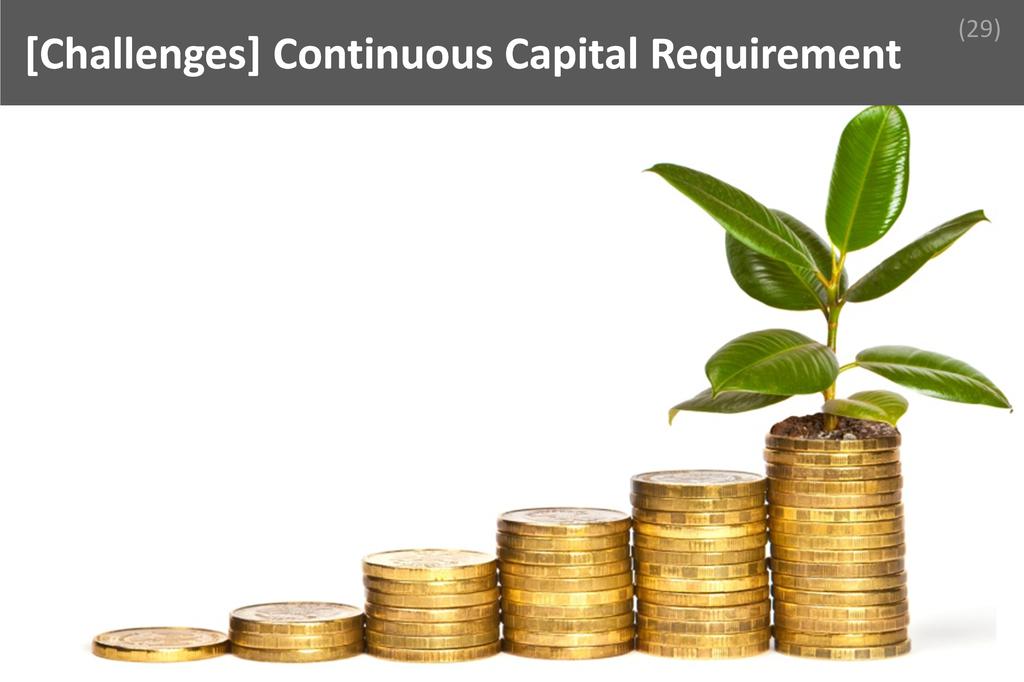
Continuous Capital Requirement in entrepreneurship refers to the ongoing need for financial resources to sustain, grow, and adapt a business. This demand is relentless, as entrepreneurs must secure funding for operations, innovation, and expansion, making it a persistent challenge that tests both financial acumen and strategic foresight.
The pressure of continuous capital requirement permeates nearly every aspect of an entrepreneur’s daily work. It shapes decisions about hiring, product development, marketing, and even customer service, as each choice must be weighed against available resources. This constant balancing act requires resilience, adaptability, and a proactive mindset. Entrepreneurs must be adept at forecasting cash flow, building relationships with investors, and exploring diverse funding sources. Successful professionals often mitigate this challenge by maintaining transparent financial records, cultivating trust with stakeholders, and staying agile in their business models. They also prioritize investments that yield sustainable returns, ensuring that every dollar spent contributes to long-term viability and growth.
Consider a tech startup founder who faces the ongoing challenge of funding product development while scaling operations. Instead of relying solely on venture capital, the founder diversifies funding sources by combining revenue from early customers, government grants, and strategic partnerships. By maintaining open communication with investors and demonstrating prudent financial management, the founder builds credibility and secures additional rounds of funding when needed. This approach not only alleviates the immediate pressure of capital requirements but also fosters a culture of fiscal responsibility within the company. As a result, the business is able to innovate, attract talent, and expand into new markets without compromising its financial stability.
Lack of Awareness

Lack of Awareness in entrepreneurship refers to insufficient knowledge about market trends, customer needs, competitors, or regulatory requirements. This challenge is demanding because it can lead to misguided decisions, missed opportunities, and wasted resources, making it difficult for entrepreneurs to adapt, innovate, and sustain growth in a rapidly changing environment.
The absence of awareness can permeate every aspect of an entrepreneur’s daily work, from product development to marketing and strategic planning. Without a clear understanding of the market landscape or evolving customer preferences, entrepreneurs risk investing time and capital in the wrong direction. This uncertainty demands resilience, as setbacks and failures are more likely when decisions are based on incomplete information. Successful professionals address this constraint by actively seeking feedback, engaging in continuous learning, and building networks that provide timely insights. They remain open to change, regularly reassess their assumptions, and leverage data-driven approaches to inform their strategies, thus transforming lack of awareness into an opportunity for growth and innovation.
Consider an entrepreneur launching a tech startup in a competitive industry. Initially, she struggles due to limited knowledge about her target audience’s true needs and the presence of established competitors. Recognizing this gap, she begins attending industry conferences, participating in online forums, and conducting customer interviews. Through these efforts, she uncovers unmet needs and shifts her product focus accordingly. By embracing a mindset of curiosity and adaptability, she not only overcomes her initial lack of awareness but also positions her business to respond quickly to market changes. This proactive approach enables her to build a loyal customer base and achieve sustainable growth, demonstrating how awareness can be cultivated and leveraged for entrepreneurial success.
Initial Commitments

Initial Commitments in entrepreneurship refer to the early decisions, investments, and promises made regarding resources, partnerships, and strategic direction. These choices are demanding because they often involve significant uncertainty, limited information, and long-term consequences, making it difficult to reverse course without incurring substantial costs or setbacks.
The challenge of initial commitments can weigh heavily on an entrepreneur’s daily operations, as early decisions often set the tone for resource allocation, team dynamics, and market positioning. This constraint requires resilience because entrepreneurs must operate with incomplete data, balancing risk and opportunity while remaining adaptable. Successful professionals manage this by maintaining flexibility in their plans, seeking diverse perspectives before locking in decisions, and building in contingency options where possible. They also regularly review and reassess their commitments, allowing for course corrections as new information emerges. By fostering a culture of learning and adaptability, entrepreneurs can mitigate the risks associated with early commitments and steer their ventures toward sustainable growth.
Consider a startup founder who must choose between two potential co-founders, each bringing different skills and networks to the table. Recognizing the weight of this initial commitment, the founder conducts thorough due diligence, engages both candidates in short-term projects, and seeks feedback from trusted advisors. After careful evaluation, the founder selects the partner whose vision and work ethic align most closely with the company’s long-term goals. By approaching the decision methodically and allowing room for assessment, the founder not only secures a strong partnership but also sets a precedent for thoughtful, flexible decision-making in the face of uncertainty. This approach helps the business adapt and thrive as it grows.
A Day Of
Entrepreneurship
The world of entrepreneurship is a whirlwind of energy, unpredictability, and relentless ambition. Each day unfolds with the promise of new opportunities and the challenge of unforeseen obstacles, demanding both creativity and resilience from those who choose this path. Far from the monotony of a traditional office job, a typical workday for an entrepreneurship professional is a dynamic blend of strategic thinking, hands-on problem-solving, and constant adaptation. The pace is fast, the stakes are high, and every hour brings a fresh set of decisions that could shape the future of a business.
As the sun rises, an entrepreneurship professional begins the day with a quiet moment of reflection and preparation. This early hour is often spent reviewing key metrics from the previous day, scanning industry news for emerging trends, and prioritizing the most pressing tasks. With a cup of coffee in hand, they map out the day’s objectives, set intentions for critical meetings, and mentally rehearse pitches or negotiations. This calm before the storm is essential for grounding themselves and ensuring that the day starts with clarity and purpose.
By mid-morning, the pace accelerates as the entrepreneur dives into the heart of their business. This is the time for high-stakes meetings with investors, brainstorming sessions with the team, and rapid-fire problem-solving as new challenges arise. Whether it’s refining a product prototype, negotiating a partnership, or responding to urgent customer feedback, the focus is on driving momentum and making pivotal decisions. The energy is palpable, and every conversation or action is aimed at pushing the venture closer to its goals.
The afternoon brings a shift toward collaboration and execution. Entrepreneurs often find themselves leading team check-ins, coordinating with marketing or development departments, and overseeing the implementation of strategic initiatives. This is when ideas are translated into action, whether it’s launching a new campaign, troubleshooting operational issues, or mentoring team members through complex projects. The emphasis is on maintaining alignment, ensuring accountability, and keeping the business engine running smoothly as the day progresses.
As the day winds down, the focus turns to reflection and preparation for what lies ahead. The entrepreneur reviews the day’s achievements and setbacks, updates financial projections, and responds to outstanding emails or administrative tasks. This is also a crucial time for researching competitors, exploring new market opportunities, and outlining the next day’s priorities. With the office quieting and the pace slowing, these final moments are dedicated to strategic thinking and ensuring that tomorrow’s challenges are met with fresh insight and renewed determination. |