Career Counselling 2.0 HomeHomeCareer Counselling 2.0 AbroadAbroadCareer Counselling 2.0 PlanPlanCareer Counselling 2.0 | TalksTalksCareer Counselling 2.0 PhilosophyPhilosophyCareer Counselling 2.0 SeminarSeminarCareer Counselling 2.0 PagesPagesCareer Counselling 2.0 AdvisorsAdvisorsCareer Counselling 2.0 TestimonialsTestimonials

Security Management

COO Major Gorki talks about Security Management course, what is Security Management and other details about a Career in Security Management.


Security Management

Major Gorki | COO | Intrust Management


What is Security Management?


A Career in Security Management is very interesting. Understanding Why one wants to choose a Career in Security Management is phenomenally more important than figuring out How to get into Security Management. The most authoritative source of information on Security Management is someone with real experience in it.

With 5 years & 2 months of professional experience, COO Major Gorki understands Security Management. According to COO Major Gorki, Security Management is:

Security management is the identification of an organization's assets (including information assets), followed by the development, documentation and implementation of policies and procedures for protecting these assets.


How COO Major Gorki got into Security Management?


I served in the Indian Army for 13 years, after premature retirement, I travelled to many countries. Then I started a security management firm which is based out of the United States, South Africa and India.


COO Major Gorki's Talk on Security Management


Session Image
The Journey of Security Management


What Is Security Management


Security Management

### Security Management Image
What is
Security management is the process of developing, implementing, and overseeing policies and procedures to protect an organization’s assets, personnel, and information from threats. It involves risk assessment, planning, and coordination to ensure safety, compliance, and continuity in both physical and digital environments.

Concept
Security management plays a crucial role in safeguarding organizations against a wide range of threats, from cyberattacks to physical breaches. For professionals in this field, effective security management ensures a safe working environment, minimizes financial losses, and maintains organizational reputation. One major benefit is the reduction of risk, as security managers identify vulnerabilities and proactively address them. Another benefit is regulatory compliance, which helps organizations avoid legal penalties and maintain trust with clients and stakeholders. Additionally, security management enhances operational continuity by preparing for emergencies and ensuring rapid recovery, which is vital for business resilience and long-term success.

Real World Example
A security manager at a large corporate office is responsible for both physical and information security. They conduct regular risk assessments to identify potential threats, such as unauthorized access or data breaches. After identifying vulnerabilities, the manager implements access control systems, surveillance cameras, and cybersecurity protocols. They also train employees on security best practices and coordinate with law enforcement during incidents. When a suspicious activity is detected, the security manager leads the response, investigates the situation, and updates security measures to prevent recurrence. Through these actions, the security manager ensures the safety of employees, protects sensitive information, and maintains smooth business operations, demonstrating the practical application of security management in a real-world setting.

Education


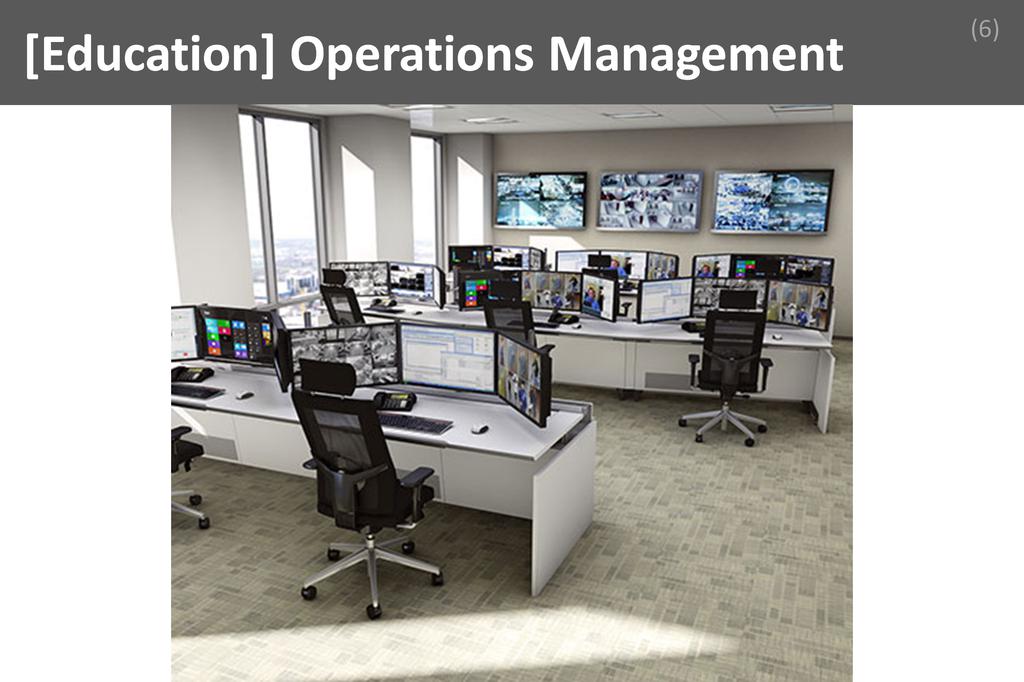
Operations Management

### Operations Management Image
What is
Operations Management is the discipline focused on designing, overseeing, and improving business processes to efficiently produce goods or deliver services. It encompasses resource allocation, workflow optimization, and quality control. In Security Management, understanding Operations Management is essential for integrating security protocols seamlessly into organizational processes and ensuring operational continuity.

Concept
A strong grasp of Operations Management is vital for anyone in Security Management because it provides the analytical tools and frameworks necessary to align security initiatives with organizational goals. By mastering this subject, professionals can optimize resource use, streamline incident response, and ensure compliance with regulatory standards. This foundational knowledge enables security managers to anticipate operational risks, implement effective controls, and measure the impact of security strategies on overall business performance. Over the long term, expertise in Operations Management empowers security professionals to lead cross-functional teams, drive continuous improvement, and adapt to evolving threats, thereby enhancing their value and career prospects within any organization.

Real World Example
Consider a Security Manager responsible for safeguarding a large corporate office. By applying principles from Operations Management, the manager analyzes foot traffic patterns, identifies bottlenecks at entry points, and redesigns access control procedures to minimize wait times without compromising security. This approach involves coordinating with facilities, IT, and human resources to ensure that security measures are integrated into daily operations smoothly. The manager also establishes performance metrics to monitor incident response times and regularly reviews processes for improvement. Through this practical application of Operations Management, the Security Manager not only enhances safety but also contributes to a more efficient and productive workplace, demonstrating the tangible benefits of combining operational and security expertise.

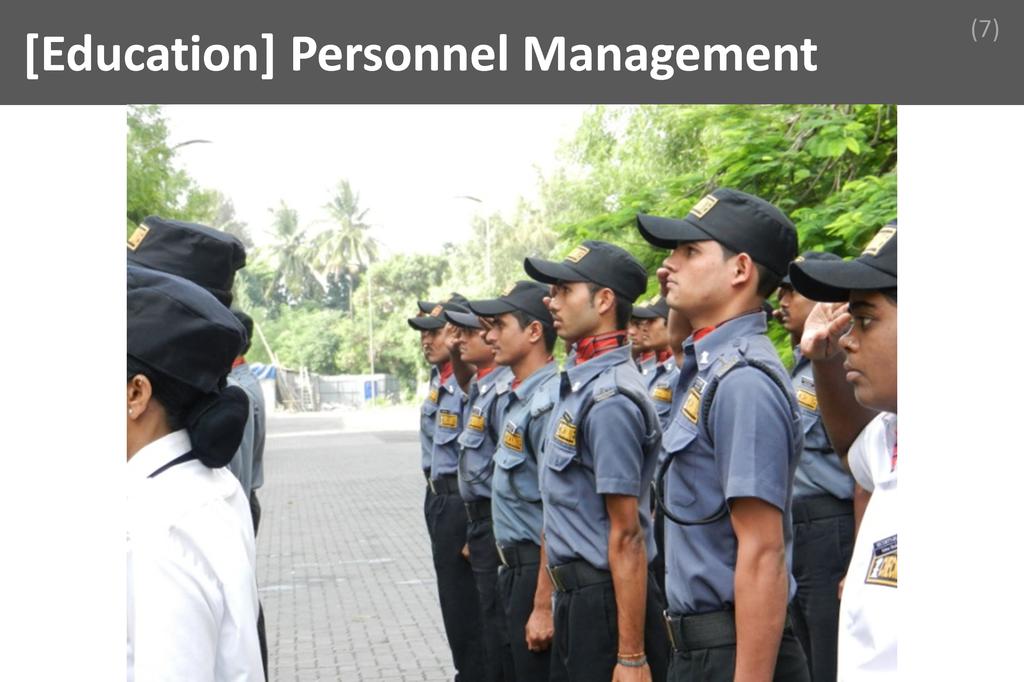
Personnel Management

### Personnel Management Image
What is
Personnel Management is the strategic process of recruiting, developing, motivating, and retaining employees to achieve organizational goals. It encompasses workforce planning, performance management, training, and conflict resolution. In Security Management, personnel management is essential for building effective teams, ensuring compliance, and maintaining a secure, professional environment within an organization.

Concept
Understanding personnel management is vital for anyone in Security Management because people are at the heart of all security operations. Security professionals must not only manage risks and protocols but also lead teams, resolve interpersonal conflicts, and foster a culture of trust and accountability. Mastery of personnel management equips security managers with the skills to select the right individuals, provide ongoing training, and ensure high morale, which directly impacts operational effectiveness. Over the long term, this knowledge supports career advancement by demonstrating leadership, enhancing team performance, and ensuring that security objectives align with broader organizational goals. Ultimately, personnel management forms the backbone of a resilient and adaptable security workforce.

Real World Example
Consider a security manager overseeing a team responsible for protecting a corporate facility. When a new threat assessment reveals the need for updated procedures, the manager draws on their personnel management expertise to communicate changes clearly, organize targeted training sessions, and address concerns from team members. By recognizing individual strengths and providing constructive feedback, the manager ensures that each team member understands their role and feels valued. This approach not only improves compliance with new protocols but also boosts morale and reduces turnover. The manager’s ability to balance operational demands with the needs of their personnel exemplifies how theoretical knowledge of personnel management translates into effective, real-world security leadership.

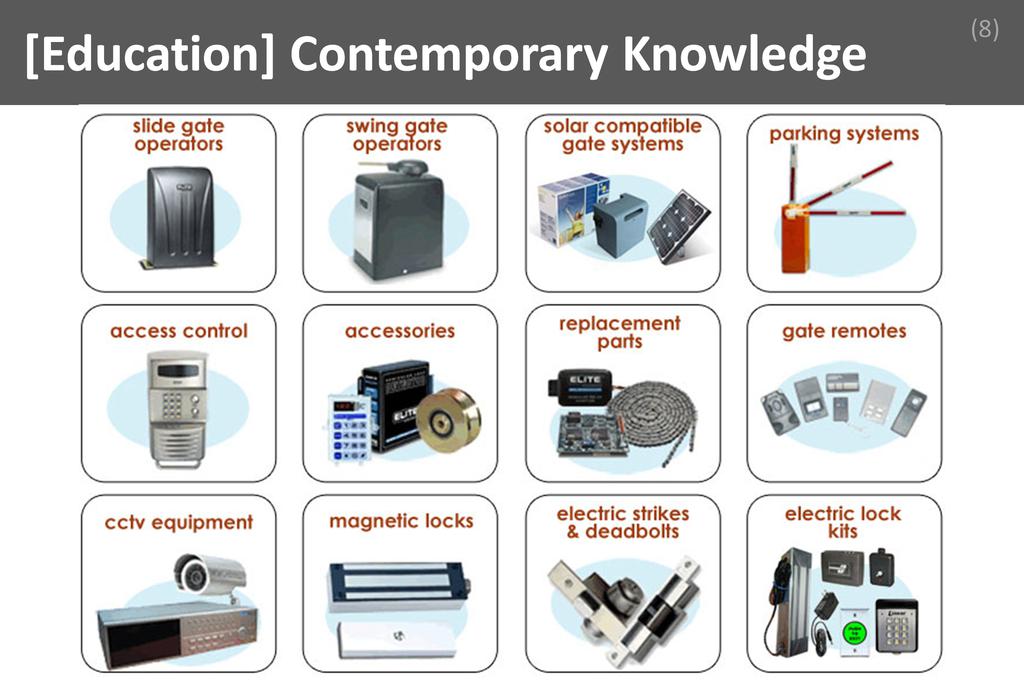
Contemporary Knowledge

### Contemporary Knowledge Image
What is
Contemporary Knowledge refers to the current, up-to-date understanding of trends, issues, technologies, and best practices that shape a particular field. In Security Management, it encompasses awareness of evolving threats, regulatory changes, and innovative solutions, forming a crucial component of both academic study and professional expertise necessary for effective decision-making.

Concept
Understanding Contemporary Knowledge is essential for anyone preparing for or working in Security Management because the field is constantly influenced by new risks, technologies, and regulatory frameworks. Mastery of this subject ensures that professionals remain agile and responsive to emerging threats, such as cyberattacks or global terrorism, and can implement the latest security protocols. This foundational knowledge enables security managers to anticipate challenges, adapt strategies proactively, and maintain compliance with legal standards. Over the long term, a strong grasp of contemporary developments enhances credibility, supports career advancement, and fosters a culture of continuous improvement within organizations, ensuring that security measures remain robust and relevant in a rapidly changing environment.

Real World Example
Consider a security manager at a multinational corporation who regularly monitors global news, cybersecurity bulletins, and regulatory updates as part of their routine. When a new type of ransomware attack is reported affecting similar organizations, their contemporary knowledge allows them to quickly assess the threat’s relevance, update internal protocols, and brief their team on preventive measures. By leveraging their understanding of current trends and best practices, the manager not only protects company assets but also demonstrates leadership and foresight. This proactive approach, grounded in contemporary knowledge, ensures the organization remains resilient against both traditional and emerging security threats, highlighting the practical value of staying informed and adaptable in the field.

Law

### Law Image
What is
Law is a system of rules created and enforced by governmental institutions to regulate behavior, maintain order, and protect rights within a society. In Security Management, understanding law is essential, as it provides the framework for ethical decision-making, compliance, and the protection of people, property, and information.

Concept
A solid grasp of law is indispensable for anyone in Security Management because it underpins every aspect of the profession, from risk assessment to incident response. Legal knowledge ensures that security measures comply with regulations, protect individual rights, and avoid liability for both the professional and their organization. By understanding laws related to privacy, employment, trespassing, and use of force, security managers can create policies and procedures that are both effective and legally defensible. Over the long term, this expertise not only minimizes legal risks but also enhances professional credibility, supports career advancement, and fosters trust with clients, colleagues, and stakeholders.

Real World Example
Consider a security manager overseeing access control at a corporate facility. When an employee is suspected of theft, the manager must balance the need to investigate with respect for legal rights. Drawing on their knowledge of search and seizure laws, the manager ensures that any search of personal belongings is conducted with proper consent and documentation, avoiding unlawful detention or invasion of privacy. This careful application of legal principles protects the organization from potential lawsuits and upholds the rights of individuals, demonstrating how theoretical understanding of law translates directly into responsible, effective daily practice in Security Management.

Skills


Analytical

### Analytical Image
What is
Analytical is the ability to systematically examine information, identify patterns, interpret data, and draw logical conclusions to solve problems or make decisions. In Security Management, this skill enables professionals to assess risks, evaluate security protocols, and respond effectively to emerging threats, making it indispensable for safeguarding assets and people.

Concept
Analytical skill directly enhances a Security Management professional’s ability to anticipate threats, investigate incidents, and implement effective solutions. Employers and clients highly value this competency because it leads to well-informed decisions, minimizes vulnerabilities, and ensures compliance with regulations. By consistently analyzing incident reports, reviewing security footage, and studying trends in security breaches, professionals can refine their analytical abilities. Engaging in ongoing education, seeking mentorship, and participating in scenario-based training further develop this skill. Over time, a strong analytical mindset allows security managers to adapt to evolving risks, optimize resource allocation, and maintain a proactive approach to organizational safety.

Real World Example
Imagine a security manager at a large corporate campus who notices a subtle increase in unauthorized access attempts over several weeks. By applying analytical skills, the manager reviews access logs, cross-references them with employee schedules, and identifies a pattern linked to a specific shift change. Further investigation reveals a vulnerability in the badge authentication process during peak hours. Using these insights, the manager implements targeted procedural changes and updates the access control system, effectively closing the security gap. This scenario demonstrates how analytical thinking enables a security professional to detect underlying issues, devise strategic solutions, and ultimately protect the organization from potential breaches.

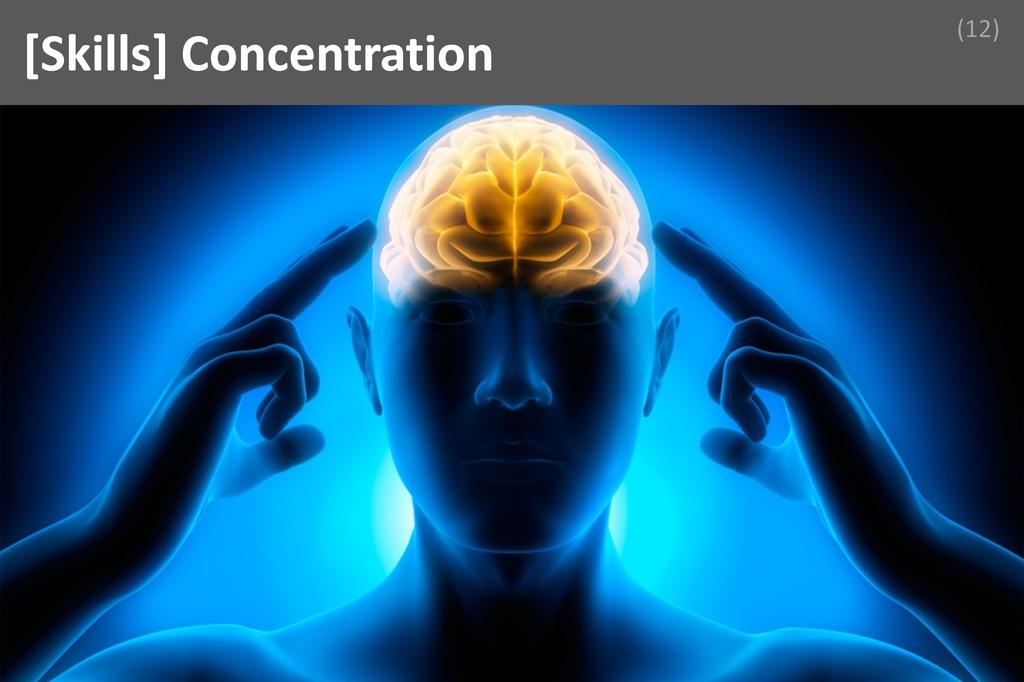
Concentration

### Concentration Image
What is
Concentration is the ability to direct one’s mental focus exclusively on a specific task or objective, filtering out distractions and maintaining sustained attention over time. In Security Management, concentration is vital because it enables professionals to process complex information, monitor multiple systems, and respond swiftly to potential threats or incidents.

Concept
Concentration directly enhances a Security Management professional’s performance by allowing them to detect subtle anomalies, assess risks accurately, and make sound decisions under pressure. Clients and employers value this skill because it leads to fewer errors, faster response times, and a higher level of vigilance, all of which are crucial in safeguarding assets and people. Cultivating concentration involves regular practice, such as mindfulness exercises, structured routines, and minimizing workplace distractions. Over time, professionals can strengthen their ability to remain focused during high-stress situations, ensuring that their attention does not waver when it matters most.

Real World Example
Imagine a Security Manager overseeing surveillance for a large corporate facility during a high-profile event. Amidst a constant stream of activity and noise, the manager must monitor multiple camera feeds and communication channels simultaneously. Suddenly, a minor irregularity appears on one of the screens—a door left ajar in a restricted area. Relying on their concentration, the manager quickly isolates the feed, assesses the situation, and coordinates with on-site personnel to investigate. Their unwavering focus prevents a potential breach, demonstrating how concentration is not just a personal asset but a critical factor in maintaining safety and operational integrity.

Rules of Engagement

### Rules of Engagement Image
What is
Rules of Engagement in Security Management refer to the clearly defined guidelines and protocols that dictate how security professionals interact with threats, stakeholders, and environments during operations. This skill ensures actions are lawful, ethical, and aligned with organizational objectives, providing a structured approach to decision-making and response in complex situations.

Concept
Mastering Rules of Engagement directly enhances a security manager’s ability to respond effectively to incidents while minimizing risks and liabilities. Clients and employers highly value this skill because it demonstrates professionalism, legal compliance, and a commitment to ethical standards. Security professionals who excel in this area are trusted to make sound judgments under pressure, ensuring the safety of people and assets without overstepping boundaries. Cultivating this skill involves continuous education on legal frameworks, regular scenario-based training, and learning from real-world case studies. Over time, experience and mentorship further refine a professional’s ability to interpret and apply these rules flexibly yet consistently, adapting to evolving threats and organizational needs.

Real World Example
Imagine a security manager overseeing a large corporate event when an unauthorized individual attempts to access a restricted area. Instead of reacting impulsively, the manager relies on established Rules of Engagement to assess the situation, communicate with the individual, and involve law enforcement only if necessary. By following these protocols, the manager avoids escalation, protects the organization from potential legal repercussions, and maintains a safe environment for attendees. This measured response not only resolves the immediate issue but also reinforces the organization’s reputation for professionalism and responsible security practices, demonstrating the critical importance of Rules of Engagement in achieving successful outcomes.

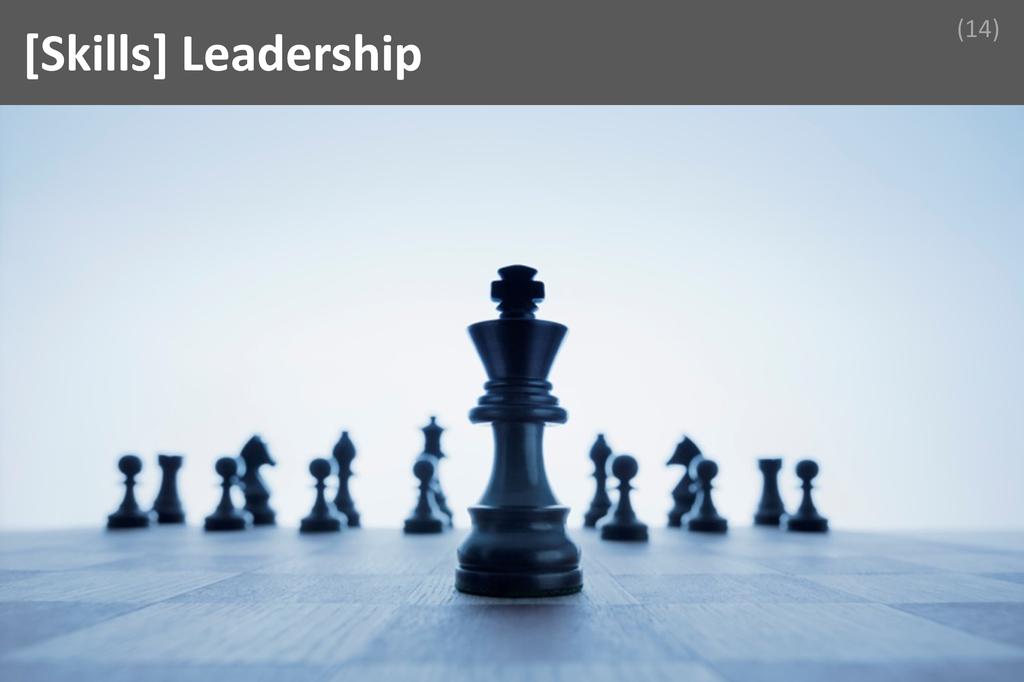
Leadership

### Leadership Image
What is
Leadership is the ability to inspire, guide, and influence individuals or teams toward achieving common goals, while fostering trust, accountability, and effective communication. In Security Management, leadership empowers professionals to make informed decisions, coordinate resources, and respond to threats efficiently, ensuring the safety and resilience of organizations and their assets.

Concept
Leadership directly enhances performance in Security Management by enabling professionals to motivate teams, delegate responsibilities, and maintain composure during high-pressure situations. Clients and employers highly value this skill because it ensures that security operations run smoothly, risks are managed proactively, and teams remain cohesive even during crises. Effective leaders are able to communicate clear expectations, adapt to evolving threats, and foster a culture of continuous improvement. Cultivating leadership involves seeking feedback, learning from mentors, participating in training programs, and embracing opportunities to lead projects or initiatives. Over time, consistent practice and self-reflection help professionals refine their leadership abilities, making them indispensable assets to any security-focused organization.

Real World Example
Imagine a Security Manager overseeing a large corporate event when an unexpected security breach occurs. Instead of panicking, the manager quickly assesses the situation, communicates calmly with the team, and delegates tasks based on each member’s strengths. By maintaining clear direction and supporting the team, the manager ensures that the breach is contained swiftly and safely. After the incident, the manager leads a debrief to analyze what happened, encourages open discussion, and implements improvements for future events. This scenario highlights how strong leadership not only resolves immediate threats but also builds trust and resilience within the team, ultimately safeguarding the organization’s reputation and assets.

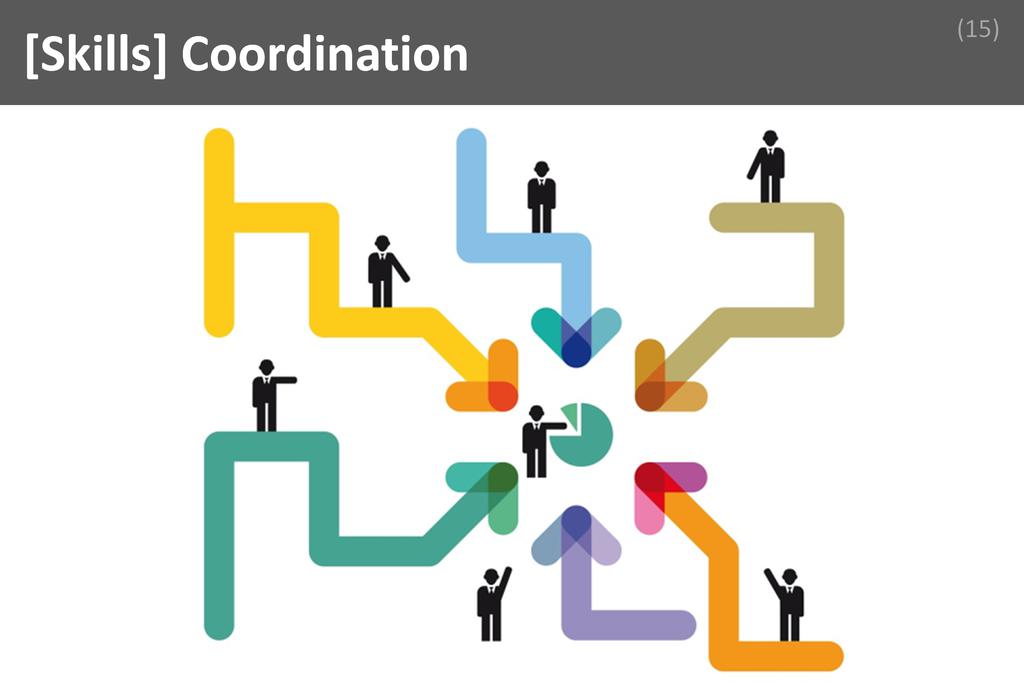
Coordination

### Coordination Image
What is
Coordination is the ability to organize people, resources, and activities efficiently to achieve shared objectives, ensuring seamless communication and collaboration among all stakeholders. In Security Management, coordination is crucial for aligning team efforts, integrating security measures, and responding effectively to threats or incidents, making it indispensable for success.

Concept
Coordination directly enhances performance in Security Management by ensuring that all team members, departments, and external partners work together harmoniously. This unified approach minimizes misunderstandings, reduces response times, and increases the effectiveness of security protocols. Clients and employers highly value this skill because it leads to smoother operations, fewer security breaches, and a more resilient organizational environment. To cultivate coordination, professionals should focus on developing strong communication abilities, building relationships across departments, and practicing proactive planning. Regularly participating in joint exercises, debriefings, and cross-functional meetings also helps refine this skill over time, making it a cornerstone of professional growth in the security field.

Real World Example
Imagine a security manager overseeing the protection of a large corporate event. Suddenly, an unanticipated security threat emerges, requiring immediate action. The manager must quickly coordinate with on-site security personnel, local law enforcement, event organizers, and emergency medical teams. By efficiently relaying information, assigning clear roles, and ensuring everyone understands the evolving situation, the manager orchestrates a swift and effective response. This seamless coordination not only neutralizes the threat but also maintains the safety and confidence of attendees. The incident highlights how essential coordination is in Security Management, as it transforms potential chaos into a controlled and successful outcome.

Observation

### Observation Image
What is
Observation is the deliberate and attentive process of noticing, identifying, and interpreting details, behaviors, and environmental cues to gain accurate situational awareness. In Security Management, observation is fundamental because it enables professionals to detect anomalies, assess risks, and respond proactively to potential threats, ensuring safety and effective incident prevention.

Concept
The ability to observe keenly enhances a security manager’s effectiveness by allowing them to recognize subtle changes in environments, behaviors, or routines that may indicate emerging risks. Clients and employers highly value this skill because it leads to early detection of security breaches, reduces response times, and minimizes potential damage. Cultivating observation involves continuous practice, such as conducting regular site assessments, participating in scenario-based training, and reflecting on past incidents to sharpen one’s attention to detail. Over time, professionals can develop a heightened sense of awareness, enabling them to anticipate issues before they escalate and to provide more comprehensive protection for people, assets, and information.

Real World Example
Consider a security manager overseeing a corporate office building. During a routine patrol, they notice an unfamiliar individual loitering near a restricted area, displaying nervous body language and frequently glancing at security cameras. Relying on their observational skills, the manager discreetly monitors the individual and reviews recent access logs, discovering an unauthorized entry attempt. By acting on these subtle cues, the manager intervenes before any breach occurs, preventing potential theft or data compromise. This scenario illustrates how strong observation skills allow security professionals to identify and address threats proactively, ensuring the safety and integrity of the organization’s operations.

Positives


High Responsibility

### High Responsibility Image
What is
High responsibility in security management refers to the crucial obligation of safeguarding people, assets, and information by making critical decisions, anticipating threats, and implementing effective protective measures. This level of accountability ensures that security professionals are trusted to maintain safety and continuity, directly impacting the well-being and success of their organizations. High responsibility fosters a sense of purpose, as every action taken can have significant consequences, motivating professionals to remain vigilant, ethical, and proactive. In this field, the weight of responsibility is not a burden but a driving force that elevates the role, making it both challenging and deeply rewarding for those who embrace it.

Concept
The high responsibility inherent in security management transforms the profession into a dynamic and meaningful career path. Knowing that their decisions directly affect the safety and stability of people and organizations, security managers experience a profound sense of purpose and accomplishment. This level of trust from employers and stakeholders not only boosts confidence but also encourages continuous learning and professional growth. The daily challenges and the need for quick, effective decision-making keep the work engaging and intellectually stimulating. As security professionals witness the tangible results of their efforts—such as preventing incidents or resolving crises—they gain immense job satisfaction. The respect and recognition that come with such responsibility further enhance their motivation and commitment to excellence.

Real World Example
Imagine a security manager overseeing the protection of a major corporate headquarters during a high-profile event. With hundreds of guests and sensitive information at stake, the manager must coordinate teams, assess risks, and respond swiftly to emerging threats. When a potential security breach is detected, the manager’s decisive actions prevent unauthorized access and ensure the safety of everyone present. In the aftermath, both executives and employees express gratitude, recognizing the manager’s pivotal role in averting a crisis. This experience highlights the fulfilling nature of high responsibility, as the professional not only safeguards valuable assets but also earns the trust and appreciation of the entire organization, reinforcing the profound impact of their work.

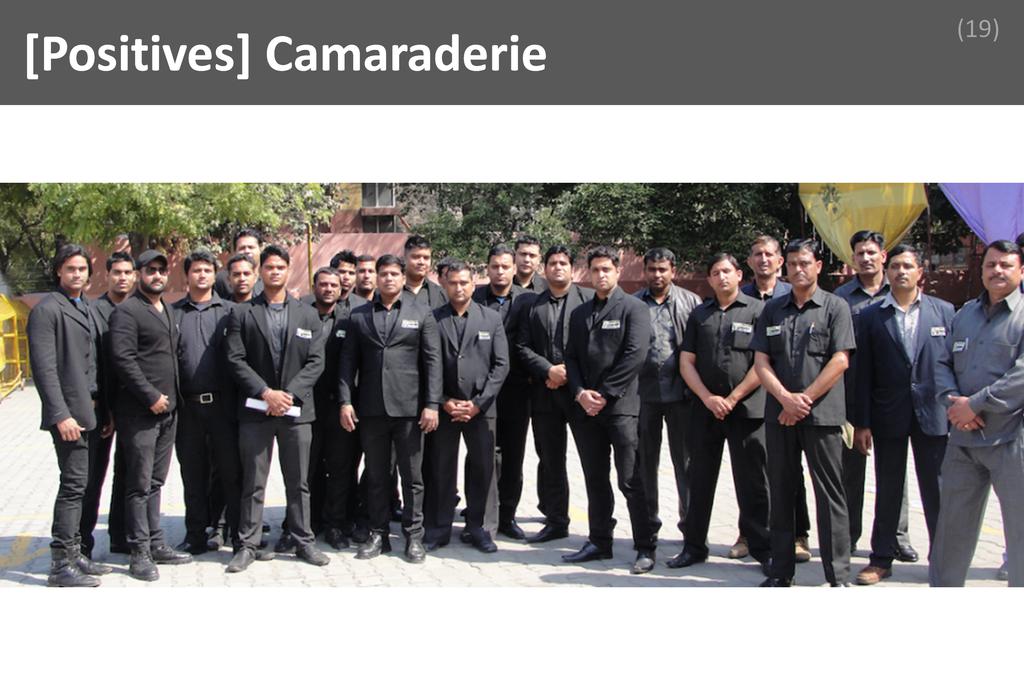
Camaraderie

### Camaraderie Image
What is
Camaraderie is the spirit of mutual trust, friendship, and solidarity that develops among people who spend significant time together, especially when facing challenges or working toward shared goals. In security management, camaraderie fosters a supportive environment where professionals rely on each other, enhancing teamwork, morale, and the collective ability to respond effectively to complex situations.

Concept
Camaraderie is a cornerstone of job satisfaction in security management because it transforms the workplace into a community where individuals feel valued and understood. The sense of belonging that comes from strong professional bonds encourages open communication, collaboration, and a willingness to go the extra mile for colleagues. This positive atmosphere not only reduces stress but also accelerates personal and professional growth, as team members learn from one another and celebrate shared successes. Daily, security professionals experience the reassurance of knowing they are not alone in facing demanding situations, which boosts confidence and resilience. Ultimately, camaraderie creates a culture where people are motivated to perform at their best, knowing their efforts contribute to a greater purpose.

Real World Example
Imagine a security management team responsible for safeguarding a large corporate campus during a high-profile event. As unexpected challenges arise, such as managing crowd control or responding to a security breach, team members instinctively support one another, drawing on their shared experiences and trust. One professional, new to the team, finds reassurance in the guidance and encouragement offered by more seasoned colleagues. Together, they coordinate seamlessly, communicate openly, and celebrate small victories throughout the day. By the end of the event, the sense of accomplishment is amplified by the knowledge that their collective effort made a difference. This experience of camaraderie not only strengthens professional relationships but also leaves each team member feeling fulfilled and proud to be part of such a dedicated group.

Recognition

### Recognition Image
What is
Recognition is the acknowledgment and appreciation of an individual’s contributions, achievements, and dedication within their professional environment. In Security Management, recognition serves as a powerful motivator, reinforcing the value of safeguarding people, assets, and information. It fosters a sense of pride and belonging, encouraging professionals to excel in their roles.

Concept
The positive aspect of recognition in Security Management is profound, as it validates the often behind-the-scenes efforts that keep organizations safe. When professionals are recognized for their vigilance, problem-solving, and crisis management, it boosts their morale and job satisfaction. This acknowledgment not only enhances personal confidence but also motivates continuous learning and professional growth. Security managers who feel valued are more likely to remain committed, proactive, and innovative in their approach. Daily, this benefit is experienced through feedback from leadership, gratitude from colleagues, or visible improvements in workplace safety, all of which reinforce the importance of their role and inspire them to maintain high standards.

Real World Example
Imagine a security manager who successfully implements a new access control system that prevents a potential security breach. When leadership publicly acknowledges their foresight and dedication during a company meeting, the manager feels a deep sense of accomplishment. Colleagues express their appreciation, recognizing the increased safety and peace of mind the new system provides. This recognition not only affirms the manager’s expertise but also strengthens their commitment to the organization’s mission. The experience becomes a motivating force, encouraging them to pursue further innovations and to mentor others, knowing their contributions are valued and impactful. This daily reinforcement of their worth transforms routine responsibilities into a fulfilling and meaningful career.

Networking

### Networking Image
What is
Networking is the process of building and maintaining professional relationships that foster the exchange of information, resources, and support. In Security Management, networking connects individuals with peers, mentors, and industry experts, enabling them to share best practices, stay informed about emerging threats, and collaborate on innovative solutions, ultimately enhancing their effectiveness and career growth.

Concept
The importance of networking in Security Management cannot be overstated. It opens doors to new opportunities, such as job leads, partnerships, and access to cutting-edge knowledge. By connecting with others in the field, professionals gain insights into evolving risks and regulatory changes, which helps them stay ahead in a rapidly changing environment. Networking also provides a sense of community and support, reducing the isolation that can sometimes come with high-responsibility roles. This ongoing exchange of ideas and experiences not only boosts job satisfaction but also accelerates professional development, making each day more dynamic and rewarding for those who actively engage with their network.

Real World Example
Imagine a Security Manager attending an industry conference where they meet counterparts from other organizations. Through engaging conversations, they learn about a new cybersecurity threat and the innovative strategies others are using to mitigate it. Inspired, the manager brings these insights back to their own team, implementing proactive measures that successfully prevent a similar incident. The relationships formed at the conference continue to provide valuable advice and support, making the manager feel more connected and confident in their role. This real-world experience demonstrates how networking not only enhances professional competence but also brings a deep sense of fulfillment and belonging within the security community.

Satisfaction

### Satisfaction Image
What is
Satisfaction is the deep sense of fulfillment and contentment that arises from achieving meaningful goals, overcoming challenges, and making a positive difference. In security management, satisfaction stems from knowing that your efforts protect people, assets, and information, fostering a safer environment. This feeling motivates professionals and enhances their commitment to excellence.

Concept
Satisfaction is a driving force that elevates the experience of working in security management. When professionals feel satisfied, they are more engaged, motivated, and resilient in the face of challenges. This positive outlook not only improves job performance but also encourages continuous learning and growth. The sense of accomplishment that comes from preventing incidents or resolving security threats reinforces a professional’s confidence and dedication. Over time, this satisfaction builds a strong sense of purpose and loyalty to the organization, making each day’s work more meaningful. As a result, security managers often find themselves inspired to innovate and lead, knowing their contributions have a tangible, positive impact on the safety and well-being of others.

Real World Example
Imagine a security manager overseeing a large corporate campus. After months of planning and implementing new security protocols, the team successfully prevents a major data breach attempt. The manager witnesses firsthand how their proactive measures protected sensitive information and maintained business continuity. Colleagues express gratitude, and leadership acknowledges the team’s efforts. This moment brings a profound sense of satisfaction, as the manager realizes their expertise and dedication directly contributed to the organization’s safety and success. The experience not only validates their hard work but also fuels their passion for the profession, reinforcing the rewarding nature of a career in security management.

Learning

### Learning Image
What is
Learning is the continuous process of acquiring new knowledge, skills, and insights through study, experience, or instruction. In security management, learning fuels adaptability, sharpens problem-solving abilities, and keeps professionals ahead of emerging threats. This ongoing development not only enhances expertise but also empowers individuals to make informed, impactful decisions.

Concept
The dynamic nature of security management means that no two days are ever the same. New technologies, evolving threats, and changing regulations demand that professionals stay curious and proactive in their pursuit of knowledge. This constant learning keeps the work intellectually stimulating and prevents stagnation, leading to higher job satisfaction. As professionals master new tools and strategies, they become more confident and capable, which opens doors to career advancement and leadership opportunities. The sense of growth and accomplishment that comes from overcoming challenges and staying ahead of risks is deeply rewarding. Every day, security managers experience the satisfaction of knowing their expanding expertise directly contributes to the safety and resilience of their organizations.

Real World Example
Imagine a security manager at a large corporation who notices a rise in sophisticated phishing attacks targeting employees. Instead of relying solely on existing protocols, she dedicates time to researching the latest cyberattack trends and attends a specialized webinar on social engineering. By applying her newly acquired knowledge, she updates the company’s training program and implements advanced email filtering solutions. As a result, the organization sees a significant drop in successful phishing attempts. This experience not only reinforces her value to the company but also brings her a profound sense of accomplishment. The opportunity to learn, adapt, and make a tangible difference is what makes her role truly fulfilling.

Challenges


Hectic

### Hectic Image
What is
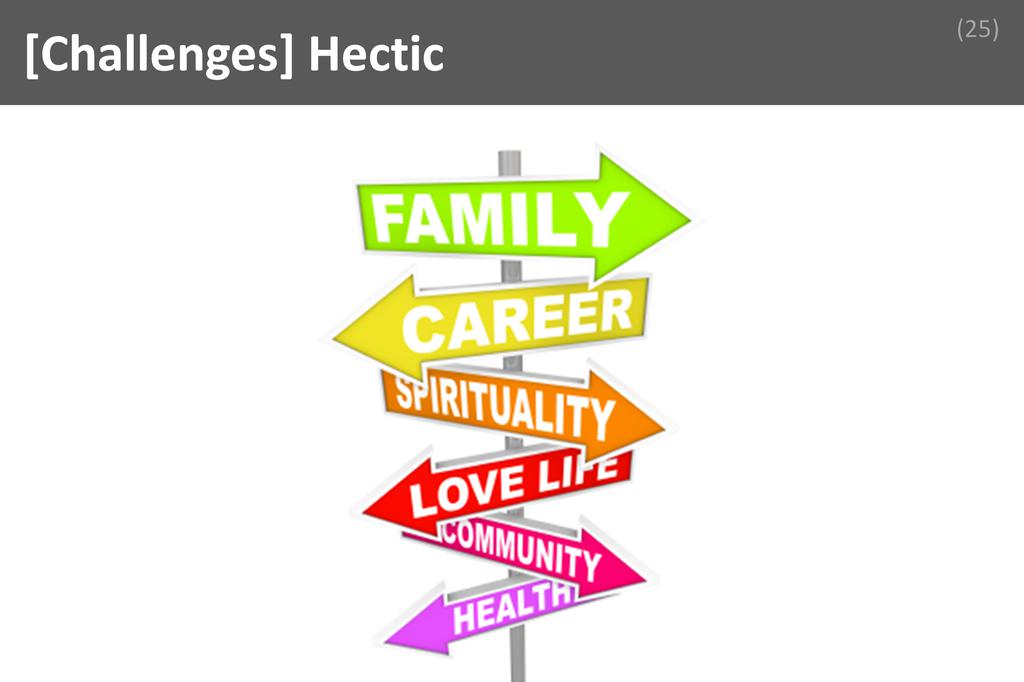
In Security Management, "Hectic" refers to the relentless pace and constant pressure to respond to emerging threats, incidents, and compliance demands. Professionals must juggle multiple priorities, adapt to rapidly changing situations, and make critical decisions under stress, making the role both mentally and physically demanding on a daily basis.

Concept
The hectic nature of security management can lead to fatigue, burnout, and errors if not managed properly. Daily work is often interrupted by urgent incidents, requiring immediate attention and swift decision-making. This environment demands resilience, adaptability, and strong organizational skills. Successful professionals develop routines to prioritize tasks, delegate responsibilities, and maintain clear communication with their teams. They also invest in continuous learning to stay ahead of evolving threats and implement robust incident response plans. By fostering a culture of teamwork and leveraging technology to automate routine processes, they reduce the burden of constant urgency. Regular self-care and stress management techniques further help them sustain high performance despite the relentless pace.

Real World Example
Consider a security manager at a large financial institution who faces a sudden surge in phishing attacks while simultaneously overseeing a scheduled compliance audit. Rather than succumbing to the chaos, the manager quickly assembles a response team, delegates investigation tasks, and communicates clear priorities. By relying on established protocols and leveraging automated monitoring tools, the manager ensures both the audit and incident response progress smoothly. Throughout the process, the manager maintains open lines of communication with stakeholders, providing updates and managing expectations. This approach not only mitigates immediate risks but also demonstrates how effective leadership and structured processes can transform a hectic situation into a manageable and successful outcome.

Others First

### Others First Image
What is
In Security Management, "Others First" means consistently prioritizing the safety, needs, and concerns of clients, employees, or the public above personal interests. This is demanding because it requires constant vigilance, self-sacrifice, and the ability to make difficult decisions under pressure, often with little recognition or immediate reward.

Concept
The "Others First" mindset can lead to emotional fatigue and burnout, as security professionals must remain alert to threats and respond to emergencies, sometimes at the expense of their own well-being. This challenge demands resilience because the work is often thankless and high-stakes, requiring professionals to maintain composure and objectivity in stressful situations. Successful security managers navigate this constraint by developing strong support networks, practicing self-care, and setting clear boundaries to prevent overextension. They also rely on effective communication and delegation, ensuring that responsibilities are shared and that no single individual bears the full weight of the "Others First" expectation. By fostering a culture of teamwork and mutual support, they are able to sustain their commitment to protecting others without sacrificing their own health or effectiveness.

Real World Example
Consider a security manager at a large corporate campus who is responsible for both physical safety and crisis response. During a major incident, such as a fire alarm evacuation, the manager must ensure that all employees and visitors are safely accounted for before considering their own safety or comfort. Despite personal stress and the urge to retreat from chaos, the manager remains visible and calm, directing staff, communicating with emergency services, and reassuring anxious individuals. After the situation is resolved, the manager takes time to debrief with the team, acknowledges the emotional toll, and encourages everyone—including themselves—to access available support resources. By putting others first in the moment, but also recognizing the importance of recovery and self-care afterward, the manager models sustainable leadership in a demanding field.

Awareness

### Awareness Image
What is
In Security Management, "Awareness" refers to the continuous, proactive understanding of evolving threats, vulnerabilities, and security protocols across an organization. This challenge is demanding because it requires constant vigilance, adaptability, and communication to ensure all stakeholders recognize risks and follow best practices, despite frequent changes and information overload.

Concept
The challenge of maintaining awareness significantly impacts daily operations in Security Management. Professionals must stay updated on emerging threats, regulatory changes, and internal policy shifts, all while ensuring that colleagues and stakeholders remain informed and compliant. This ongoing effort can be mentally taxing, requiring resilience to manage information fatigue and the pressure of potential oversights. Successful professionals address this constraint by fostering a culture of open communication, leveraging regular training sessions, and utilizing technology to disseminate timely updates. They also prioritize self-education and encourage feedback, enabling them to adapt quickly to new developments and maintain a high level of organizational security awareness.

Real World Example
Consider a Security Manager at a large financial institution who notices a rise in phishing attempts targeting employees. Recognizing the importance of awareness, the manager initiates a series of interactive workshops and simulated phishing exercises. By engaging staff in real-world scenarios and providing immediate feedback, the manager helps employees recognize suspicious emails and respond appropriately. Regular communication through newsletters and quick-reference guides reinforces key messages. As a result, the organization experiences a measurable decrease in successful phishing incidents, demonstrating how proactive awareness initiatives can empower individuals and strengthen the overall security posture. This example highlights the effectiveness of continuous education and engagement in overcoming the challenge of awareness in Security Management.

Interference from Authorities

### Interference from Authorities Image
What is
Interference from Authorities in Security Management refers to situations where governmental or regulatory bodies impose directives, restrictions, or interventions that conflict with established security protocols or organizational objectives. This challenge is demanding because it can undermine professional autonomy, disrupt operational continuity, and create ethical or legal dilemmas for security managers.

Concept
The presence of interference from authorities can significantly complicate the daily responsibilities of security management professionals. It often leads to delays in decision-making, increased scrutiny, and the need to balance compliance with effective risk mitigation. Navigating such interference requires resilience, as professionals must adapt to shifting requirements while maintaining the integrity of security operations. Successful practitioners manage this constraint by fostering transparent communication with authorities, advocating for the organization’s security needs, and seeking collaborative solutions that align regulatory expectations with operational realities. Building strong relationships with regulatory bodies and demonstrating a commitment to compliance can help mitigate misunderstandings and reduce the frequency or severity of interference, allowing security managers to maintain a proactive stance in safeguarding assets and personnel.

Real World Example
Consider a security manager at a multinational corporation operating in a region where local authorities frequently mandate sudden changes to access control procedures during high-profile events. These directives often conflict with the company’s established protocols, risking operational confusion and potential security lapses. The security manager addresses this challenge by initiating regular meetings with local officials to clarify expectations and explain the rationale behind existing procedures. Through open dialogue and mutual respect, the manager negotiates adjustments that satisfy both regulatory requirements and the company’s security standards. By documenting all changes and ensuring thorough staff training, the manager successfully maintains compliance without compromising the organization’s security posture, demonstrating adaptability and effective stakeholder management in the face of external interference.

A Day Of


Security Management

What is
Security management is not a job for those who crave predictability. Each day unfolds like a high-stakes chess match, where vigilance, adaptability, and quick decision-making are essential. The hum of surveillance monitors, the constant ping of alerts, and the steady flow of team communications create an environment that is both dynamic and demanding. Whether safeguarding sensitive data, overseeing physical premises, or responding to emerging threats, a security management professional’s day is a blend of strategic oversight and hands-on problem-solving, all set against the backdrop of an ever-evolving risk landscape.

Concept
As dawn breaks, the first order of business is a comprehensive review of overnight incident reports and system logs. The security manager scans for anomalies, verifies that all surveillance equipment is operational, and checks in with the night shift for any handover notes. This early morning ritual sets the tone for the day, ensuring that any potential vulnerabilities are identified and addressed before the rest of the organization comes to life.

Real World Example
By mid-morning, the pace accelerates as the core operational window opens. The security manager leads the team through real-time incident response, whether it’s investigating a suspicious access attempt or coordinating with IT to address a potential phishing attack. This is the most intense part of the day, requiring sharp focus, rapid communication, and decisive action. The manager balances immediate threats with ongoing projects, ensuring that protocols are followed and that the team remains alert and cohesive.

The afternoon brings a shift toward collaboration and execution. The security manager meets with department heads to review compliance with security policies, discuss upcoming organizational changes, or plan for large-scale events. These sessions often involve updating training materials, refining emergency procedures, and aligning security initiatives with broader business objectives. It’s a time for bridging gaps between departments and reinforcing a culture of safety and preparedness.

As the day winds down, attention turns to administrative wrap-up and forward planning. The security manager reviews the day’s incidents, compiles reports for senior leadership, and updates risk assessments based on new intelligence. Time is set aside to research emerging threats and regulatory changes, ensuring that tomorrow’s strategies are informed and proactive. Before leaving, the manager checks in with the evening team, passing along critical information and setting priorities for the next shift, closing the loop on another demanding, rewarding day in security management.


Install the LifePage App to:


  1. (for Free) Watch COO Major Gorki’s full Security Management Career Talk

  2. ₹ Do a Self Assessment on Security Management to calculate your Dream Index, which is defined as:

    According to Major Gorki your chances of success in Security Management is __%

  3. Access your personalized Dream Index Report which will have all your Dream Indices sorted in descending order.

Career Counselling 2.0


<?php echo $altimage; ?>


<?php echo $altimage; ?>


How to get into

Security Management?


If you are want to get into Security Management, start by investing in a Career Plan.

The 14 hour process, guided by a LifePage Career Advisor, will help you introspect and check whether your interest in Security Management is merely an infatuation or is it truly something you wish to do for the rest of your life.

Next, your Career Advisor will help you document how you can get into Security Management, what education and skills you need to succeed in Security Management, and what positives and challenges you will face in Security Management.

Finally, you will get a Career Plan stating which Courses, Certifications, Trainings and other Items you need to do in the next 7 years to become world’s best in Security Management.


LifePage Career Plan

14 hour personalized guidance program


Your LifePage Career Advisor facilitates your guided introspection so that you systematically explore various Career options to arrive at a well thought out Career choice.

Next: your Advisor helps you figure out how you will get into your chosen Career and how will you develop the skills needed for success in your Chosen Career.

LifePage Plan will not stop at saying "to become an Architect study Architecture". It will guide you on which Certifications, Trainings and Other items you need to do along with your Architecture education to become the world's best Architect.


Links for this Talk


LifePage Career Talk on Security Management


Career Counselling 2.0
[Career]
https://www.lifepage.in/careers/security-management-1


Career Counselling 2.0
[Full Talk]
https://lifepage.app.link/20161114-0001


Career Counselling 2.0
[Trailer]
https://www.youtube.com/watch?v=Cg1QoGqY-MI


(Security Management, Major Gorki, Intrust Management, Surveillance, Risk Management, Security Control, Security Operations Management, Security Audit, Safety Management)


Similar Talks



Career in Innovation Management
Innovation Management
Kapil Rawat
Vice President - Innovation | Citibank, Dublin
[ 1 year & 7 months Experience ]

Innovation management includes a set of tools that allow managers and engineers to cooperate with a common understanding of processes and goals. Innovation management allows the organization to respond to external or internal opportunities, and use its creativity to introduce new ideas, processes or products.

"I worked for Citibank's Innovation Center for Excellence in Dublin and was responsible for managing two significant innovations in the Global Transaction Services business."


Career Counselling 2.0 Career Counselling 2.0 Career Counselling 2.0 Career Counselling 2.0 Career Counselling 2.0


Career in General Management
General Management
Col Deepak Badoni
Chief Executive Officer | Bhagalpur Electricity Distribution Company
[ 2 years Experience ]

Since the liberalization of the power sector we are seeing private companies enter into generation, transmission and distribution of electricity. The head of any such company is responsible to cater for increased expectations from end users. General Management is the art of making sure that the organization in totality delivers to expectations of both the end consumer and also the financial health of the company.

"After holding senior techno-commercial positions in various power sector companies I was appointed as the CEO for a power distribution company. In this video I share the nuances of power distribution sector."


Career Counselling 2.0 Career Counselling 2.0 Career Counselling 2.0 Career Counselling 2.0 Career Counselling 2.0


Career in Security Management
Security Management
Ramit Datta
Chief Security Officer | Ramada, Dehradun
[ 4 years & 11 months Experience ]

Security management is a broad field that encompasses everything from the supervision of security guards at malls and museums to the installation of high-tech security management systems designed to protect an organization's data.

"I did BA from Hindu College. I have represented India in diving and have won 62 gold medals. I have served in CRPF for 9 years. I shifted to Hospitality industry recently when I joined Lemon tree Hotel as Security Manager. I am Chief Security Officer at Ramada, Dehradun."


Career Counselling 2.0 Career Counselling 2.0 Career Counselling 2.0 Career Counselling 2.0 Career Counselling 2.0


Career in Business Management
Business Management
Nipun Vasudev
Senior Manager | Looks Unisex Salon
[ 4 years Experience ]

Business management is the administration of an organization, whether it is a business, a not-for-profit organization, or government body

"After completing my Schooling from Carmen, and my Graduation from Graphic Era, I did my MBA from Ansals. I have worked in events as well. I joined IBM in the Customer Service Department. I worked there for 2 in half years. In 2013 I joined Looks Unisex Salon as a Senior Manager."


Career Counselling 2.0 Career Counselling 2.0 Career Counselling 2.0 Career Counselling 2.0 Career Counselling 2.0


Career in Product Management
Product Management
Kapil Rawat
VP Liabilities Product | Citibank
[ 10 years Experience ]

Product Management is an organizational lifecycle function within a company dealing with the planning, forecasting, and production, or marketing of a product or products at all stages of the product lifecycle.

"After 2 years of financial management and 2 years of innovation management at Citibank, I took a transfer to India where I worked as the Liabilities Head for Citibank managing both the domestic as well as NRI market."


Career Counselling 2.0 Career Counselling 2.0 Career Counselling 2.0 Career Counselling 2.0 Career Counselling 2.0


Career in Project Management
Project Management
Brea Dutt
Project Manager | Accenture Digital
[ 4 years & 3 months Experience ]

A project manager is a professional in the field of project management. Project managers have the responsibility of the planning, procurement and execution of a project, in any undertaking that has a defined scope, defined start and a defined finish; regardless of industry

"After completing my Schooling from Vasant Valley, Delhi, I did Economics from Smith University, Massachusetts. I worked as a Business Analyst for a while, but always wanted to do something else. I am a Project Manager at Accenture Digital."


Career Counselling 2.0 Career Counselling 2.0 Career Counselling 2.0 Career Counselling 2.0 Career Counselling 2.0


Career in Business Management
Business Management
Meena Sharma
Owner | Hair Indulgence Salon
[ 2 years & 4 months Experience ]

Business Management is the administration of an organization, whether it is a business, a not-for-profit organization, or government body.

"After completing my Schooling from St Thomas, Dehradun, I did my Graduation from DAV. I also did a course in Public Relations from Polytechnic. After that, I have worked in the automobile industry as a Sales Manager. Later on, I joined Looks Unisex Salon as a Manager and in 2016, I started my own salon, since then I am managing my salon."


Career Counselling 2.0 Career Counselling 2.0 Career Counselling 2.0 Career Counselling 2.0 Career Counselling 2.0


Career in HR Management
HR Management
Shubhi Verma
HR Manager | Various Assignments
[ 4 years & 10 months Experience ]

Human resource management (HRM or HR) is the strategic approach to the effective management of people in an organization, so that they help the business gain a competitive advantage. Commonly known as the HR department, it is designed to maximize employee performance in service of an employer's strategic objectives.

"After doing my schooling from St. Anthony's Junior College, Agra, I did my BBA from Sharda University and then did my MBA in Human Resource Management from Prin L N Welingkar Institute of Management Development & Research, Delhi. In 2014, I started my career as an HR Executive for Tech Mahindra and thereafter joined Lenskart.com as an HR Manager."


Career Counselling 2.0 Career Counselling 2.0 Career Counselling 2.0 Career Counselling 2.0 Career Counselling 2.0


Career in Product Management
Product Management
Sricharan Vadapalli
Practice Head | Pyramid Solutions
[ 5 years & 2 months Experience ]

Product management is an organisational lifecycle function within a company dealing with the planning, forecasting, and production, or marketing of a product or products at all stages of the product lifecycle.

"I joined IT MNC from college and worked for a Product Company for 8 years mostly in USA. I have also worked with MNC's and Startups. I am working as Practice Head of Data Analytics, DevOps and Cloud, currently with Pyramid Solutions. My books are on DevOps, Big Data and successful Relationships. Learning was my passion, I am certified SAP Hana consultant also certified in PMP, ITIL, OCA, INS21, FP, In Memory, I was always passionate about data and its value at the enterprise level hence I found my way into Big data Analytics. I have authored books on DevOps, Bigdata and relationships"


Career Counselling 2.0 Career Counselling 2.0 Career Counselling 2.0 Career Counselling 2.0 Career Counselling 2.0


Career in Security Management
Security Management
Arnav Das Gupta
Director | Helios Security Consulting
[ 8 years Experience ]

Security management is the identification of an organization's assets including people, buildings, machines, systems and information assets, followed by the development, documentation, and implementation of policies and procedures for protecting these assets

"I did my schooling from Marshall School, and completed my 12th from Scholars Home, Dehradun. I did my graduation from DAV PG College. After my Graduation I went on to do my Post Graduation from Gurukul Kangri University, Haridwar. I have worked with various places like Jindal, CMC and GE. I also went to US for 5 years. I came back to Dehradun and started my own company, Helios Security Consulting in 2009."


Career Counselling 2.0 Career Counselling 2.0 Career Counselling 2.0 Career Counselling 2.0 Career Counselling 2.0


Career in Project Management
Project Management
Gargi Gautam
IT Analyst | Tata Consultancy Services
[ 3 years & 9 months Experience ]

Project management is the practice of initiating, planning, executing, controlling, and closing the work of a team to achieve specific goals and meet specific success criteria at the specified time

"After completing my graduation from Uttar Pradesh Technical University in Computer Science (GNIT) in 2012, I started working with Sears IT & Management Services private limited where I worked till 2015 while I was a System Engineer. After that I have joined Tata Consultancy Services where my designation is IT Analyst and I am working as a Project Manager. Meanwhile in 2017 I had completed my Post Graduation Diploma in Management in Operations Management from All India Management Association."


Career Counselling 2.0 Career Counselling 2.0 Career Counselling 2.0 Career Counselling 2.0 Career Counselling 2.0


Career in Project Management
Project Management
Marcel Bandur
Research Assistant | Asia Research Institute
[ 3 years & 2 months Experience ]

Project Management is the application of knowledge, skills, tools, and techniques to project activities to meet the project requirements. The five essential elements of project management are initiating, planning, executing, monitoring and controlling, and closing.

"After completing my masters degree in Political Science from Singapore, I joined the Asia-Europe Foundation (ASEF) as a Project Officer where I was responsible for handling large-scale projects and events in the field of formal education, supporting the activities under ASEF's Higher Education Programme (AHEP)."


Career Counselling 2.0 Career Counselling 2.0 Career Counselling 2.0 Career Counselling 2.0 Career Counselling 2.0


Career in Teaching Management
Teaching Management
Neha
Assitant Professor | DIT University
[ 14 years Experience ]

Management is the administration of an organization, whether it is business, a non -profit organization, or government body.

"After completing my education, I started Teaching in Management College in 2005."


Career Counselling 2.0 Career Counselling 2.0 Career Counselling 2.0 Career Counselling 2.0 Career Counselling 2.0


Career in HR Business Partnering
HR Business Partnering
Aanchal Batra
HR Business Partner | Various Assignments
[ 6 years & 7 months Experience ]

HR business partners are HR professionals who work closely with an organization's senior leaders in order to develop an HR strategy that closely supports the overall aims of the organization.

"After doing my schooling from Bhavans Bhagwandas Purohit Vidhya Mandir Nagpur, I did my BTech in Computer Science from Nagpur university and then did MBA in Human Resources from IBS, Gurugram. I worked as Assistant Manager for InfoCepts Technologies Pvt Ltd in Gurugram for five years and later, in 2016 I joined Lenskart.com as an HR Business Partner."


Career Counselling 2.0 Career Counselling 2.0 Career Counselling 2.0 Career Counselling 2.0 Career Counselling 2.0


Career in Purchase Management
Purchase Management
Aneesh Sharma
Buyer Representative | Moksha
[ 6 years Experience ]

Purchase Management has three main aspects. First being sourcing which is finding the right product from the right place at the right price. Second being quality control that is to ensure that the standard of the product is met to match the needs of the Client. Lastly, logistics to ensure the smooth negotiations and final delivery of the purchased products.

"After my graduation, I helped my father in looking after the family business for around two years. I then took up a job of a purchase manager for a company called gipsy homes. It was the first time, I had worked in the field of purchase management and working with gipsy homes gave me great exposure. I soon shifted companies. I have been working as a purchase manager for a company called Moksha which is based in South America."


Career Counselling 2.0 Career Counselling 2.0 Career Counselling 2.0 Career Counselling 2.0


Career in Project Management
Project Management
Evandro Melo
Project Manager | Banco de Desenvolvimento de Minas Gerais
[ 3 years Experience ]

Project management is the practice of initiating, planning, executing, controlling, and closing the work of a team to achieve specific goals and meet specific success criteria at the specified time.

"I graduated in Psychology from the Universidade Federal de Minas Gerais, Brazil. I worked in Banco de Desenvolvimento de Minas Gerais, a development bank in Minas Gerais, for ten years before enrolling for an MBA degree in Project Management at Instituto de Educação Tecnológica, Brazil. Upon graduation, I started working as a Project Manager for Banco de Desenvolvimento de Minas Gerais."


Career Counselling 2.0 Career Counselling 2.0 Career Counselling 2.0 Career Counselling 2.0 Career Counselling 2.0


Career in Teaching Management
Teaching Management
Manu Sharma
Assistant Professor | Doon University
[ 10 years Experience ]

Management is the administration of an organization, whether it is a business, a not-for-profit organization, or government body.

"I did B Sc and an MBA from UP Technical University and I was the topper and a gold medalist. After that, I started working in Graphic Era University as an Assistant Professor. In 2012, I joined IMS University and I have also worked at UPES as Visiting Faculty. In 2013, I completed my Ph D in Marketing from Rohilkhand University. In 2018, I started doing my Postdoctoral from ICCSR sponsored by MHRD."


Career Counselling 2.0 Career Counselling 2.0 Career Counselling 2.0 Career Counselling 2.0 Career Counselling 2.0


Career in Teaching Management
Teaching Management
Rajen Samuel Brijnath
Team Leader | Manpower Development Group
[ 20 years Experience ]

Management is the administration of an organization, whether it is a business, a not-for-profit organization, or government body.

"After completing my Schooling from St Anthony, Lahore, I went on to do my Graduation from St Stephen's College, Delhi. I worked with ITC Limited and in 1968 I was the Founder of Manpower Development Group of ITC Limited."


Career Counselling 2.0 Career Counselling 2.0 Career Counselling 2.0 Career Counselling 2.0 Career Counselling 2.0


Career in Order Management
Order Management
Deepak S
Operations Analyst | EMC2
[ 2 years & 1 month Experience ]

Order management is the administration of business processes related to orders for goods or services. An order management system (OMS) automates and streamlines order processing for businesses.

"I am a graduate in commerce from SBRR Mahajan College, Mysuru. After completing my MBA in Human Resources, I began working as an Operations Analyst at EMC2 before moving on to IBM as Subject Matter Expert (SME)."


Career Counselling 2.0 Career Counselling 2.0 Career Counselling 2.0 Career Counselling 2.0 Career Counselling 2.0


Career in Teaching Management
Teaching Management
Prof Sachin Ghai
Associate Professor | Graphic Era University, Dehradun
[ 15 years Experience ]

Besides gaining knowledge and experience in your technical domain, Teaching Management requires discipline, interest and understanding of Teaching / Learning Processes and adding to the body of knowledge, by reading and practicing topics & concepts related to Effective teaching, Student Psychology & Engagement, Pedagogy & Andragogy, Levels of Learning, Blooms Taxonomy, Technology enabled teaching, Outcome based teaching and much more. Teaching requires development of the habit of reading, writing and communicating, practice content generation & management and develop delivery and demonstration skills. It is imperative for an effective teacher to have clarity of thought and well-developed higher order skills, to facilitate holistic development of his scholars, and prepare them for life. Management Teaching encompasses lot more than just teaching, life skills coaching, researching and authoring, training and development, executive education, academic Administration and more.

"I have done master of Economics, Bachelor of Management and Information Technology. I am an Academician, Life Coach and Trainer with over 15 years of experience. My areas of academic interest are Economics, Management & Behavioral Sciences, Personality Development, Communication, Soft-skills and Psycho-linguistics. I have conducted management and communication skill enhancement classes for various professional courses and for managers and working professionals. I have been on the Editorial Advisory Board for the book published by IGI Global on Socio-Economic Development."


Career Counselling 2.0 Career Counselling 2.0 Career Counselling 2.0 Career Counselling 2.0 Career Counselling 2.0


Career in Knowledge Management
Knowledge Management
Dr Shantanu Ganguly
Fellow | TERI
[ 29 years Experience ]

Knowledge management is the process of creating, sharing, using and managing the knowledge and information of an organisation. It refers to a multidisciplinary approach to achieving organisational objectives by making the best use of knowledge.

"I have done B Sc, M Sc, MBA in Marketing Management, B LISc, M LISc, PG Diploma in Computer Applications and a Ph D in Marketing of Special Library Services. I am working in TERI since 1990 as a Fellow in the Knowledge Management division."


Career Counselling 2.0 Career Counselling 2.0 Career Counselling 2.0 Career Counselling 2.0 Career Counselling 2.0


[Install the LifePage App to access all Talks]


<?php echo $altimage; ?>


<?php echo $altimage; ?>


&mbsp;


Career Counselling 2.0 | Home   Home  
Career Counselling 2.0 | Abroad   Abroad  
Career Counselling 2.0 | Plan   Plan  
Career Counselling 2.0 | Talks   Talks  
Career Counselling 2.0 | Philosophy   Philosophy  
Career Counselling 2.0 | Seminar   Seminar  
Career Counselling 2.0 | Workshop   Workshop  
Career Counselling 2.0 | Pages   Pages  
Career Counselling 2.0 | Advisors   Advisors  
Career Counselling 2.0 | Discuss   Discuss  
Career Counselling 2.0 | Meet   Meet  
Career Counselling 2.0 | Advisor   Advisor  
Career Counselling 2.0 | Story   Story  
Career Counselling 2.0 | Fine Print   Fine Print  
Career Counselling 2.0 | Links   Links  
Career Counselling 2.0 | Blog   Blog  
Career Counselling 2.0 | Testimonials   Testimonials  
Career Counselling 2.0 | Follow   Follow  
 
[ Site Visits ]


Career Counselling 2.0