The Journey of Counselling
What Is Counselling

Counselling

Counselling is a professional, collaborative process where trained individuals help clients explore personal challenges, develop self-understanding, and find effective solutions. Through empathetic listening and guidance, counsellors support emotional well-being, personal growth, and positive change, fostering healthier relationships and improved coping strategies for a wide range of life issues.
Counselling plays a vital role in supporting mental health and emotional resilience, both for individuals and communities. For professionals in this field, the work is deeply meaningful, as they witness firsthand the transformative power of empathetic listening and guidance. Counsellors help clients navigate complex emotions, overcome trauma, and build healthier relationships, which can lead to lasting positive change. The profession offers the benefit of making a tangible difference in people’s lives, while also providing opportunities for personal growth and continuous learning. Additionally, counselling fosters a sense of fulfillment and purpose, as practitioners contribute to the well-being of others and help create more supportive, understanding communities.
A professional counsellor might work with a teenager experiencing anxiety and academic stress. Through regular sessions, the counsellor creates a safe, non-judgmental space for the teen to express their feelings and concerns. By using active listening and evidence-based techniques, the counsellor helps the client identify triggers, develop coping strategies, and set achievable goals. Over time, the teenager gains confidence in managing stress, improves communication with family members, and experiences better emotional balance. This example illustrates how counselling empowers individuals to understand themselves, overcome challenges, and build resilience, ultimately leading to improved mental health and overall well-being.
Education
Psychology

Psychology is the scientific study of the mind, behavior, and mental processes, exploring how individuals think, feel, and act in various situations. As a discipline, it provides essential theories and research methods that underpin effective counselling, making it a cornerstone of both academic preparation and professional practice in the helping professions.
A thorough understanding of psychology is crucial for anyone entering or working in counselling because it equips professionals with the ability to comprehend human behavior, emotional responses, and cognitive patterns. This foundational knowledge allows counsellors to assess client needs accurately, develop effective intervention strategies, and foster empathetic therapeutic relationships. Mastery of psychological principles also enhances a counsellor’s ability to recognize mental health disorders, understand developmental stages, and apply evidence-based techniques tailored to individual clients. Over the course of a career, this expertise supports ongoing professional growth, ethical decision-making, and adaptability to diverse client populations, ensuring that counsellors remain effective and responsive in a constantly evolving field.
Consider a counsellor working with a teenager experiencing anxiety and academic stress. Drawing on their knowledge of developmental psychology, the counsellor recognizes that adolescence is marked by identity formation and heightened sensitivity to peer and academic pressures. By applying cognitive-behavioral techniques rooted in psychological theory, the counsellor helps the client identify negative thought patterns and develop healthier coping strategies. Understanding psychological concepts such as reinforcement and motivation, the counsellor tailors interventions to the client’s unique needs, fostering resilience and self-efficacy. This practical application of psychology not only addresses the immediate concerns but also empowers the client with tools for long-term emotional well-being, demonstrating the indispensable role of psychology in effective counselling practice.
Sociology

Sociology is the systematic study of society, social relationships, institutions, and patterns of behavior. It explores how individuals interact within groups, the influence of culture, and the impact of social structures. For Counselling, sociology provides essential insights into the social contexts that shape individual experiences and mental health.
Understanding sociology is crucial for anyone preparing for or working in Counselling because it equips professionals with a broader perspective on human behavior. By studying social norms, cultural diversity, and group dynamics, counsellors can better comprehend the external factors influencing their clients’ lives. This foundational knowledge helps practitioners recognize the impact of family, community, and societal expectations on mental well-being. Over the long term, a solid grounding in sociology enables counsellors to develop more empathetic, culturally sensitive, and effective interventions. It also supports ethical decision-making and enhances communication skills, both of which are vital for building trust and rapport with clients from diverse backgrounds.
Consider a counsellor working with a teenager experiencing anxiety related to academic performance. By applying sociological theories, the counsellor recognizes that the pressure stems not only from individual expectations but also from societal values placed on achievement and success. The counsellor explores how family background, peer influence, and cultural attitudes toward education contribute to the client’s stress. This understanding allows the counsellor to address the root causes more holistically, offering strategies that consider both personal coping mechanisms and the broader social environment. Through this sociological lens, the counsellor empowers the client to navigate external pressures more effectively, leading to more sustainable and meaningful outcomes.
Common Diseases

Common Diseases refers to illnesses and health conditions frequently encountered in the general population, such as diabetes, depression, hypertension, and anxiety disorders. In Counselling, understanding these diseases is essential, as they often intersect with mental health and influence clients’ emotional, psychological, and social well-being, shaping effective intervention strategies.
A thorough grasp of Common Diseases is crucial for anyone preparing for or working in Counselling. Many clients present with concerns that are directly or indirectly related to physical health conditions, which can significantly impact their mental and emotional states. By understanding the symptoms, progression, and psychosocial effects of these diseases, counsellors can better empathize with clients, recognize warning signs, and provide holistic support. This foundational knowledge also enables professionals to collaborate effectively with healthcare providers, ensuring comprehensive care. Over the long term, expertise in Common Diseases enhances a counsellor’s credibility, broadens their scope of practice, and improves client outcomes by integrating physical and mental health perspectives into their therapeutic approach.
Consider a counsellor working with a client recently diagnosed with type 2 diabetes. The client expresses feelings of anxiety, frustration, and hopelessness about managing their new health condition. Drawing on their knowledge of Common Diseases, the counsellor recognizes the psychological impact of chronic illness and explores how the diagnosis affects the client’s self-esteem, daily routines, and relationships. The counsellor provides emotional support, helps the client develop coping strategies, and encourages open communication with healthcare providers. By integrating an understanding of both the physical and psychological aspects of diabetes, the counsellor empowers the client to navigate lifestyle changes and emotional challenges, ultimately fostering resilience and promoting overall well-being.
Physical Development

Physical development refers to the progression of bodily changes and motor skills throughout the human lifespan, including growth, brain maturation, and coordination. In Counselling, understanding physical development is essential because it informs practitioners about the biological factors that influence behavior, emotional regulation, and overall mental health across different life stages.
A thorough grasp of physical development is crucial for anyone preparing for or working in Counselling. This knowledge allows professionals to recognize how biological changes, such as puberty, aging, or neurological conditions, can impact a client’s emotional well-being and behavior. By understanding the interplay between physical and psychological growth, counsellors can more accurately assess clients’ needs, tailor interventions, and provide holistic support. Over the course of a career, this foundational knowledge enhances a counsellor’s ability to identify developmental delays, recognize signs of physical health issues affecting mental health, and collaborate effectively with other professionals. Ultimately, mastery of physical development equips counsellors to foster healthier outcomes for clients at every stage of life.
Consider a counsellor working with a teenager who is experiencing mood swings and social withdrawal. By applying their understanding of physical development, the counsellor recognizes that these behaviors may be linked to the hormonal and neurological changes typical of adolescence. Rather than attributing the client’s struggles solely to psychological factors, the counsellor integrates this developmental perspective into their assessment and intervention strategies. This approach enables the counsellor to normalize the client’s experiences, educate both the client and their family about the impact of physical changes, and develop coping strategies that address both emotional and biological aspects. Such informed practice leads to more empathetic and effective support for the client.
Anatomy

Anatomy is the scientific study of the structure of living organisms, focusing on the physical organization of the human body and its systems. In the context of Counselling, understanding anatomy provides essential insights into how physical health, neurological processes, and bodily functions can influence mental and emotional well-being.
A solid grasp of anatomy is crucial for anyone preparing for or working in Counselling because it bridges the gap between physical and mental health. Many psychological symptoms have physiological roots, and understanding the body’s structure helps counsellors recognize when a client’s issues may be linked to medical conditions. This foundational knowledge enables professionals to communicate more effectively with healthcare providers, make informed referrals, and approach clients holistically. Over the long term, counsellors with anatomical knowledge are better equipped to address complex cases, foster trust with clients, and contribute to multidisciplinary teams, enhancing both their professional credibility and the quality of care they provide.
Consider a counsellor working with a client who reports persistent fatigue, mood swings, and difficulty concentrating. Drawing on their understanding of anatomy, the counsellor recognizes that these symptoms could be related to thyroid dysfunction or another underlying medical issue, rather than being purely psychological. This awareness prompts the counsellor to discuss the possibility of a medical evaluation with the client, ensuring that physical health factors are not overlooked. By integrating anatomical knowledge into their practice, the counsellor not only supports the client’s mental health but also advocates for comprehensive care, demonstrating the practical value of anatomy in everyday counselling scenarios.
Skills
Communication

Communication is the process of exchanging information, thoughts, and feelings through verbal, non-verbal, and written means. In counselling, it involves active listening, empathy, clarity, and responsiveness. Effective communication enables counsellors to understand clients’ needs, build trust, and facilitate meaningful dialogue, making it a cornerstone of successful therapeutic relationships.
Strong communication skills directly enhance a counsellor’s ability to connect with clients, interpret their concerns accurately, and provide appropriate guidance. Clients and employers highly value this skill because it fosters trust, ensures confidentiality, and promotes a safe environment for personal growth. To cultivate communication skills, counsellors can engage in reflective practice, seek feedback, participate in supervision, and pursue ongoing professional development. Over time, these efforts help counsellors become more attuned to both verbal and non-verbal cues, adapt their approach to diverse clients, and navigate complex emotional situations with sensitivity and professionalism. Mastery of communication not only improves client outcomes but also strengthens the counsellor’s reputation and effectiveness within the field.
Imagine a counsellor working with a client who is hesitant to discuss a traumatic experience. The counsellor uses open-ended questions, maintains attentive body language, and offers gentle affirmations, creating a supportive atmosphere. Through careful listening and empathetic responses, the counsellor helps the client feel understood and safe enough to share their story. As the session progresses, the client gradually opens up, allowing the counsellor to identify underlying issues and collaboratively develop coping strategies. In this scenario, the counsellor’s communication skills are vital in breaking down barriers, building trust, and guiding the client toward healing and personal growth. Without effective communication, such breakthroughs would be far less likely to occur.
Patience

Patience is the ability to calmly endure delays, challenges, or discomfort without becoming frustrated or anxious, maintaining composure and understanding throughout. In counselling, patience allows professionals to listen deeply, give clients the necessary time to process emotions, and support gradual progress, making it a cornerstone of effective therapeutic relationships.
Patience directly enhances a counsellor’s performance by fostering a safe, non-judgmental environment where clients feel heard and respected. Clients and employers value this quality because it builds trust and encourages honest communication, which are vital for meaningful progress. Counsellors can cultivate patience through mindfulness practices, reflective supervision, and ongoing self-awareness, learning to manage their own expectations and emotional responses. Over time, repeated exposure to diverse client situations helps professionals recognize that personal growth and healing are often slow, non-linear processes. By embracing patience, counsellors become more resilient and adaptable, better equipped to support clients through setbacks and breakthroughs alike, ultimately contributing to more sustainable and positive outcomes.
Consider a scenario where a counsellor is working with a client experiencing severe anxiety and reluctance to open up. Despite several sessions with minimal verbal communication, the counsellor remains patient, offering consistent support and gentle encouragement without pressuring the client to share before they are ready. Over time, this unwavering patience helps the client feel safe and respected, gradually building enough trust to begin discussing their feelings and challenges. The counsellor’s patience not only prevents the client from feeling overwhelmed or judged but also lays the foundation for a strong therapeutic alliance. This steady, patient approach ultimately enables the client to make meaningful progress at their own pace, demonstrating how patience is critical to achieving successful outcomes in counselling.
Listening and Observation

Listening and Observation in counselling refers to the ability to attentively hear what clients say, notice nonverbal cues, and interpret underlying emotions or concerns. This skill enables counsellors to fully understand clients' experiences, build trust, and respond appropriately, making it a foundational element in effective therapeutic relationships and successful outcomes.
Mastering Listening and Observation significantly enhances a counsellor’s effectiveness by allowing them to grasp both spoken and unspoken aspects of a client’s narrative. Clients and employers value this skill because it fosters empathy, ensures accurate assessment, and promotes tailored interventions. Over time, counsellors can cultivate this ability through mindfulness practices, supervision, and reflective exercises, which help them remain present and attentive during sessions. Regular feedback from peers and clients also sharpens their awareness of subtle cues, such as changes in tone, body language, or emotional shifts. By consistently applying and refining this skill, counsellors not only improve their professional competence but also create a safe, supportive environment where clients feel genuinely heard and understood.
Imagine a counsellor working with a client who insists that everything is fine but repeatedly avoids eye contact and fidgets nervously. By employing strong Listening and Observation skills, the counsellor notices these inconsistencies between words and behavior. Instead of accepting the verbal assurance at face value, the counsellor gently explores the client’s feelings, acknowledging the observed discomfort. This approach encourages the client to open up about underlying anxieties that were previously unspoken. Through attentive listening and careful observation, the counsellor is able to identify the real issue, address it directly, and guide the client toward meaningful progress. This scenario highlights how essential these skills are in uncovering hidden concerns and facilitating genuine therapeutic breakthroughs.
Decision Making

Decision Making is the process of evaluating information, considering alternatives, and choosing the most appropriate course of action to address a specific situation or problem. In counselling, this skill is vital as professionals must navigate complex emotional landscapes, ethical dilemmas, and diverse client needs to provide effective support and guidance.
Strong decision making enhances a counsellor’s ability to respond thoughtfully and ethically to client concerns, leading to better outcomes and increased trust. Clients and employers value this skill because it ensures that interventions are tailored, timely, and grounded in best practices. Counsellors who excel in decision making can manage crises, set appropriate boundaries, and adapt strategies to individual cases. Cultivating this skill involves ongoing self-reflection, supervision, and professional development. By engaging in case discussions, seeking feedback, and staying informed about new research, counsellors refine their judgement and become more confident in their choices, ultimately benefiting both their clients and their own professional growth.
Imagine a counsellor working with a teenager experiencing severe anxiety and academic decline. The counsellor must decide whether to address the anxiety through individual sessions, involve the family, or refer the client to a specialist. After assessing the situation, considering the client’s background, and consulting ethical guidelines, the counsellor chooses to involve the family while maintaining individual support. This decision is communicated clearly to the client and their guardians, ensuring transparency and collaboration. By making a well-informed choice, the counsellor not only addresses the immediate issue but also builds a supportive network around the client, demonstrating how effective decision making can lead to positive, holistic outcomes in counselling practice.
Interpersonal

Interpersonal refers to the ability to effectively communicate, empathize, and build relationships with others through verbal and nonverbal means. In counselling, this skill enables professionals to establish trust, understand client perspectives, and foster a supportive environment, making it a cornerstone of effective therapeutic relationships and positive client outcomes.
Interpersonal skills directly enhance a counsellor’s ability to connect with clients, interpret their needs, and respond with empathy and understanding. Clients and employers highly value this skill because it creates a safe space for open dialogue, encourages honest self-expression, and promotes healing. Counsellors with strong interpersonal abilities can de-escalate tense situations, navigate sensitive topics, and adapt their communication style to suit individual clients. Developing this skill involves active listening, practicing empathy, seeking feedback, and engaging in reflective practice. Over time, counsellors can refine their interpersonal abilities through supervision, ongoing education, and real-world experience, ensuring they remain responsive and attuned to the diverse needs of those they support.
Imagine a counsellor working with a client who is hesitant to discuss a traumatic experience. The counsellor’s interpersonal skills become crucial as they use attentive listening, gentle encouragement, and nonjudgmental body language to create a sense of safety. By demonstrating genuine empathy and patience, the counsellor helps the client feel understood and respected, gradually building trust. This supportive environment empowers the client to open up about their feelings and experiences at their own pace. As a result, the counselling process moves forward, and the client begins to make meaningful progress. In this scenario, the counsellor’s interpersonal abilities are instrumental in overcoming barriers and achieving positive therapeutic outcomes.
Trust Building

Trust Building is the ongoing process of establishing reliability, honesty, and emotional safety between individuals, fostering open communication and mutual respect. In counselling, it is a foundational skill that enables clients to feel secure, understood, and supported, allowing them to share personal experiences and work collaboratively toward positive change.
Trust Building directly enhances a counsellor’s effectiveness by creating a safe environment where clients feel comfortable expressing their thoughts and emotions without fear of judgment. Clients and employers highly value this skill because it leads to stronger therapeutic alliances, increased client engagement, and better outcomes. Cultivating trust requires consistent demonstration of empathy, confidentiality, and active listening, as well as maintaining professional boundaries. Over time, counsellors can refine this skill through reflective practice, supervision, and ongoing professional development. By prioritizing genuine connection and reliability, counsellors not only foster trust with clients but also contribute to a positive reputation within their workplace or community.
Imagine a client who has experienced repeated betrayals and is hesitant to open up during sessions. The counsellor recognizes this reluctance and responds with patience, validating the client’s feelings and consistently respecting their pace. Over several sessions, the counsellor’s unwavering confidentiality and empathetic responses gradually reassure the client. As trust develops, the client begins to share deeper concerns and past traumas, leading to meaningful therapeutic breakthroughs. In this scenario, the counsellor’s commitment to trust building transforms a guarded relationship into a collaborative partnership, ultimately enabling the client to engage fully in the counselling process and achieve personal growth.
Records and Follow Up

Records and Follow Up refers to the systematic documentation of client interactions, session details, progress notes, and subsequent actions, along with the ongoing monitoring of client needs and outcomes. This skill ensures continuity, accountability, and personalized care, making it a cornerstone of effective and ethical counselling practice.
Mastering Records and Follow Up significantly enhances a counsellor’s effectiveness by ensuring that each client’s journey is accurately tracked and their evolving needs are addressed promptly. Clients and employers value this skill because it demonstrates professionalism, builds trust, and supports measurable progress. Thorough records help counsellors recall important details, avoid repetition, and tailor interventions, while diligent follow up shows clients that their well-being is a priority. To cultivate this skill, professionals should commit to consistent documentation practices, utilize secure and organized record-keeping systems, and set reminders for timely follow up. Over time, these habits foster reliability and responsiveness, which are highly regarded in the counselling field.
Consider a counsellor working with a client experiencing anxiety. After several sessions, the counsellor documents the client’s triggers, coping strategies discussed, and agreed-upon action steps. Weeks later, the client misses an appointment and seems to withdraw. By reviewing detailed records, the counsellor identifies patterns of avoidance and promptly follows up with a supportive message, referencing previous discussions. This timely intervention not only re-engages the client but also demonstrates attentiveness and care. The counsellor’s ability to rely on comprehensive records and proactive follow up ultimately helps the client feel understood and supported, leading to improved outcomes and a stronger therapeutic alliance.
Time Management

Time management is the deliberate process of organizing, planning, and allocating time to specific activities in order to maximize efficiency and productivity within a set period. For counselling professionals, time management is a foundational skill that ensures client sessions, administrative duties, and personal development are balanced effectively and ethically.
Strong time management skills directly enhance a counsellor’s ability to provide consistent, high-quality support to clients. By efficiently scheduling sessions, managing paperwork, and setting aside time for supervision or self-care, counsellors avoid burnout and maintain professional boundaries. Clients and employers value this skill because it leads to reliable appointment availability, timely responses, and a structured therapeutic environment. Cultivating time management involves setting clear priorities, using calendars or digital tools, and regularly reflecting on how time is spent. Over time, counsellors who practice these habits become more adept at handling unexpected changes, meeting deadlines, and ensuring that each client receives the attention they deserve without compromising their own well-being.
Imagine a counsellor working in a busy community mental health center who is responsible for seeing multiple clients each day, completing detailed session notes, and attending regular team meetings. One afternoon, a client arrives in crisis, requiring immediate attention and potentially a longer session than scheduled. The counsellor must quickly reassess their day, reschedule non-urgent tasks, and communicate changes to other clients or colleagues. By relying on strong time management skills, the counsellor is able to provide the necessary support to the client in crisis while still meeting essential administrative responsibilities and maintaining professional commitments. This ability to adapt and prioritize ensures both client safety and the smooth operation of the counselling service.
Counselling Techniques

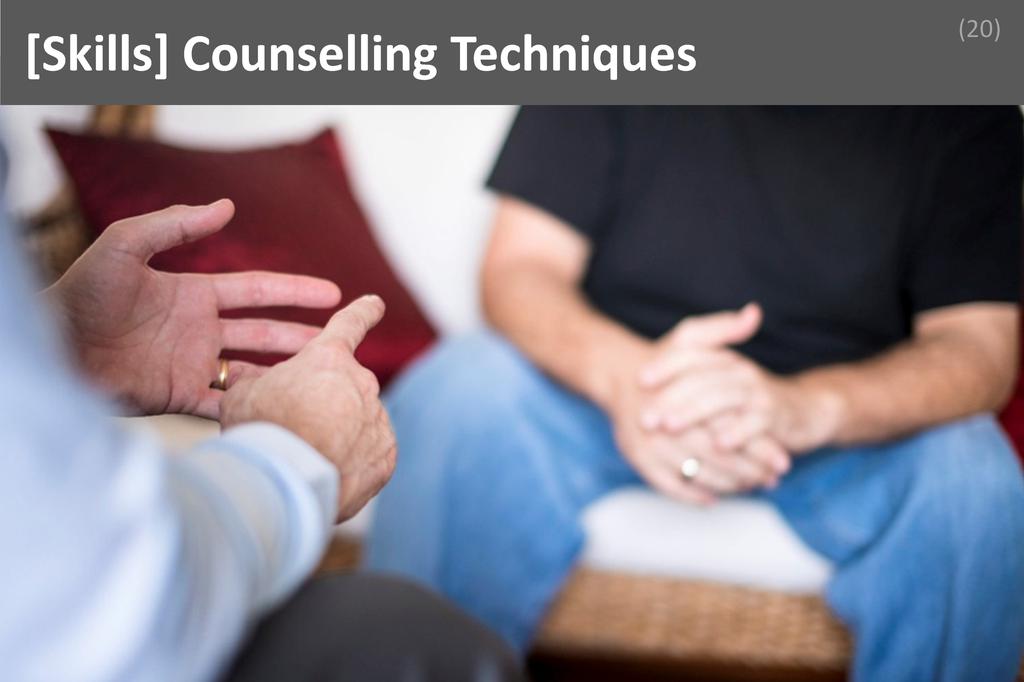
Counselling Techniques refer to a set of structured methods and interpersonal skills used by counsellors to facilitate client self-exploration, problem-solving, and emotional growth. These techniques include active listening, questioning, reflection, and empathy, forming the foundation for effective therapeutic relationships and positive client outcomes in diverse counselling settings.
Mastering counselling techniques significantly enhances a professional’s ability to build trust, understand client needs, and guide individuals through complex emotional or psychological challenges. Clients and employers highly value this skill because it ensures sessions are productive, respectful, and tailored to individual circumstances, fostering a safe environment for change. Developing proficiency in counselling techniques requires ongoing education, supervised practice, and self-reflection. By engaging in workshops, seeking feedback, and staying updated with current research, counsellors can refine their approach and adapt to the evolving needs of their clients. Over time, this commitment to growth not only improves client outcomes but also strengthens the counsellor’s confidence and professional reputation.
Imagine a counsellor working with a client experiencing severe anxiety about a recent job loss. The counsellor employs active listening to fully understand the client’s fears and uses open-ended questions to encourage deeper exploration of underlying concerns. Through reflection and empathy, the counsellor helps the client identify negative thought patterns and reframe their perspective. By applying these counselling techniques, the professional creates a supportive atmosphere where the client feels heard and empowered to develop coping strategies. As a result, the client gains clarity, reduces anxiety, and begins to take constructive steps toward new employment opportunities, demonstrating the transformative impact of skilled counselling techniques in practice.
Positives
Immense Satisfaction

Immense satisfaction is the profound sense of fulfillment and contentment that arises from making a meaningful difference in the lives of others. In counselling, this feeling stems from witnessing clients overcome challenges, grow emotionally, and achieve personal breakthroughs. This deep reward energizes counsellors, reinforcing their commitment and passion for their vital work.
The immense satisfaction found in counselling is a powerful motivator that sustains professionals through the emotional demands of the job. Knowing that their guidance directly contributes to someone’s healing and growth fosters a strong sense of purpose and pride. This positive aspect not only enhances daily job satisfaction but also encourages continuous professional development and resilience. Counsellors often report that the gratitude and progress of their clients provide a unique and lasting motivation, making the challenges of the role worthwhile. Over time, this satisfaction becomes a cornerstone of their professional identity, helping them maintain enthusiasm and dedication even in the face of difficult cases.
Consider a counsellor working with a client who has struggled with anxiety for years. Through weeks of empathetic listening, skillful questioning, and tailored strategies, the client gradually learns to manage their anxiety and regain confidence. One day, the client shares a heartfelt thank you, expressing how their life has changed for the better. In that moment, the counsellor experiences immense satisfaction, knowing their expertise and compassion have made a tangible difference. This sense of fulfillment not only validates their efforts but also inspires them to continue supporting others, reinforcing the meaningful impact of their career in counselling.
Societal Impact

Societal Impact refers to the meaningful and lasting influence that an individual or profession has on the well-being, attitudes, and functioning of communities and society as a whole. In counselling, this impact is seen through the positive changes fostered in individuals, families, and groups, ultimately strengthening the social fabric. By helping people overcome challenges, develop resilience, and improve their mental health, counsellors contribute to healthier, more compassionate communities. This ripple effect extends beyond the counselling room, as empowered individuals are better equipped to support others and participate constructively in society. The profession’s commitment to societal betterment is a core reason why many are drawn to and remain passionate about their work in counselling.
The societal impact of counselling is a profound source of motivation and fulfillment for professionals in the field. Knowing that their work not only transforms individual lives but also uplifts entire communities gives counsellors a deep sense of purpose. This awareness enhances job satisfaction, as each session holds the potential to spark positive change that extends far beyond the immediate client. Counsellors often witness firsthand how their guidance helps clients rebuild relationships, regain confidence, and contribute positively to their environments. This ongoing experience of making a tangible difference fosters professional growth, resilience, and a strong sense of belonging within the broader mission of social well-being. The daily realization that their efforts matter on a societal level is both humbling and inspiring.
Imagine a school counsellor working with a teenager who has been struggling with anxiety and social isolation. Through consistent support and evidence-based interventions, the counsellor helps the student develop coping skills and reconnect with peers. Over time, the student’s improved mental health leads to better academic performance and increased participation in school activities. As the student’s confidence grows, they begin to support classmates facing similar challenges, creating a more inclusive and supportive school environment. The counsellor witnesses this transformation and recognizes that their work has not only changed one life but has also contributed to a healthier, more empathetic community. This realization embodies the profound societal impact that makes a career in counselling so rewarding.
Self Development

Self development is the ongoing process of gaining self-awareness, enhancing personal skills, and fostering emotional growth to reach one’s fullest potential. In counselling, self development is essential because it enables professionals to understand themselves deeply, manage their emotions, and build authentic connections with clients, ultimately enhancing their effectiveness and empathy.
The emphasis on self development in counselling transforms the profession into a journey of personal growth as much as a career. Counsellors are encouraged to reflect on their beliefs, biases, and emotional responses, which leads to greater self-awareness and resilience. This ongoing self-improvement not only boosts job satisfaction but also helps counsellors avoid burnout and maintain their passion for helping others. As they grow personally, counsellors become more attuned to their clients’ needs, fostering trust and creating a safe environment for healing. The daily practice of self development ensures that professionals remain adaptable, open-minded, and compassionate, which are crucial qualities for long-term success and fulfillment in this field.
Imagine a counsellor working with a client who is struggling with anxiety. Through regular supervision and self-reflection, the counsellor recognizes their own tendencies to become anxious in stressful situations. By addressing these personal challenges, the counsellor learns new coping strategies and develops greater emotional resilience. This growth not only benefits their own well-being but also enhances their ability to empathize with the client’s experience. As a result, the counsellor can offer more effective support, model healthy coping mechanisms, and inspire confidence in their client. This real-world scenario highlights how self development is both a personal and professional asset, enriching the counsellor’s practice and deepening the impact they have on others.
Exposure

Exposure in counselling refers to the continuous interaction with diverse individuals, backgrounds, and life experiences, allowing professionals to broaden their understanding of human behavior and emotional needs. This dynamic environment fosters personal growth, empathy, and adaptability, making the counselling profession both intellectually stimulating and emotionally enriching for those who pursue it.
The exposure gained in counselling is a powerful catalyst for both personal and professional development. By engaging with clients from various walks of life, counsellors constantly learn new perspectives and coping strategies, which enhances their ability to empathize and connect. This ongoing learning process not only keeps the work engaging but also deepens the counsellor’s sense of purpose and fulfillment. The variety of cases and stories encountered ensures that no two days are the same, preventing monotony and encouraging continual growth. As counsellors witness the resilience and transformation of their clients, they often feel a profound sense of accomplishment, which significantly boosts job satisfaction and motivates them to further hone their skills.
Consider a counsellor working in a community mental health center who meets clients ranging from teenagers struggling with identity issues to elderly individuals coping with loss. Each session introduces the counsellor to new cultural backgrounds, belief systems, and personal challenges. Through these interactions, the counsellor not only helps clients navigate their difficulties but also gains invaluable insights into the complexities of human experience. This exposure broadens the counsellor’s worldview and enhances their ability to offer compassionate, tailored support. Over time, the counsellor feels a deep sense of fulfillment, knowing that their expanding knowledge and empathy are making a tangible difference in the lives of others.
Challenges
Time Consuming

In counselling, "Time Consuming" refers to the significant amount of time required for client sessions, documentation, follow-ups, and ongoing professional development. This challenge is demanding because it extends beyond scheduled appointments, often encroaching on personal time and requiring sustained emotional and cognitive investment from the counsellor.
The time-consuming nature of counselling can lead to extended work hours, emotional fatigue, and difficulty maintaining work-life balance. Counsellors must be resilient, as the demands of thorough case management and client care can be relentless. Successful professionals address this by setting clear boundaries, prioritizing tasks, and employing effective time management techniques. They may also utilize digital tools for scheduling and documentation, delegate administrative tasks when possible, and regularly reflect on their workload to prevent burnout. By consciously managing their time and energy, counsellors can maintain the quality of their work while safeguarding their own well-being, ensuring they remain effective and empathetic in their roles.
Consider a counsellor working in a busy community clinic who faces a packed schedule of back-to-back client sessions, each requiring detailed notes and follow-up plans. Recognizing the risk of exhaustion, the counsellor implements structured time blocks for documentation immediately after each session, rather than postponing paperwork until the end of the day. They also schedule brief breaks between appointments to recharge mentally and emotionally. By consistently adhering to these practices, the counsellor is able to maintain high standards of care for clients while also preserving personal energy and preventing burnout. This proactive approach demonstrates how thoughtful time management can transform a demanding workload into a sustainable and rewarding professional practice.
Gaining Trust

Gaining trust in counselling refers to the process by which a counsellor earns a client’s confidence, ensuring the client feels safe, respected, and understood. This is demanding because clients often arrive with vulnerabilities, skepticism, or past negative experiences, making them hesitant to open up or fully engage in the therapeutic process.
The challenge of gaining trust can significantly affect a counsellor’s daily work, as progress often hinges on the client’s willingness to share personal thoughts and emotions. Without trust, sessions may remain superficial, hindering meaningful breakthroughs and prolonging the therapeutic journey. This ongoing challenge demands resilience from professionals, who must remain patient, empathetic, and consistent despite setbacks or slow progress. Successful counsellors navigate this constraint by demonstrating genuine care, maintaining confidentiality, and practicing active listening. They also adapt their approach to each individual, recognizing that trust is built at different paces. By fostering a nonjudgmental environment and validating clients’ experiences, professionals gradually encourage openness, which is essential for effective counselling outcomes.
Consider a counsellor working with a teenager who has been referred after experiencing bullying at school. Initially, the teenager is withdrawn, avoids eye contact, and responds with monosyllabic answers, clearly signaling mistrust. The counsellor, rather than pushing for immediate disclosure, focuses on building rapport through consistent, respectful interactions and by showing genuine interest in the client’s hobbies and strengths. Over several sessions, the counsellor’s patience and nonjudgmental attitude help the teenager feel more comfortable. Eventually, the client begins to share deeper feelings and experiences, marking a turning point in the therapeutic relationship. This scenario illustrates how perseverance, empathy, and a tailored approach can successfully overcome the obstacle of gaining trust in counselling.
Low Money

"Low Money" in the context of Counselling refers to the persistent challenge of earning a modest income despite significant educational investment and emotional labor. This issue is demanding because it can limit access to resources, create financial stress, and impact the ability to sustain a long-term, fulfilling career in the helping professions.
The reality of low earnings in Counselling often means professionals must juggle multiple roles or work extended hours to make ends meet. This financial strain can lead to burnout, reduced job satisfaction, and even attrition from the field. The challenge demands resilience, as counsellors must remain committed to their clients while managing their own well-being. Successful professionals often navigate this constraint by diversifying their income streams, such as offering workshops, writing, or consulting. They may also seek out sliding scale clients or community partnerships to maintain a steady caseload. By building strong professional networks and prioritizing self-care, counsellors can mitigate the emotional and practical impacts of financial limitations, allowing them to continue their vital work with purpose and stability.
Consider a counsellor working in a small community clinic where salaries are modest and resources are limited. Despite these constraints, she supplements her income by facilitating weekend group therapy sessions and offering online workshops on mental health awareness. She also collaborates with local organizations to secure small grants for special projects, which not only provide additional funding but also expand her professional reach. Through careful budgeting and a willingness to adapt her services to meet community needs, she manages to maintain financial stability. Her proactive approach not only alleviates the stress of low income but also enhances her sense of professional fulfillment and impact within the community.
No Generalization

In counselling, "No Generalization" refers to the reality that each client’s experiences, needs, and responses are unique, making it impossible to apply uniform solutions or techniques across cases. This is demanding because it requires counsellors to approach every session with fresh perspective, adaptability, and individualized strategies, avoiding assumptions or shortcuts.
The challenge of no generalization deeply influences a counsellor’s daily work by demanding constant attentiveness and flexibility. Counsellors cannot rely on predetermined scripts or interventions, which can be mentally taxing and require ongoing learning. This reality tests their resilience, as they must remain open-minded and avoid frustration when familiar approaches do not yield expected results. Successful professionals manage this constraint by cultivating strong listening skills, engaging in continuous professional development, and reflecting regularly on their practice. They embrace the uniqueness of each client, using supervision and peer consultation to gain new insights, and adapt their methods to fit individual circumstances. This commitment to personalization not only enhances outcomes but also fosters trust and rapport with clients.
Consider a counsellor working with two clients experiencing anxiety. While both present similar symptoms, the underlying causes differ significantly—one struggles with workplace stress, while the other faces unresolved childhood trauma. Recognizing that no generalization is possible, the counsellor tailors their approach for each individual. For the first client, they focus on stress management techniques and workplace coping strategies. For the second, they employ trauma-informed therapy and gradually build emotional safety. By resisting the urge to apply a one-size-fits-all solution, the counsellor demonstrates adaptability and respect for each client’s unique journey. This individualized care leads to more meaningful progress and reinforces the importance of treating every case as distinct.
Handling Negative Atitude

Handling Negative Atitude in counselling refers to managing clients who consistently express pessimism, resistance, or hostility during sessions. This challenge is demanding because it can hinder therapeutic progress, strain the counsellor-client relationship, and test the professional’s patience, empathy, and ability to maintain a supportive and nonjudgmental environment.
Encountering negative attitudes in counselling sessions can significantly affect a professional’s daily work. Persistent negativity may slow the therapeutic process, create emotional fatigue, and challenge the counsellor’s motivation. This difficulty demands resilience, as professionals must avoid internalizing negativity and maintain their own emotional balance. Successful counsellors navigate this constraint by employing empathy, active listening, and boundary-setting. They focus on building trust and rapport, gently challenging negative thought patterns without confrontation. By practicing self-care and seeking supervision or peer support, they sustain their well-being and effectiveness. Over time, these strategies help transform resistance into openness, allowing for gradual progress and a more constructive therapeutic alliance.
Consider a counsellor working with a client who arrives at each session expressing hopelessness and skepticism about the possibility of change. Rather than reacting defensively or becoming discouraged, the counsellor acknowledges the client’s feelings and validates their experience. Through consistent empathy and patience, the counsellor gently explores the roots of the client’s negativity, helping them identify small, achievable goals. Over several sessions, the client begins to notice minor improvements and gradually shifts their outlook. The counsellor’s ability to remain nonjudgmental and supportive, while also maintaining professional boundaries, enables the client to feel understood and safe enough to engage more openly in the therapeutic process.
A Day Of
Counselling
The hum of quiet anticipation fills the counselling office as the day begins, a gentle contrast to the emotional currents that will soon flow through its walls. For a counselling professional, each workday is a tapestry of empathy, active listening, and thoughtful guidance, woven together by moments of deep connection and reflection. The pace is steady but unpredictable, shaped by the unique needs of each client and the ever-shifting landscape of human experience. In this environment, the counsellor’s role is both anchor and guide, offering a safe harbor for those navigating life’s storms while managing the practical demands of a busy caseload.
As the sun rises, the counsellor arrives early, taking a few quiet moments to center themselves before the day’s sessions begin. This time is dedicated to reviewing client notes, updating case files, and reflecting on the goals set in previous meetings. The counsellor might also spend these minutes preparing resources or therapeutic materials tailored to the specific needs of the day’s clients. This period of calm allows for mental clarity and emotional readiness, ensuring that each client receives focused, individualized attention.
By mid-morning, the heart of the day is underway as the counsellor welcomes clients into their office, whether in person or through a secure virtual platform. These sessions are the most intense and rewarding part of the day, demanding full presence and active listening. The counsellor navigates a range of emotions and topics, from anxiety and grief to personal growth and relationship challenges. Each conversation is a delicate balance of empathy, guidance, and professional boundaries, as the counsellor helps clients explore their feelings, identify patterns, and develop coping strategies.
The afternoon often brings a shift from one-on-one sessions to collaborative work and practical execution. The counsellor may consult with colleagues, participate in supervision meetings, or coordinate care with other professionals such as social workers, psychologists, or medical providers. This time is also used for updating treatment plans, documenting progress, and responding to urgent client needs. The collaborative environment fosters professional growth and ensures that clients receive comprehensive, well-coordinated support.
As the day winds down, the counsellor turns to essential wrap-up tasks. This includes finalizing session notes, organizing client files, and reviewing the day’s outcomes. There is often time set aside for research into new therapeutic approaches or professional development, as well as planning for upcoming sessions. This reflective period allows the counsellor to process the emotional weight of the day, ensuring they are prepared to offer the same level of care and attention tomorrow. The office grows quiet again, signaling the close of another day spent guiding others toward healing and growth. |